
Héron has spent its first few years in Montreal doing one thing very well. The Marinor, a 39mm skin-diver with 250 meters of water resistance, a Miyota 9039 and a steel case hardened to around 1,200 HV, became the brand’s calling card, and it is the watch we already picked as a Fifty Fathoms alternative at a fraction of the price. The Mirabel GMT then moved Héron into dressier territory with a 37.5mm case and a Miyota 9075, but it dropped the hardened steel and settled for 50 meters on a leather strap.
What the catalogue never had was the watch in between: small, tough and plain enough to wear every day without reading as a dive watch or a dress piece. The new Héron Continental changes that. Launched on September 23, 2026 at $630, it is a 37mm explorer-style three-hander on a hardened steel bracelet, built for buyers who want one watch for weekends outdoors and weekdays at a desk, and who care more about proportions and finishing than about winning a spec sheet argument.
It is not a limited edition, and it is not trying to reinvent the genre. The interesting part is how directly Héron carried its diver toolkit across: the same hardened steel and the same movement, 100 meters instead of 250, and a sandwich dial with a lume detail of its own.
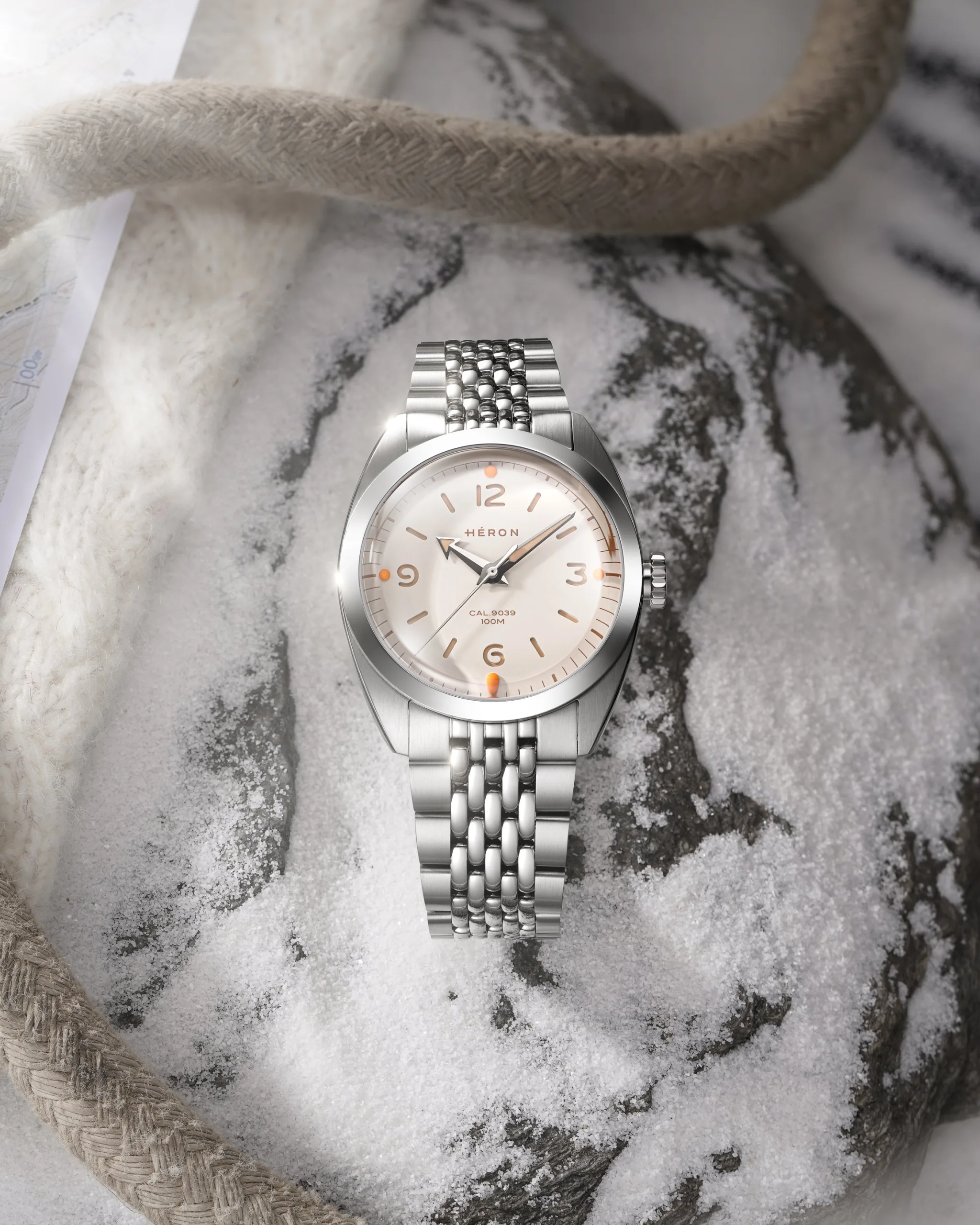
A Small Explorer That Borrows From Big Names
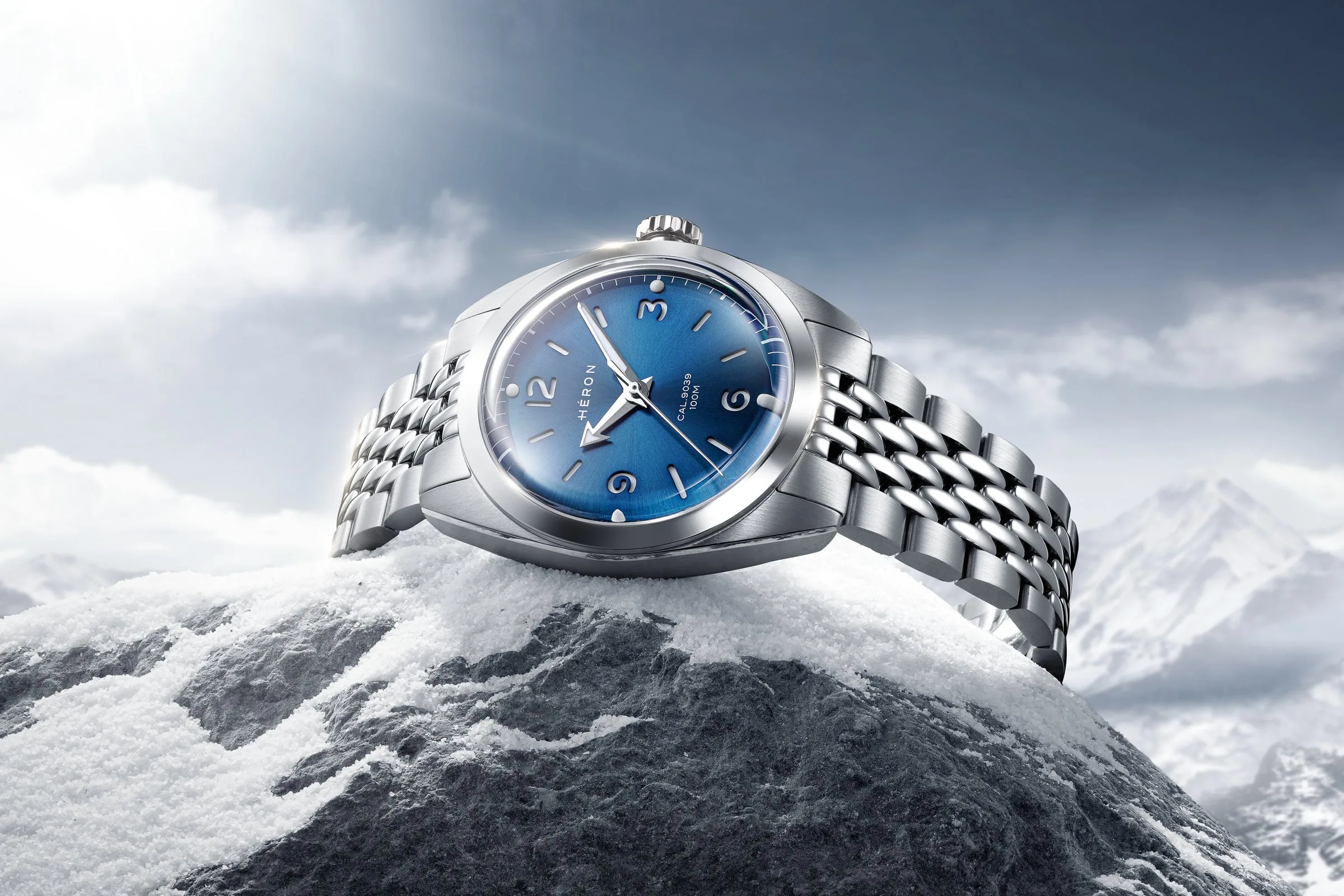
Héron cites the Rolex Explorer, the Universal Genève Polerouter, the Omega Railmaster and the Longines Conquest, and you can see the Explorer most clearly in the Arabic numerals at the cardinal points and the baton markers between them. The Continental measures 37mm across and 43mm lug to lug, with 20mm lugs and a case that is 8.5mm thick before the boxed sapphire takes it to 11mm.
That lands between Rolex’s current 36mm Explorer and the 40mm version added in 2023, which is a smart place to be. It also places the Continental above the price ceiling of our guide to budget field watches, which tells you where Héron is aiming: not at the Timex and Seiko crowd, but at buyers ready to spend a little more for better materials.
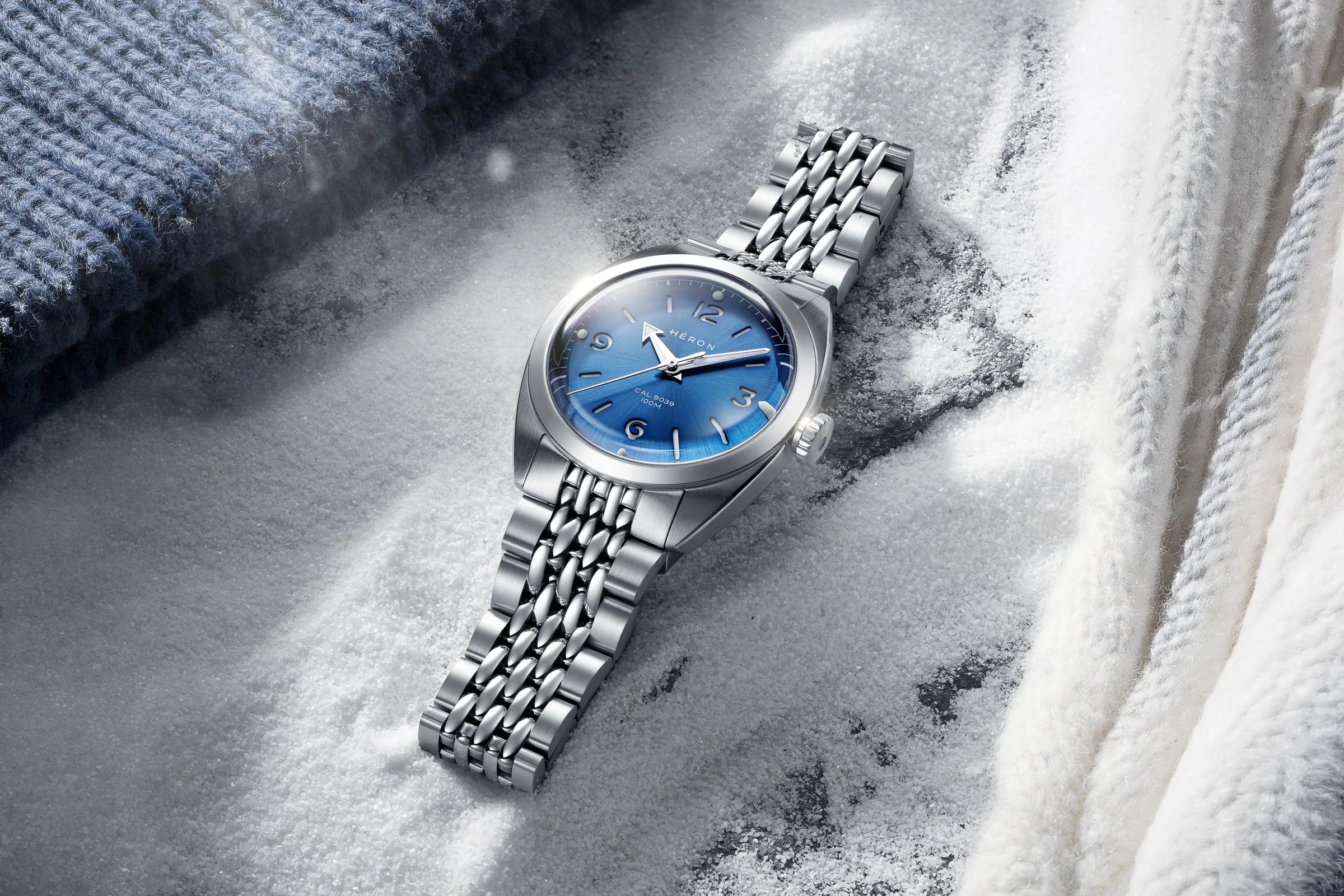
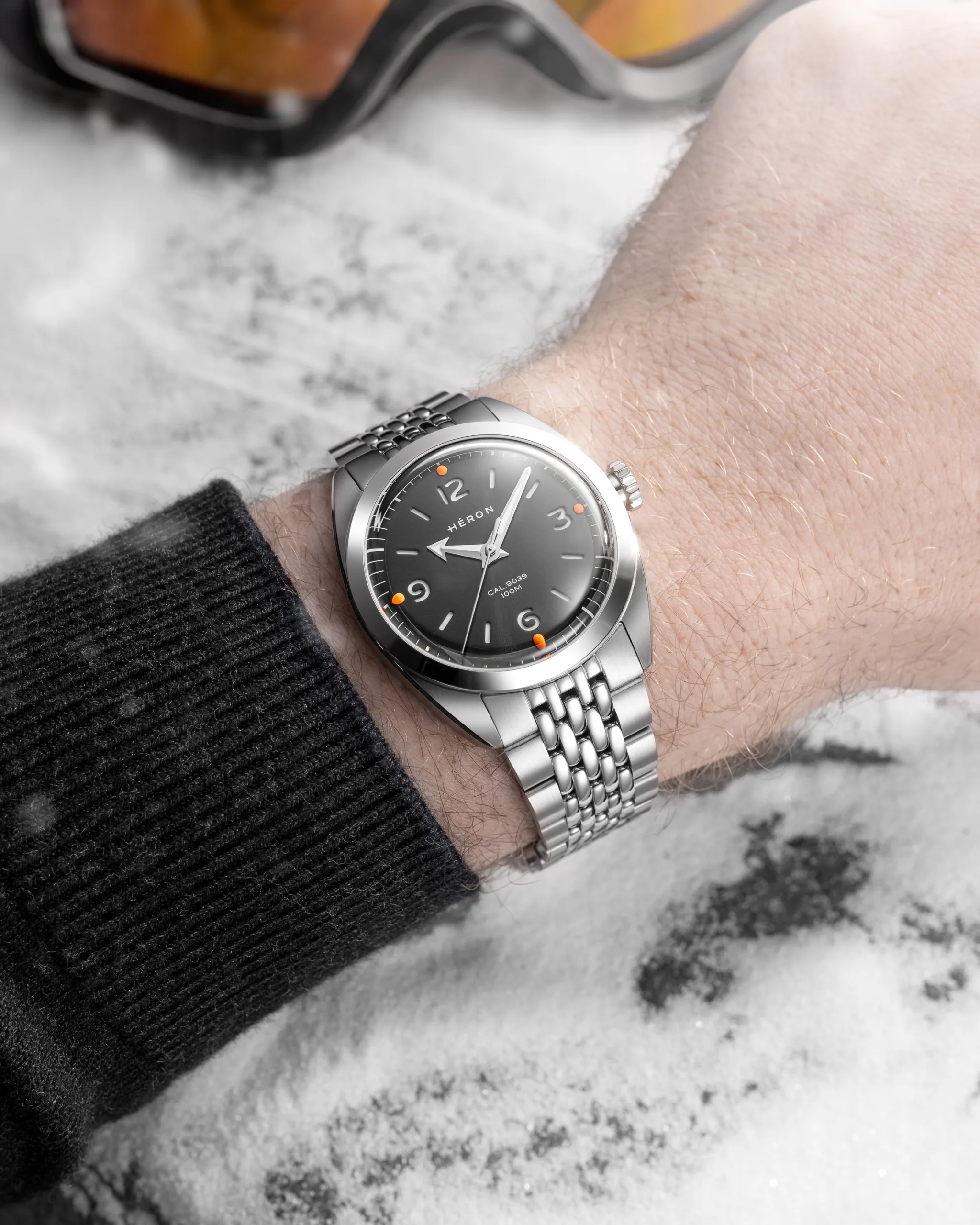
My only reservation is height. Much of the 11mm comes from the box crystal, so the profile will read taller than a 37mm width suggests.
The headline feature is the same one that made the Marinor stand out. Héron treats both the case and the bracelet to roughly 1,200 HV, against the 150 to 200 HV it quotes for untreated 316L. That makes the surface six to eight times harder on paper, and on an everyday explorer, which spends its life on a bracelet brushing against desks and door frames, that treatment matters more than it ever did on a diver.
Héron admits the caveat itself: polished surfaces can still show fine scuffs, and early hands-on coverage puts them closer to 800 HV. With polished case accents and polished center links on the beads-of-rice bracelet, it will not stay pristine forever.
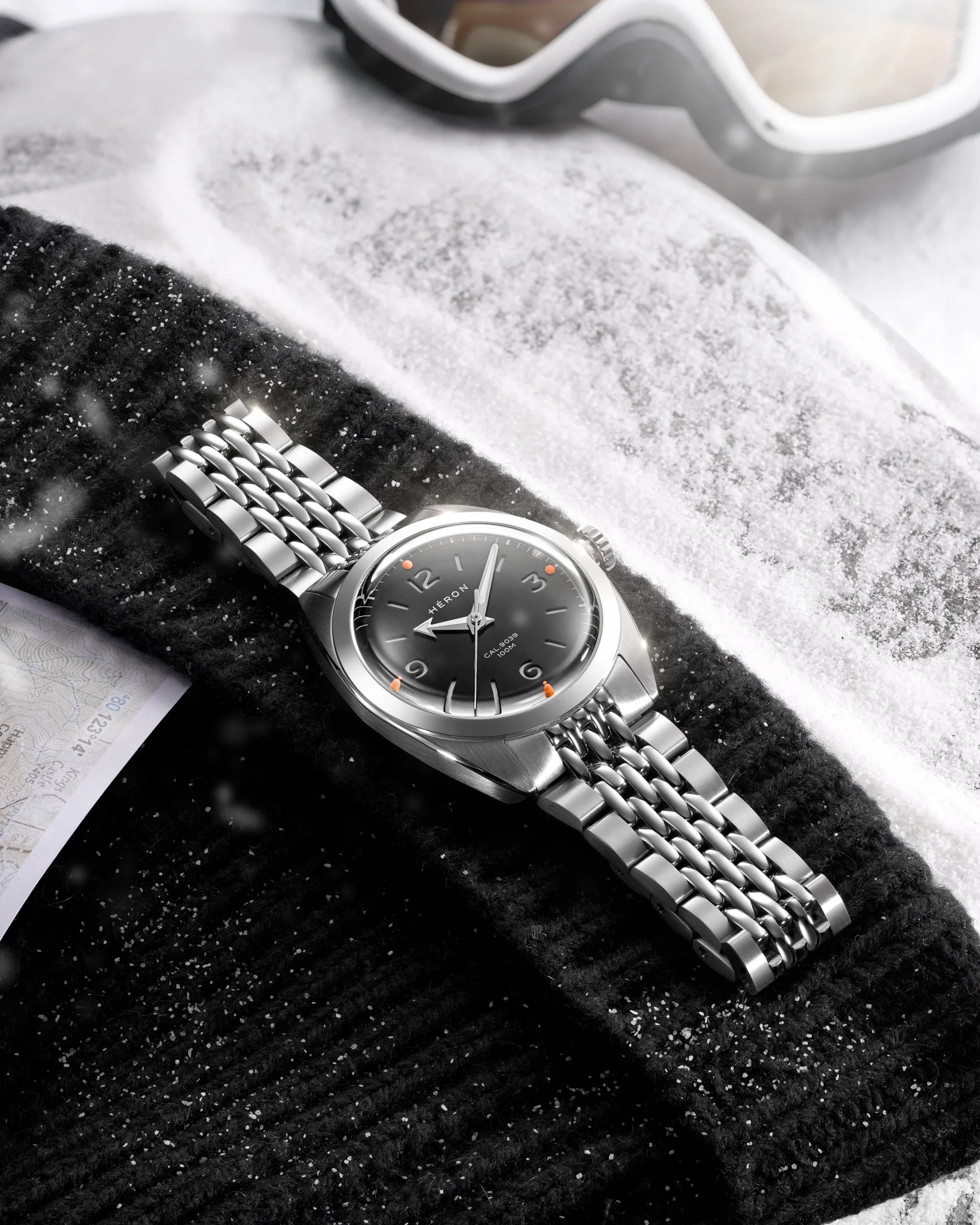
Otherwise the bracelet is strong for $630, with screwed links, quick-release pins and on-the-fly micro-adjustment in the clasp. A screw-down crown and caseback make the case more serious than its dressy styling suggests.
Three Dials, Three Different Watches
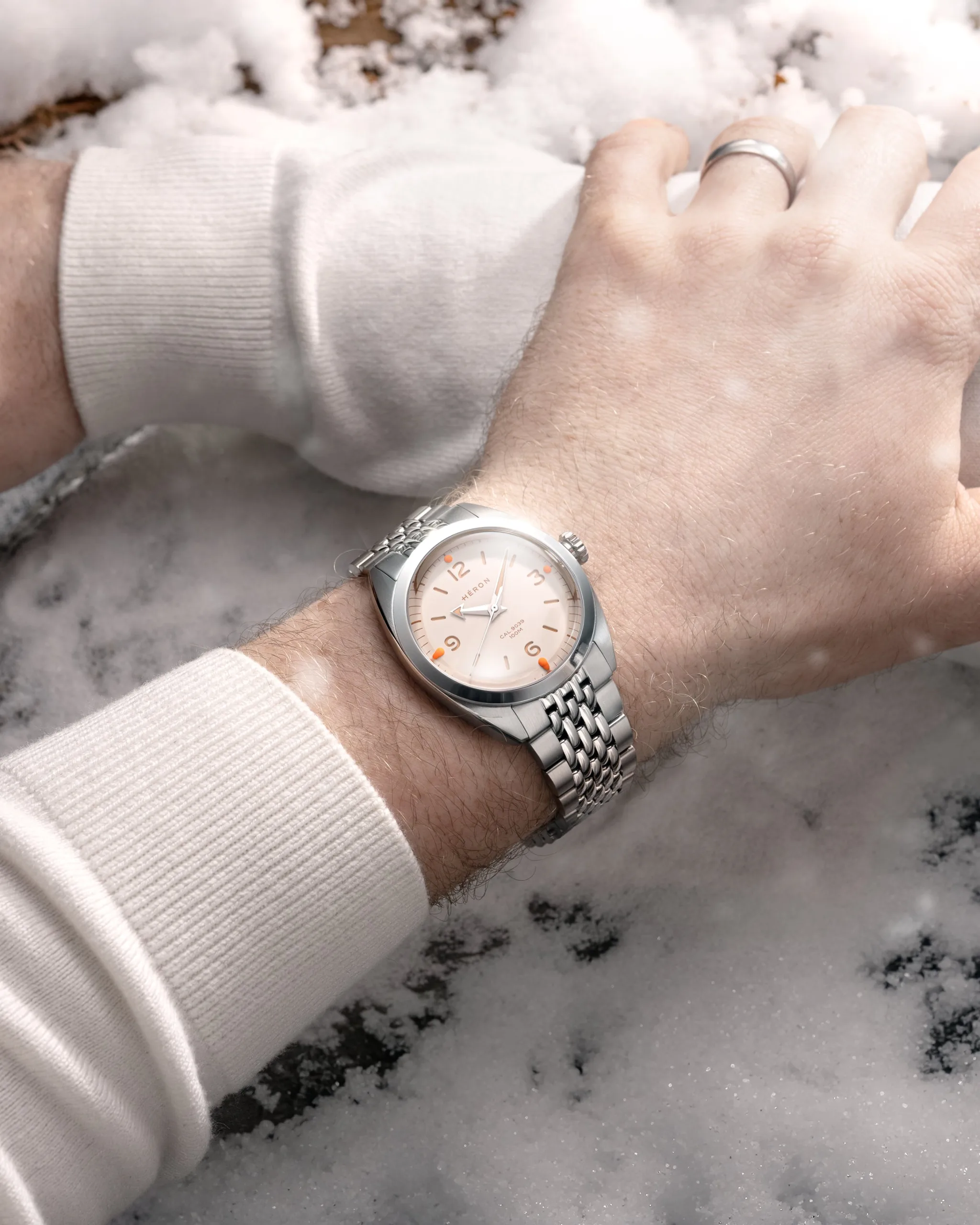
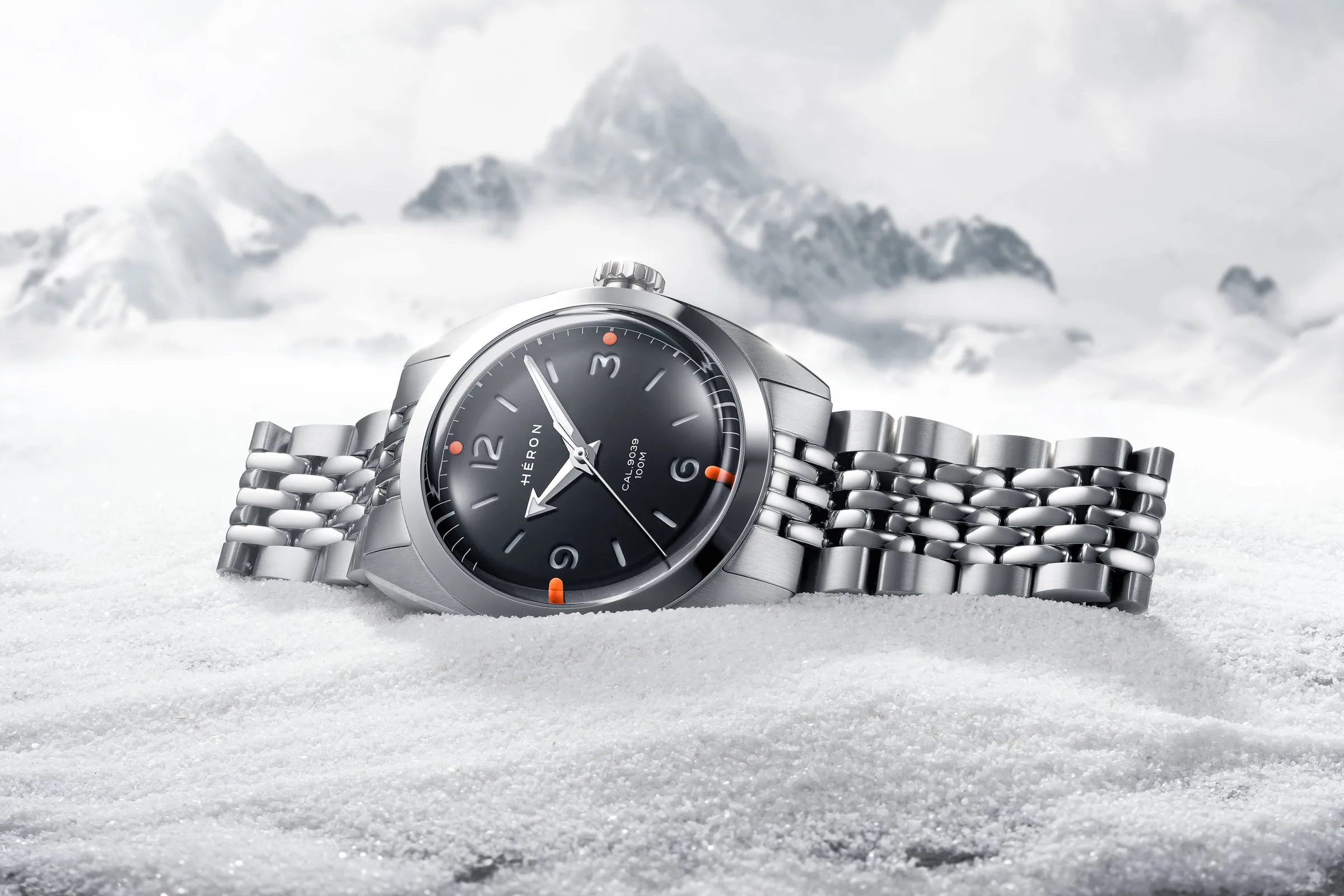
Each colorway changes the watch’s character more than usual. The black 5001-A uses a subtle sunray dial with white and bright orange accents, the most overtly sporty of the three. The blue 5002-A pairs a deep blue sunray dial with crisp white accents and nods to jet-age air travel. The cream 5003-A has a lacquered dial inspired by the rare “albino” explorer dials collectors chase, with warm old-radium-toned lume.
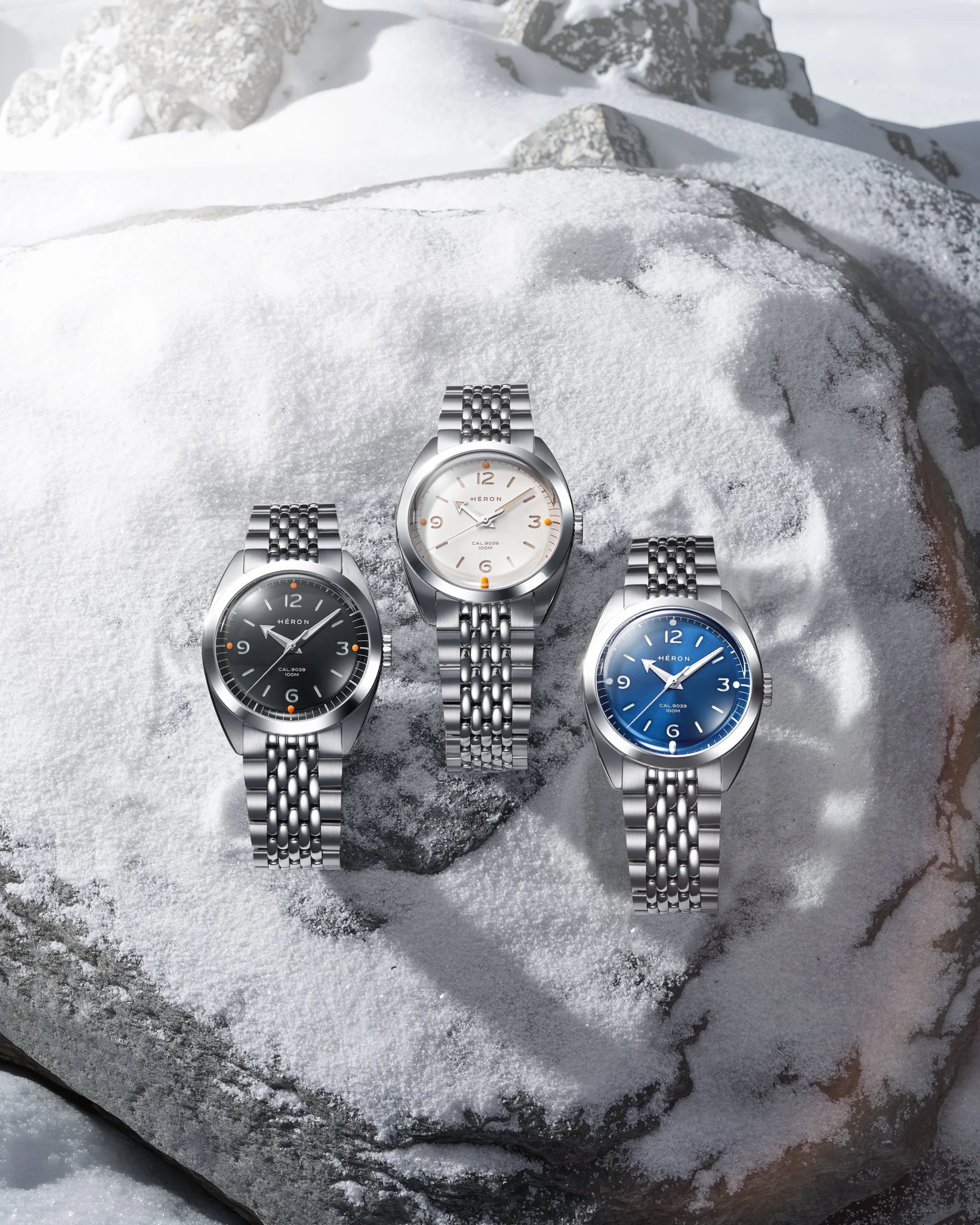
All three use a two-layer sandwich dial, and the detail that sets them apart is the four raised, spherical “Lume-Blocks” at the quadrants. They help orient the dial in the dark and give the Continental an identity beyond its references. Héron lists Super-LumiNova BGW9 on the blue dial and a BGW9/C3 combination on the black and cream versions.
If I were choosing, it would be the cream. The black is the safer bet, but the cream looks least like every other affordable explorer out there.
The Movement Is Competent, Not the Story
Inside is the Miyota 9039, the no-date version of Miyota’s premium 9 series caliber. It beats at 28,800 vph, runs on 24 jewels, holds around 42 hours of power reserve, hacks and hand-winds. Being a true no-date movement, it also avoids the phantom crown position you get when a brand hides a date wheel under a clean dial.
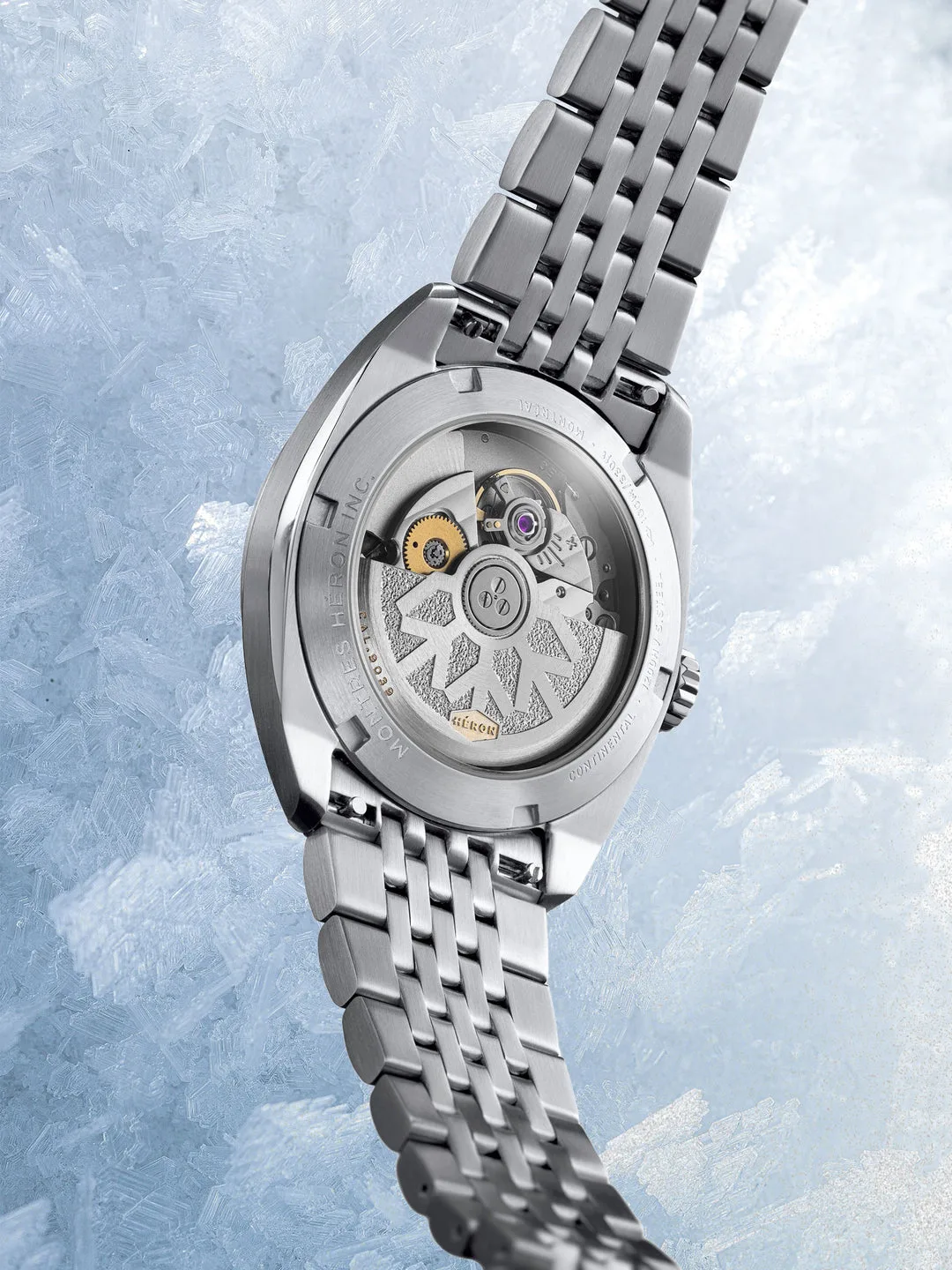
It is the Marinor’s caliber, so no new ground here. The official accuracy tolerance of -10/+30 seconds per day is loose, and the 9 series rotor is known for being audible on the wrist. Héron dresses it up with a custom snowflake rotor, brushed and grained with small gold accents, visible through the exhibition caseback.
Price is where the choice makes sense. With affordable mechanical movements getting steadily more expensive, a 9039 at $630 remains a very fair deal, and it is the thinner, better-finished choice over the Seiko NH35 that most microbrands fall back on at this price.
Who This Actually Makes Sense For
The Continental fits someone building a small collection who wants one bracelet watch that covers almost everything, especially on wrists below around 17cm, where 37mm will sit better than the usual 39 to 40mm.
It makes less sense if you need a beater for real outdoor abuse and would rather not spend $630 on it. A cheaper, simpler option like the solar Timex Expedition North we tested will handle trails and cold without much worry, even if it cannot match the Continental’s finishing or movement.
Specs, Pricing & Availability
Case Diameter: 37mm (43mm lug to lug)
Case Thickness: 8.5mm (11mm including crystal)
Case Material: Hardened 316L stainless steel (approx. 1,200 HV)
Water Resistance: 100m
Caliber: Miyota 9039 automatic
Crystal: Boxed sapphire with anti-reflective coating
Function: Hours, minutes, central seconds
Price: $630
My Verdict: Héron’s Most Wearable Watch Yet
I think the Continental is the most useful watch Héron has made. The Marinor is the better tool, and the Mirabel is the more unusual design, but this is the one I would recommend to someone who can only buy a single Héron. The hardened steel, the 37mm size and the no-date 9039 make sense together, and the cream dial gives it a face you will not confuse with the rest of the explorer field.
The box crystal adds height and the rotor will be audible, but neither is serious enough to steer buyers away.
The bigger takeaway is about the brand. With a diver, a dress GMT and now an explorer, Héron is no longer a one-model microbrand riding a hit. It is building a catalogue with a consistent idea behind it, vintage references made with harder steel than most brands bother with, and that puts real pressure on better-known microbrands charging more for softer cases.