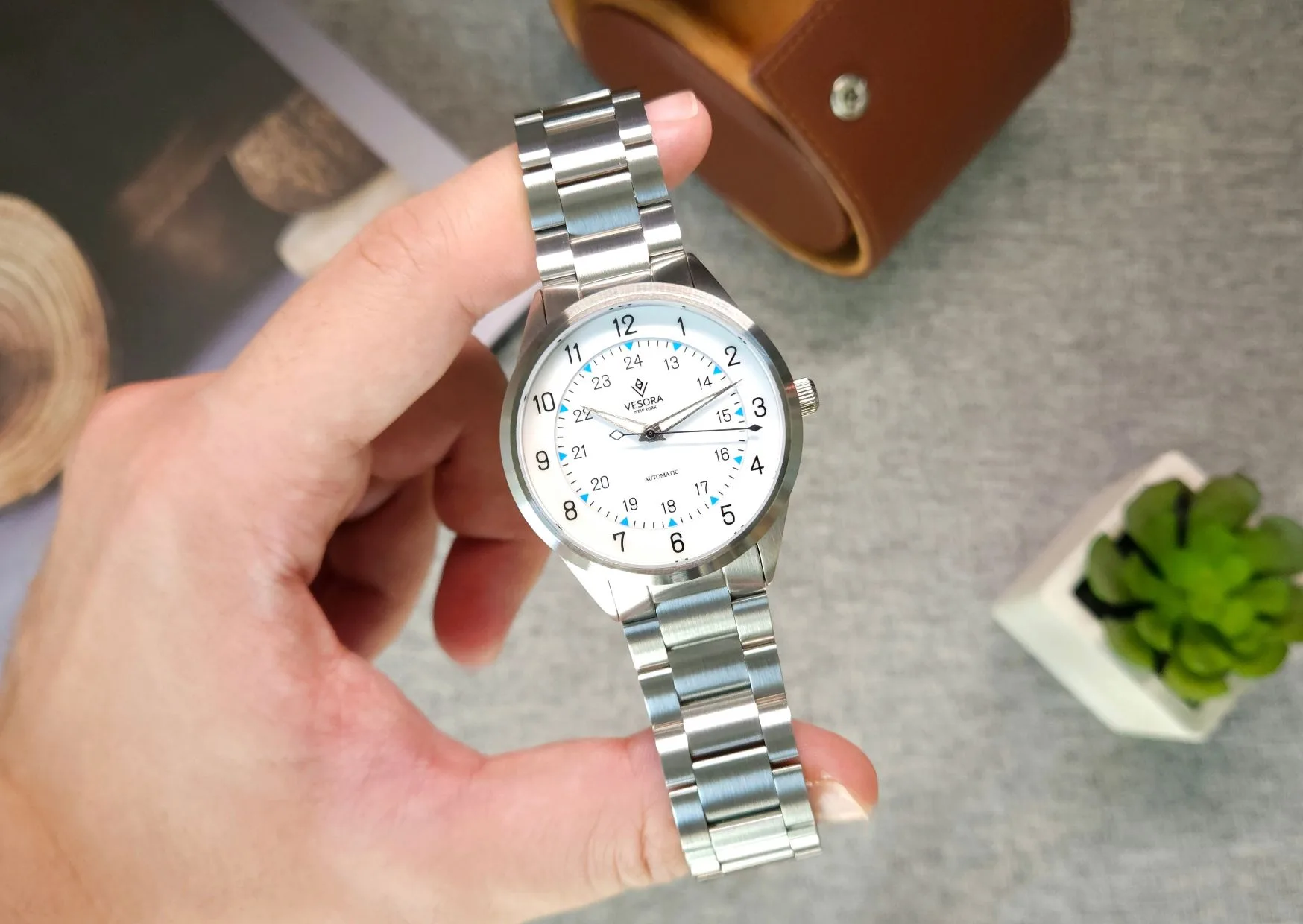

Vesora Watch Co. is a new microbrand based in New York City, and the Gantry Field is its first watch. When Kamil from the brand first emailed me, the spec list read like something from a more established name: a double-layer enamel dial, a double-domed sapphire crystal, 100m of water resistance and a decorated Sellita SW210-1b, all in a 39.5mm steel case. Today it sells for $569, in white, black and red.
There is one thing to be clear about before anything else. What arrived at my door was a prototype, and it differs from the production watch in three ways: it ran a Miyota 9039 automatic instead of the hand-wound Sellita, it measured 11.3mm thick instead of the final 10.6mm, and it said “Automatic” on the dial where production watches say “Gantry”. Everything else is what Vesora says you will get, and I will flag the differences wherever they matter.
Vesora lent me the prototype for this review. It has gone back now, and I am genuinely sorry to see it go. The opinions are my own.
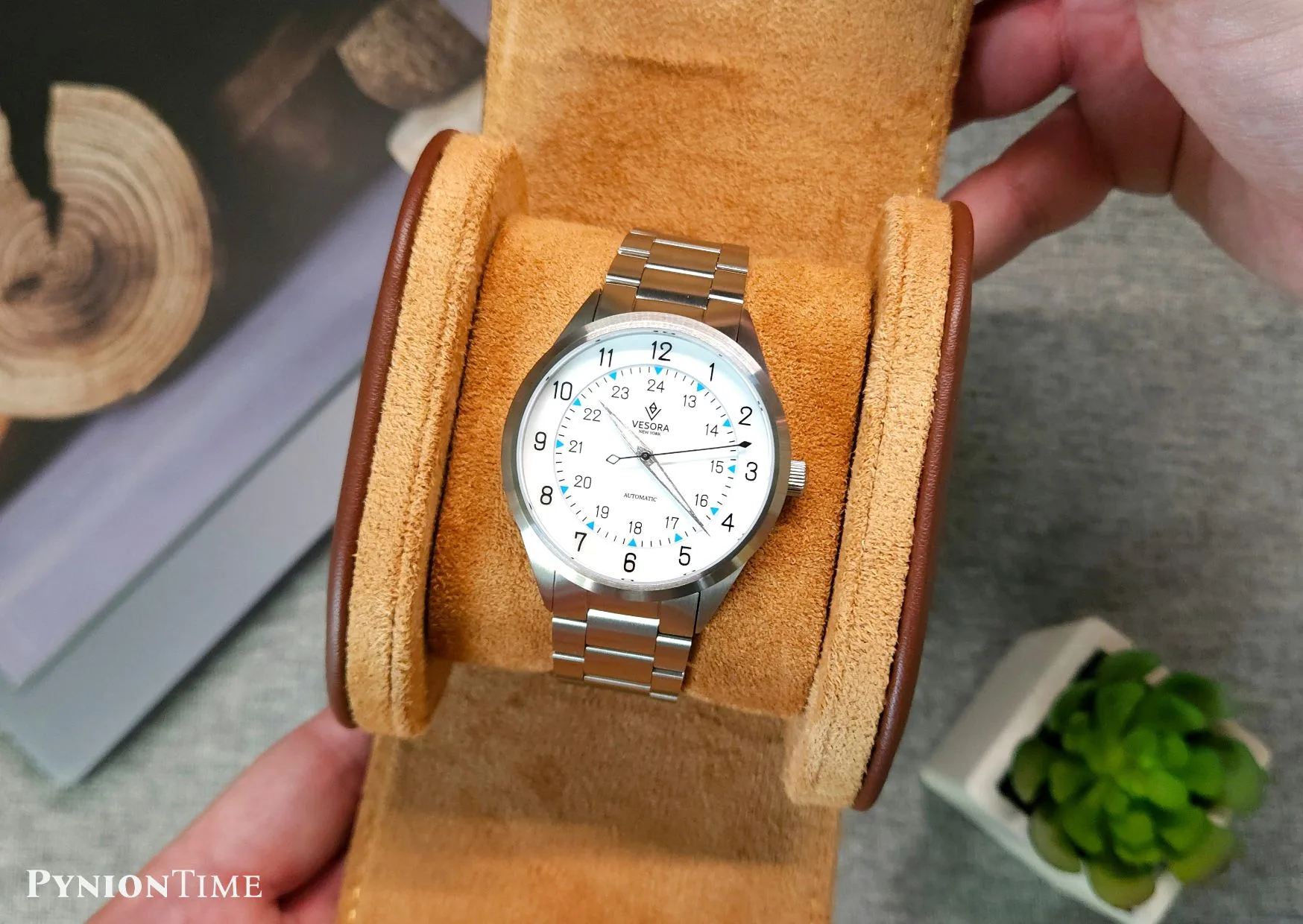
Field Watches Are Hard to Make Interesting, and Vesora Managed It
The field watch is one of the most worked-over formats in the hobby. Arabic numerals, a clear minute track, a steel case, a strap or a bracelet. It is a formula that works, which is exactly why so many brands stop there, and why most affordable field watches end up looking like each other.
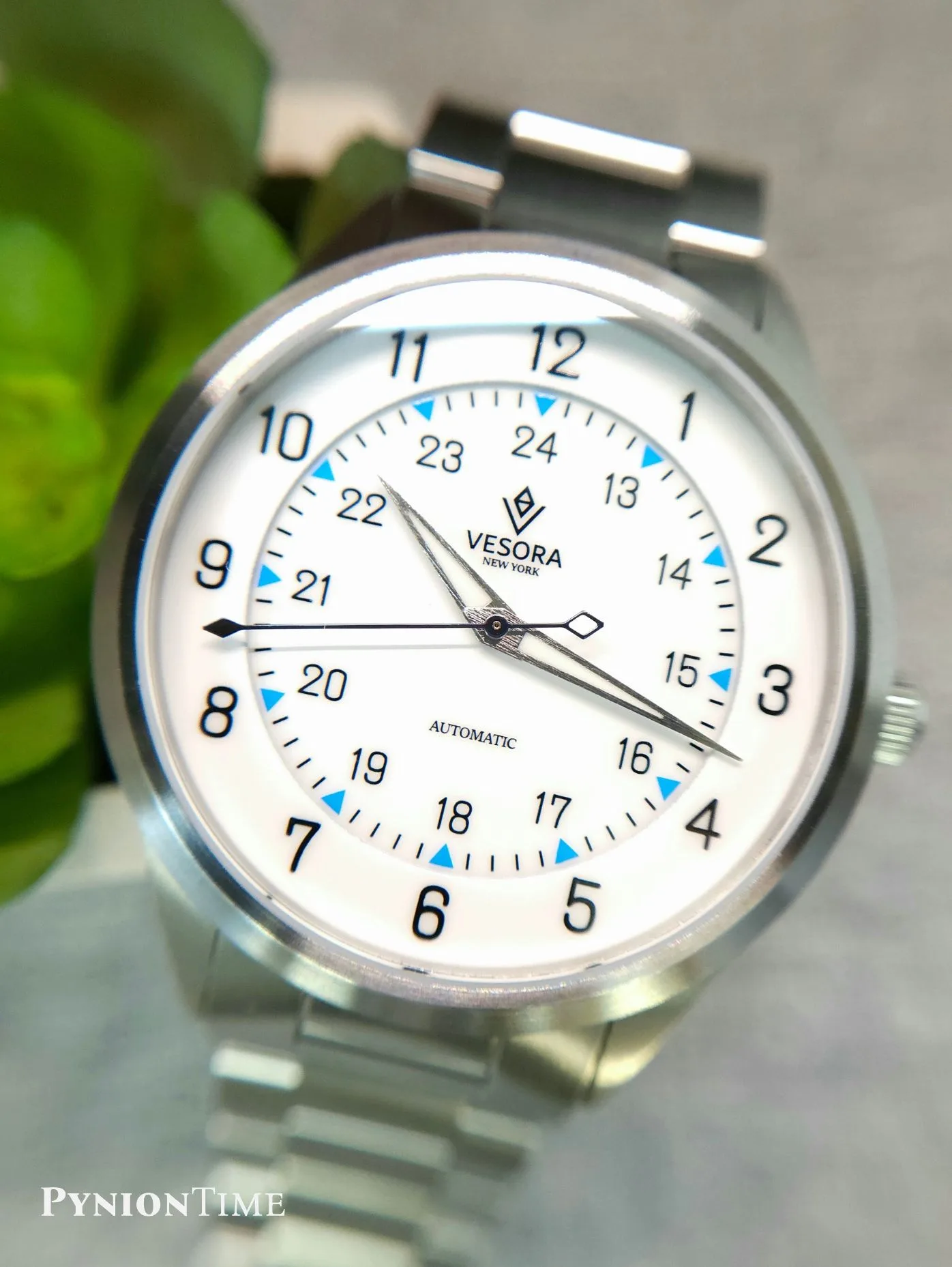
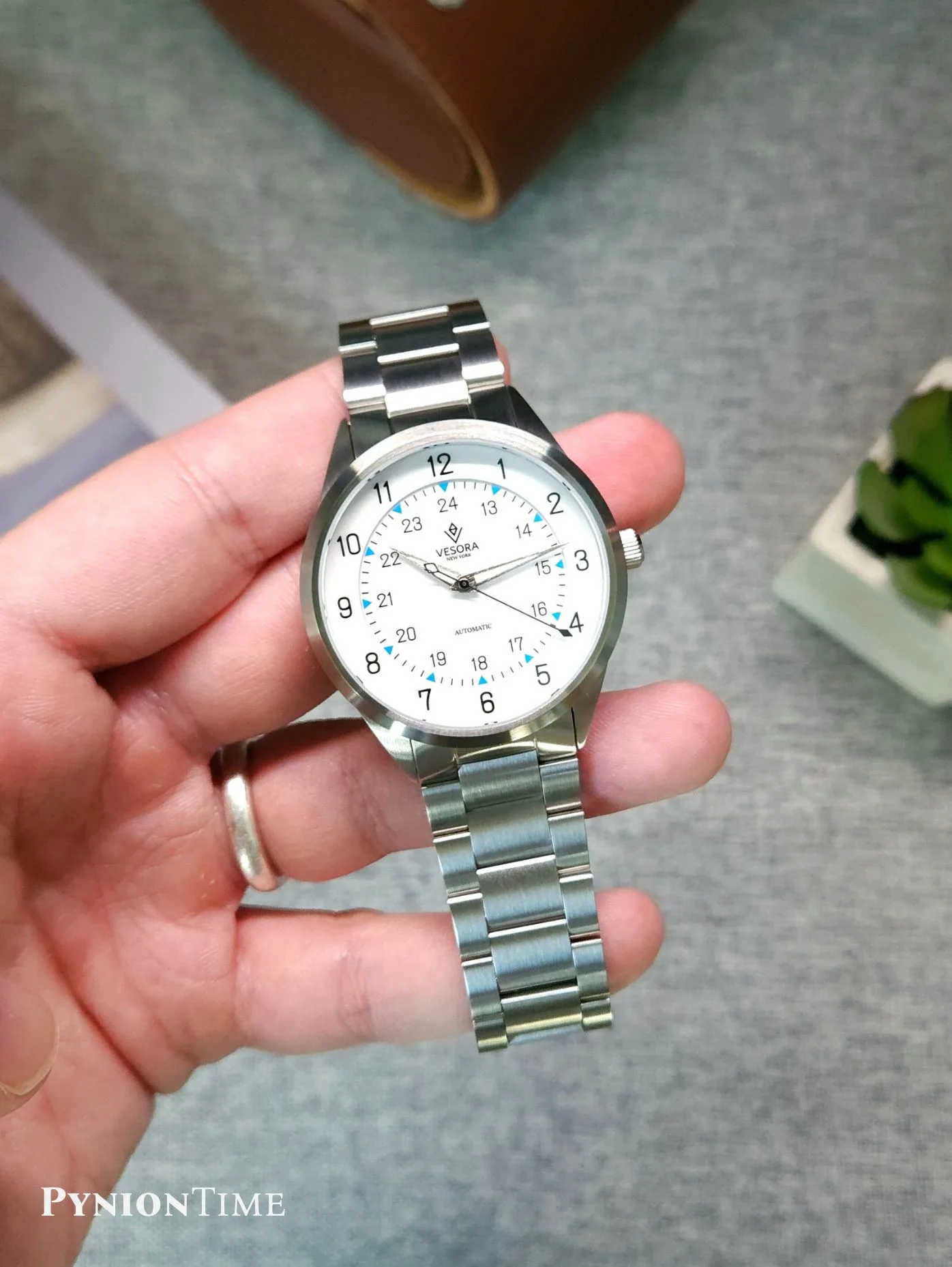
What I like most about the Gantry Field is that it is simple and different at the same time. That is not easy to pull off. The layout is as legible as any field watch should be, but the enamel, the recessed sector and the little blue triangles give it its own face. On a crowded shelf of affordable microbrand watches worth your money, it is one I could recognize from across a room, and for a first watch from a brand nobody knew a few months ago, that is a real achievement.
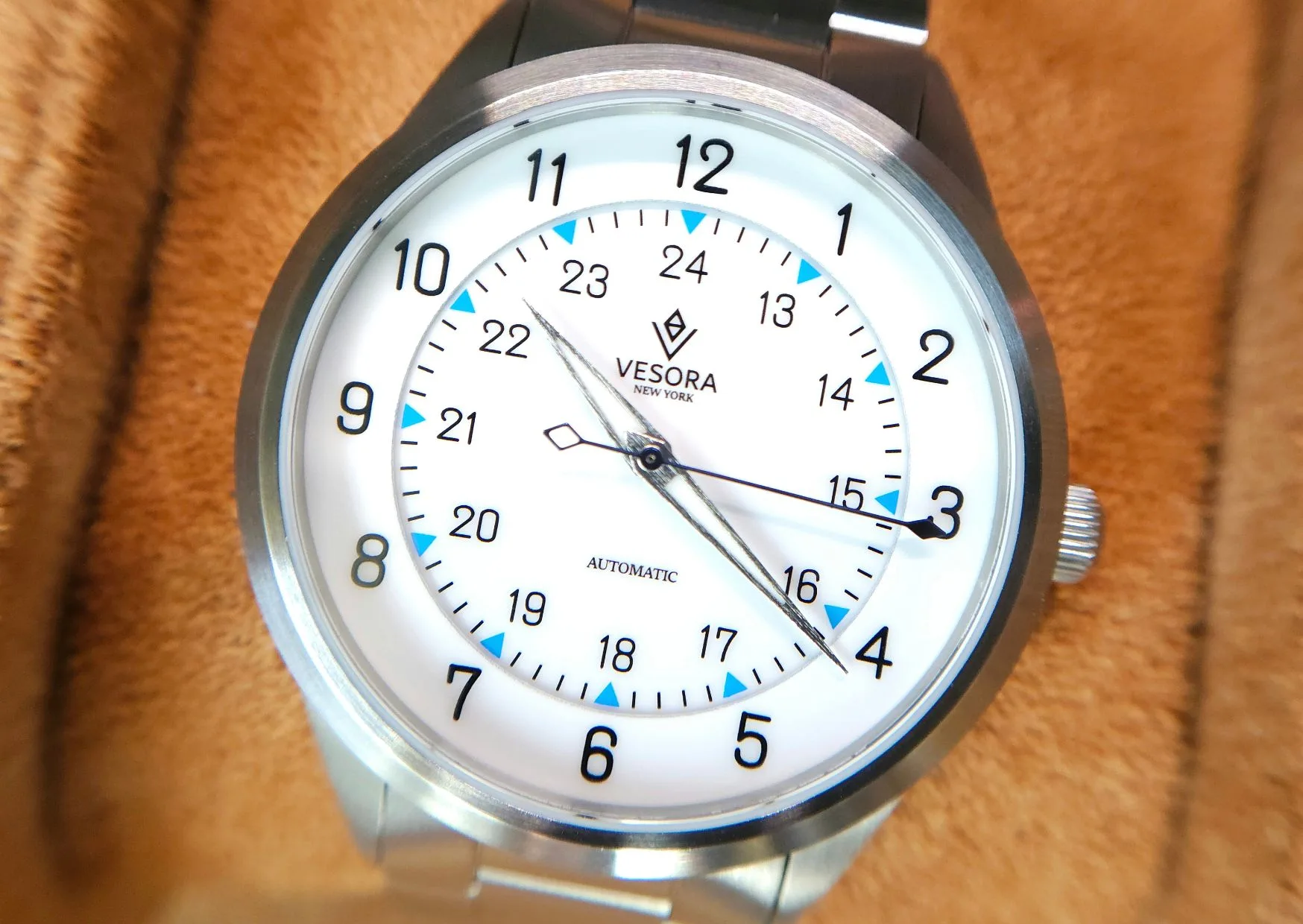
The recessed sector is what does most of the work. It gives the white dial depth without adding clutter, so the watch looks richer the closer you get, but stays calm at a glance. The blue triangles pick up the color of the seconds hand, which means the dial uses one accent color and simply repeats it. Nothing on it feels like it is there to fill space, and that restraint is a big part of why it still reads as a field watch first.
It also comes in black and red. I have only worn the white, so I cannot tell you how the other two look in person.
39.5mm by 46.5mm Is the Sweet Spot on My Wrist
My wrist measures 6.5 inches, and these proportions fit it perfectly. The 46.5mm lug-to-lug is the number that matters here, because it keeps the lugs inside the edges of my wrist, which is the whole point of why lug-to-lug matters more than diameter. At 39.5mm it still has presence, but nothing overhangs.
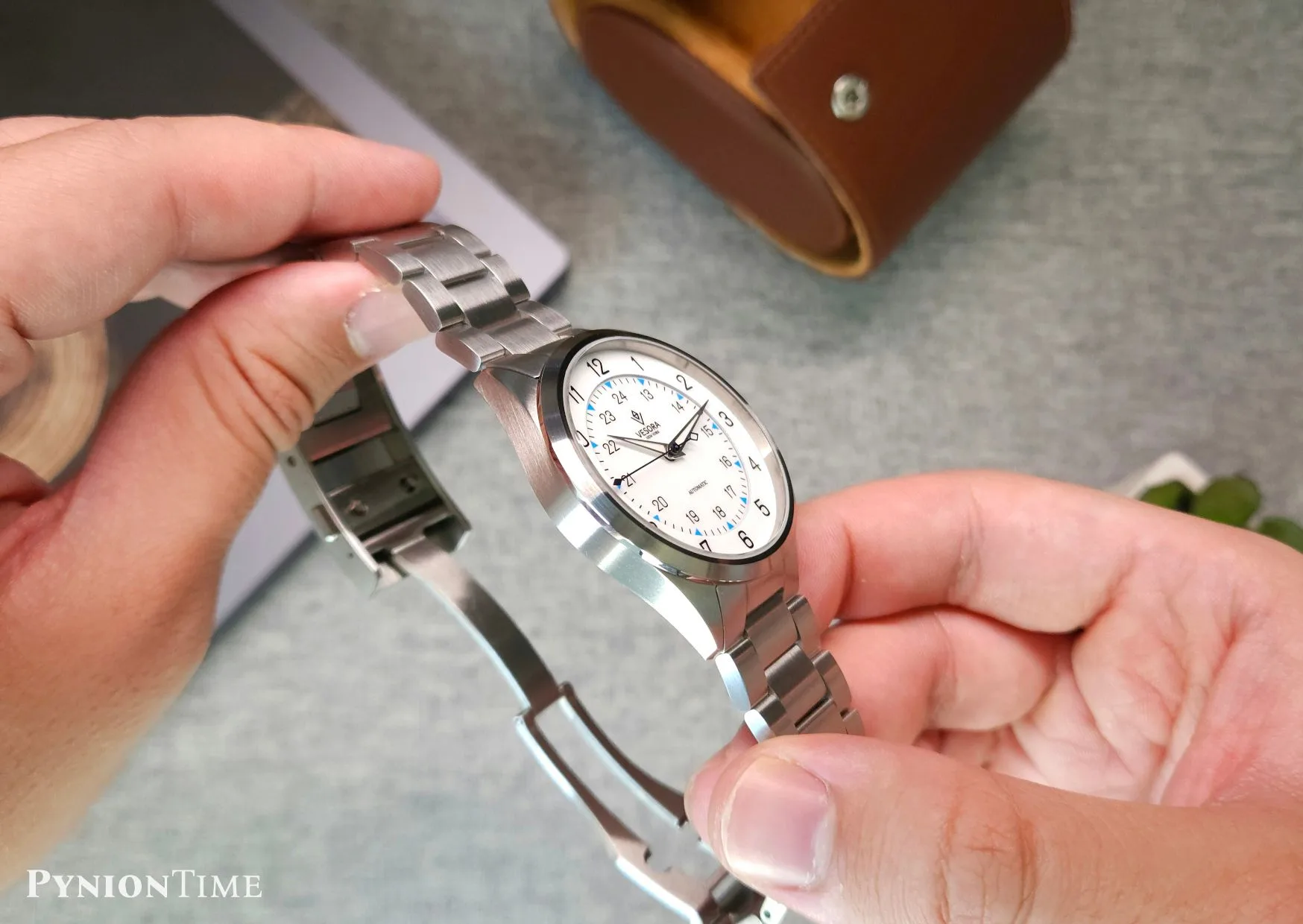
The case is mostly brushed, with a thin polished bevel running around the bezel. It is not elaborate finishing, but it is clean, and that single polished line lifts the case more than you would expect. For the money, I would call the finishing more than decent.
Even at 11.3mm, my prototype slid under a shirt cuff without any trouble. The production watch drops to 10.6mm thanks to the slimmer Sellita, so it will only get better there. In weight it is about what you would expect from a steel watch of this size on a bracelet: not light, not heavy, just normal.
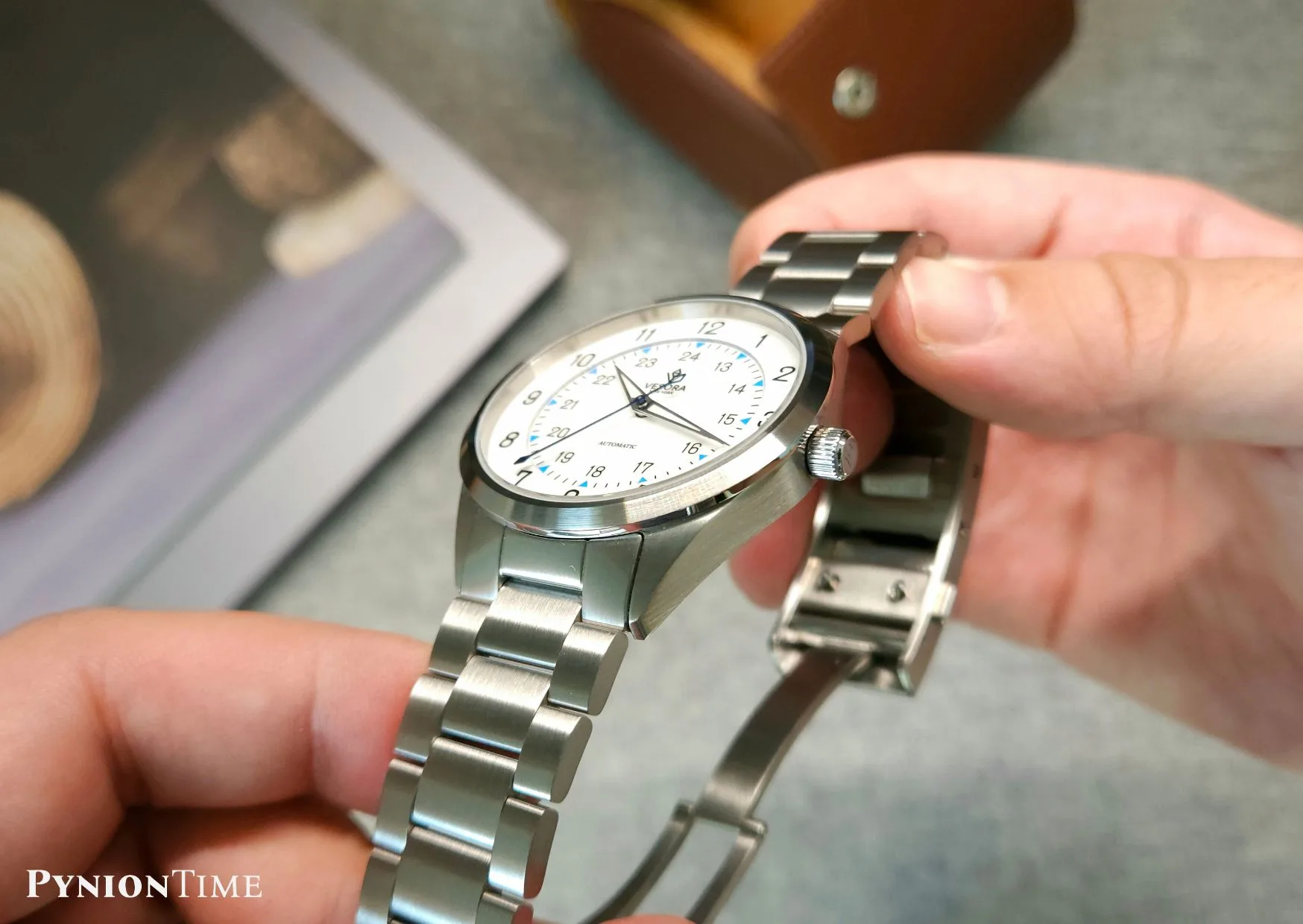
The 100m rating is worth a mention too. Plenty of field watches at this price stop at 50m, which is fine for rain and washing your hands but not something most brands would recommend swimming with. At 100m, the Gantry is rated for the pool and the sea, which fits the go-anywhere character I describe further down.
The Crown Is the One Part of the Case I Would Change
On my prototype the crown screws down, which helps explain the 100m rating. The problem is its size. It is on the small side, and it is not the most comfortable crown to grip when you unscrew it or set the time. A slightly bigger crown would make daily use easier without spoiling the clean profile, and on a watch that you will be winding by hand in production, that matters even more.
The engraved logo on the end is a nice touch, though.
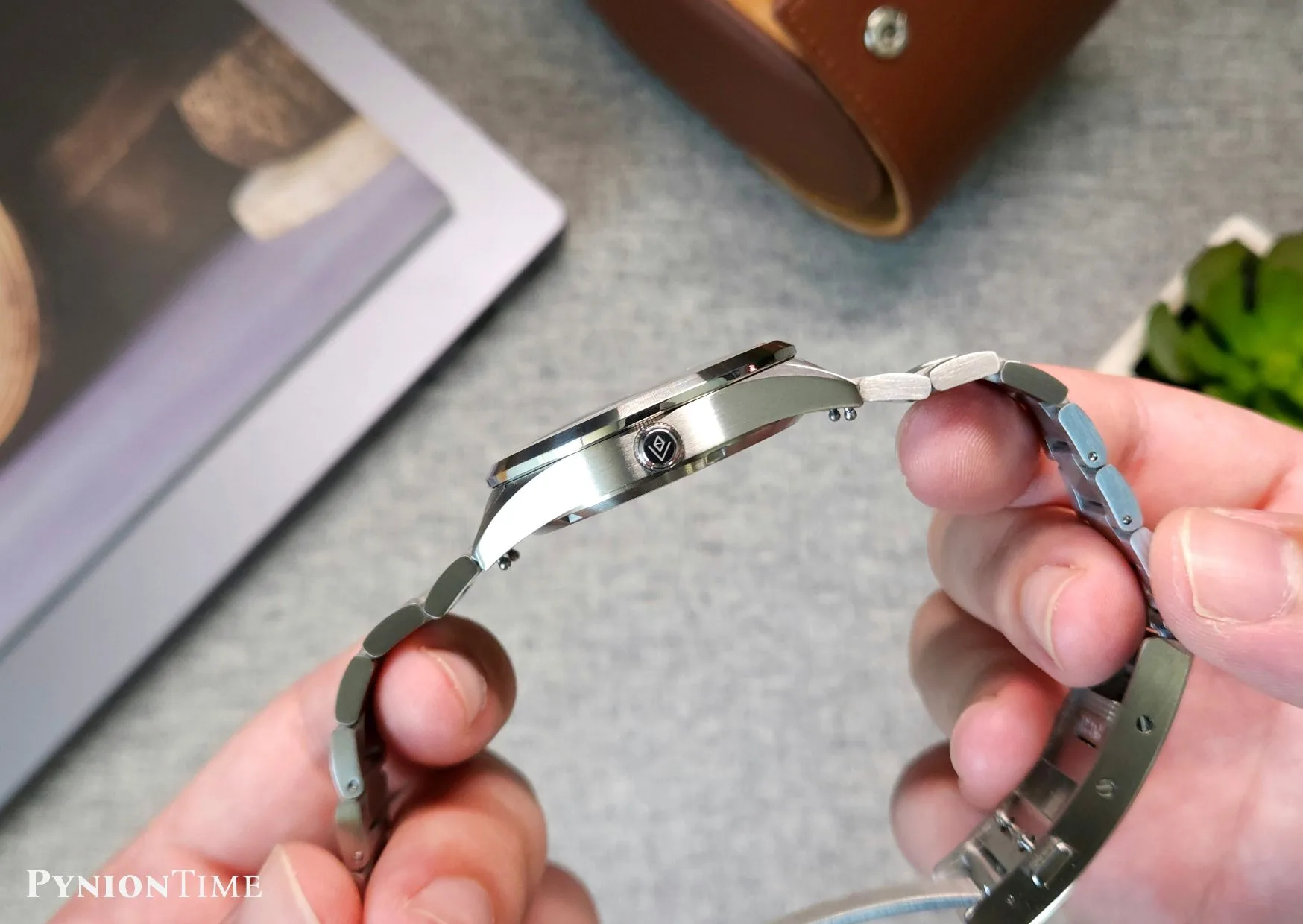
The dial uses two layers of enamel with a recessed sector, and yes, you can see it in person. The surface catches the light and throws soft reflections as you move your wrist, but they never get in the way of reading the time. My prototype’s dial was also spotless: not a single speck of dust anywhere under the crystal, which is not a given at this price.
Legibility is excellent, exactly what a field watch should deliver. Black Arabic numerals on white, a clear track, and a blue seconds hand that adds a bit of color without fighting the rest. The only thing I would refine is the hands. Their brushing is a little coarse, and at certain angles that throws an extra reflection. It is a small thing, but it is the kind of detail that separates good from great.
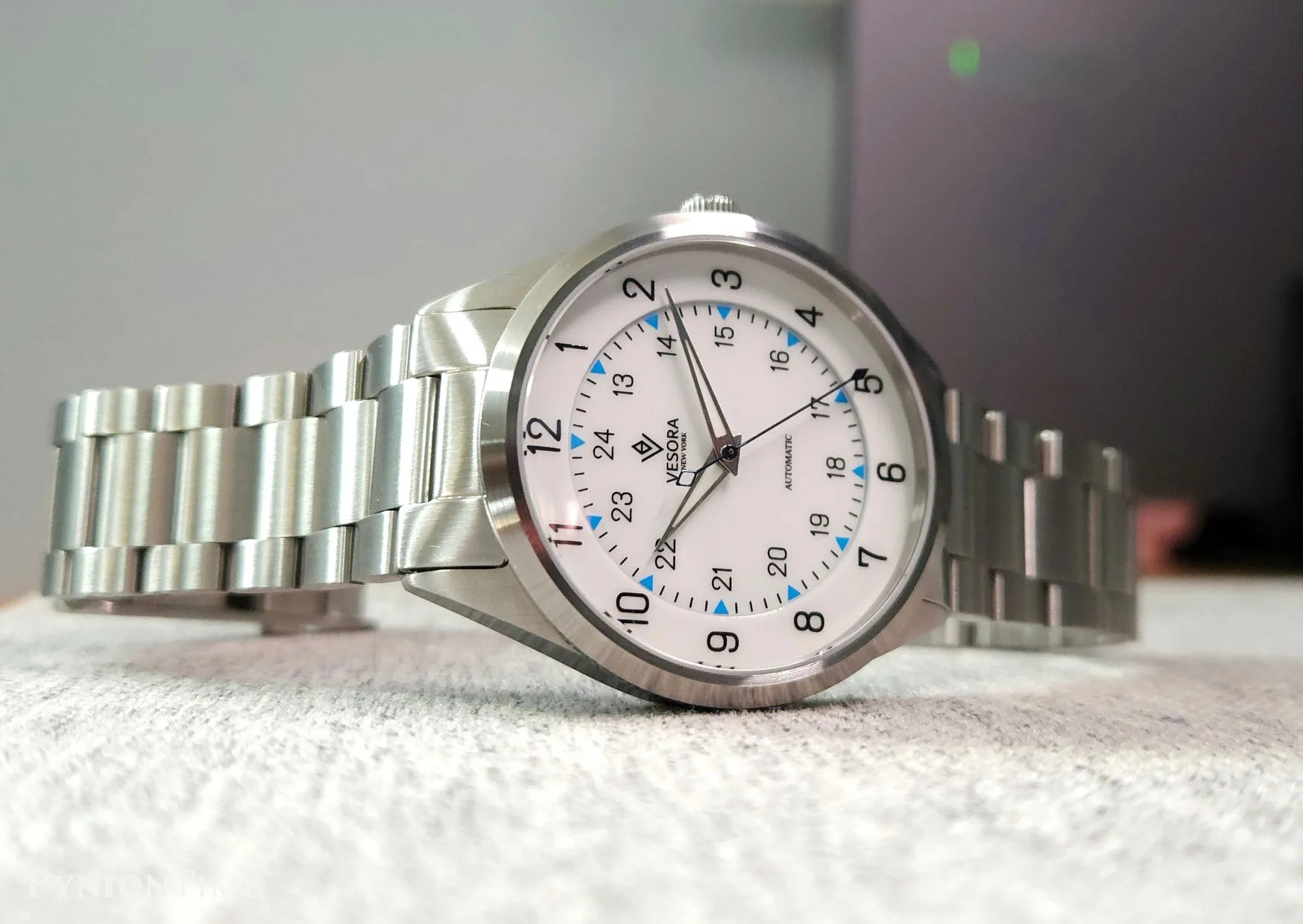
The double-domed sapphire behaves like a typical modern crystal. The anti-reflective coating does its job, and I never had a reflection that bothered me. And the “Automatic” text on my prototype’s dial did not bother me either. I like a bit of text on a dial, so the production “Gantry” will suit me just as well.
The White Dial Deserved More Lume
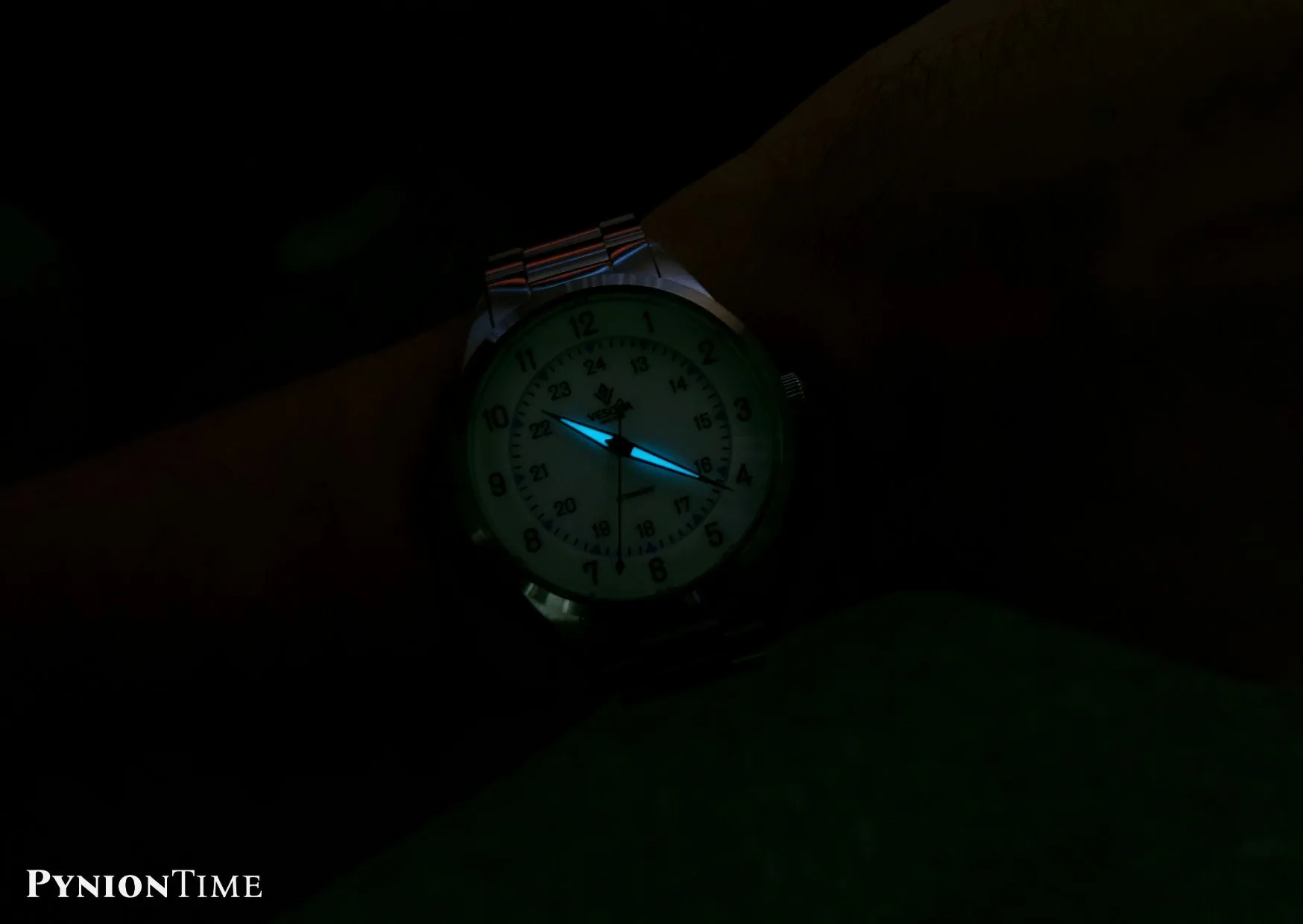
This is my biggest complaint. On the white version, the lume is only on the hour and minute hands. I honestly expected the blue triangles on the dial to glow too, and I missed them. On a field watch, being able to read the dial in the dark feels essential to me, not optional.
The lume that is there could also be stronger. For comparison, the Timex Expedition North I reviewed also had modest lume, but on a field watch that costs a fraction of this one I could accept it more easily. If lume matters to you, note that Vesora lists lume on both the hands and the hour markers for the other colors. Only the white dial gives them up.
The Miyota 9039 in my unit behaved very well. I did not notice any rotor noise, probably helped by the sealed case, and I did not see the seconds hand stutter that some owners complain about with this caliber. Over my time with it, it ran within about 5 seconds a day, which is better than I expected.
The production Gantry Field swaps that for a Sellita SW210-1b in Elaboré grade, decorated and visible through a sapphire caseback. It is a Swiss hand-wound movement beating at 28,800 vph, with hacking seconds, Incabloc shock protection and a power reserve of around 45 hours. Vesora quotes an average accuracy of plus or minus 7 seconds a day. I have not tested the Sellita, so those are the brand’s numbers, not mine. Vesora also told me it believes this is the least expensive SW210-1b watch on the market. I have not been able to verify that claim independently.
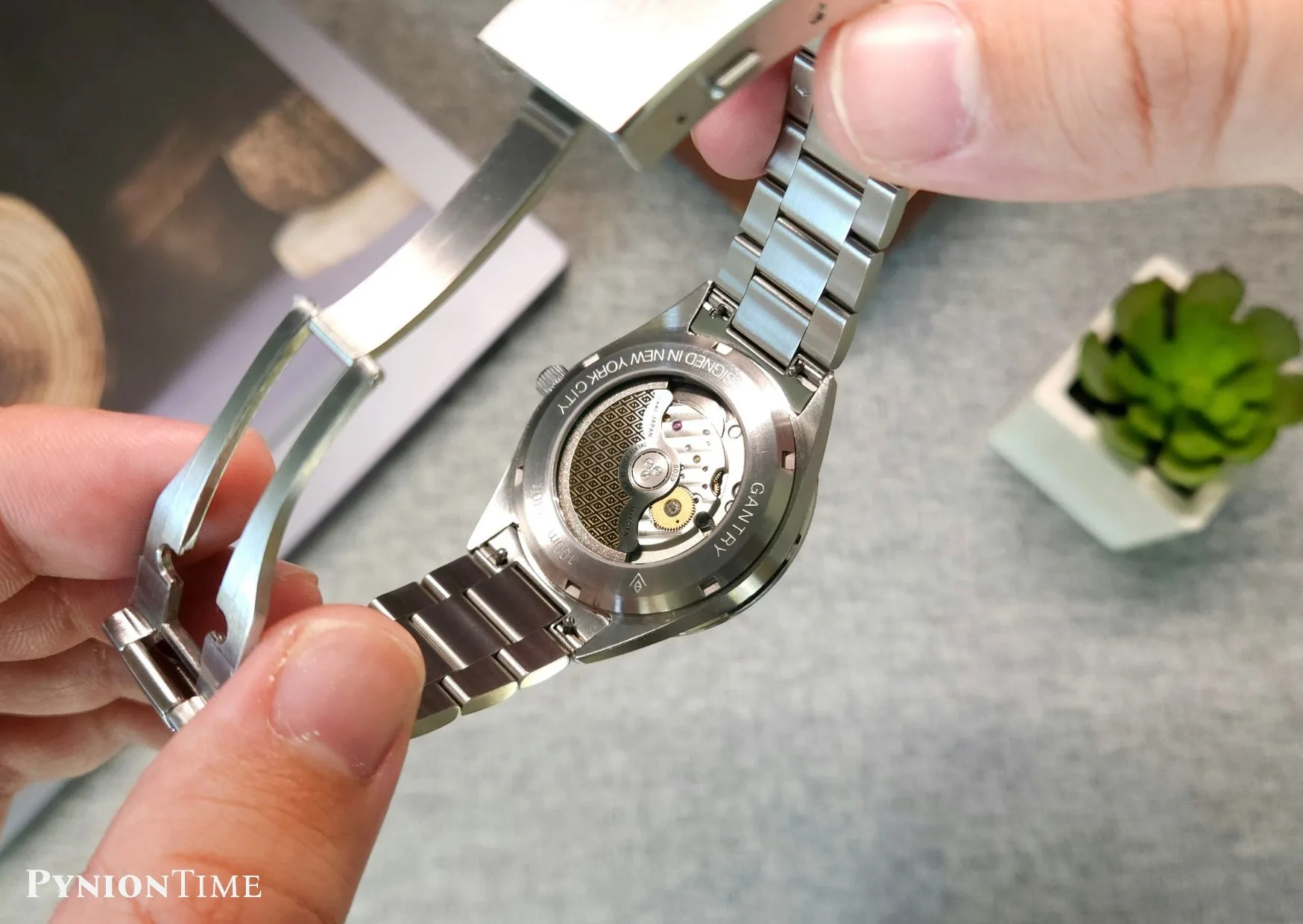
For context, the Miyota 9039 is the no-date version of the 9000 series, the higher-end automatic family from the Japanese maker, beating at 28,800 vph with a power reserve of around 42 hours. The SW210-1 is Sellita’s hand-wound equivalent of the ETA 2801-2, a slim and proven Swiss workhorse that has been inside far more expensive watches than this one. Both are good movements. They simply ask different things of you.
In practice, hand-winding is a short routine. Pull the crown, give it a few dozen turns until you feel the resistance build, and stop there, without forcing it. Then set the time, using the hacking seconds if you want to be precise, and push the crown back in. It takes less than a minute, and some people end up loving it.
The other thing I missed is a date. Neither my prototype nor the production watch has one, and on a watch built to be worn every day, it is the one complication I would have liked to see. I understand why Vesora left it out, since it keeps the dial clean and symmetrical, but a discreet date window would have made the Gantry an even more complete daily watch.
Here is my honest take. I am more of an automatic person, and the Gantry I lived with for two weeks was automatic. With 45 hours of reserve, the production watch will want a few turns of the crown every day or so, and that small crown is going to get used a lot. If you enjoy the ritual of winding, this is a plus. If you just want to grab the watch and go, think about it. What the Sellita does bring is a Swiss movement at this price, at a time when mechanical movement prices keep climbing, and a thinner case.
The Bracelet and Clasp Are Better Than They Need to Be
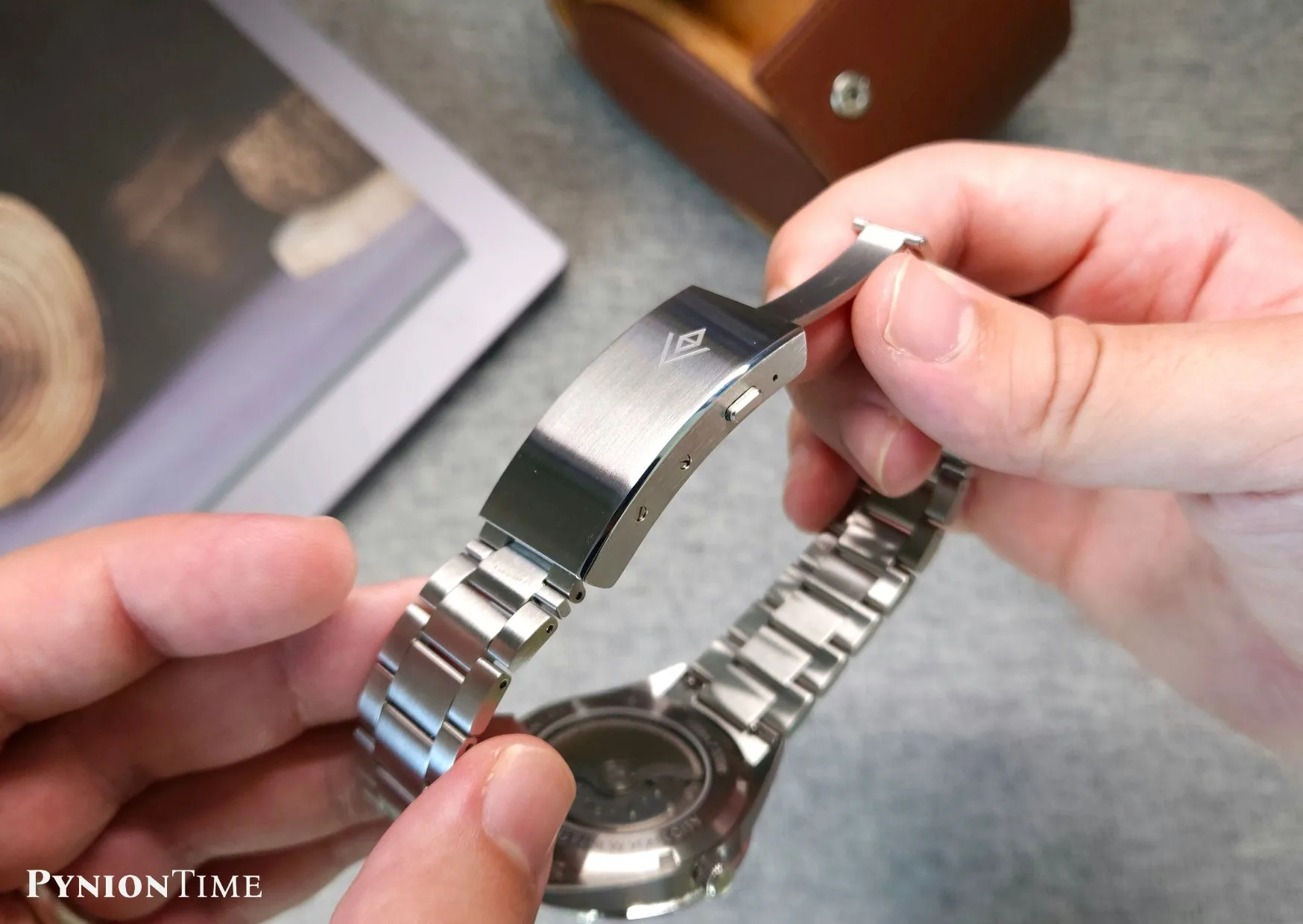
The bracelet is high quality. It never pulled a single hair and the links feel solid. It tapers from 20mm at the case to 18mm at the clasp. Personally, 20 to 16 is my idea of perfection, but that is subjective, and the wider taper gives the watch a bit more presence on the wrist. It still looks right.
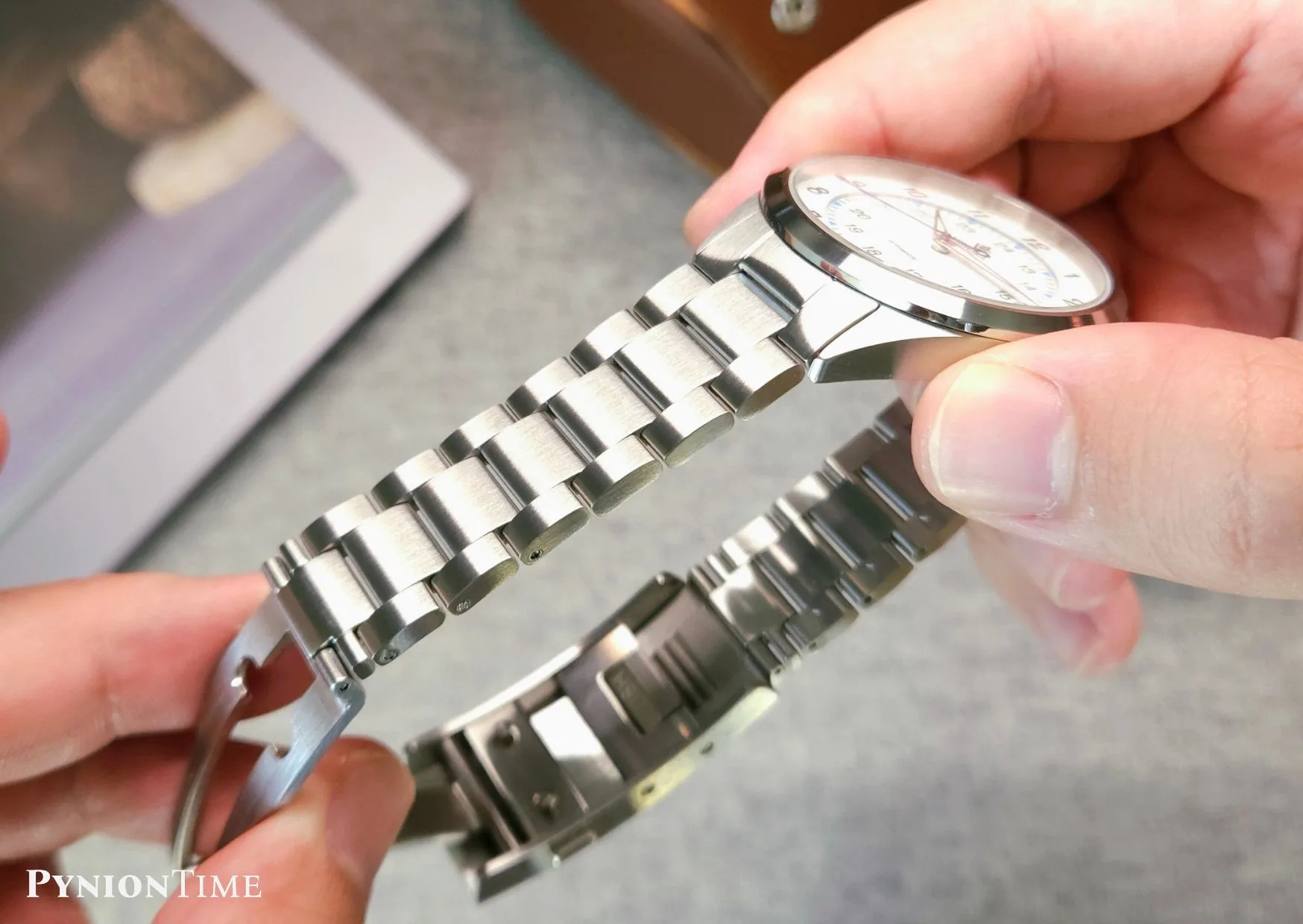
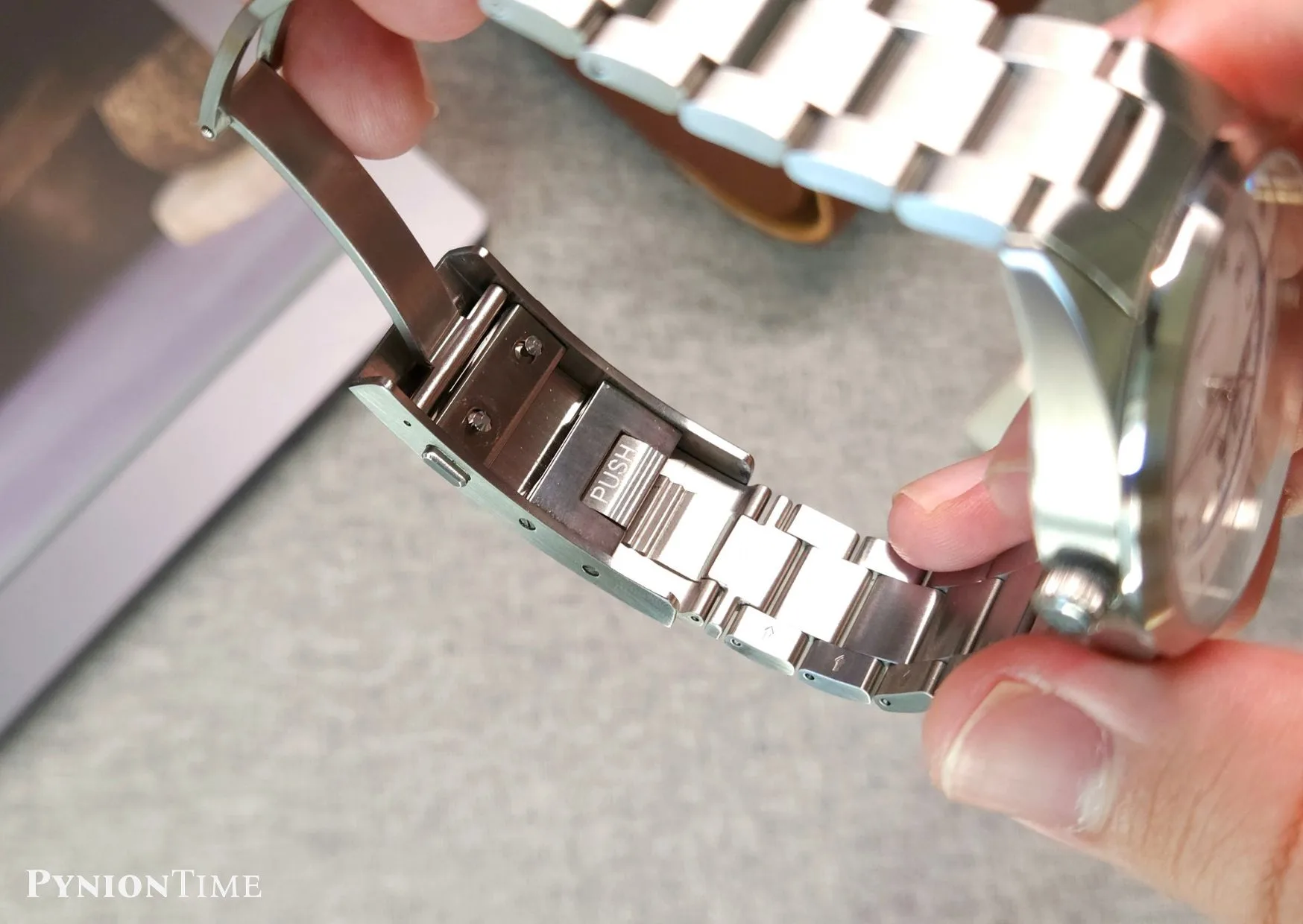
The folding clasp has on-the-fly micro-adjustment, and it works perfectly. I appreciate that a lot, because even at these prices, some brands still do not offer a clasp this good. Being able to loosen the bracelet a notch on a warm afternoon without taking the watch off is the kind of thing you use every single day.
The bracelet uses quick-release spring bars, so swapping straps takes seconds without tools. Production watches also come with a NATO strap, which did not ship with my prototype. I did not try it on other straps, but I like how easy the system makes it.
More Go-Anywhere Than Dress
Vesora describes the Gantry as a field dress watch. After two weeks, I would put it firmly on the field side. It slips under a cuff and the enamel gives it some polish, but the numerals, the sector and the 100m rating say tool watch, not formal wear. If anything, I would call it a GADA watch rather than a dress watch, and I mean that as a compliment. It is the kind of watch you can wear every day of the week without thinking about it.
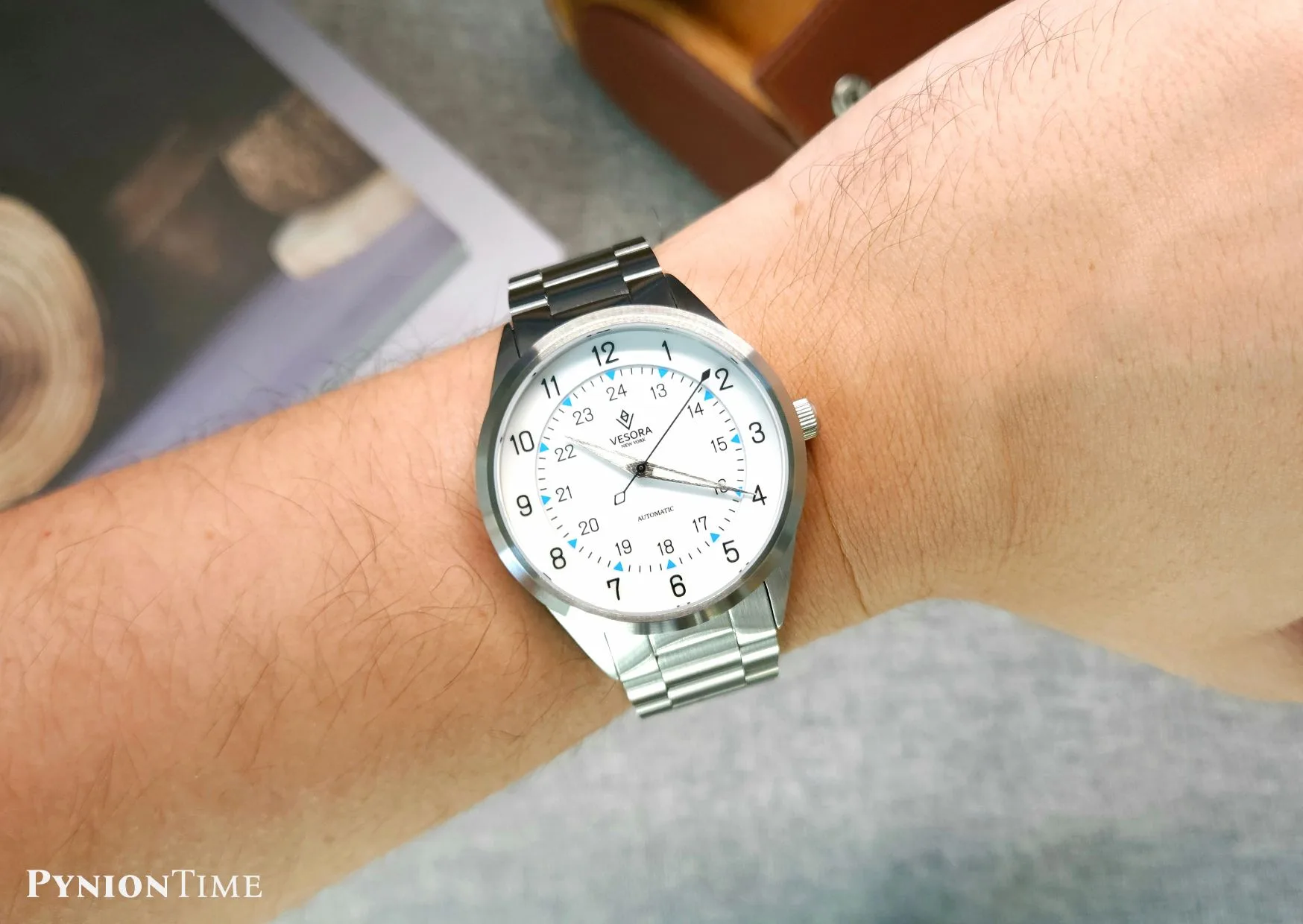
GADA is collector shorthand for go anywhere, do anything: the watch you can wear to the office, on a weekend outdoors and to dinner without feeling you should have changed it. That is a harder brief than it sounds, because a watch that is too dressy looks fragile outdoors and a watch that is too tough looks out of place at a nice table. The Gantry sits comfortably in the middle, with the enamel doing the polishing and the case, numerals and water resistance doing the rest.
How It Compares at Around $600
The obvious rival is the Hamilton Khaki Field Mechanical, which sells for around $675 at US retailers. It is also hand-wound, slimmer at 9.5mm in a 38mm case, and its H-50 caliber offers 80 hours of power reserve, a clear advantage over the Sellita’s 45. It also carries a name with real military history. But it is rated to 50m, and the version I looked at ships on a textile strap rather than a bracelet.
Then there is Kiwame Tokyo’s dress-field Mune. It runs the same Miyota 9039 my prototype had, in a slimmer 38mm by 9.5mm case, at $690 on a leather strap. It leans further toward dress than the Gantry does. Baltic’s HMS 003 comes in lower, but with a domed hesalite crystal, a Miyota 8315 automatic, 50m of water resistance and a 13mm case.
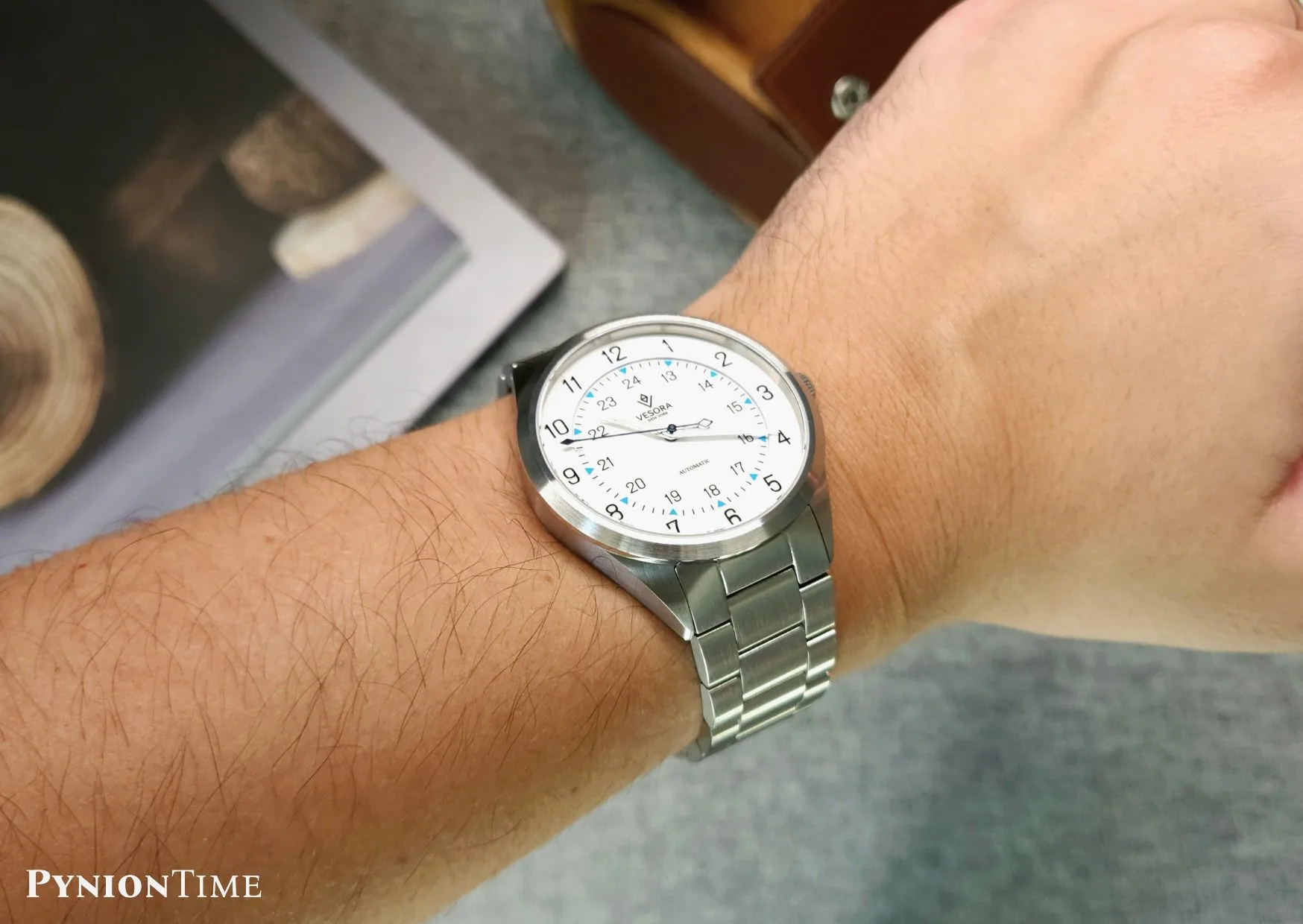
For quality against price, the Gantry beats all of them in my view. None of these rivals combines a Swiss movement, an enamel dial, double-domed sapphire, 100m of water resistance and a bracelet with micro-adjustment plus a NATO strap at $569. The Hamilton has the heritage and the longer reserve. The Gantry has more watch for less money.
That does not mean it is the right pick for everyone. If you rotate several watches and want one that is still running after a weekend off your wrist, the Hamilton’s 80 hours make a real difference. If you want something dressier and slimmer, the Mune leans that way. And if your budget is tighter and you like the warmth of a vintage-style domed hesalite crystal, the Baltic gets you into a well-made microbrand field watch for less. If you want one watch to cover everything, though, the Gantry is the one I would point you to.
Specs, Pricing & Availability
Case Diameter: 39.5mm
Case Thickness: 10.6mm (11.3mm on the prototype tested)
Lug-to-Lug: 46.5mm
Case Material: 316L stainless steel
Water Resistance: 100m
Caliber: Sellita SW210-1b Elaboré, hand-wound (prototype tested: Miyota 9039 automatic)
Crystal: Double-domed sapphire with anti-reflective coating
Function: Hours, minutes, central seconds
Bracelet: Brushed 316L steel, 20mm to 18mm taper, folding clasp with on-the-fly micro-adjustment, quick-release spring bars, plus NATO strap
Price: $569
Verdict
The Gantry Field does the hardest thing a field watch can do: it looks new without breaking what makes the format work. The enamel dial, the proportions and the bracelet all feel a class above $569. The lume on the white dial and the small crown are the only parts that hold it back.
- Double-layer enamel dial with a recessed sector that stands out from other field watches
- 39.5mm case and 46.5mm lug-to-lug that sit perfectly on a smaller wrist
- Excellent legibility and a spotless dial
- High-quality tapered bracelet that never pulls hair
-
Folding clasp with on-the-fly micro-adjustment
- Lume only on the hands on the white dial, and it could be stronger
- Small crown that is not comfortable to grip
- Coarse brushing on the hands can catch extra reflections
- Hand-wound only, so it needs winding every day or so
- No date option
Who Should Buy It, and Who Should Skip It
Buy it if you want one field watch you can wear every day, on most wrists, with a dial that does not look like everyone else’s. It makes particular sense if you have a smaller or medium wrist, if you care about spec and build quality more than a famous name, and if you like the idea of a Swiss hand-wound movement.
Skip it if you need strong lume to read the time at night, especially on the white dial. The same goes if you want an automatic you can simply put on and forget, if you have big fingers or wear gloves and need a crown that is easy to grip, or if you are looking for a true dress watch.
And if you love the design but lume is a deal breaker, look at the black or red versions before you write it off, since those get lume on the hour markers as well.
Worth It at $569?
Yes. For the money, this is about as optimized as a mechanical field watch gets right now. You get an enamel dial that gives the watch real character, excellent proportions, a bracelet and clasp that would not look out of place on a watch costing twice as much, and a Swiss movement inside. The compromises, the lume on the white dial and the small crown, are real but easy to live with. The hand-wound movement is the part I would ask yourself about, because it changes how you live with the watch more than any spec does.
One caveat on my verdict. I tested a prototype, so my impressions of the case, dial, crystal and bracelet carry over, but the production movement and final finishing are things I have not handled. That said, every change Vesora has announced points in the right direction: a thinner case, a Swiss movement and the brand name on the dial instead of a generic word.
Check out The Ultimate Affordable Watches Guide