
(This article features affiliate links, for more information, click here.)
AVI-8 has built most of its catalogue around the Second World War. Spitfires, Hurricanes and Mustangs are the brand’s comfort zone, lately dressed up with Snoopy collaborations and museum partnerships, and even when it plays with the formula, as it did with the memento mori Mr Skelly chronograph, the aircraft behind the watch usually has a propeller.
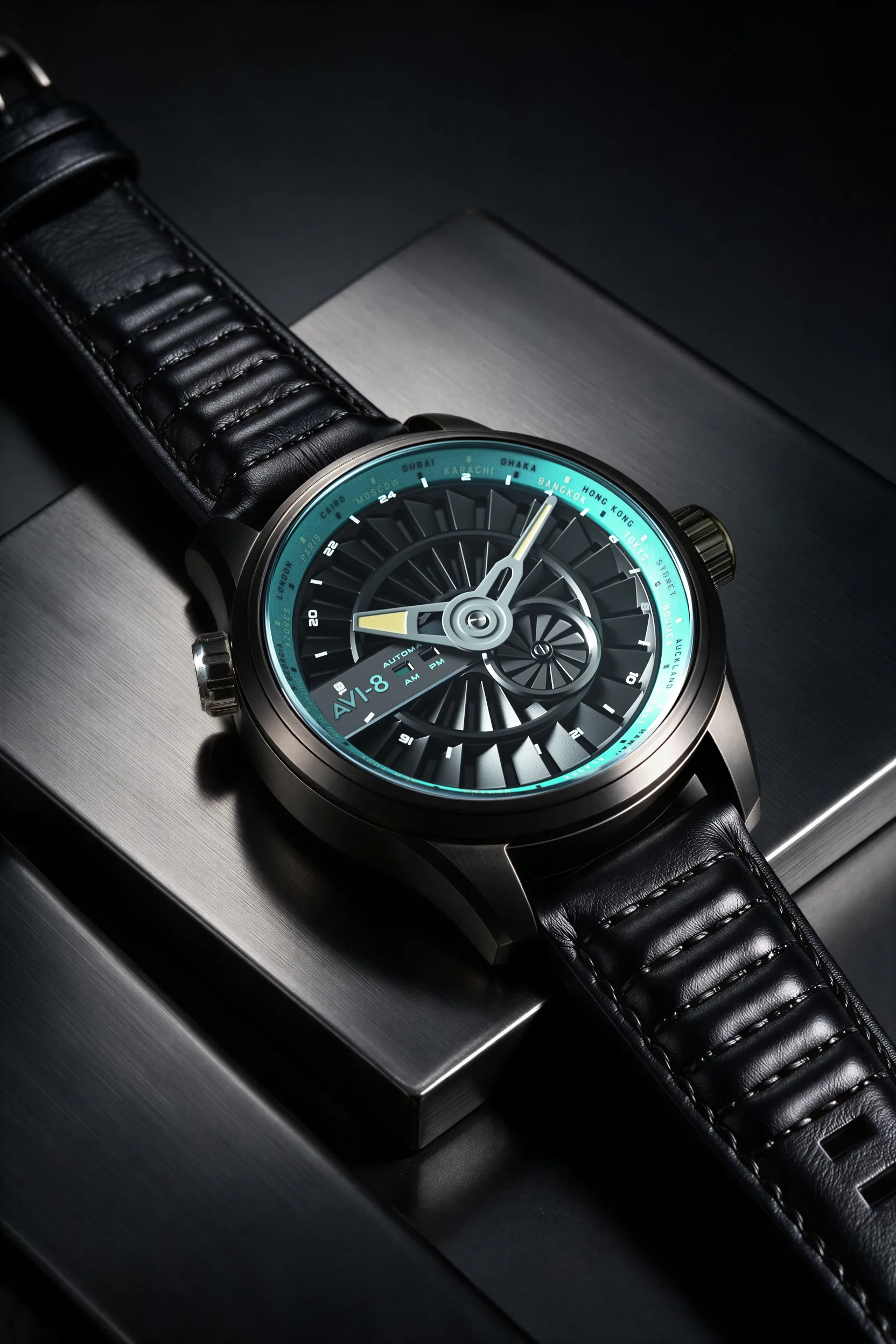
The new Hawker Harrier Pegasus Automatic 60th Anniversary Limited Edition moves the brand into the jet age. It marks sixty years since the first Harrier flew, and it does it with a 44mm gunmetal case, a spinning turbine for small seconds and a run of 500 numbered pieces at $425. It is a story watch, aimed at aviation enthusiasts with a larger wrist who care more about the history than the dive rating.
The Harrier Earned This Anniversary
The Harrier was the first jet fighter that did not need a runway in any meaningful sense. Its predecessor, the Hawker P.1127, hovered for the first time in 1960, and on 31 August 1966 the first pre-production Harrier took off from Dunsfold Aerodrome in Surrey, the airfield where Hawker Siddeley assembled and tested it. AVI-8 borrows that airfield’s name for this variant, Dunsfold.
The trick was the Pegasus engine. Instead of separate lift and cruise engines, the Bristol Siddeley turbofan (later a Rolls-Royce product) fed four rotating nozzles that could point thrust straight down for take-off and hover, then swing back for forward flight. The aircraft entered RAF service in 1969 as the world’s first operational V/STOL jet fighter, and that same year a Harrier flew from a disused coal yard near St Pancras to Manhattan during the Daily Mail Transatlantic Air Race.
Its reputation was made in service. Sea Harriers flew from Royal Navy carriers in the 1982 Falklands War, and the US Marine Corps adopted the jet as the AV-8A in the 1970s, then the redesigned AV-8B Harrier II. The RAF retired its Harriers in 2010, and the Marines have been scheduled to retire their last ones by the end of 2026. So this anniversary lands in what should be the type’s final year of front-line service, which gives the watch more weight than a round number usually does.
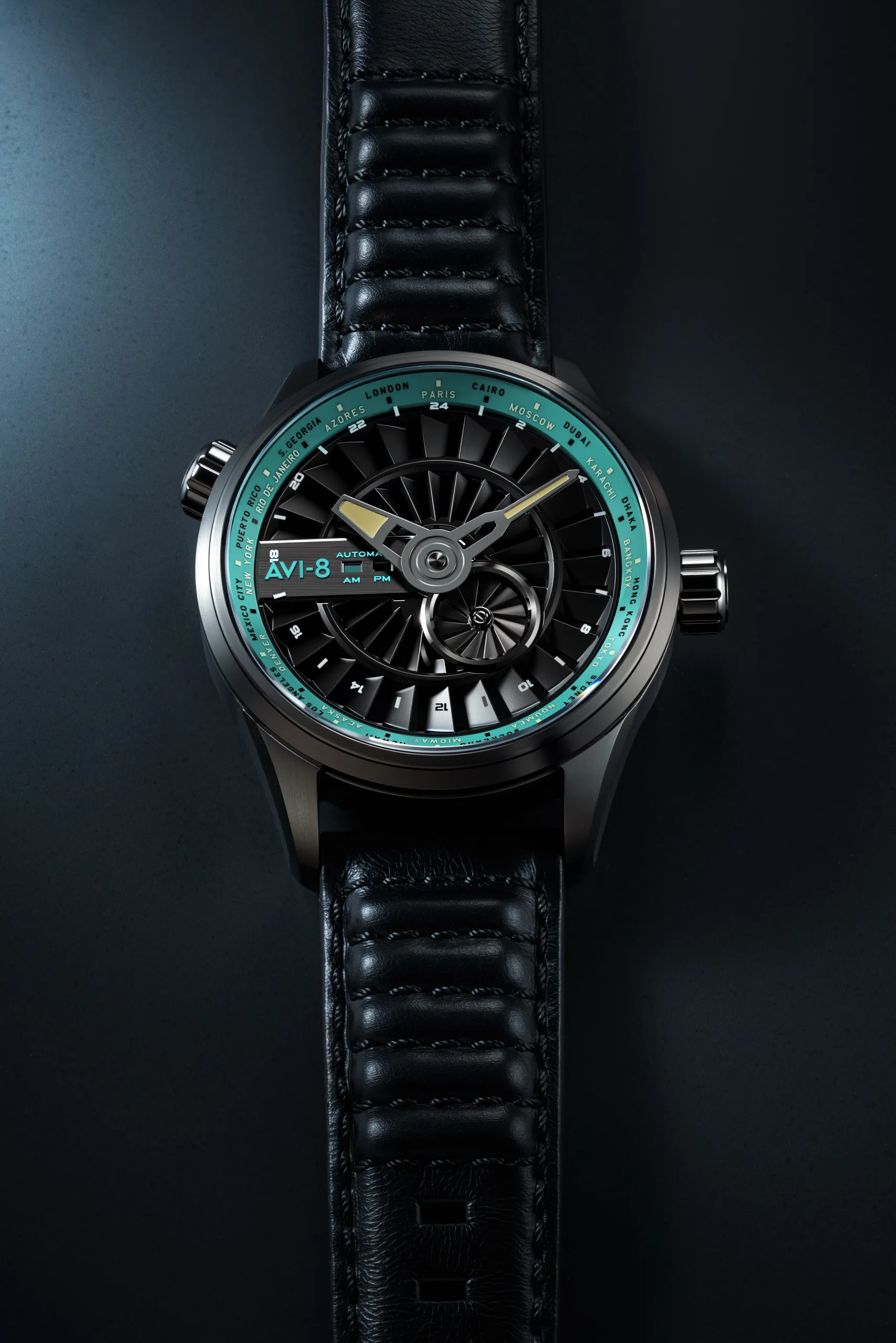
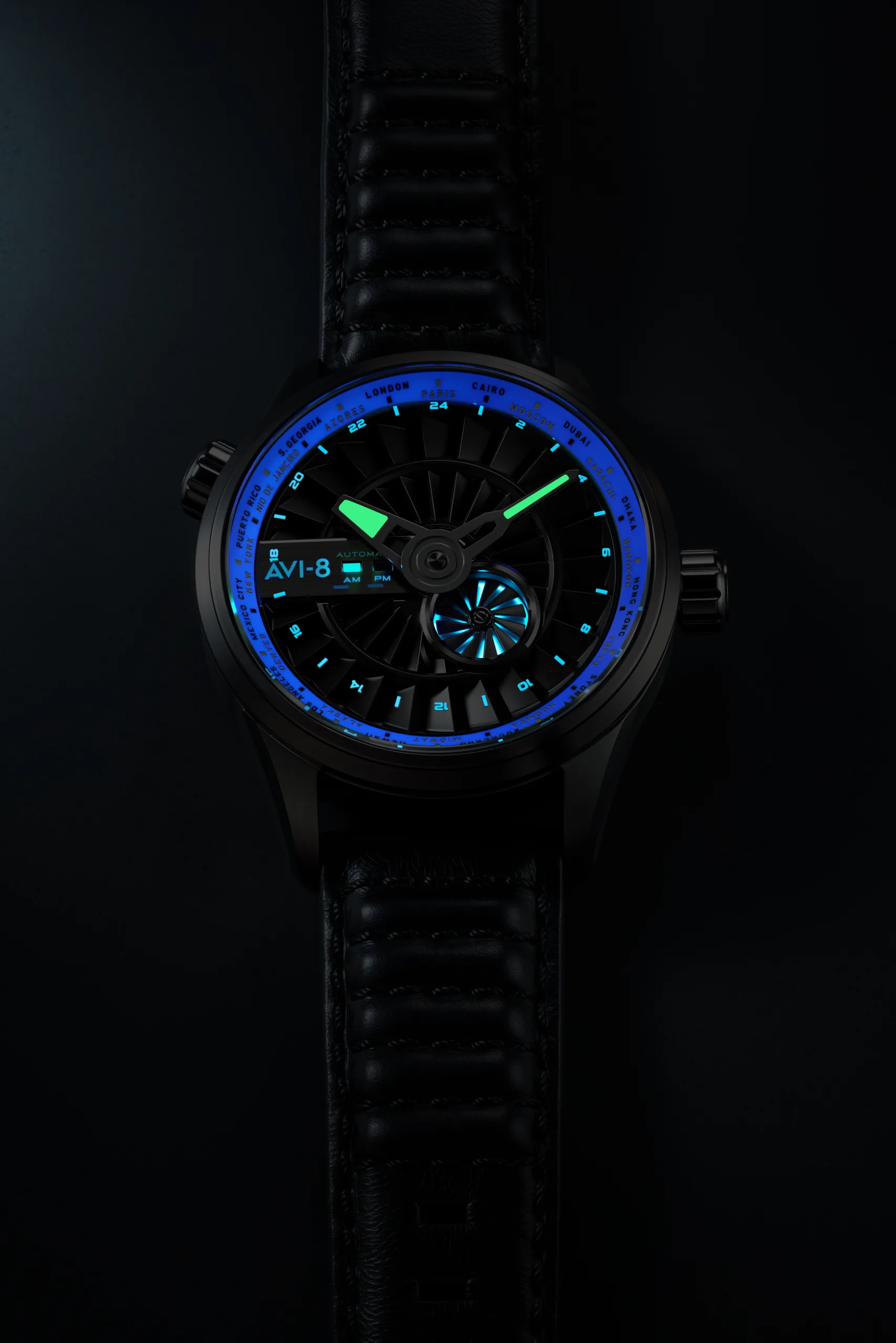
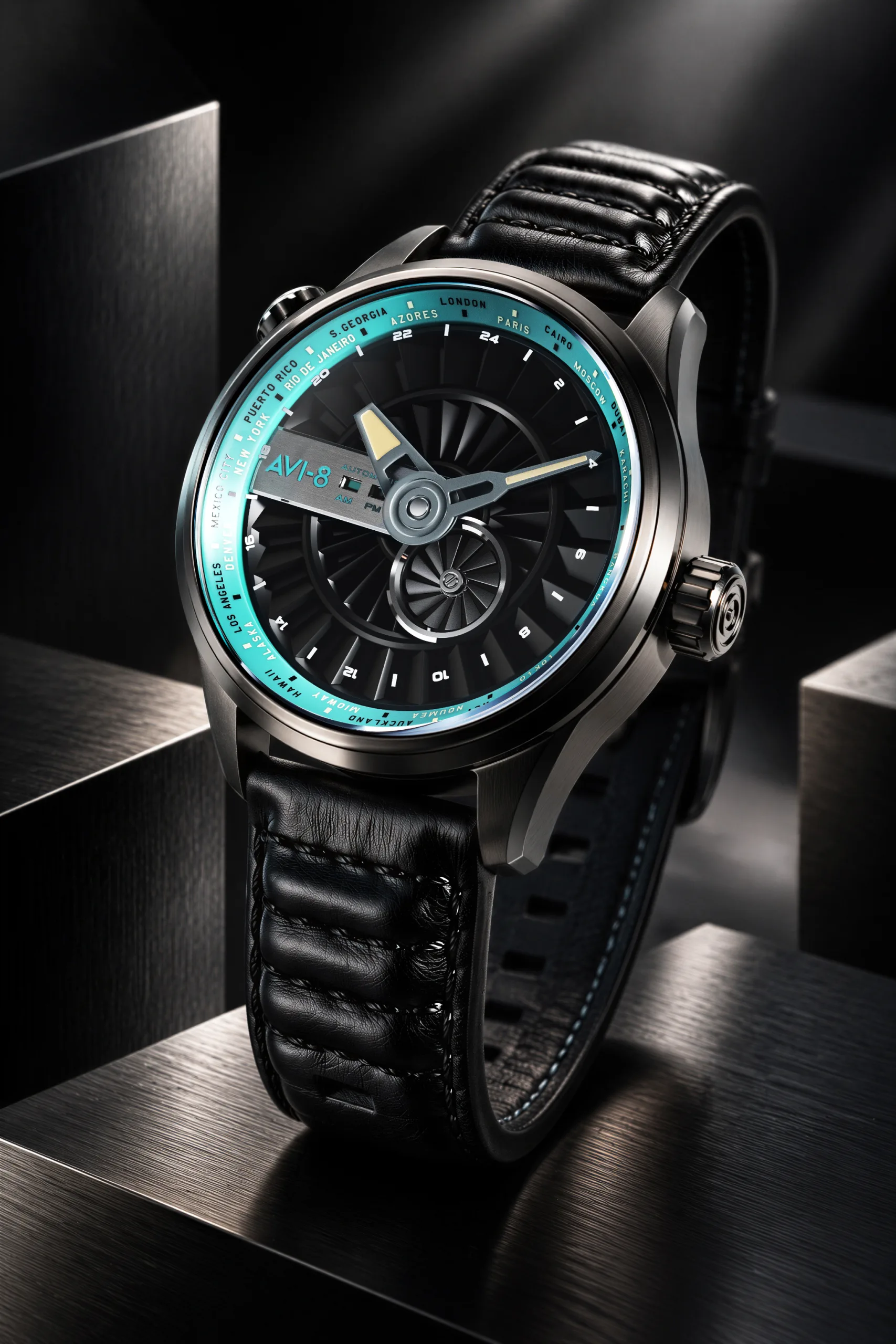
AVI-8 could have printed a Harrier silhouette on the dial and called it done. Instead it turned the engine into the small seconds: a turbine at the heart of the matte black brass dial that rotates as the watch runs. It is the smartest idea in the release, because it ties the movement’s motion to the aircraft’s defining part rather than relying on a logo.
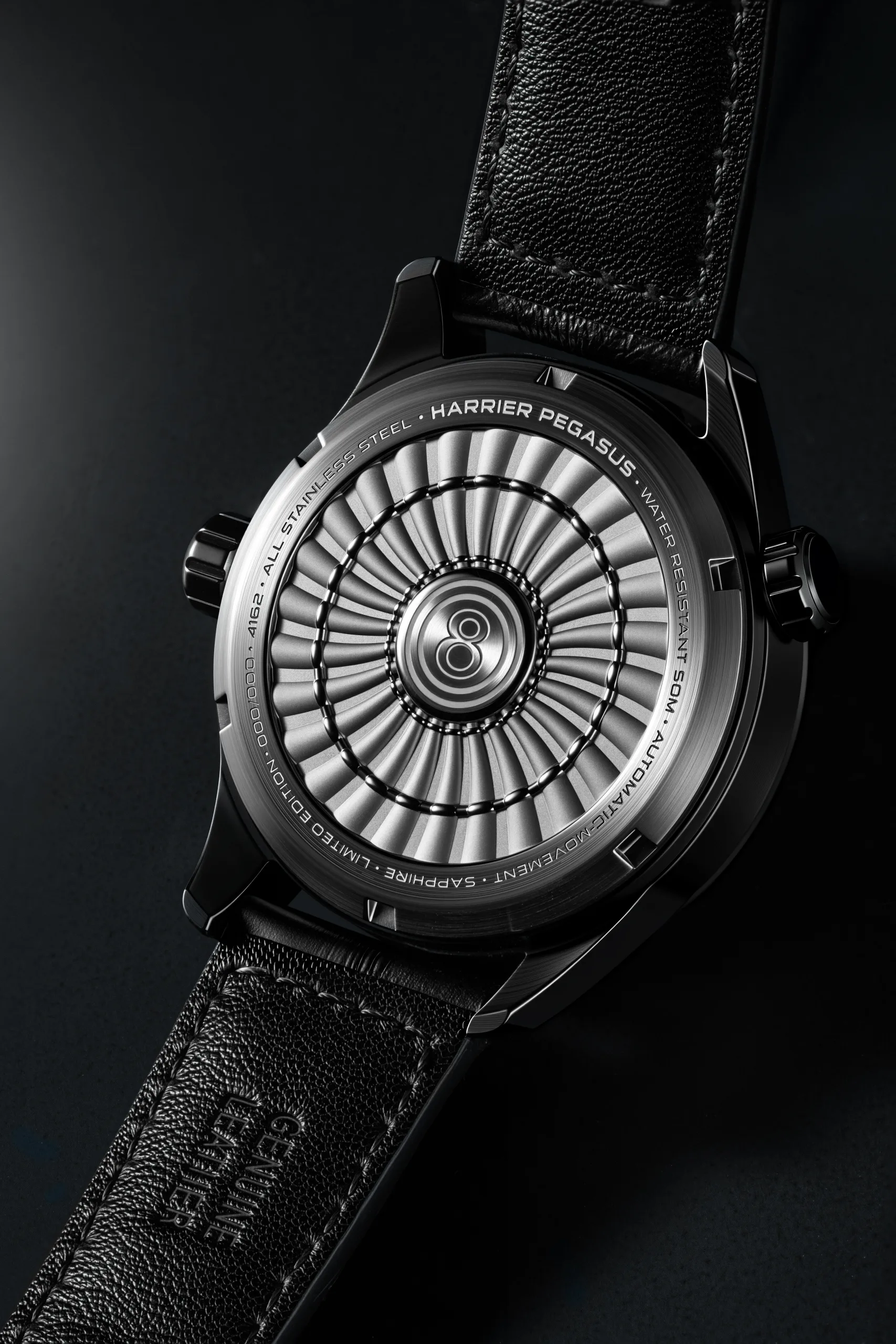
The rest of the dial stays disciplined. Printed grey indexes with Swiss-origin lume and a 24-hour indicator keep it in military-instrument territory, a display AVI-8 has used before, most practically on the McKellar Dual Time travel piece. The screw caseback carries an engraved Pegasus turbine, and there is a small laser-etched detail on the underside of the sapphire crystal. Those touches are subtle, which suits a gunmetal case better than more colour would.
A Big Case With Modest Tool Credentials
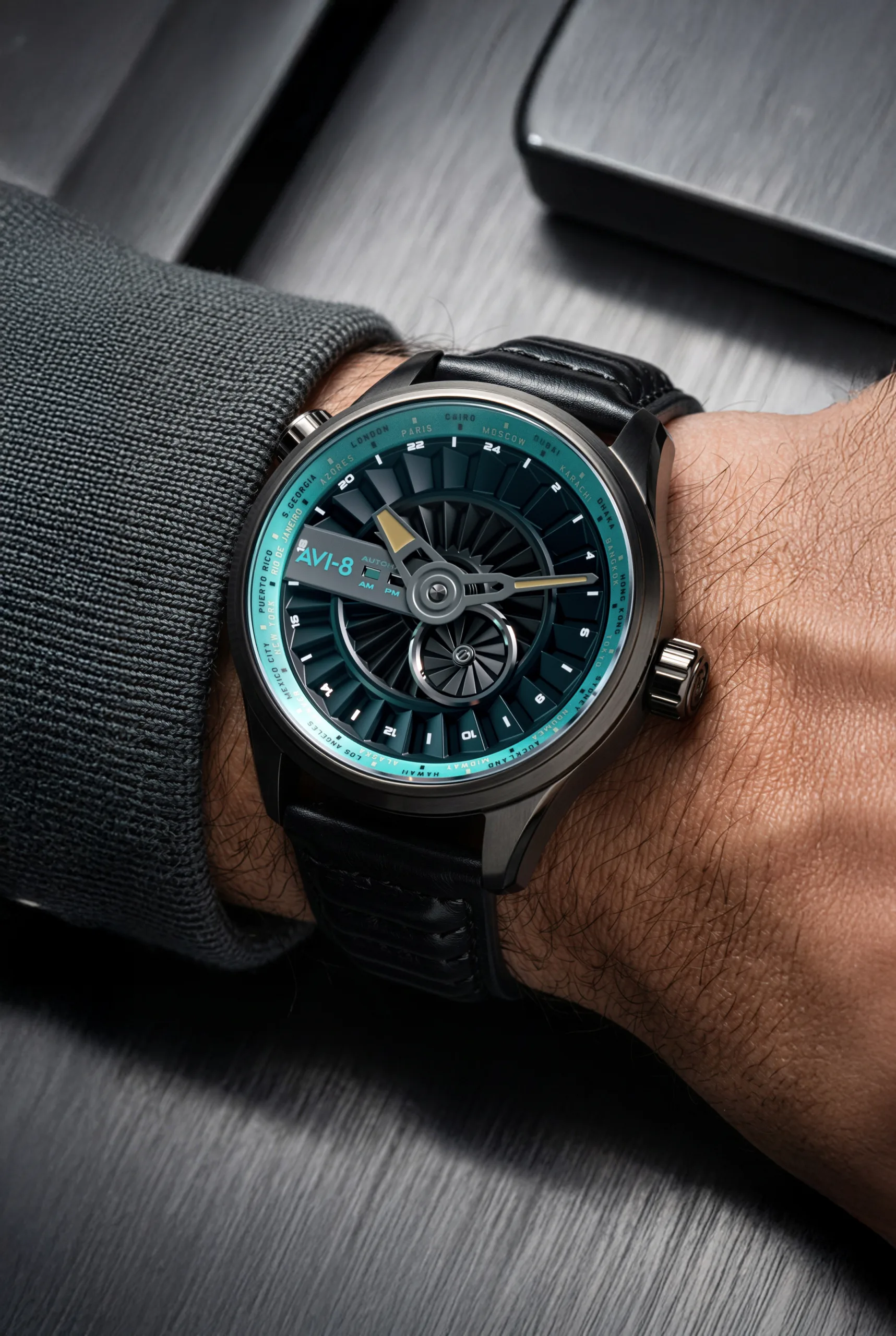
Here is where buyers should slow down. The case measures 44mm across, 15.9mm thick and 52mm lug to lug. That is a lot of watch, and the lug-to-lug figure matters more than the diameter: on a wrist under roughly seven inches it will overhang. If you are unsure, what actually makes an affordable watch worth buying starts with fit, not features.
The spec sheet also points away from tool use. Water resistance is 5 ATM, the crown simply pulls out rather than screwing down, and the watch ships on a 22mm black leather strap with a solid buckle. The anti-reflective sapphire is a genuine plus at this price, but this is a desk and weekend watch, not one to swim in.
Inside is the Miyota 8247. It is built on the 8215, Miyota’s long-running workhorse, and adds the two functions this dial needs: small seconds and a 24-hour hand alongside central hours and minutes. Specs are familiar for the family, with 21 jewels, a 21,600 bph beat, roughly 40 hours of power reserve and hand-winding through the crown.
That is a sensible choice rather than an exciting one. Proven Japanese automatics are the reason limited editions like this can still sit under $500 while affordable mechanical movements keep getting pricier. And AVI-8’s execution with Japanese automatics has held up: the CVRT we reviewed last year remains one of the better sub-€400 automatics we have covered.
Specs, Pricing & Availability
Case Diameter: 44mm
Case Thickness: 15.9mm
Case Material: Stainless steel, gunmetal finish
Water Resistance: 5 ATM
Caliber: M-MIY-8247 (Japanese automatic)
Crystal: Anti-reflective coated sapphire
Function: Hours, minutes, small seconds (turbine), 24-hour indicator
Price: $425
Buy It for the Story
I like this release more than most of AVI-8’s recent limited editions. The Harrier is a genuinely important aircraft, the anniversary is real rather than manufactured, and the turbine subdial is a design idea with a reason behind it. At $425 with sapphire and a 500-piece cap, it is a fair price for a numbered tribute.
I’d recommend it if you have a bigger wrist, a soft spot for Cold War aviation and no need to get it wet. Skip it if you want a daily tool watch or wear anything under 44mm comfortably, because nothing about this case is compact. The more interesting signal is for AVI-8 itself: after years of Spitfires and Snoopy, the jet age gives the brand fresh material, and I would like to see it in a smaller case next time.
The watch launches on 16 October 2026.
Check out The Ultimate Affordable Watches Guide