
Edifice has spent most of its 26 years being the part of Casio that shouts. The line built its name on large metal chronographs, motorsport styling and, for several seasons, a Formula 1 partnership with Scuderia AlphaTauri. When Casio wanted a quiet, affordable three-hander, it usually sold it under the MTP name instead, as it did late last year with the understated MTP-B195 collection.
The EFB-109 was the first real crack in that split: a sapphire-crystal Edifice three-hander at 38.5mm that sells for €139 on Casio’s Spanish store and $145 on Casio’s US store. The new Casio Edifice EFR-109 pushes the idea further down the price ladder. Four models, all at €119 (about $136), share a 38mm steel case, a gently domed mineral crystal, 10 bar water resistance and a quartz movement with date. They are aimed at buyers who want a watch that slides under a shirt cuff without paying microbrand money.
That makes the obvious rival not a Seiko or a Tissot, but Casio’s own EFB-109. Twenty euros (about $23) separate them in Europe, and against the EFB’s $145 US price the converted gap shrinks to under $10, and in the crowded under-$300 bracket a gap that small is exactly where buying decisions get made. The EFR-109 has to justify itself against a sibling with the same sports-car brief and almost the same footprint.
Four Dials, One Case, and a Leather Outlier
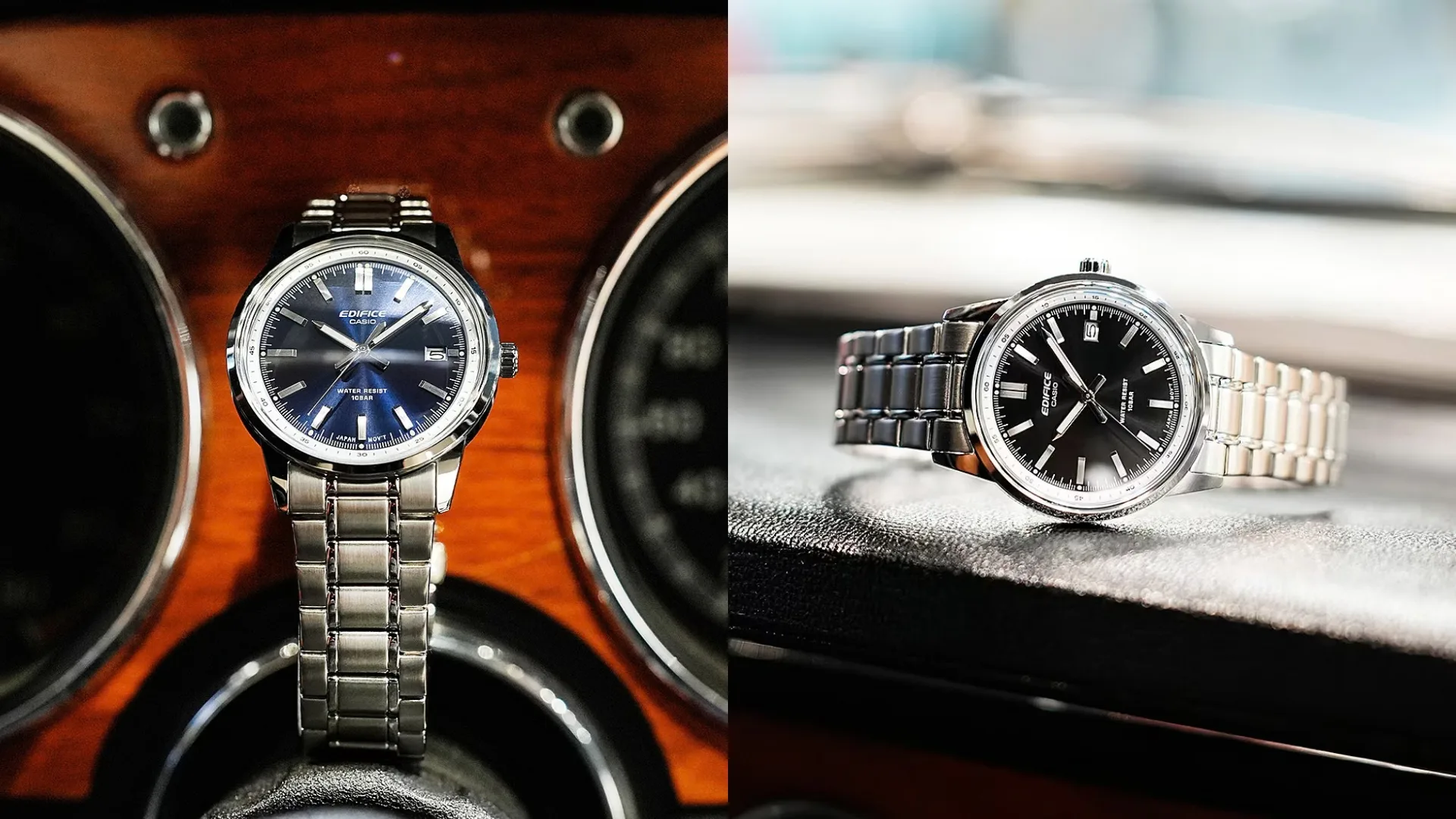
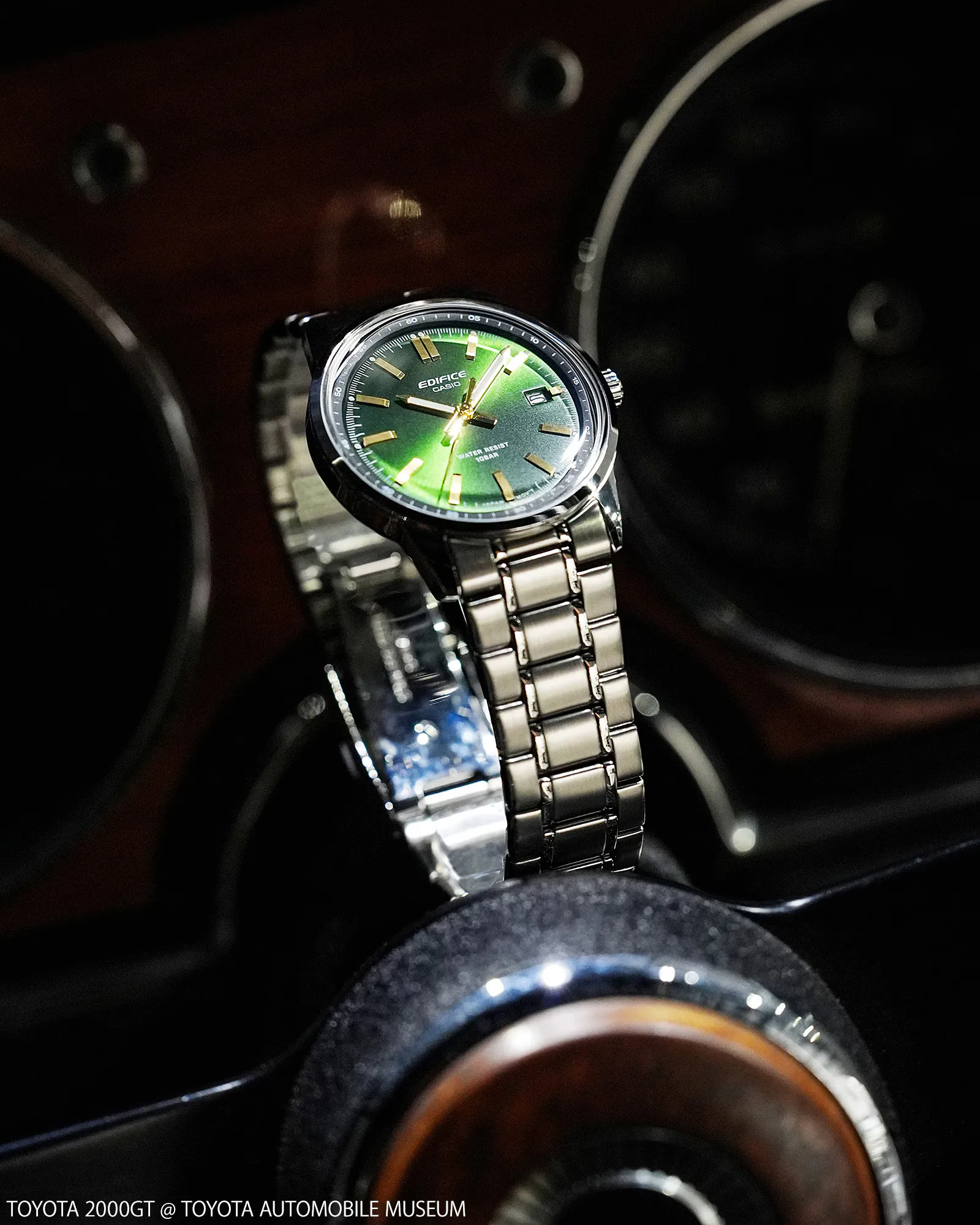
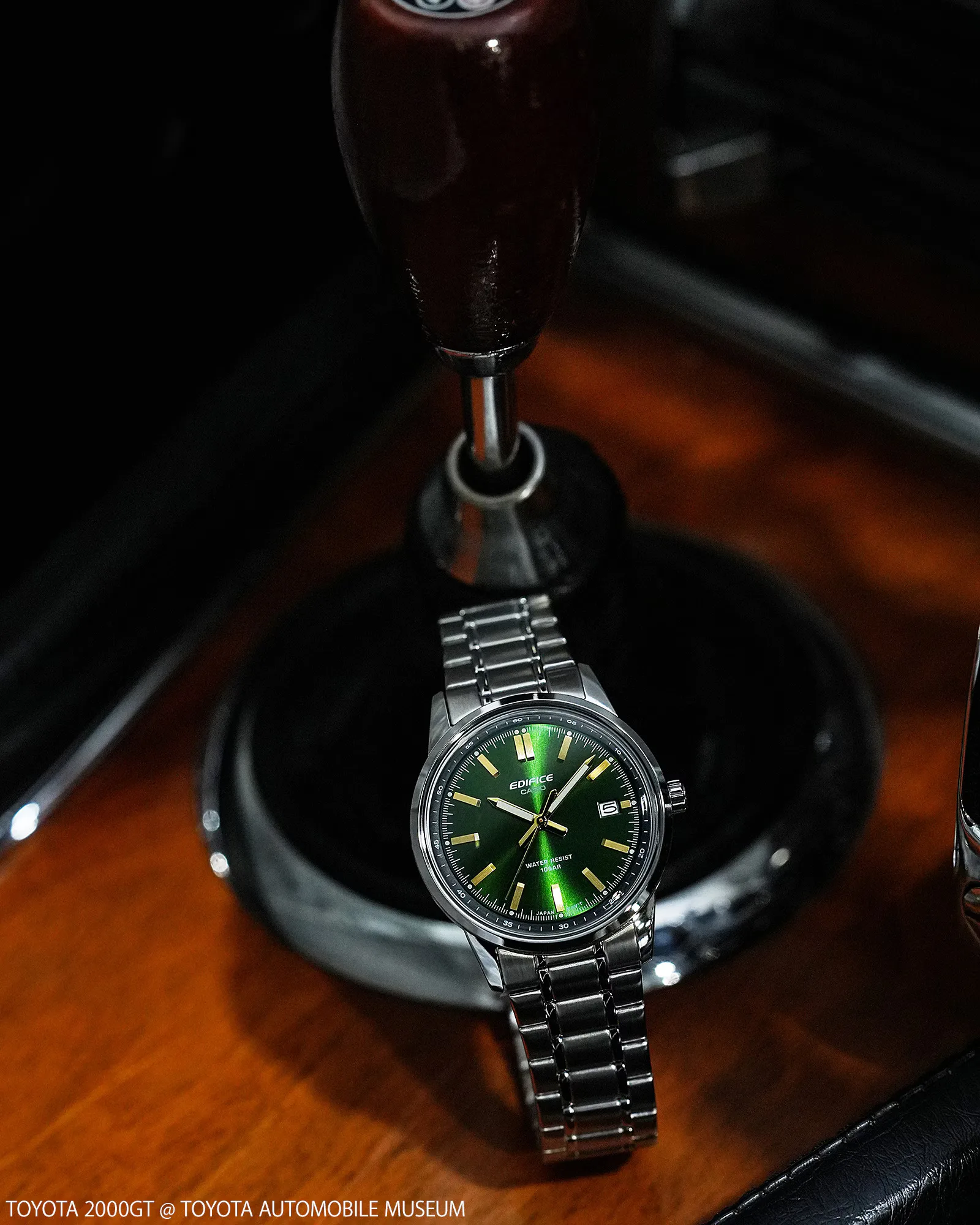
The three bracelet versions are the EFR-109D-1A with a black dial, the EFR-109D-2A in navy and the EFR-109D-3A, which pairs a dark green dial with gold-toned hands and markers. All of them use applied baton markers, a date at 3 o’clock and a thin printed chapter ring, numbered in fives on the black version. The bracelet closes with a one-touch three-fold clasp and fits wrists from 150 to 205mm.
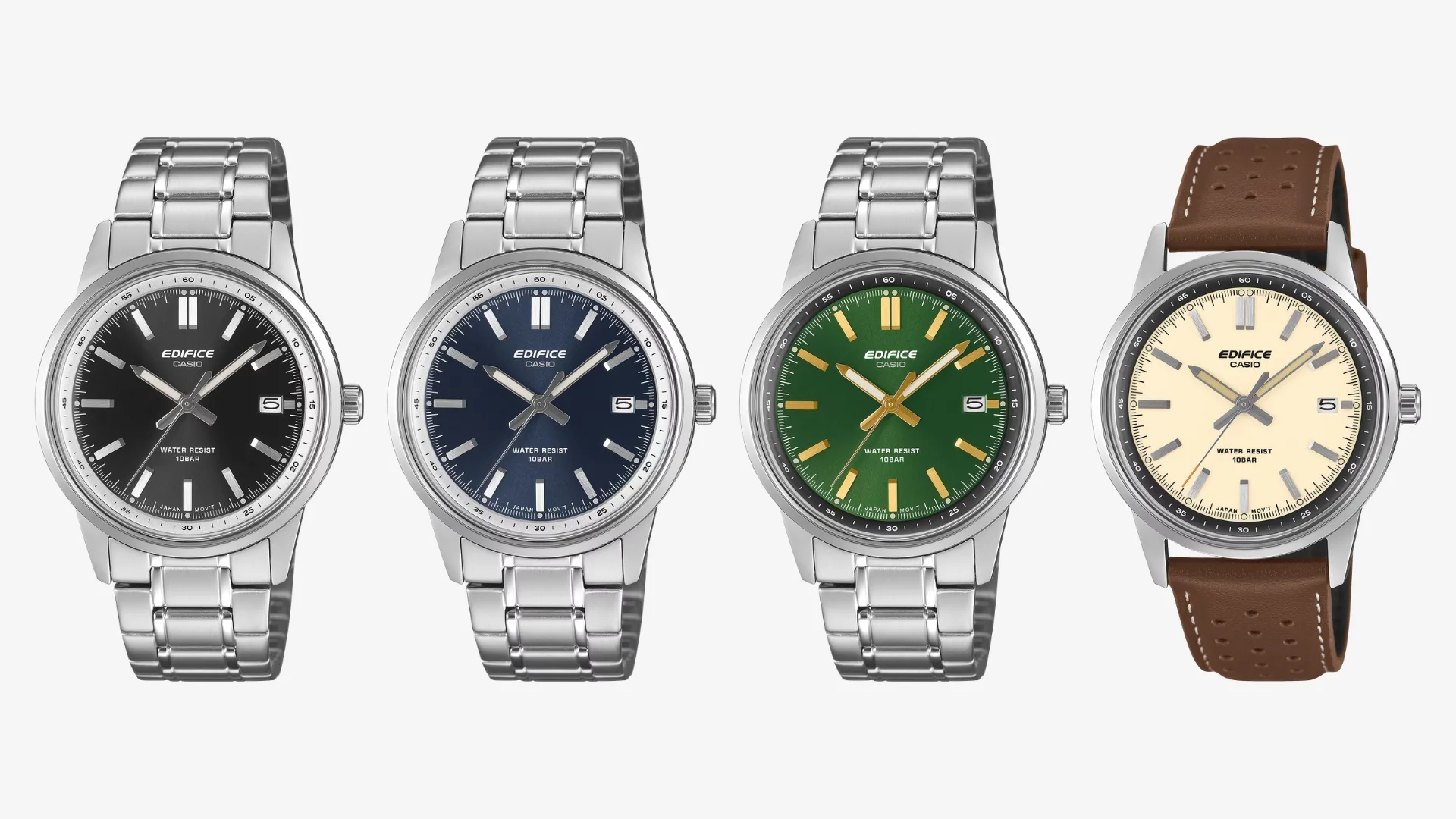
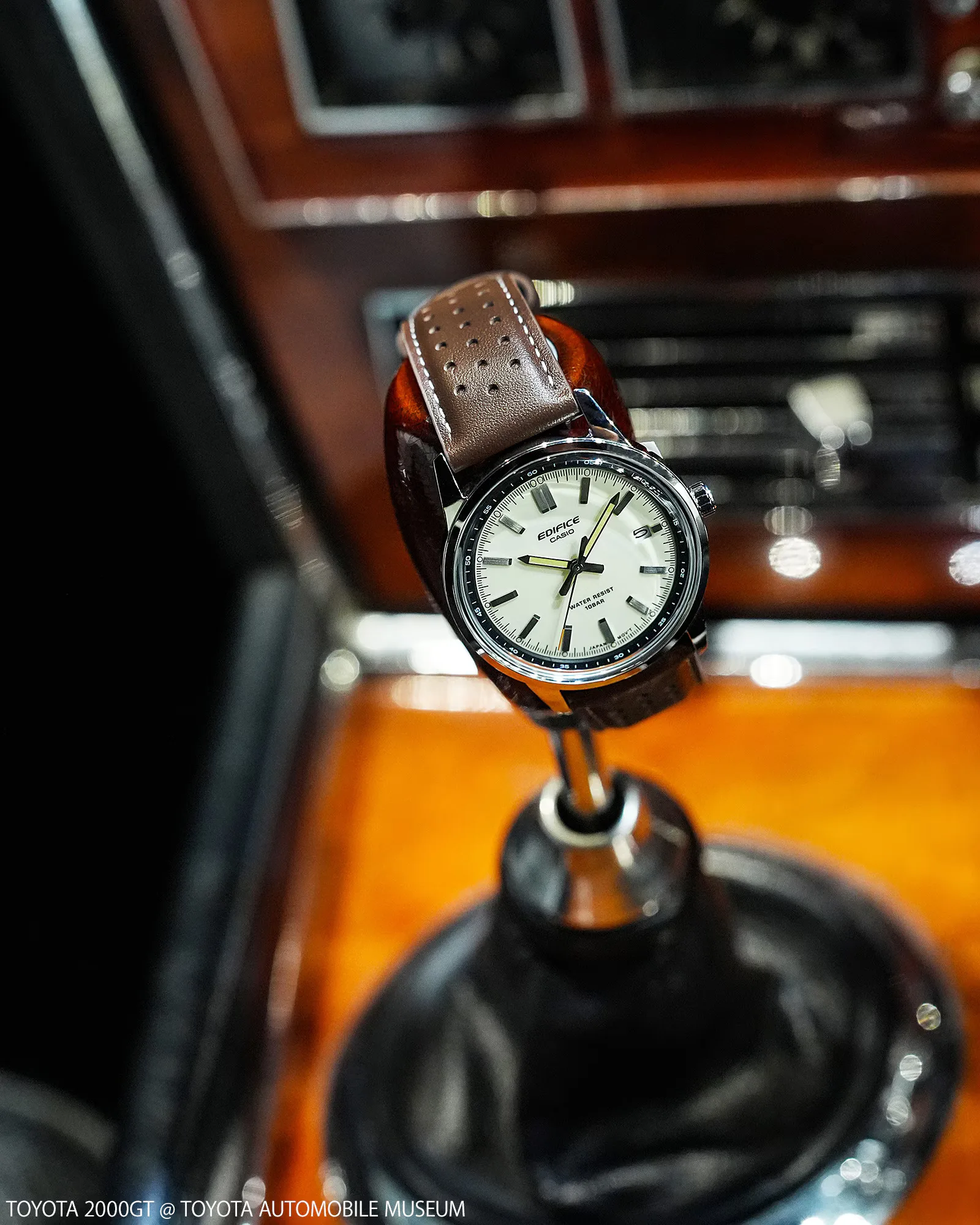
The fourth model changes the character of the line. The EFR-109L-7A puts a cream dial on a perforated brown leather strap, weighs 44g against 97g for the bracelet versions, and covers wrists from 145 to 215mm. It is the one Casio pushes hardest in its imagery, which was shot around a Toyota 2000GT from the Toyota Automobile Museum. That car has aged better than almost anything from 1960s Japan, and the cream-and-brown watch is the only EFR-109 that looks like it belongs in its cabin.
The dimensions tell a less flattering story. The case measures 38mm across, but 45.3mm lug to lug and 9.8mm thick. On a spec sheet that reads compact; on the wrist, lug span decides fit, and 45.3mm is closer to what plenty of 40mm watches measure. It still belongs to the broader push toward smaller cases we have seen across the affordable market this year, just less convincingly than the diameter suggests.
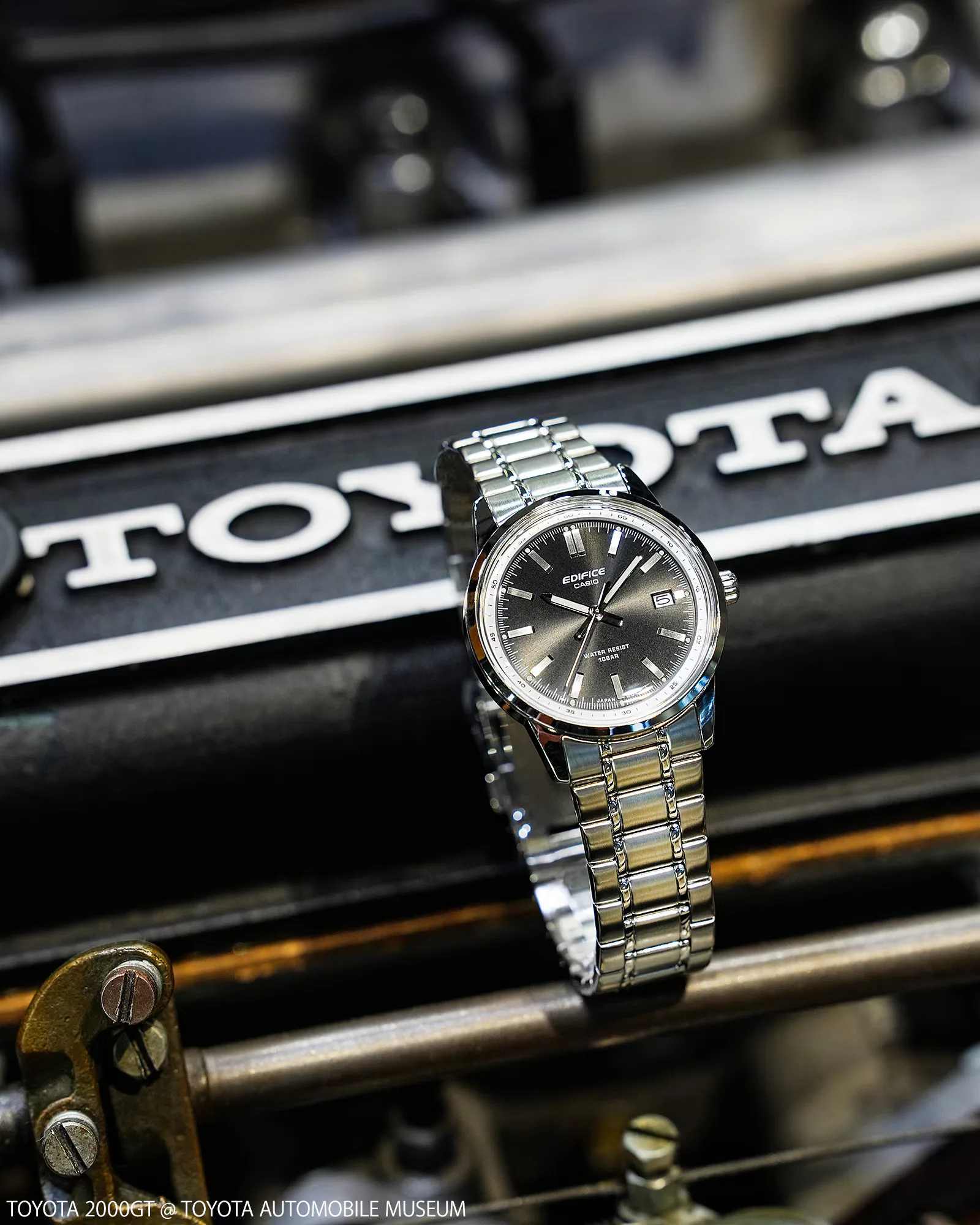
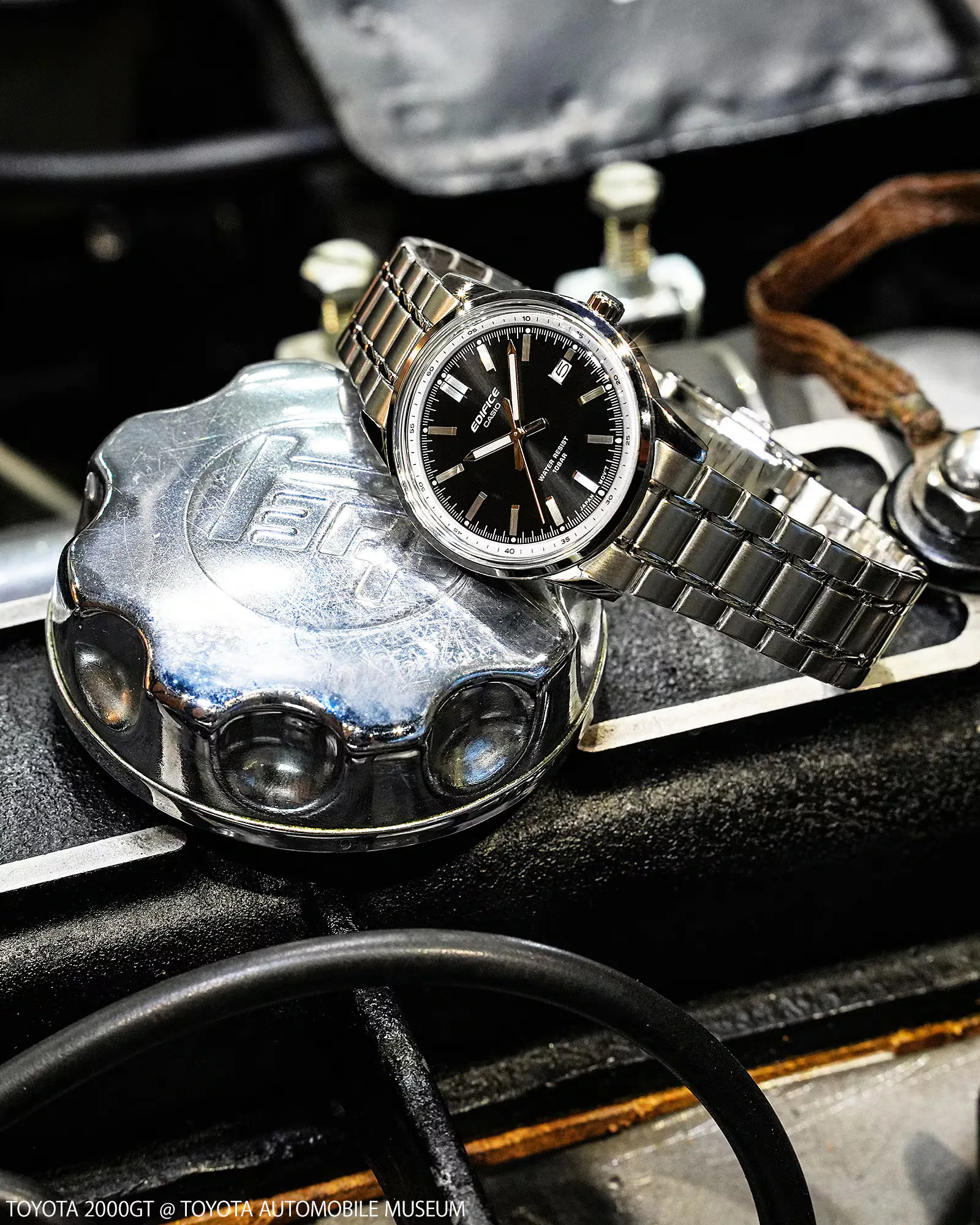
All four models appear on Casio’s Spanish store at €119, roughly $136 at today’s exchange rate, and are currently marked as coming soon, with no official date.
The Sibling Problem Is Twenty Euros Wide
Put the EFR-109 next to the EFB-109D-1AV and the numbers do not favour the newcomer. The older model uses sapphire, measures 38.5mm wide, 43.5mm lug to lug and 9.2mm thick, and carries the same 100-metre rating. The more expensive watch is slightly wider but shorter and thinner, which usually means it wears smaller.
On the steel bracelet, the EFB-109 is the stronger package for €20 (about $23) more. It gets sapphire instead of mineral glass, a shorter lug span, a thinner case, and a bracelet Casio explicitly lists as solid. The weight gap is also hard to ignore: 127g for the EFB against 97g for the EFR. Casio’s EFR-109 listing does not describe its bracelet as solid, and it wouldn’t be surprising if most of those missing 30g come from folded or hollow links, although that stays a hypothesis until someone has one in hand.
Where the EFR-109 wins is choice. The EFB-109 comes in black, blue and silver, all on steel. There is no green dial, no gold-toned handset and no leather version, so if one of those is what you want, the cheaper watch is the only way to get it inside Edifice.
Casio’s pitch leans on the slightly curved crystal and the vintage depth it gives the dial. That is a fair design argument. A domed crystal catches light at its edges and makes a flat printed dial look less flat, which is exactly what a $136 watch needs to feel like more than its price.
The trade-off is material. Mineral glass scratches more easily than sapphire, and a dome stands proud of the case, so it tends to be the first thing that meets a door frame. On a watch pitched at driving, office days and weekends, that is a manageable risk rather than a dealbreaker, but it is the main reason the bracelet versions struggle against the EFB. Seen honestly, this release is less a new idea for Edifice than a cheaper, more colourful take on one it already had.
Quartz Is the Right Call at This Price
Casio quotes accuracy of ±20 seconds per month and roughly three years from an SR920SW battery, without naming the calibre. For a date-equipped three-hander at around $136, that is the sensible spec: no winding, no service anxiety and far better accuracy than a typical affordable automatic. If you are still weighing the trade-offs between quartz and automatic, this is the kind of watch where quartz simply makes more sense.
Specs, Pricing & Availability
Case Diameter: 38mm (45.3mm lug to lug)
Case Thickness: 9.8mm
Case Material: Stainless steel
Water Resistance: 10 bar (100m)
Caliber: Quartz, ±20 seconds per month, SR920SW battery (approx. 3 years)
Crystal: Domed mineral crystal
Function: Hours, minutes, seconds, date
Price: €119 (approx. $136)
Buy the Cream One
My verdict is simple. The EFR-109L-7A is the model worth buying. The cream dial, perforated leather and 44g weight give it a character nothing else in the Edifice range offers at this price, and it undercuts most of the retro driving-watch crowd. The green EFR-109D-3A is a reasonable second pick if that dial is specifically what you are after.
For the black and navy bracelet models, I would spend the extra €20, about $23, on an EFB-109 instead: same brief, same water resistance, better crystal, better proportions. Casio has built a cheaper door into the 38mm Edifice, and that is good news for anyone who wants a small metal watch from a big Japanese brand. The most convincing EFR-109, though, is the one that doesn’t try to be an EFB-109 at all.