
Casio has spent the last few years testing how little a smartwatch can be while still counting as connected. A handful of other CASIO Collection pieces added phone-linked time sync and multi-city world time to otherwise ordinary digital cases. None of them tracked what your body was actually doing. They synced the clock and stopped there, doing less than a real smartwatch on purpose.
That kind of doing-less has aged into a selling point. The same years that pushed smartwatch adoption into the mainstream also produced a countertrend of people going back to plain analog and digital pieces on purpose, trading notifications and daily charging for something they can put on once and forget. Dumbphones had their moment for the same reason, and watches are having theirs now, with buyers explicitly choosing less connectivity rather than settling for it.
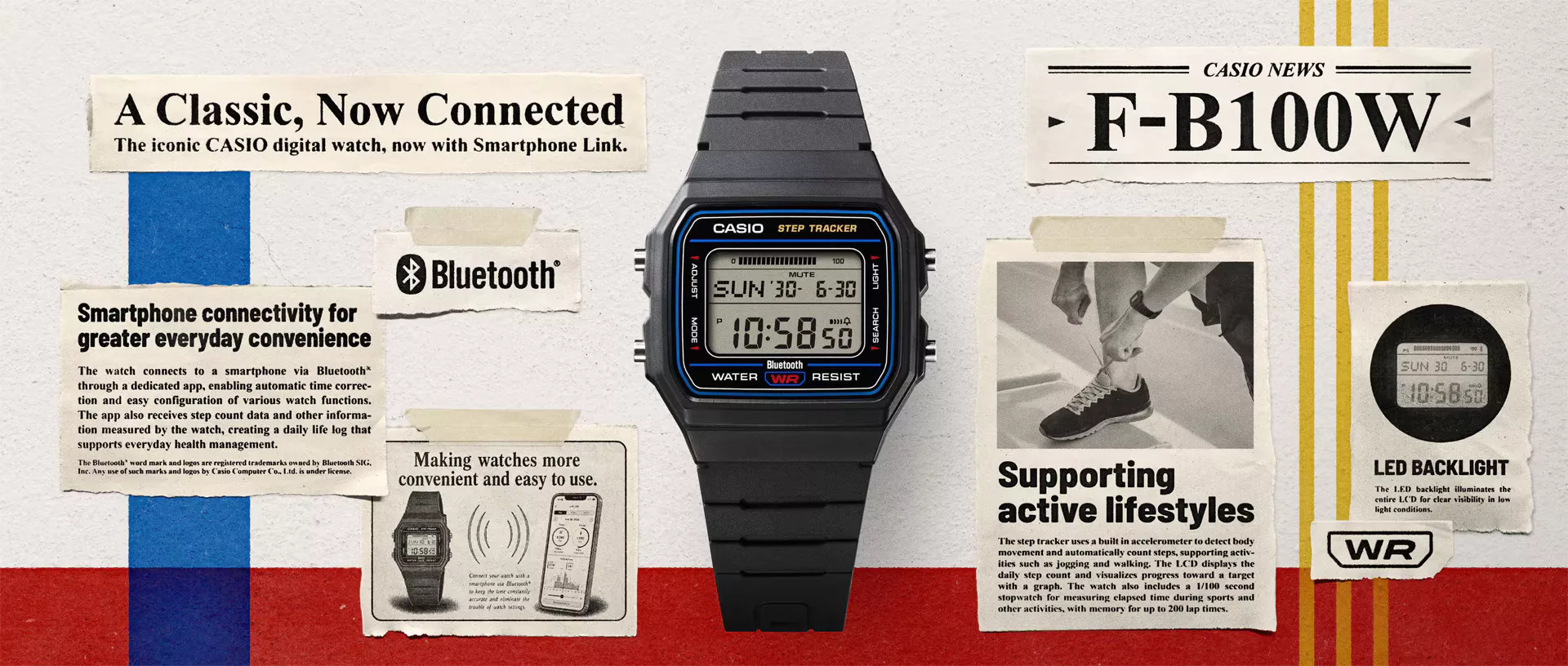
The F-B100W leans directly into that shift instead of fighting it, and pushes it a step further than Casio’s own back catalog. It keeps the same resin case, the same LCD block, the same Bluetooth mobile-link protocol Casio has used across that lineup, and adds a step counter with a built-in accelerometer, a daily goal tracker and an hourly activity graph you can read straight off the screen, no app required to see it.
The Face Is Borrowed
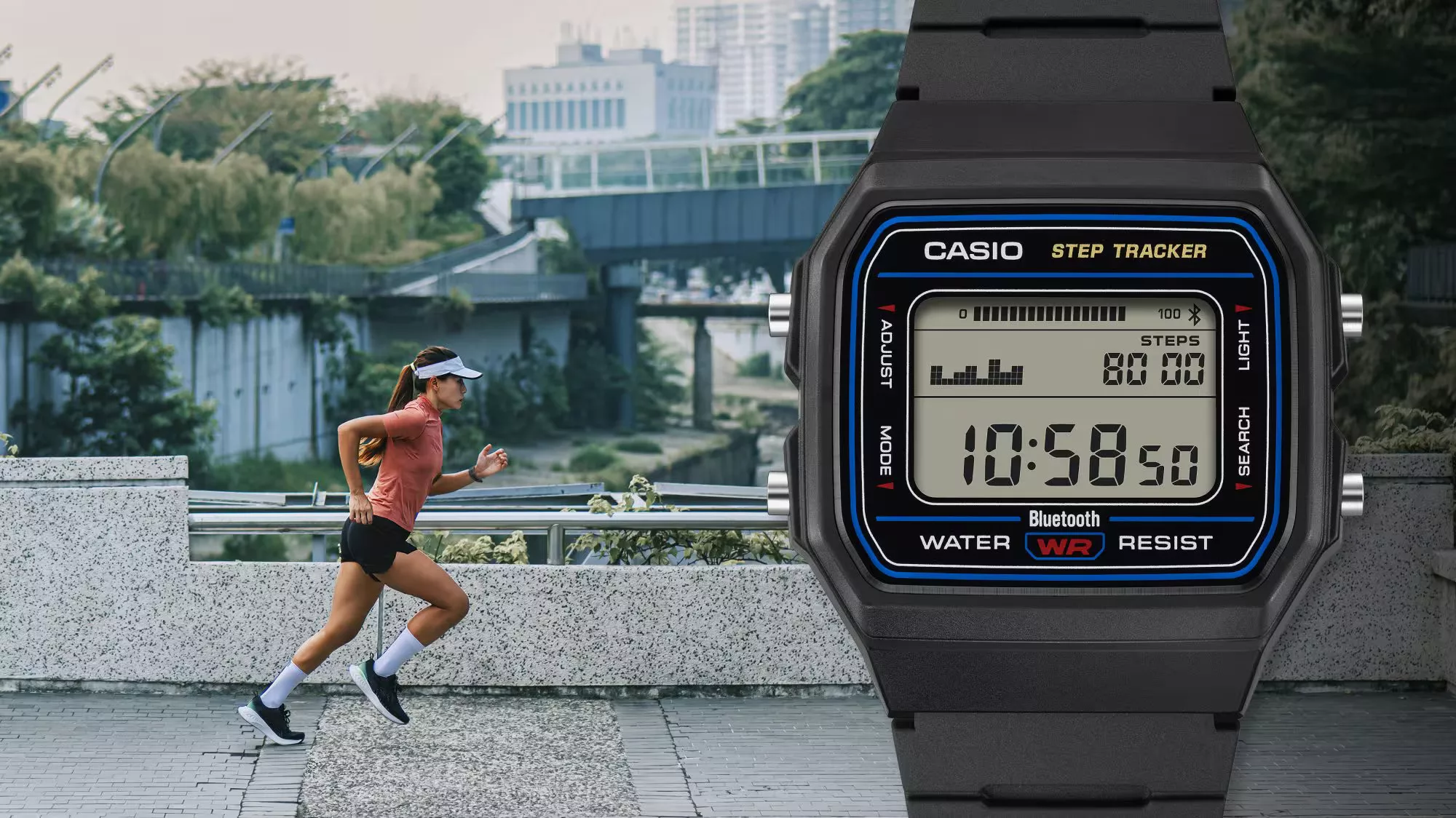
Casio says outright that the F-B100W shares its dial design with the F-91W, the watch that has outlived most of the smartwatches launched to replace it. That is not laziness. The 41.9mm case and 8.8mm thickness read as thin and unremarkable specifically because nothing about the layout needed to change. Casio added a Bluetooth radio and an accelerometer without touching the segment display or the button layout that has stayed nearly identical since the 1980s, which is the whole argument for buying into this design lineage in the first place.
The band takes the one real cosmetic liberty, switching to a slotted resin strap made partly from biomass plastic, with venting cut into the underside for sweat. At 26 grams total, it sits lighter than most of Casio’s tactical-styled digitals, and lighter than anything with a rechargeable battery inside it.
Not a Coach
The step tracker itself is deliberately narrow in scope. It counts up to 999,999 steps a day, lets you set a goal between 1,000 and 50,000 steps, and can flag it when you have been still too long, with an on/off switch for anyone who finds that intrusive. That reminder fires right on the watch, a display prompt and an electronic beep after a set stretch of inactivity, so it catches sedentary time the same way an old kitchen timer would: no phone in reach, no app open, no notification to swipe away. The screen also shows an hourly breakdown across a seven-hour window in six rough levels, which is closer to the graph on a $15 pedometer than to anything a Garmin owner would recognize as training data.
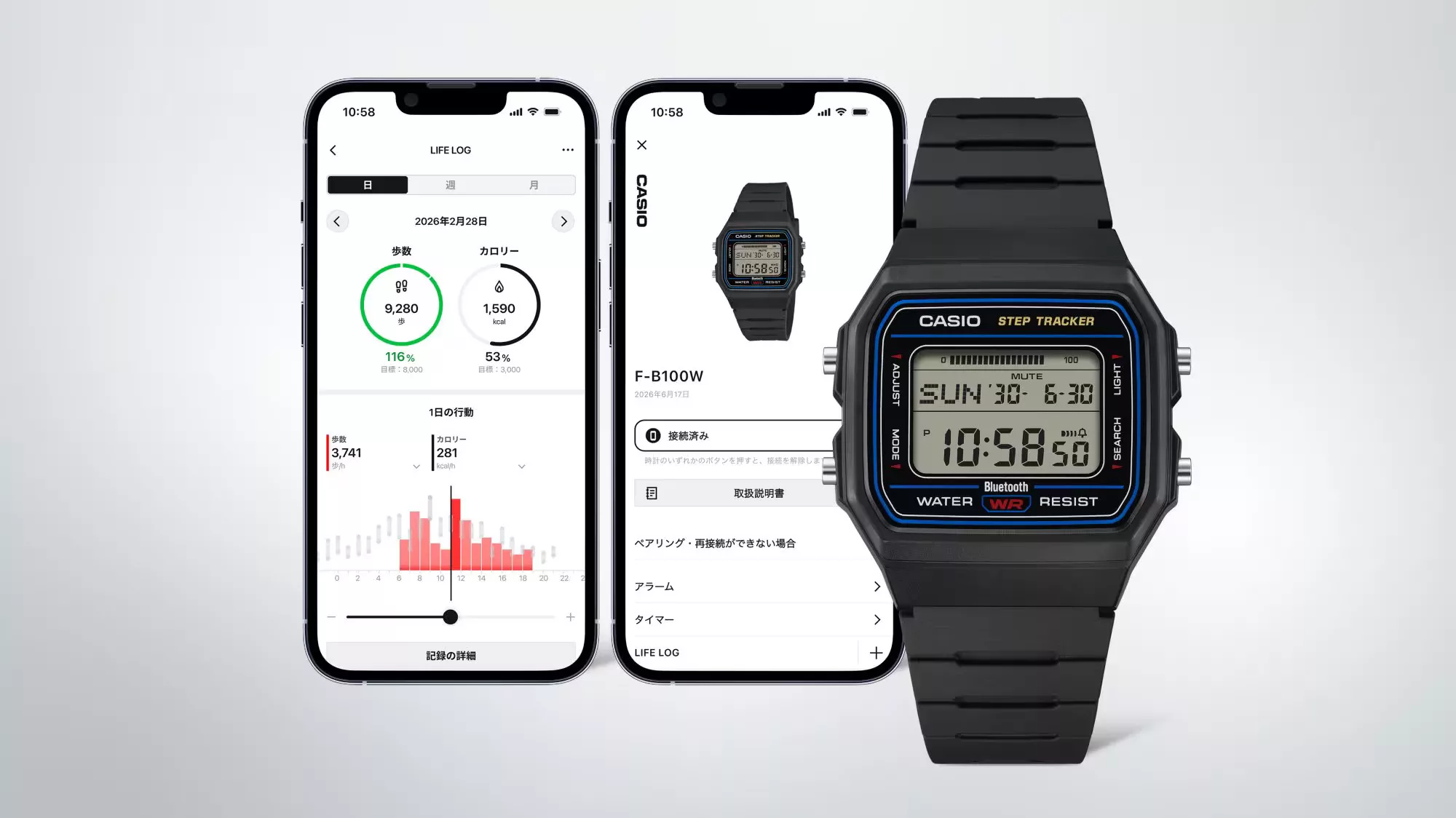
That data does sync to the CASIO WATCHES app for a longer-term log, alongside auto time correction, world time across roughly 300 cities and a phone-finder function. None of it asks you to open the app daily, and nothing on the watch face pushes a notification at you. The step count exists to be glanced at, not managed.
The Battery Argument Still Wins
Casio’s real trump card is what it left out. The F-B100W runs on a coin-cell battery rated for roughly two years, the same power source that has kept F-91W variants running for decades, instead of the daily or weekly charging cycle every actual smartwatch demands. Pair that with the everyday water resistance rating and a full auto-calendar, dual time, a 1/100-second stopwatch with 200-memory lap storage and a 60-minute timer, and you get a watch that does more than the F-91W ever did while asking less of you than any connected device on the market.
At 8,800 yen, roughly 50 euros at the Japanese launch price, it is not competing on cost with the F-91W’s roughly 20-euro street price, and Casio has not confirmed a release date outside Japan. Given how quickly similarly styled models like the ABL-100WE reached other markets, a wider rollout is a reasonable bet, just not a guaranteed one yet.
Specs, Pricing & Availability
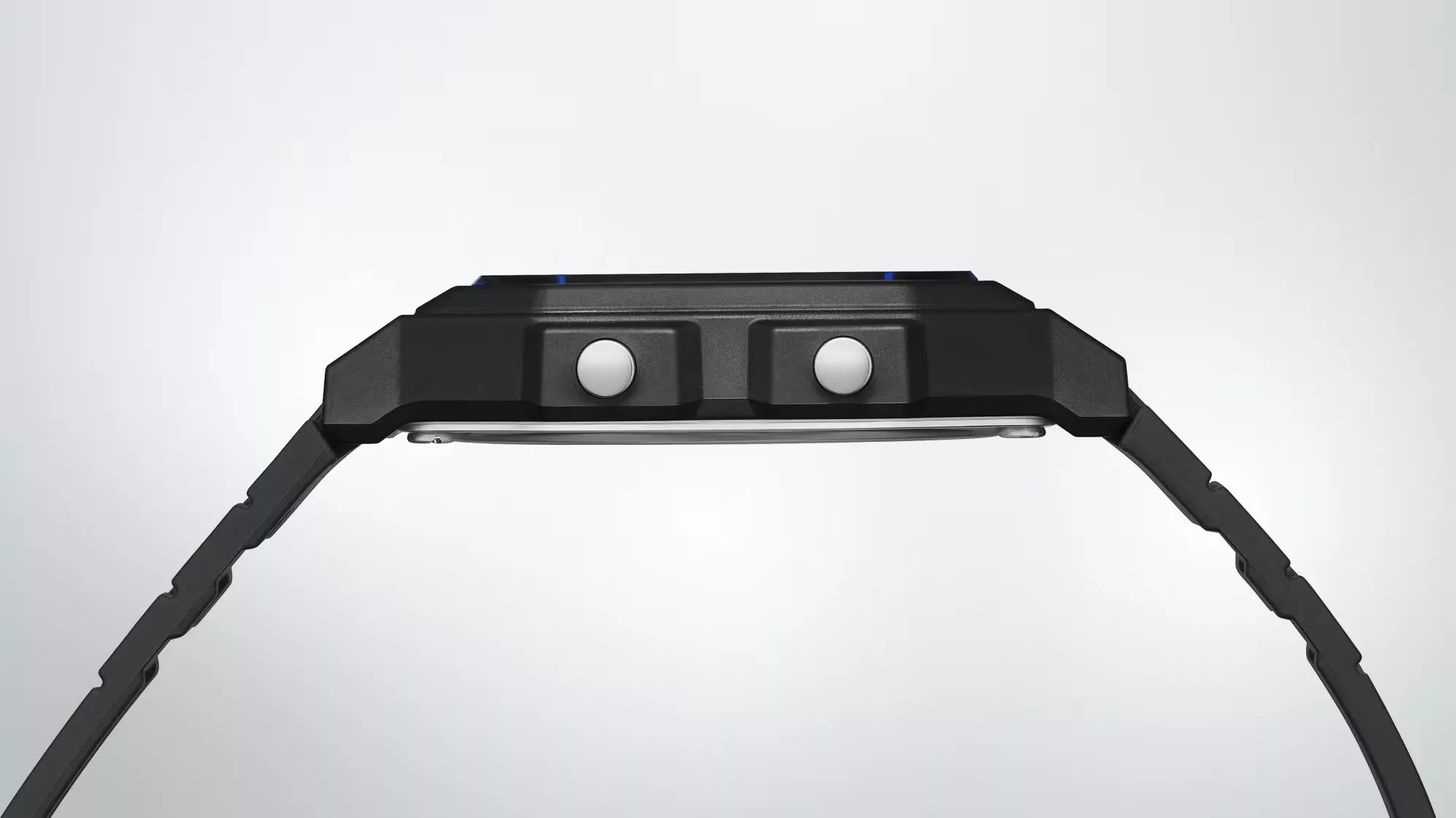
Case Diameter: 41.9 mm
Case Thickness: 8.8 mm
Case Material: Resin case and bezel, resin band with biomass plastic
Water Resistance: Everyday life water resistant
Crystal: Resin glass
Function: Step tracker with goal setting and hourly activity graph, Bluetooth mobile link (auto time correction, world time for about 300 cities, phone finder, life-log data via CASIO WATCHES app), dual time, 1/100-second stopwatch with 200-record memory, 60-minute timer, 5 daily alarms plus hourly time signal, full auto-calendar, amber LED backlight with adjustable afterglow, 12/24-hour display
Price: 8,800 yen (tax included)
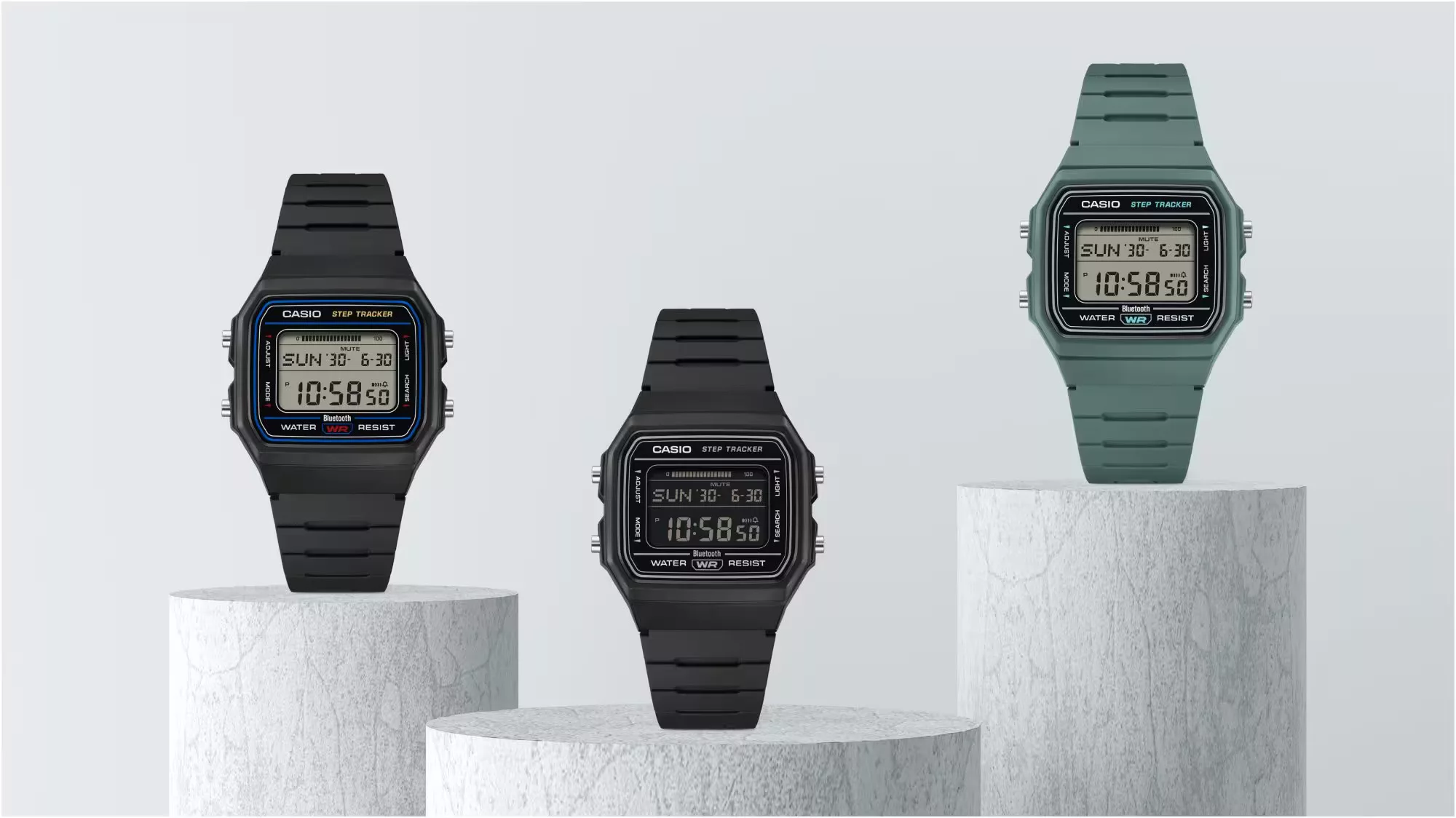
Honestly, I would buy the F-B100W-3AJF in the green colorway over the two black variants. Blackcased F-91W lookalikes are everywhere; a muted green on a case this shape is not, and it is the one launch color here that actually stands out on a shelf full of Casio digitals. Anyone drawn to actual fitness metrics, heart rate, sleep tracking, GPS, should look elsewhere; this watch was never built to compete there and does not pretend to.
Where it earns its place is for anyone who wants passive step data without a charger, an app they have to babysit, or a wrist buzzing every time a message lands. That is a narrower audience than Casio’s marketing implies, but it is a real one, and the F-B100W is one of the few watches built specifically not to ask more of it than that.