G-Shock GAC-2500 and GMC-2500: Casio Brings Their “CasioNaut”

Casio’s analog G-Shock strategy has been narrow for five years. The GA-2100 octagon became a phenomenon, the metal-bezel and full-metal versions followed, and almost everything since has been a variation on one silhouette with a different bezel material and a different price. It sold well. It also left the analog line looking like a single idea stretched across a dozen references.
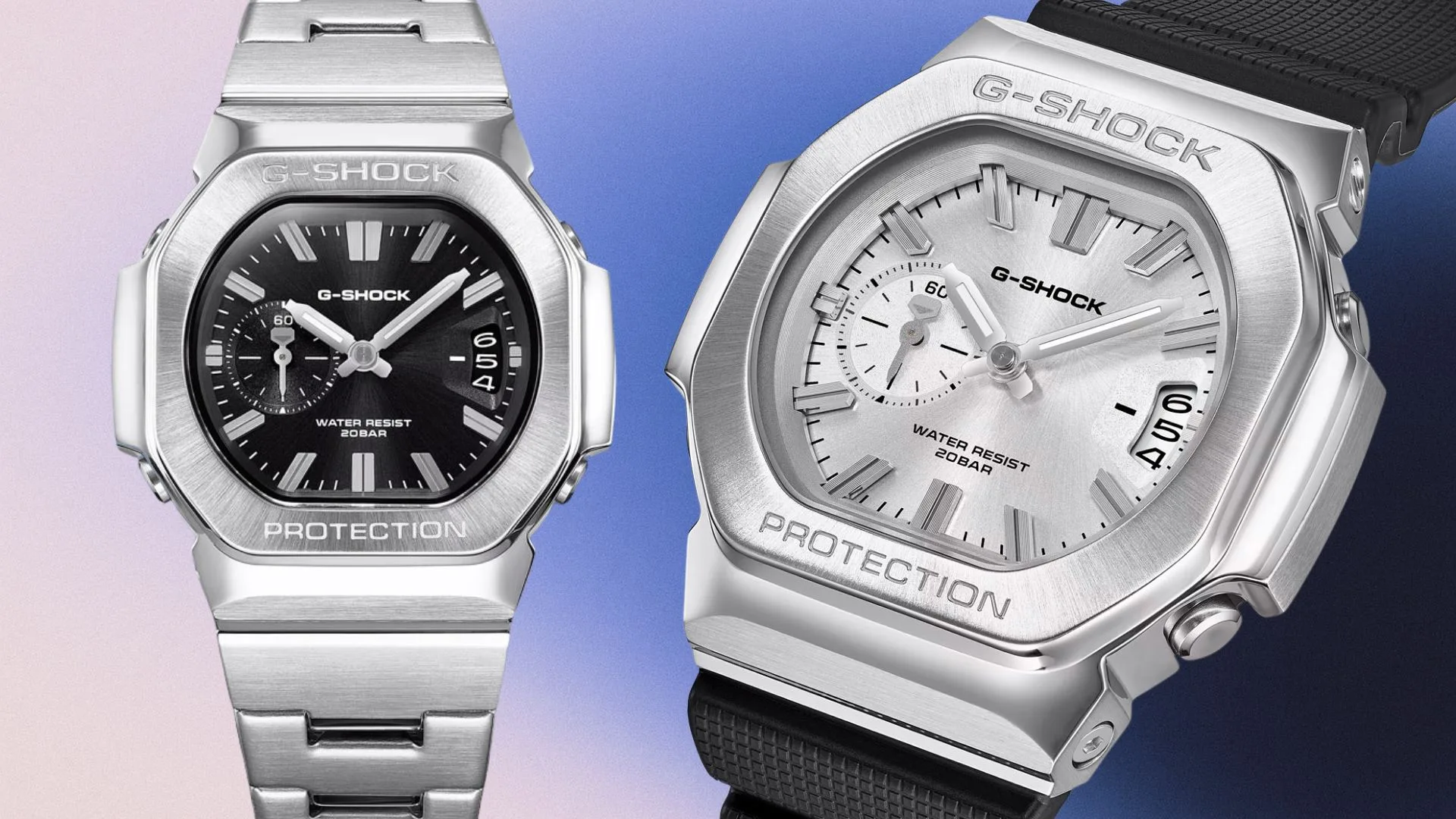
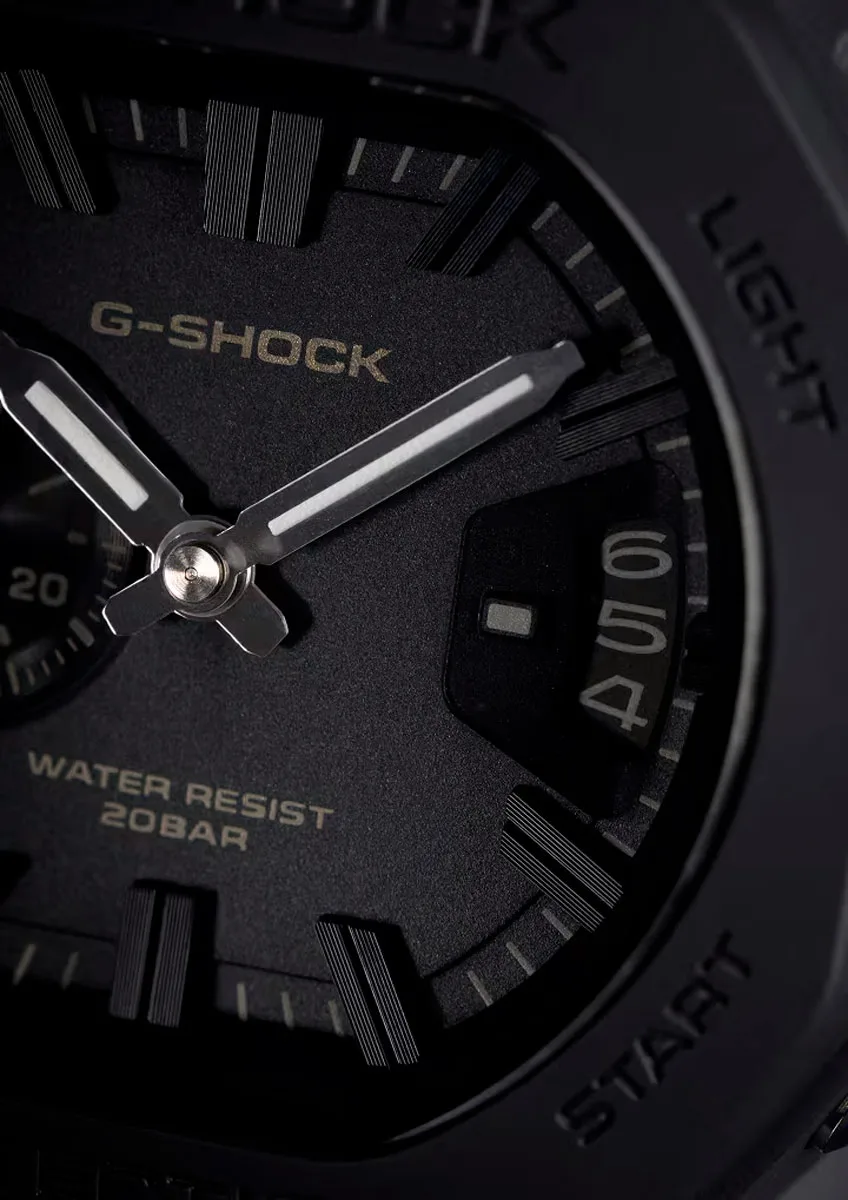
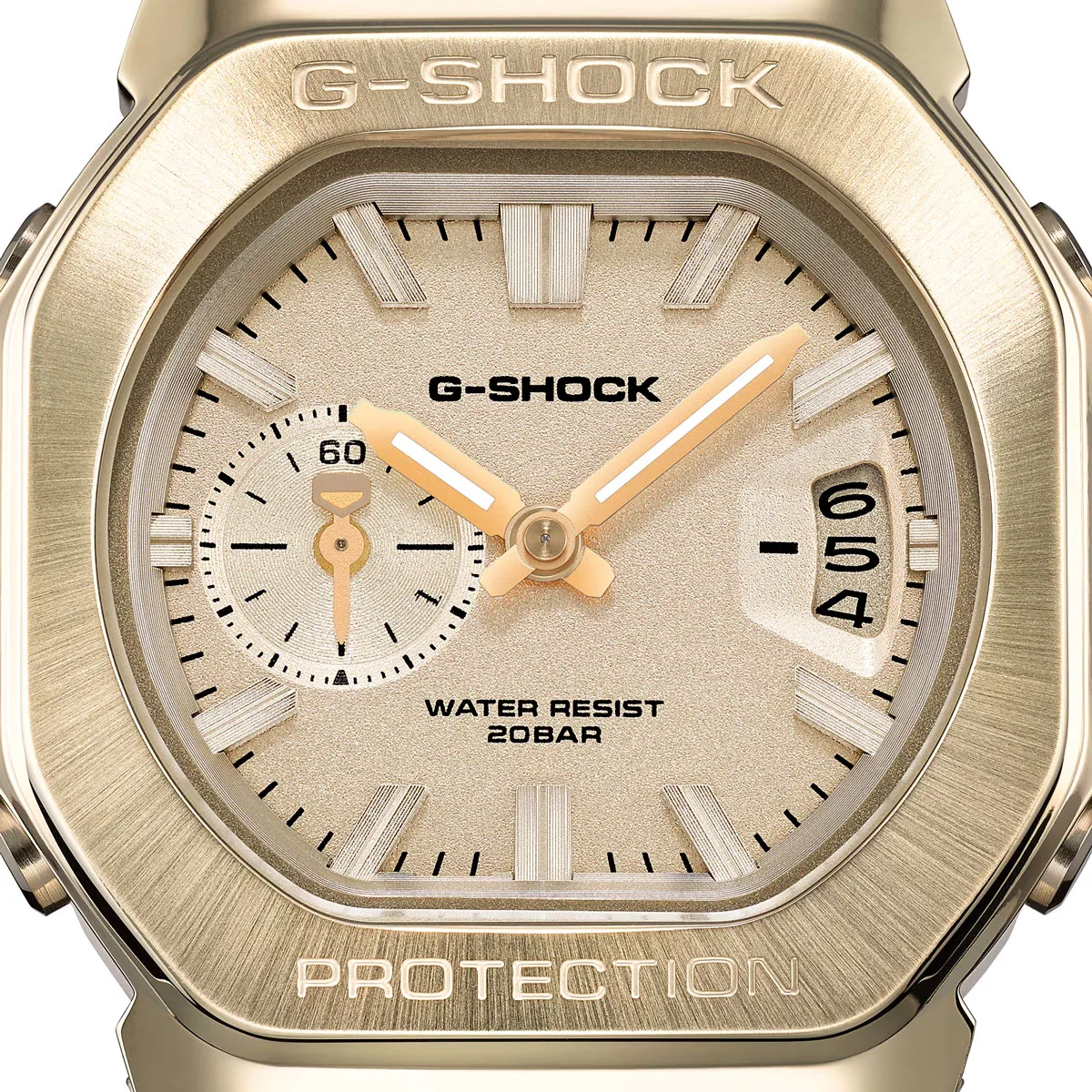
The GAC-2500 and GMC-2500 break that pattern. These are fully analog two-eye watches, small seconds on one side and a three-cell date window on the other, in a cushion case that reaches back to the 1983 DW-5000C instead of the octagon. Two families, two materials, and two prices that sit nowhere near each other: resin at 20,900 yen (roughly $134) and steel at 49,500 yen (roughly $318), both slated for Japan in November.
Collectors named it before Casio announced it. The wide flat bezel and the squat proportions got it tagged the CasioNaut (or even Gnautilus or Nauti-Shock), which says more about how the watch world reads shapes than about what Casio was actually doing, and it drops the release into the same conversation as other affordable takes on famous designs.
The Resin Version Is Where the Interesting Number Sits
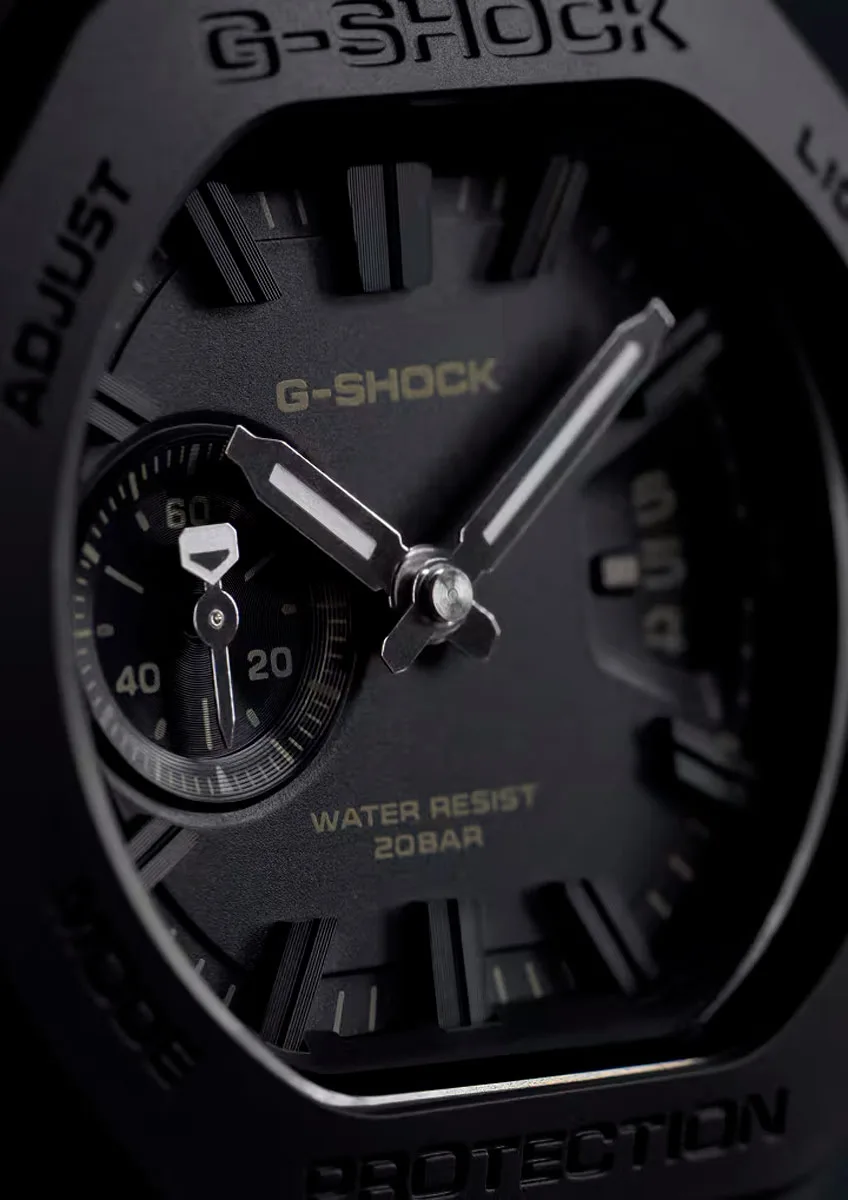
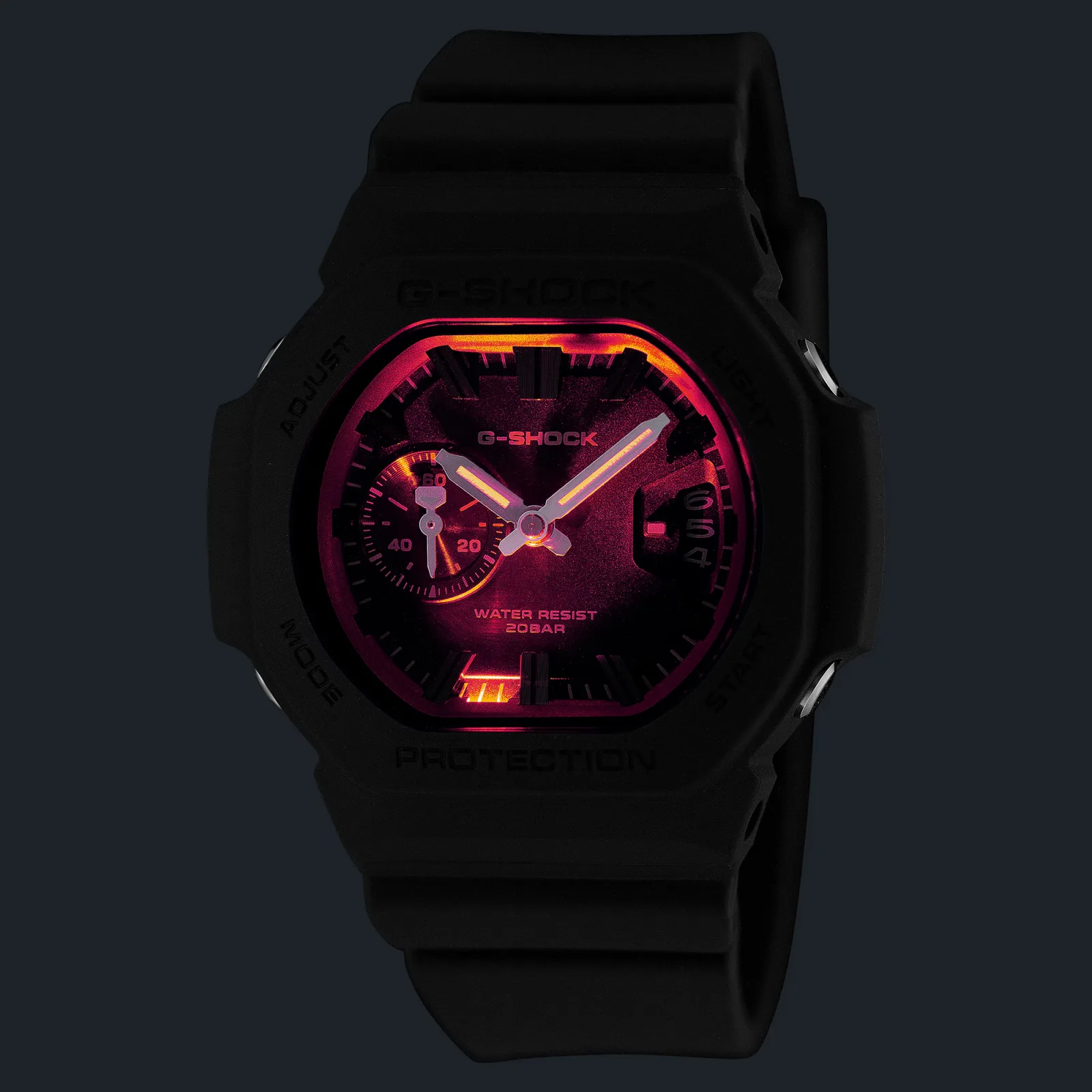
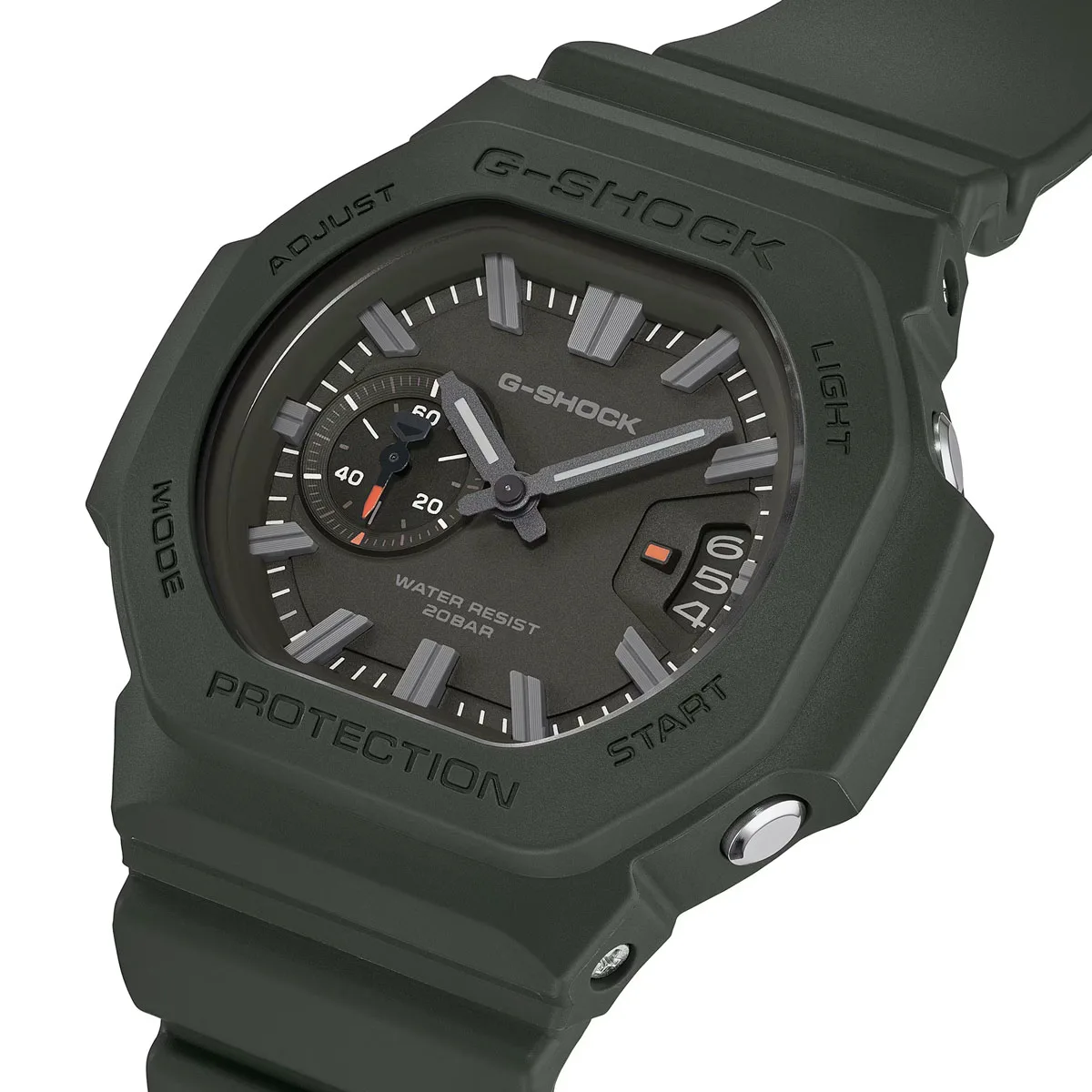
The GAC-2500 arrives in black, green, white and yellow, all resin, with case, bezel and band made partly from biomass plastic. It measures 46.7 by 44.5 by 12.7 mm and weighs 47 grams, which is light even by G-Shock standards, and it fits wrists from 145 to 215 mm.
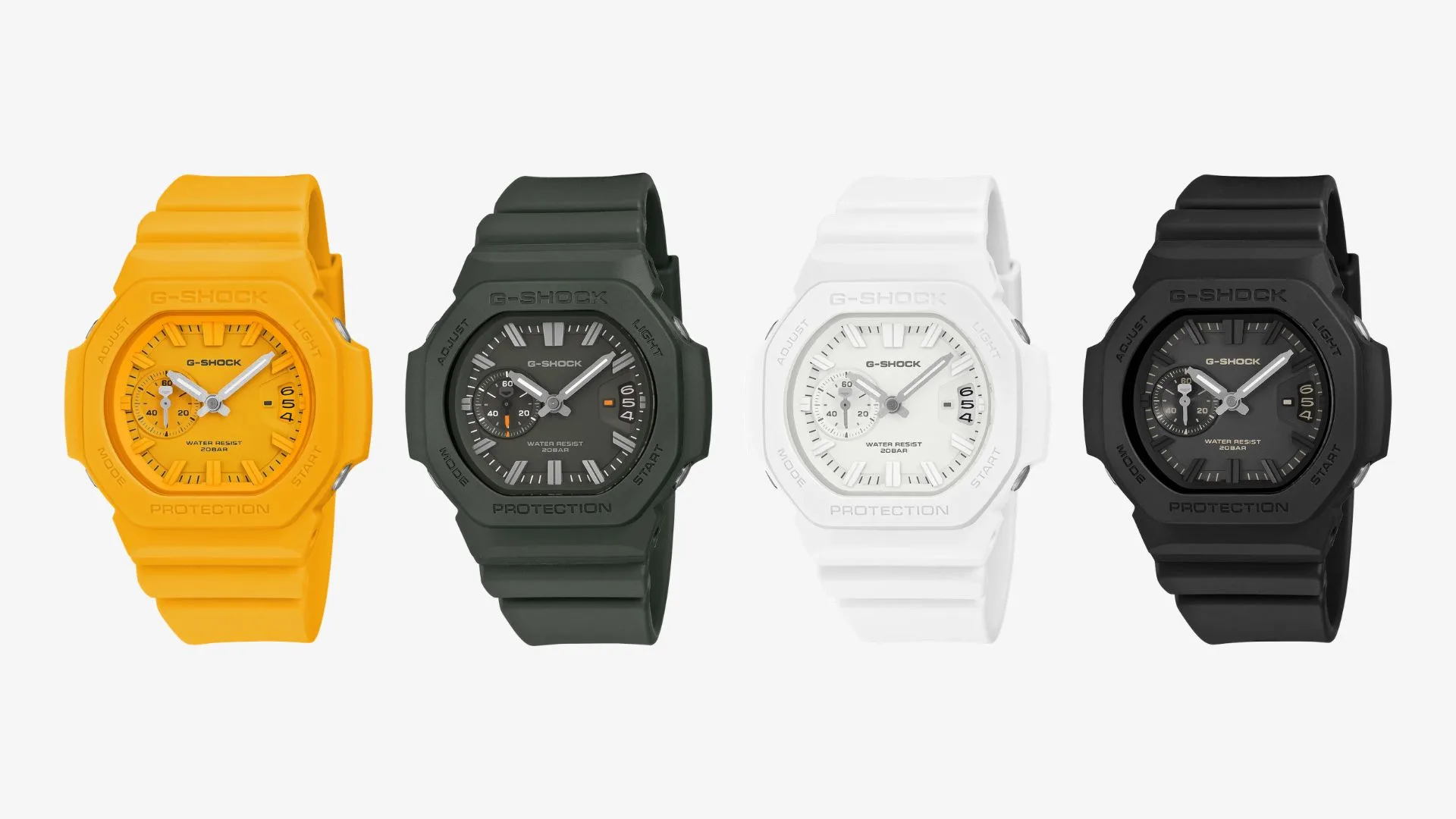
Everything else is standard-issue Casio competence: mineral crystal, 200 m water resistance, Neobrite lume, an amber LED backlight, quartz accurate to plus or minus 15 seconds a month, and a battery rated at around two years. At $134 that is a lot of watch, and it lands squarely in the busiest bracket in affordable watches, where Casio already wins more fights than it loses.
Case Diameter: 44.5 mm (46.7 mm lug to lug)
Case Thickness: 12.7 mm
Case Material: Resin, partly biomass plastic
Water Resistance: 200 m
Crystal: Mineral
Function: Hours, minutes, small seconds, three-cell date window, second-hand sleep function, amber LED backlight, Neobrite lume, accuracy plus or minus 15 seconds per month, battery life approximately 2 years
Price: 20,900 yen (approximately $134)
The Steel One Charges You for the Bracelet
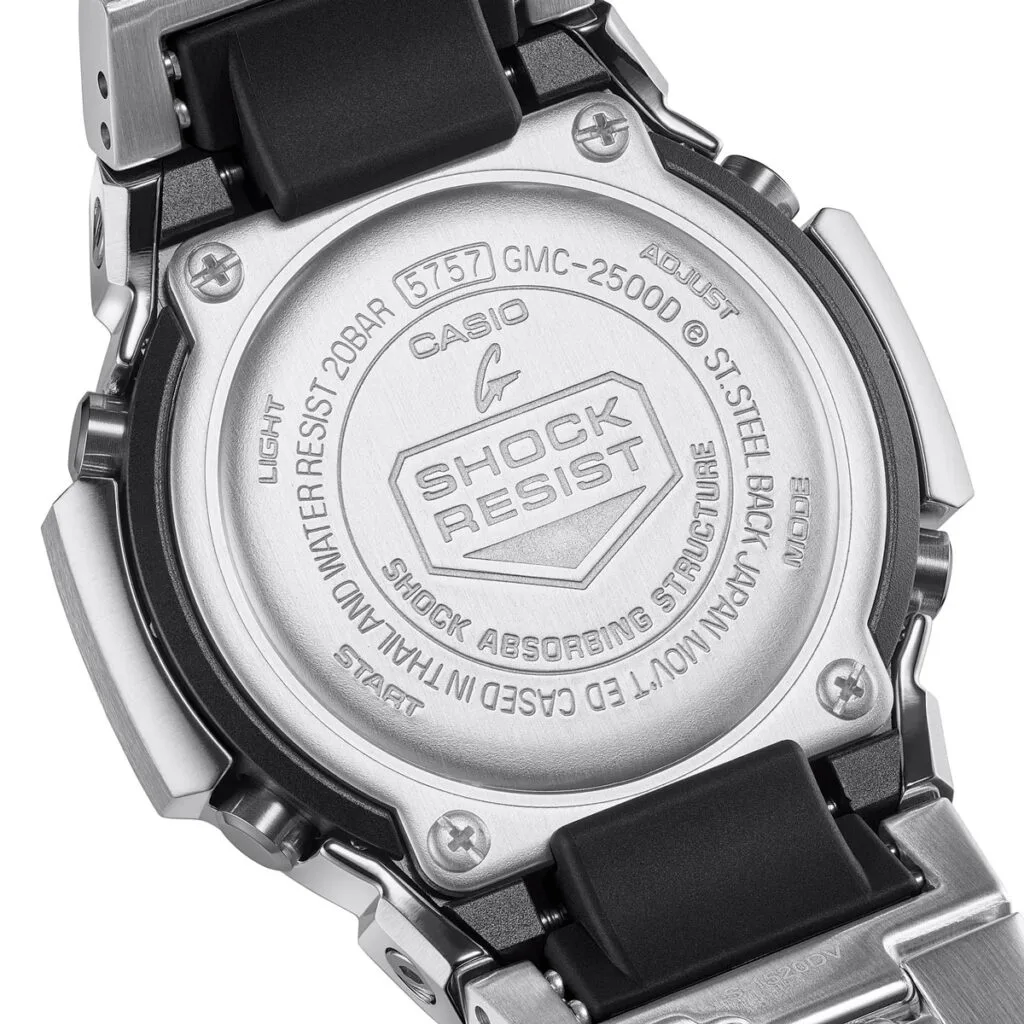
The GMC-2500 is the same concept in stainless steel, at 46.7 by 43.8 by 12.9 mm and 138 grams, on a steel bracelet with a one-push triple-folding clasp and a 150 to 205 mm fit. Two references are confirmed: a black GMC-2500D-1AJF and a blue-grey GMC-2500D-1A2JF.
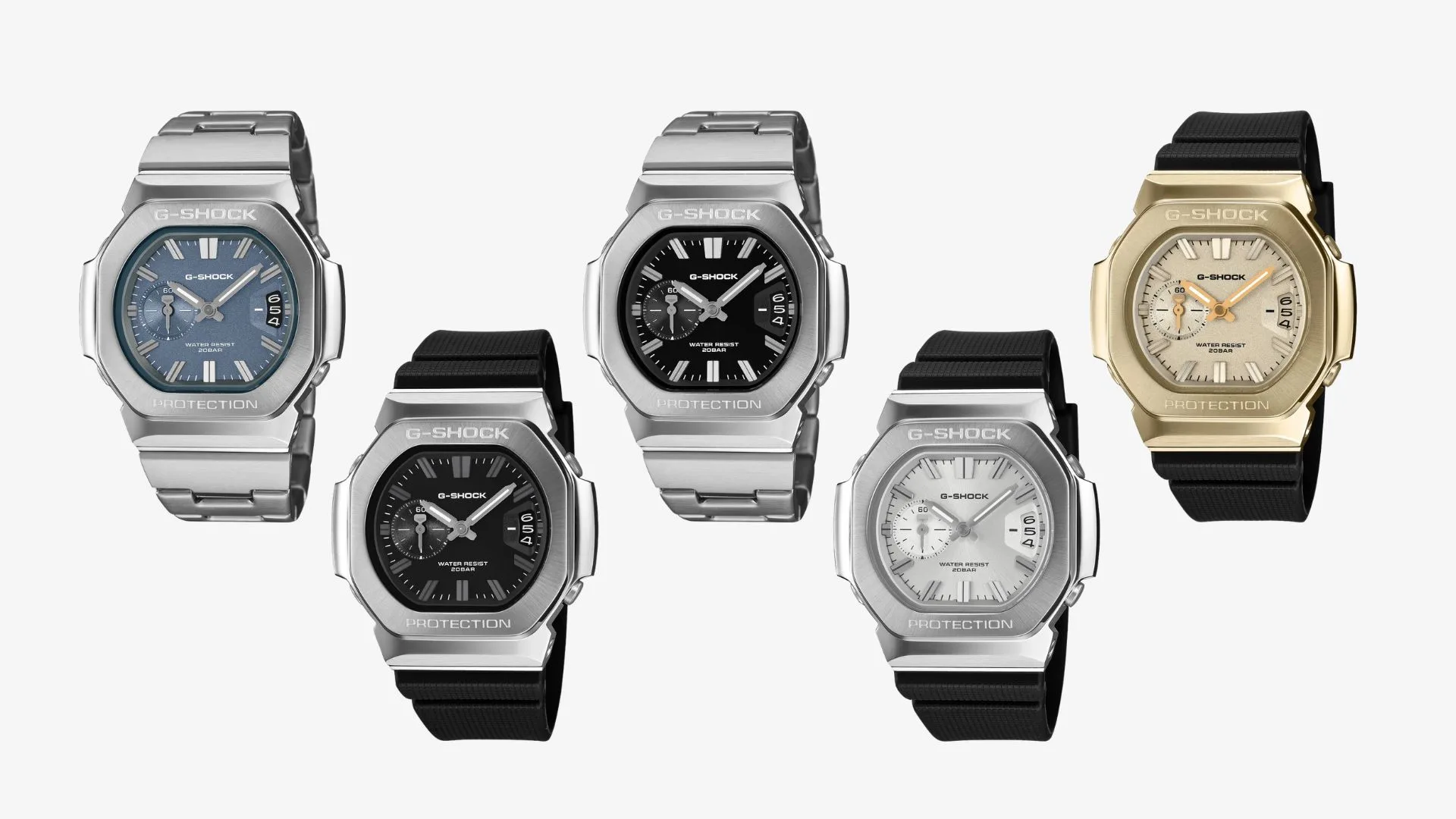
Here is the part worth being blunt about. Crystal, water resistance, accuracy, battery and functions are identical to the resin version. You are paying roughly $180 more for metal and a bracelet, and for nothing else. That is a defensible trade if you want a G-Shock that reads as a proper steel sports watch across a desk. It is a poor one if you expected the spec sheet to move with the price.
Where the metal version does get interesting is inside Casio’s own range. It costs about half what the metal GMC-B2100 line does, because it drops Tough Solar and Bluetooth. This is the cheapest route into a metal analog G-Shock so far, and it gets there by removing the two features Casio has spent a decade adding to everything else.
Case Diameter: 43.8 mm (46.7 mm lug to lug)
Case Thickness: 12.9 mm
Case Material: Stainless steel, stainless steel bracelet with one-push triple-folding clasp
Water Resistance: 200 m
Crystal: Mineral
Function: Hours, minutes, small seconds, three-cell date window, second-hand sleep function, amber LED backlight, accuracy plus or minus 15 seconds per month, battery life approximately 2 years
Price: 49,500 yen (approximately $318)
Magnetic Hands Are the Actual Engineering Story
The headline feature is not the case. Instead of fixing the hour and minute hands rigidly to the shaft, Casio holds them in place with magnetic force, so an impact deflects the hand rather than shearing it. Casio’s own notes admit the trade-off plainly: the minute hand can wobble under shock or vibration and may shift position briefly, returning to its correct place within a few minutes.
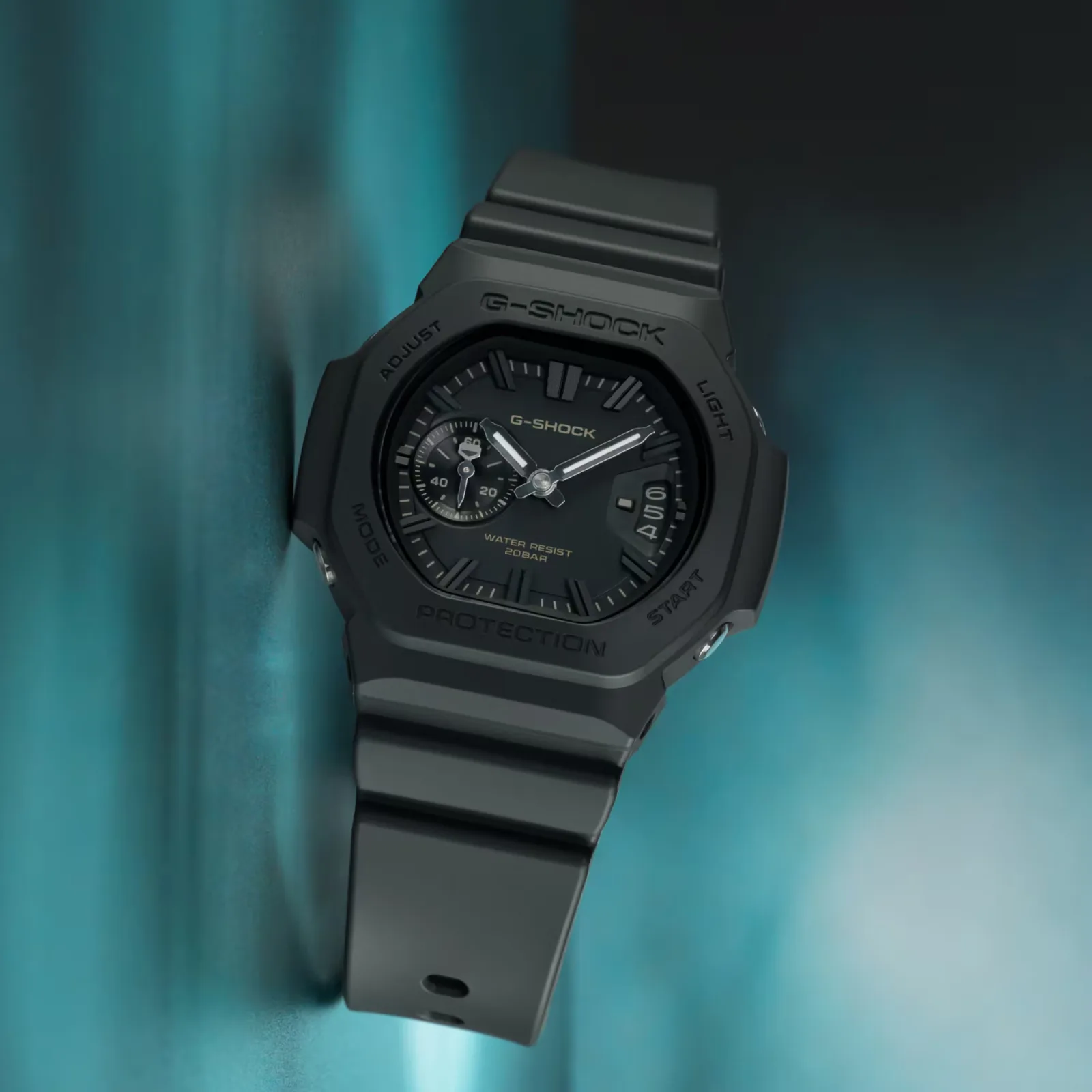
That is an unusual answer to the oldest problem in analog shock resistance, and it is the reason a fully analog G-Shock at this price is possible at all. The second feature is smaller but smarter. A user-triggered second-hand sleep function stops the seconds hand to conserve power, which matters far more on a watch running a plain two-year cell than it would on a solar model. If you are weighing this against something mechanical, the case for quartz in a genuinely tough watch has rarely been this easy to make.
What Casio Has Not Actually Confirmed
This needs flagging, because the leak ran further than the facts. Japanese product pages for the four GAC references briefly went live and now return 404s, and that is where most of the spec detail above comes from. Circulating alongside them are references for a gold GMC-2500G-9A and resin-strap GMC variants that no official page has ever shown, plus a claimed 30-minute stopwatch that appears in no Casio spec list. With a small seconds subdial and this button layout, treat that last one as unverified until Casio says otherwise.
International pricing and dates are open too. November 2026 is a Japanese date. Casio usually follows elsewhere within a few months, often at a number that does not convert neatly from yen.
Which One I Would Actually Buy
The GAC-2500, and it is not close. At $134 you get the entire design idea, the magnetic hand system, 200 m and 47 grams, and the resin case is arguably the more honest expression of what a G-Shock is supposed to be. The steel version is a nice object, but $318 for the same watch in a heavier suit is the kind of maths that looks worse the longer you stare at it, particularly from a brand whose whole pitch is being cheap and unkillable.
The bigger story is what this does to the analog line. For five years the answer to “I want an analog G-Shock” was the octagon or nothing. Now there are two shapes, and the cheaper one is the more interesting watch. Casio’s recent low-cost experiments suggest a company still willing to try odd things at the bottom of the range, and this is the best argument yet for that instinct.