Watch Size Guide: How to Measure Your Wrist and Find the Right Watch Size

In short:
- Measure your wrist just above the wrist bone, snug but not tight. That circumference is your starting number.
- Lug-to-lug decides fit more than case diameter. If the lugs reach past the flat top of your wrist, the watch looks too big, whatever the diameter says.
- The quick formula: double your wrist size in centimetres and add 15. That is your maximum lug-to-lug in millimetres for a balanced fit. A 17cm wrist gets 49mm.
- Keep thickness under about a third of the diameter, and around 13mm if the watch has to slide under a shirt cuff.
The right watch size depends less on case diameter than most size charts suggest. What decides fit is lug-to-lug: the distance from the tip of the top lugs to the tip of the bottom ones, set against the flat top of your wrist. Measure your wrist in centimetres, double it and add 15, and you have the longest lug-to-lug that will sit inside it for a balanced look.
Most size guides stop at diameter. Under 16cm, wear 36mm. Over 18cm, wear 42mm. That’s how people end up with a 40mm watch that hangs over the edges and a 42mm diver that wears small, because two watches with the same diameter can differ by several millimetres in length.
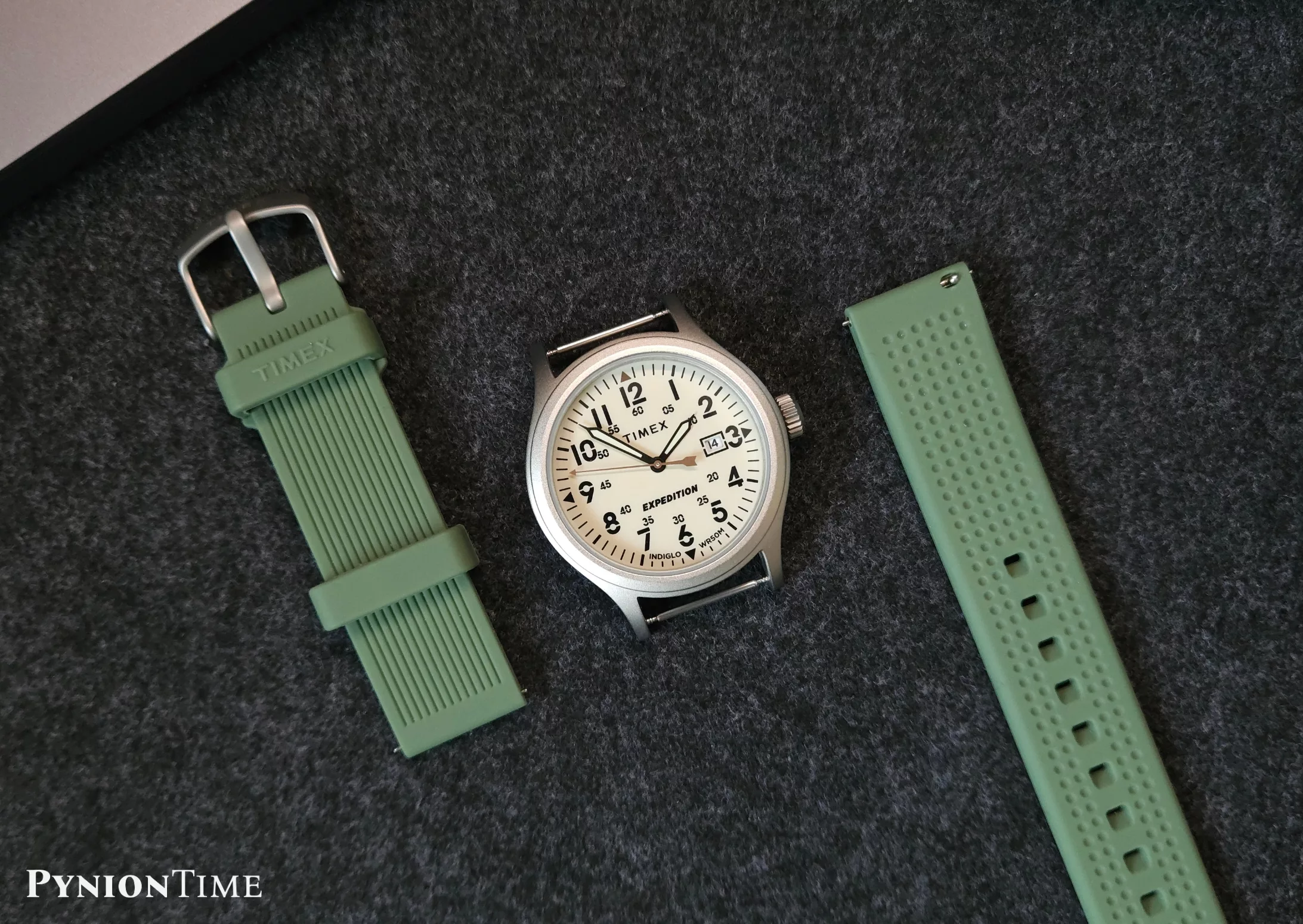
My own wrist is a classic 6.5 inches (16.5cm), on the flat side, though not by much. By the chart below, that puts my balanced maximum at 48mm of lug-to-lug, which on paper rules out most 42mm watches.
Yet two of the watches I’ve reviewed did exactly that and wore well: a 42mm titanium diver with a 49.3mm lug-to-lug, and a 41mm field watch with a lug-to-lug of about 50mm. Both sat 1-2mm past my number. That’s a slightly flat wrist and a small tolerance doing their job, and it’s precisely what a diameter-only chart can’t tell you.
This guide goes the other way round. Lug-to-lug first, then diameter, then thickness, with a chart you can read in ten seconds. It’s the same logic I use in my guide to choosing an affordable watch, scaled to your actual wrist.
How to Measure Your Wrist for a Watch
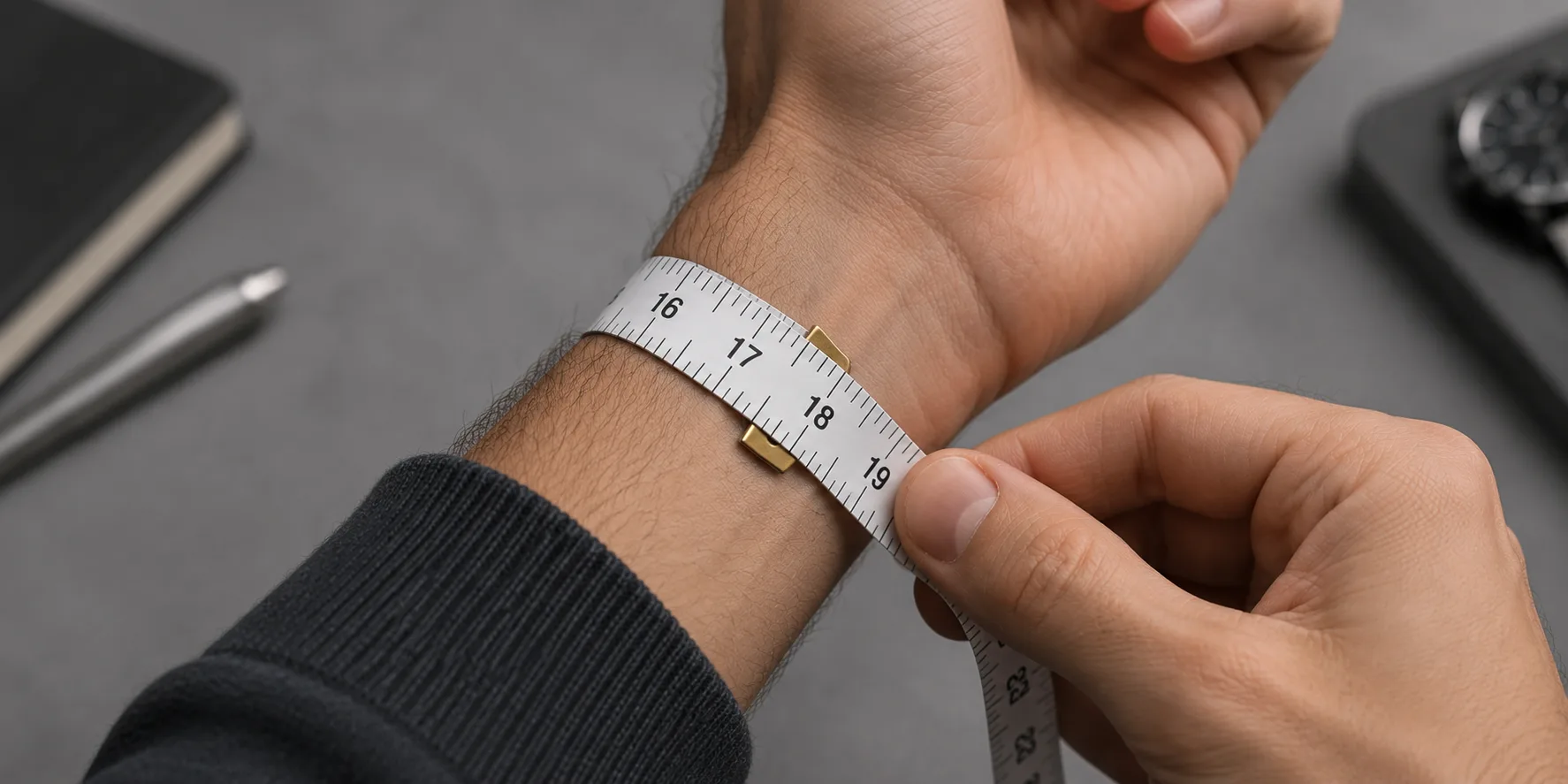
Wrap a soft tape measure around your wrist just above the wrist bone, where a watch actually sits, and read it snug but not tight. No tape? Use a strip of paper, mark where it overlaps, and measure that length against a ruler. Write it down in millimetres; the maths is easier.
- Find the spot. Feel for the bony bump on the outside of your wrist. The watch sits just above it, towards the hand, so that’s where you measure.
- Wrap it flat. The tape should lie flat against the skin, not twisted, and tight enough not to slide. Don’t pull it in: you’re measuring the wrist, not the strap you’ll end up wearing.
- Read and round. Read in centimetres and round to the nearest half centimetre. 16.8cm becomes 17cm.
- Measure twice. Wrists swell a little through the day and in the heat. If the morning and evening numbers differ, use the larger one.
- Measure the flat top (optional, but useful). Lay a ruler across the top of your wrist and note how wide the flat part is before it curves away at the sides. That width is the space lug-to-lug has to fit inside.
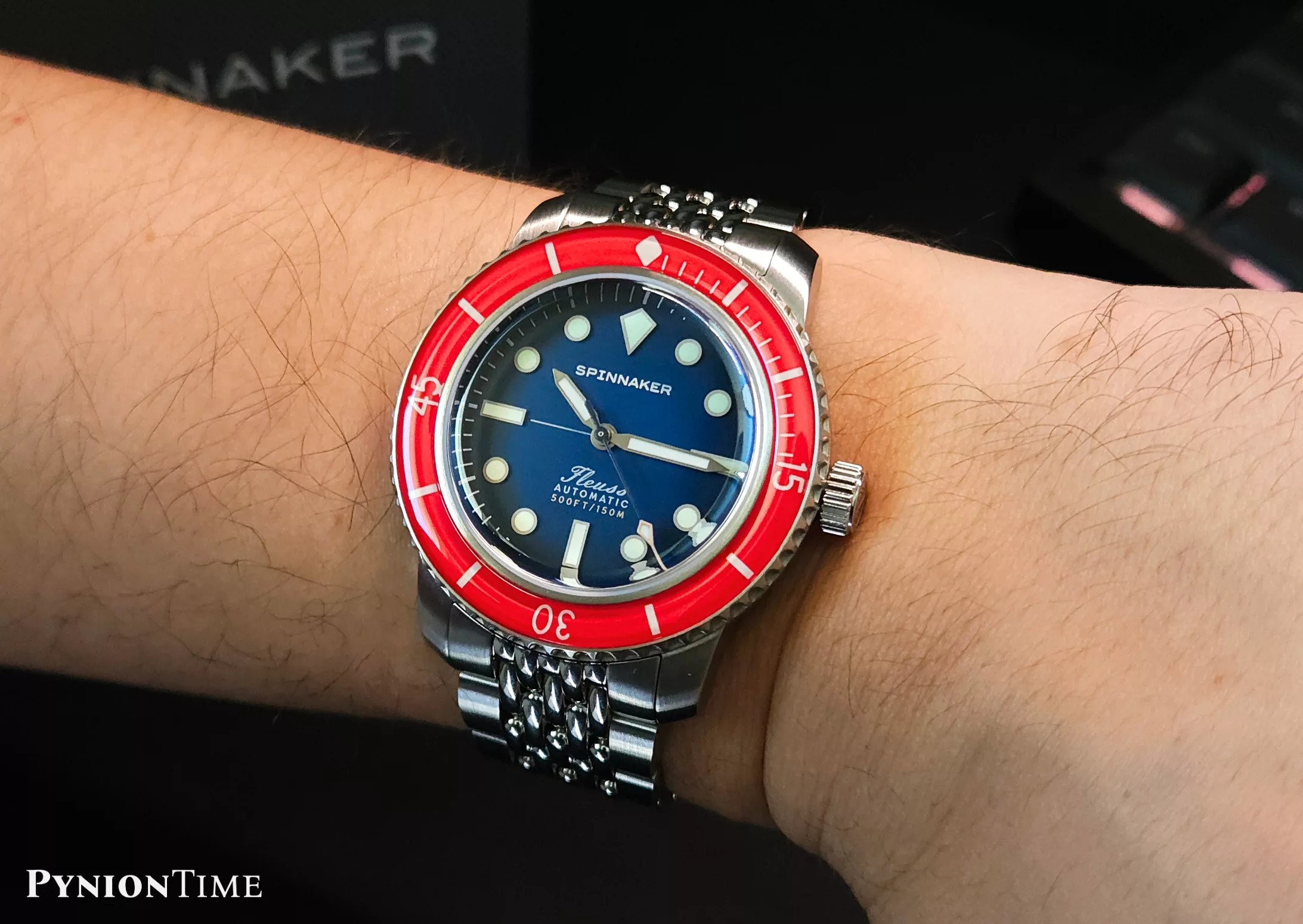
No tape measure? Use paper
Cut a strip of paper about 1cm wide. Wrap it around your wrist at the same spot, mark where the end meets the strip with a pen, lay it flat and measure up to the mark with a ruler. A phone charging cable works too, as long as it doesn’t stretch.
Watch Size Chart: Wrist Size to Lug-to-Lug and Diameter
Find your wrist in the first column. The third column is the longest lug-to-lug that sits inside it for a balanced look, the fourth is where the lugs start to hang over the sides, and the last is the diameter range that suits that wrist. If lug-to-lug and diameter disagree, trust lug-to-lug.
| Wrist (cm) | Wrist (in) | Max lug-to-lug | Lugs overhang past | Balanced diameter |
| 14cm | 5.5in | 43mm | 46mm | 31.5-38mm |
| 15cm | 5.9in | 45mm | 48mm | 33-39.5mm |
| 16cm | 6.3in | 47mm | 50mm | 34.5-41mm |
| 17cm | 6.7in | 49mm | 52mm | 36-42.5mm |
| 18cm | 7.1in | 51mm | 54mm | 38-44.5mm |
| 19cm | 7.5in | 53mm | 56mm | 39.5-46mm |
| 20cm | 7.9in | 55mm | 58mm | 41-47.5mm |
That’s for a balanced look. If you like a watch to sit quietly, take 2.5mm off the lug-to-lug and stay in the lower half of the diameter range. If you like presence, add 2.5mm to the lug-to-lug and go up to 3.5mm past the top of the diameter range. Either way, the overhang column doesn’t move: past it, no strap can fix the fit.
Where the numbers come from
Both numbers come from the formula behind Watch Finder, the watch recommendation tool I’m building for PynionTime. Lug-to-lug starts at 14mm and adds 2mm for every centimetre of wrist, because the flat top of the wrist widens as the wrist grows; a balanced fit adds 1mm on top. Diameter starts at 36mm for a 15cm wrist and adds 1.6mm per centimetre, with a band of 3mm below and 3.5mm above that point.
I calibrated both against published size guides, and they hold up on my own wrist (more on that below). Diameter is the softer of the two. A cushion-cased diver with short lugs can sit a little above your diameter range and still wear well, while a long-lugged 40mm can overhang from inside it.
Watch Size Calculator
Enter your wrist and how you like a watch to wear. You get your maximum lug-to-lug, a diameter range and a thickness limit.
13 cm17.5 cm22 cm
How do you like a watch to wear?
Max lug-to-lug49 mm
Lugs overhang past 52 mm
Case diameter36–42.5 mm
Sweet spot around 39 mm
Max thickness13 mm
About a third of the diameter
The bar shows lug-to-lug in mm. Lug-to-lug decides fit more than diameter: it’s the watch’s real length on your wrist. When the two disagree, trust lug-to-lug.
Will a specific watch fit?
Copy the numbers from the spec sheet. Lug-to-lug matters most; thickness is optional.
Want watches that already fit your wrist and budget?
Try Watch FinderBased on the sizing formula behind PynionTime’s Watch Finder. A starting point, not a law: wrist shape and lug curvature change things by a millimetre or two.
What Is the Average Wrist Size?
The average man’s wrist measures about 17.6cm (6.9in) around, and the average woman’s about 15.4cm (6.1in). Those are the medians from ANSUR II, the US Army’s 2012 anthropometric survey of 4,082 men and 1,986 women, measured at the wrist bone.
| Small (5th percentile) | Average (median) | Large (95th percentile) | |
| Men | 16.2cm / 6.4in | 17.6cm / 6.9in | 19.1cm / 7.5in |
| Women | 14.2cm / 5.6in | 15.4cm / 6.1in | 16.8cm / 6.6in |
Run those through the chart and the median man’s balanced maximum lug-to-lug comes out at about 50mm, and the median woman’s at about 46mm. That gap matters, because plenty of watches sold as unisex are really sized around the men’s number. If you’re shopping for a smaller wrist, my picks of affordable watches for women start from the other end.
One caveat: ANSUR II measured soldiers aged 17 to 58, so it’s a good guide to adults rather than an exact average for everyone. Your own measurement always beats the average.
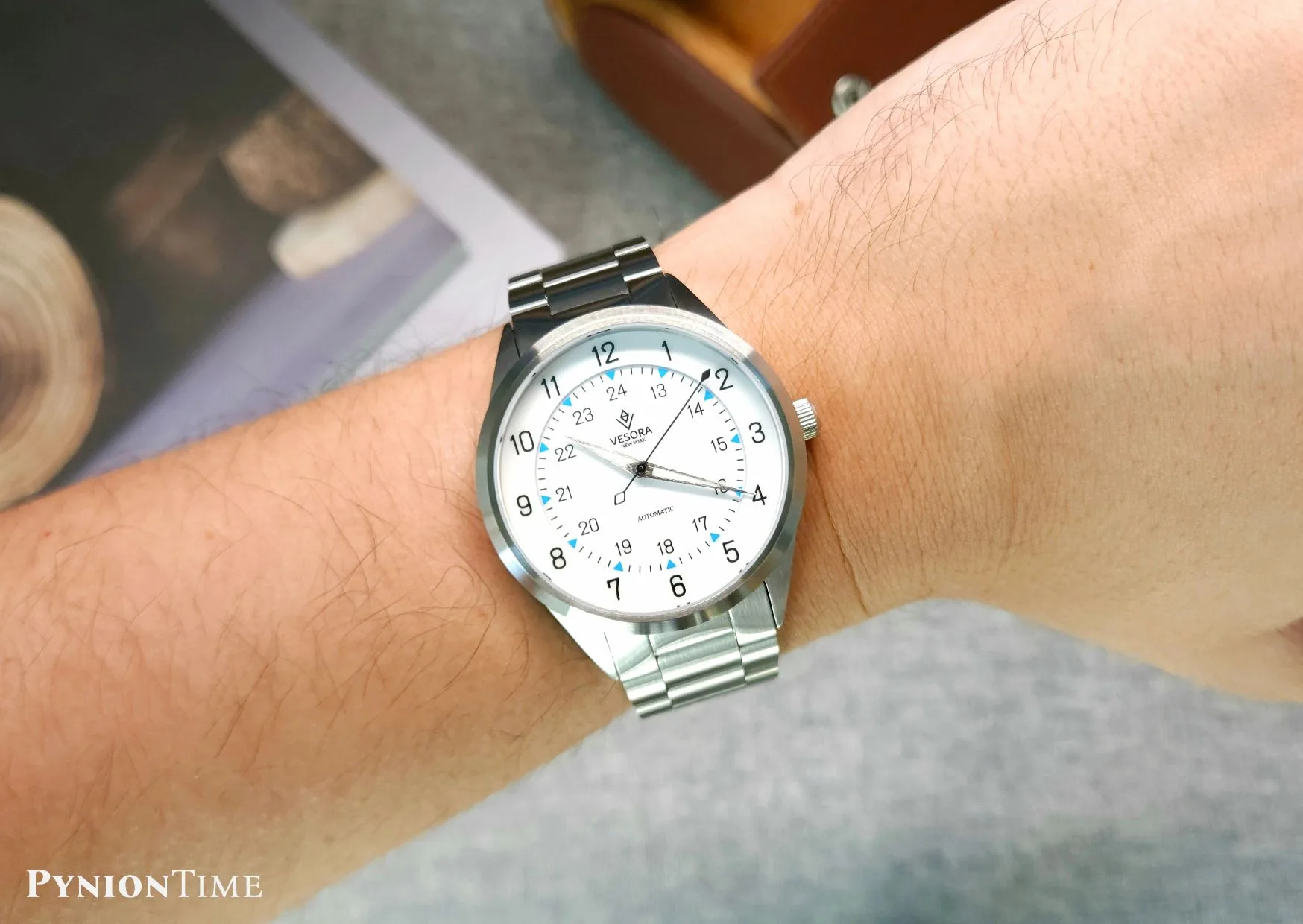
The Chart Against Real Watches on a 6.5-Inch Wrist
On my 16.5cm wrist the chart gives a balanced maximum of 48mm, a bolder ceiling of 50.5mm, and an overhang line at 51mm. Here’s how the watches I’ve reviewed with a known lug-to-lug line up against that, from the smallest to the biggest.
| Watch | Diameter | Lug-to-lug | Thickness | Vs my 48mm |
| Duxot Taranto Automatic | 37mm | 45mm | 11.4mm | 3mm inside |
| Vesora Gantry Field | 39.5mm | 46.5mm | 10.6mm | 1.5mm inside |
| WatchDives WD1969 Pro | 38mm | 47mm | 11.5mm | 1mm inside |
| Spinnaker Fleuss 40 Royal Splash | 40mm | 47mm | 11mm | 1mm inside |
| WatchDives EXD Titanium | 40.2mm | 48mm | 10.6mm | Right on it |
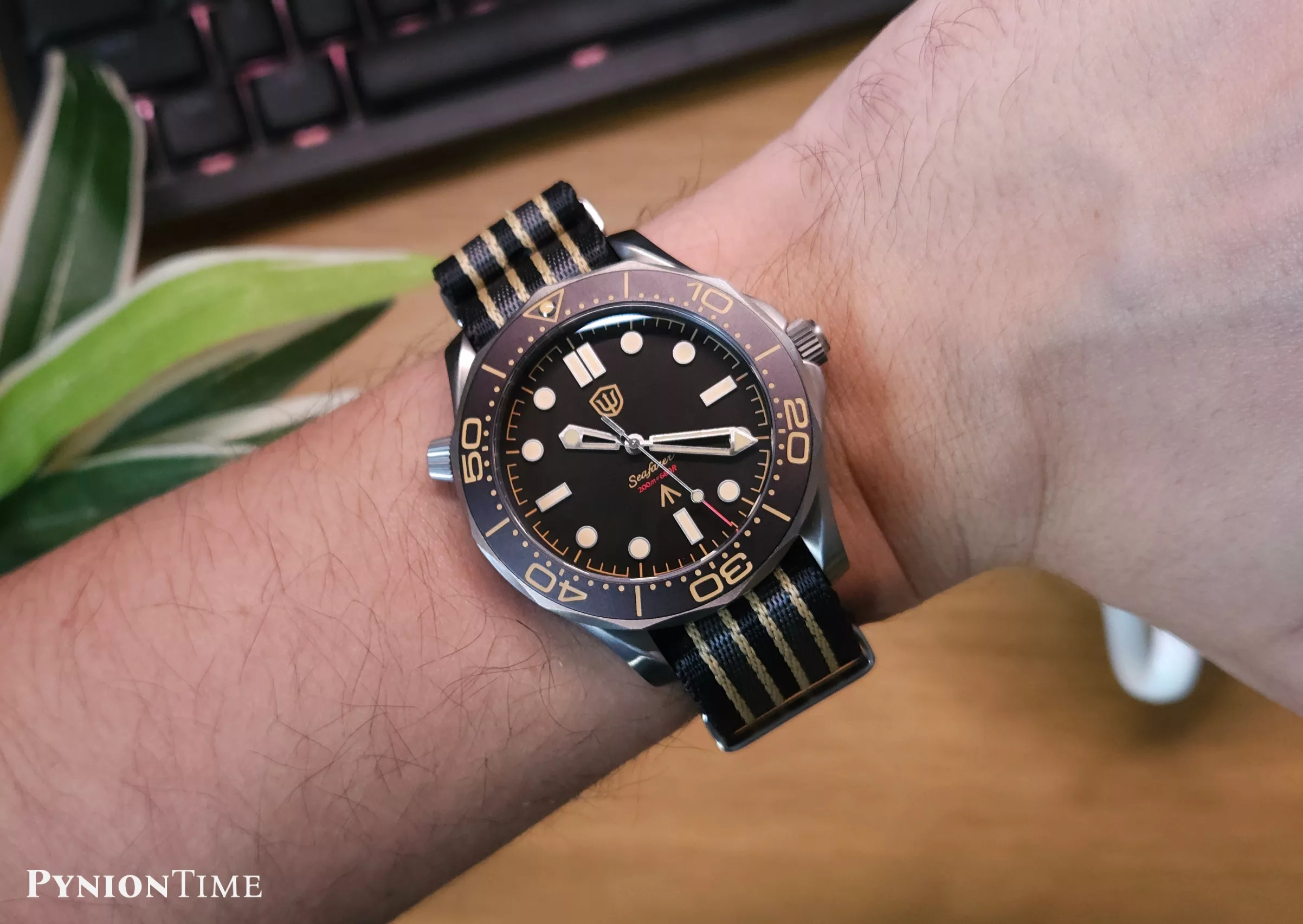
| WatchDives Seafarer WD007Q | 42mm | 49.3mm | 12.3mm | 1.3mm over, wears well |
| Timex Expedition North Field Solar | 41mm | ~50mm | 12mm | ~2mm over, wears well |
The interesting rows are the last two. Going by diameter alone, a 42mm diver is the one I’d have crossed off first. In practice, the Seafarer wears smaller than the 41mm Timex, because its lug-to-lug is shorter and its titanium case is lighter. Diameter ranked these watches wrong; lug-to-lug ranked them right.
Both sit under my bolder 50.5mm ceiling and inside the 51mm overhang line, and my wrist is a little flat, which buys a bit more room. On a rounder 16.5cm wrist I’d expect both to look borderline.
Lug-to-Lug Matters More Than Case Diameter
Lug-to-lug is the distance from the tip of the top lugs to the tip of the bottom lugs, measured straight across the case. It’s the watch’s real length on your wrist, and it’s the number that decides whether a watch overhangs.
Diameter only tells you how wide the case is. Two 40mm watches can wear completely differently if one has long, straight lugs and the other has short ones that curve down. If you only check one number before buying, check lug-to-lug.
How to measure a watch’s lug-to-lug
Use digital calipers across the outermost tips of the lugs, top to bottom, with the strap or bracelet removed if it gets in the way. If you can’t measure the watch, check the spec sheet. Microbrands almost always list lug-to-lug, but many larger brands still leave it off, so look for hands-on reviews that measure it.
Lug width is a different number
Lug width is the gap between the lugs, where the strap fits: 18mm, 20mm, 22mm. It sets your strap size, not how big the watch wears. It does affect how a watch looks, though. A wide strap on a slim wrist makes everything feel bigger. My own preference is a bracelet that tapers from 20mm at the lugs to 16mm at the clasp, which keeps a sports watch from looking chunky.
Thickness Decides Comfort, and Whether It Fits Under a Cuff
A watch is comfortable when its thickness stays under about a third of its diameter. Past that, it starts to feel tall and top-heavy on the wrist. For a watch that has to slide under a shirt cuff, my personal limit is 13mm, and for a dress watch I want it under 12mm.
Every watch in my wrist test above stays under that ratio. Even the 42mm WatchDives Seafarer, at 12.3mm thick, comes out at 0.29. The one that sits right on the line is the WatchDives WD1863 Space Pilot: 12.8mm on a 39mm case, almost exactly a third, and you notice it more than the bigger Seafarer.

Flat or Round Wrist? The Same Size Can Fit Differently
Two wrists with the same circumference can take very different watches. A flat wrist has a wide top, so it handles a longer lug-to-lug. A round wrist has a narrower top and more curve at the sides, so lugs reach the edge sooner.
If your wrist is round, lean towards the lower end of the chart, and favour lugs that curve down to hug the wrist. Leather and rubber straps also help more than a stiff bracelet. If your wrist is flat, you can sit at the top of your range or a little past it. The flat-top measurement from step 5 is the quickest way to know which camp you’re in.
How Big Is a 40mm Watch?
A 40mm watch is about 1.57 inches across. By diameter alone it’s a balanced size for wrists from about 15.5 to 19.5cm, but its lug-to-lug narrows that down: a 40mm with 46mm lugs works from 15.5cm, while one with 50mm lugs wants 17.5cm or more.

Here’s the balanced wrist range for common diameters:
| Diameter | Balanced on wrists of |
| 36mm | 13-17cm |
| 38mm | 14-18cm |
| 40mm | 15.5-19.5cm |
| 42mm | 16.5-20.5cm |
| 44mm | 18-22cm |
And here’s the smallest wrist each lug-to-lug suits, which is the number that actually rules a watch out:
| Lug-to-lug | Balanced from a wrist of |
| 44mm | 14.5cm |
| 46mm | 15.5cm |
| 48mm | 16.5cm |
| 50mm | 17.5cm |
| 52mm | 18.5cm |
So 38mm vs 40mm is less of a jump than it sounds. The step that catches people out is lug-to-lug: every 2mm of it asks for another centimetre of wrist, which is why a 42mm with long lugs is where many 16-17cm wrists cross from ‘fits’ to ‘overhangs’.
The Sizing Mistakes I See Most Often
Buying on diameter alone is the big one. The second is measuring over the wrist bone instead of just above it, which adds a few millimetres you’ll never wear the watch on. The third is ignoring thickness until the watch arrives and won’t go under a cuff.
And bracelets can fix a loose fit, but never a long case. If the lugs overhang, no amount of link removal will change it. I go through more of these in my list of first-watch buying mistakes.
Check out The Ultimate Affordable Watches Guide