Duxot Vitesse Meca Quartz Chronograph: A Very Attainable 39mm Racing Chrono

Duxot has built most of its reputation on automatics. Their most recent Quadrata and the Siena both sit at $310 on a Miyota 8215, and when I wore the Quadrata for my full review, what stood out was how much case and bracelet the brand fits in at that price. Racing chronographs have always been part of Duxot’s 1970s mood board, but they have rarely been the watch it puts at the front of a launch.
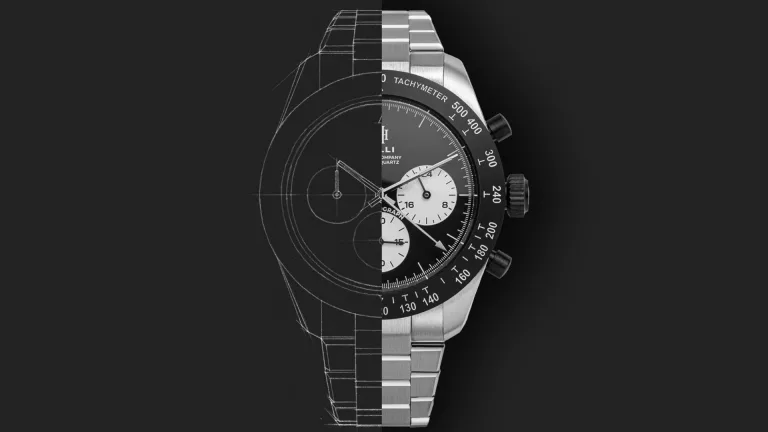
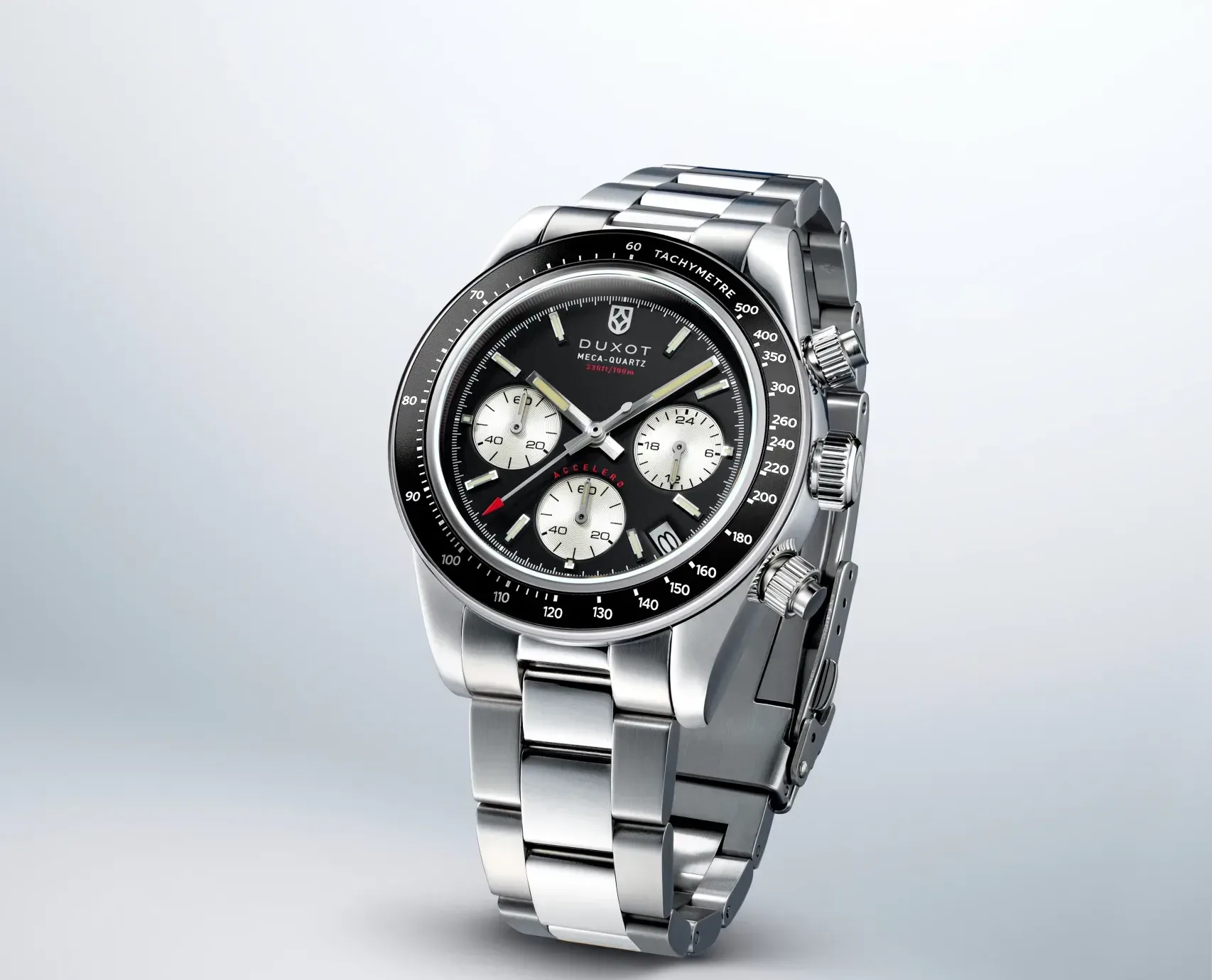
The new Vitesse Meca Quartz Chronograph changes that. It is a 39mm steel racing chronograph with a fixed tachymeter bezel, flat sapphire crystal and a Japanese meca-quartz movement, launching in five colourways on October 16, 2026. It is aimed at people who want the vintage motorsport look on a normal-sized wrist without paying for, or servicing, a mechanical chronograph.
The name itself isn’t new. Duxot has already sold earlier Vitesse references under the same DX-2072 number, listed by retailers as the “Vitesse Dual Time Chronograph” in blue, red and a gold-toned grey (DX-2072-22, -33 and -55). The same 39mm by 11.2mm case carries over to the five new references, DX-2072-66 to -AA. What has changed is the palette, and the “Dual Time” label has gone.
The Movement
Duxot lists the caliber as M-SII-VK63-D4.5, which decodes as the Seiko Instruments VK63 with the date at 4:30. It is one of the most widely used meca-quartz chronographs at this level, and Nivada Grenchen and Worn & Wound even built a Datomaster edition around it. A quartz circuit keeps time, rated to within about 20 seconds a month, while a mechanical module runs the chronograph. That module is why the central chronograph hand sweeps smoothly and flies back to zero on reset instead of ticking. Battery life is roughly three years, less if you run the chronograph all the time.
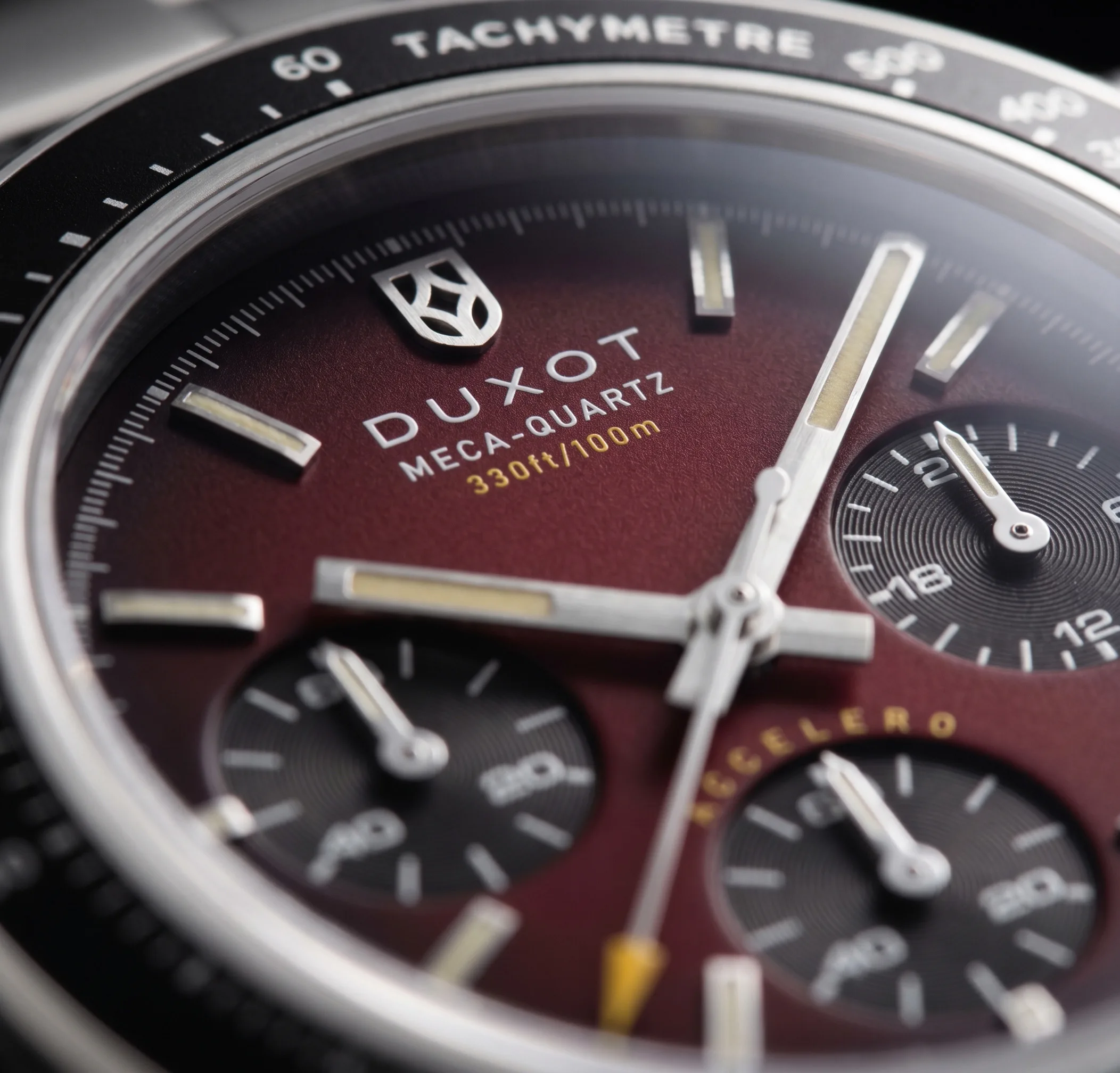
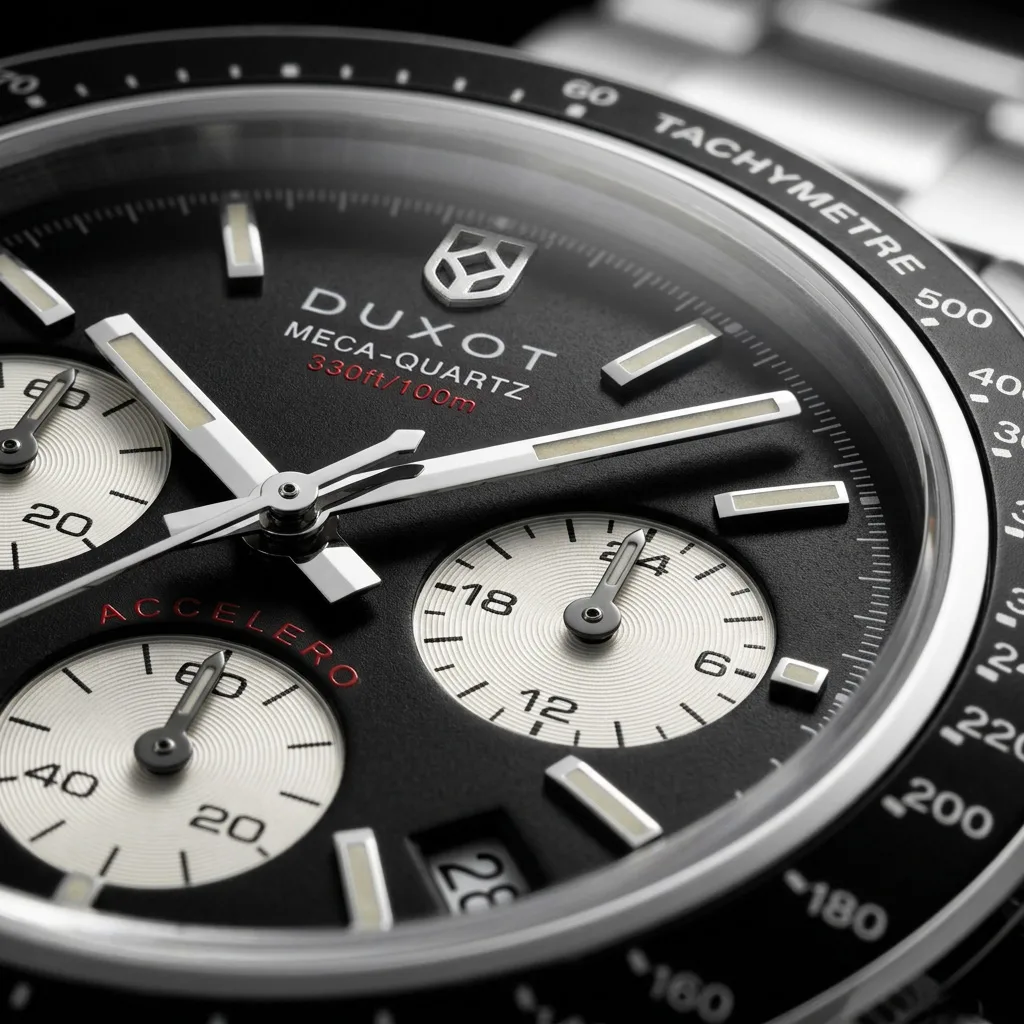
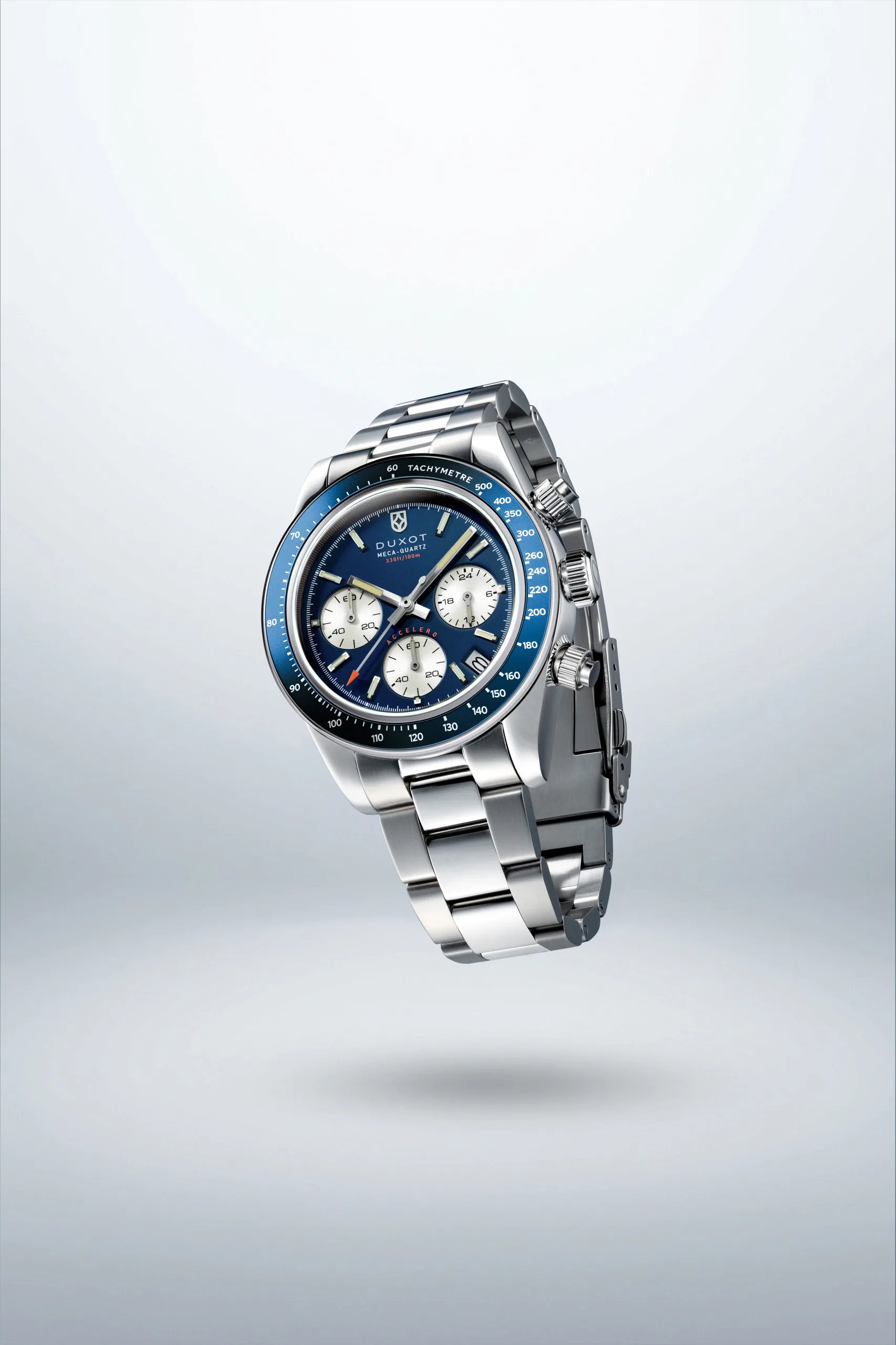
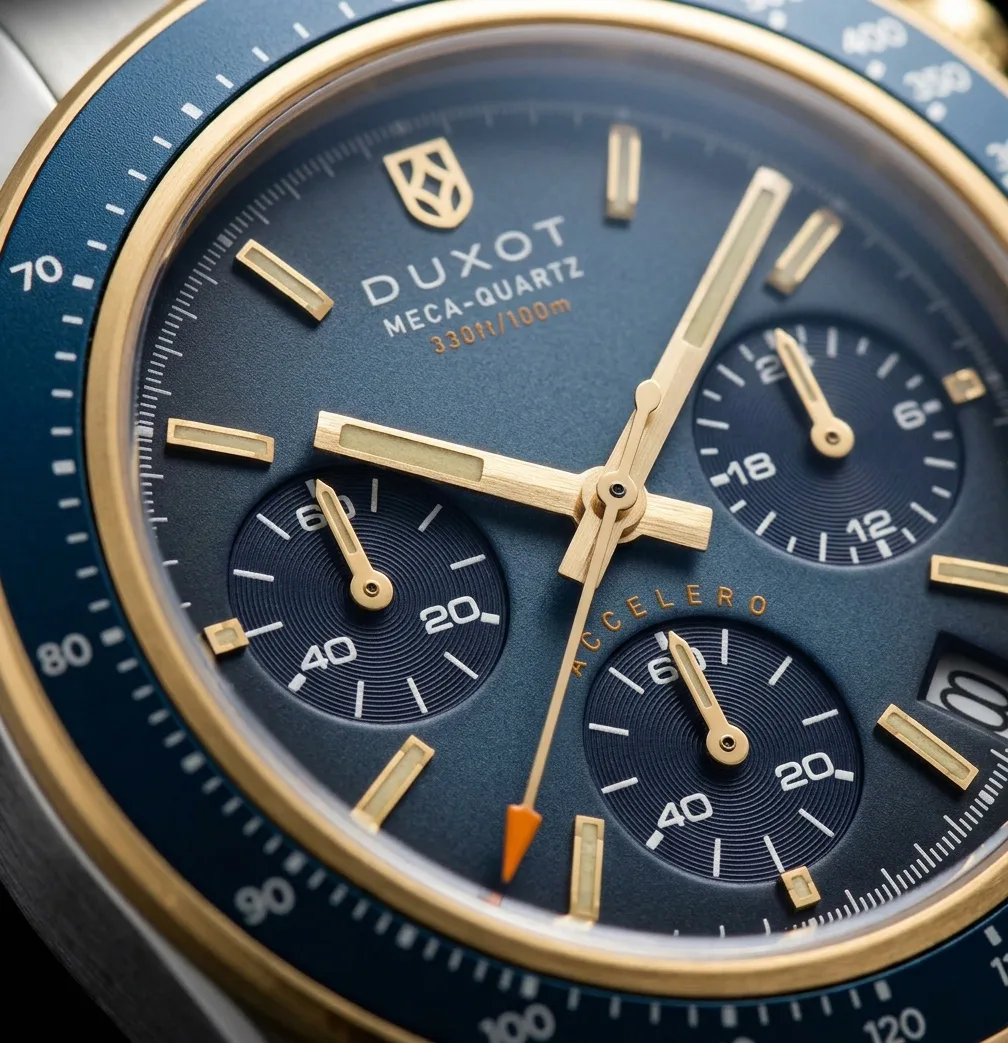
The standard VK63 layout puts small seconds at 6, a 60-minute counter at 9 and a 24-hour register at 3. That 24-hour hand follows the main hour hand, so it works as a day-night indicator rather than a second time zone (people sometimes confuse them), which is probably why the “Dual Time” name was dropped.
If you are still deciding between battery and mainspring, the trade-offs between quartz and automatic matter less here than usual. Meca-quartz exists for exactly this job: you get the push-and-snap feel of a mechanical chronograph with the accuracy of quartz, and for a $220 racing chronograph, it is the right movement to choose.
39mm Is the Right Size for This Kind of Watch
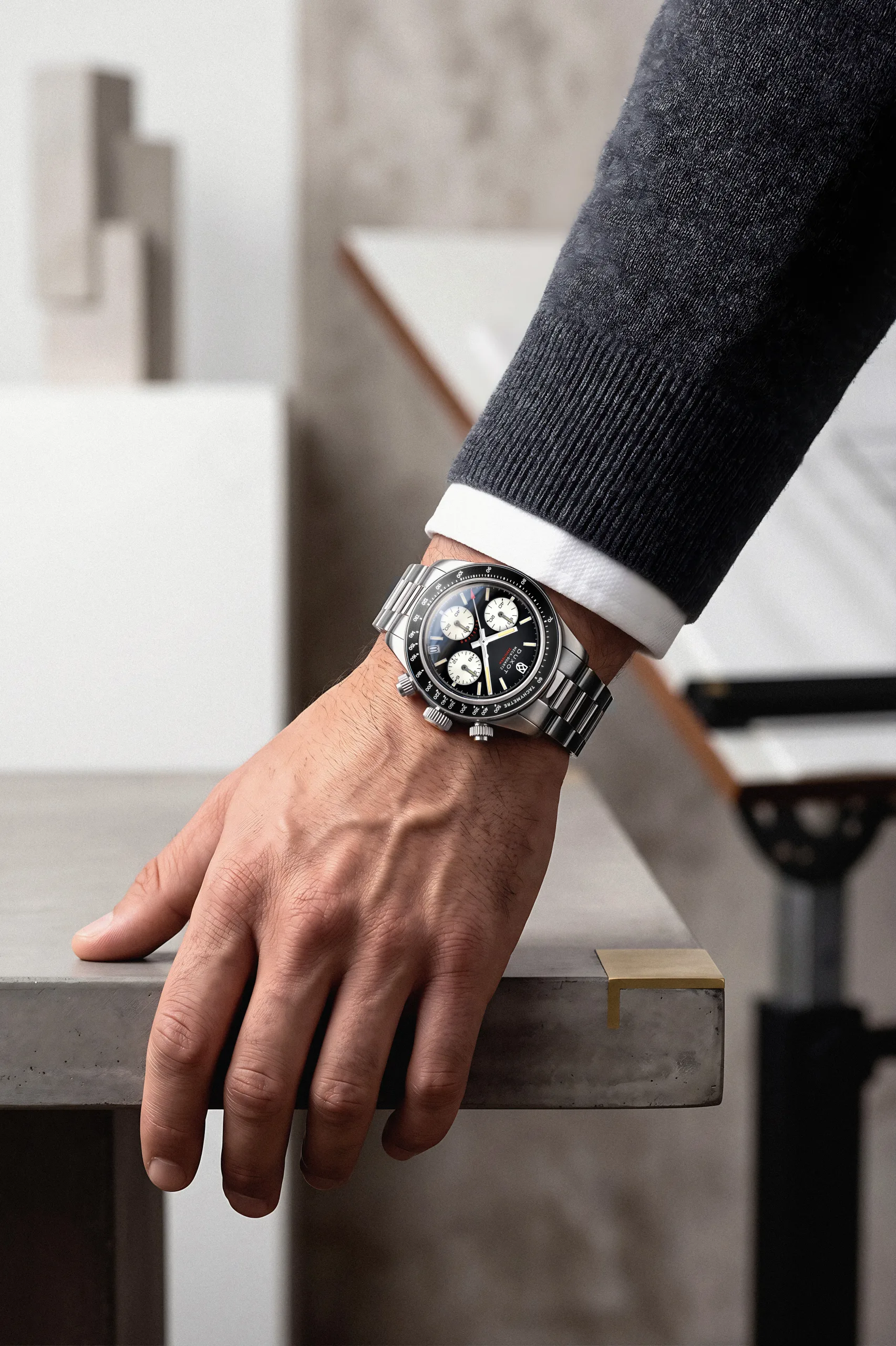
The case measures 39mm across, 11.2mm thick and 46.6mm lug to lug. Those are compact numbers for a three-register chronograph, and they put the Vitesse closer to the vintage racing watches it borrows from than to the 42mm-plus chronographs that fill cheap listings. Staying under 12mm also means it should slide under a shirt cuff without a fight.
The tachymeter scale on the fixed bezel is the part most owners will never use, but it does work. Start the chronograph at one marker, stop it at the next one a kilometre or mile later, and the central hand points to your average speed on the bezel. A lap that takes 40 seconds reads as 90. It belongs to the racing theme more than to daily life, and that is fine on a watch called Vitesse.
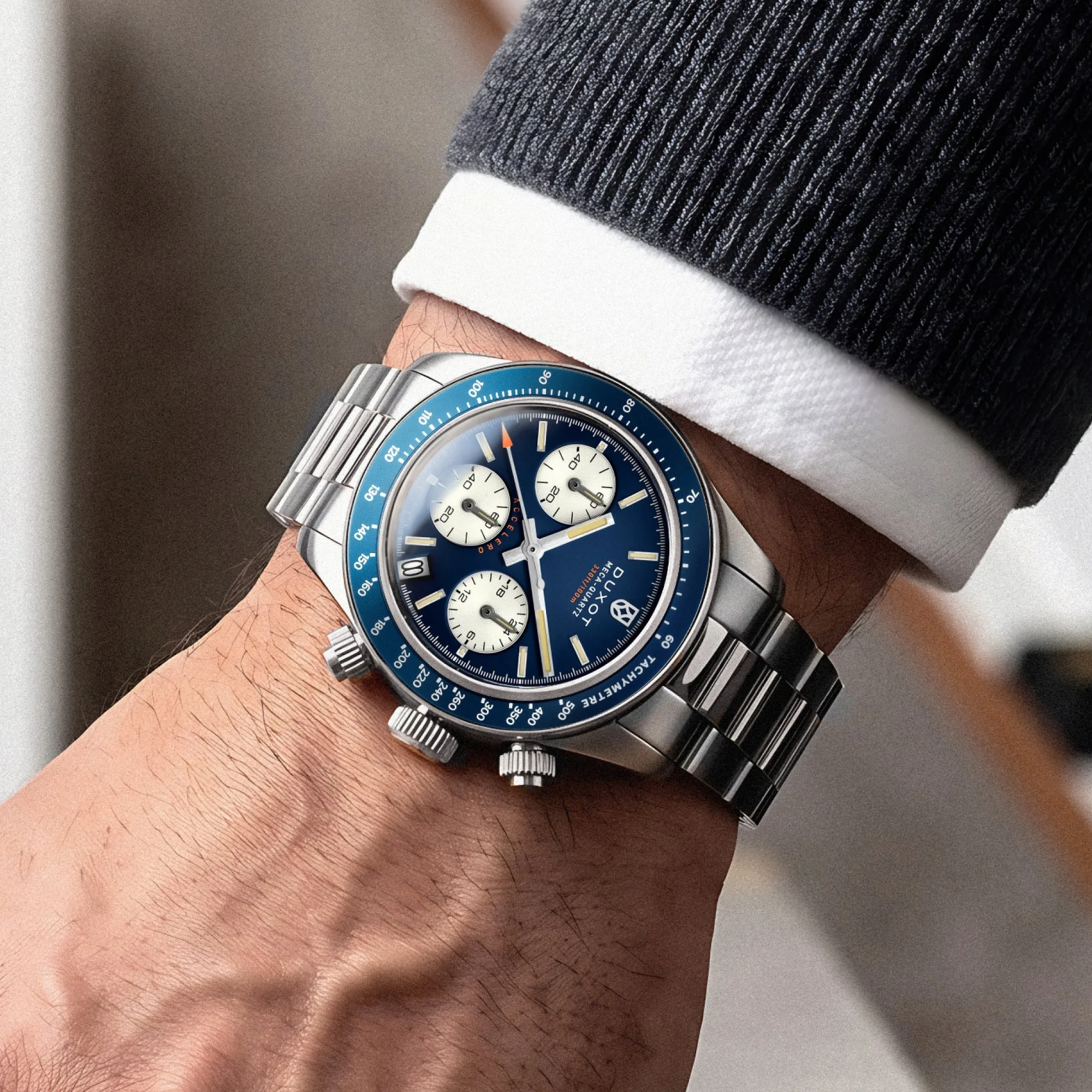
The rest of the build is sensible. A screw-down crown with a debossed Duxot “D,” a solid screw caseback and 10 ATM of water resistance make it a watch you can wear every day without thinking about rain or a swim. The crystal is flat, anti-reflective sapphire over a matte dial, which should keep glare down when you read a subdial at an angle.
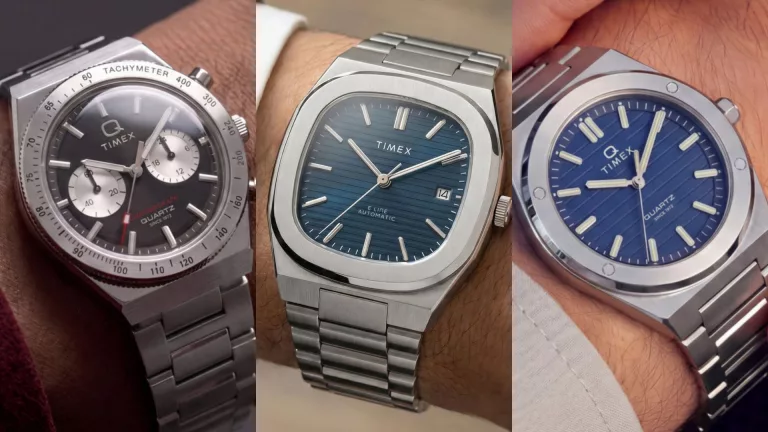
It is worth setting it next to the Cadola Slipstream we covered, another five-dial meca-quartz racing chronograph aimed at the same buyer. The Slipstream measures 41mm and 13mm thick and uses mineral crystal. On paper the Vitesse is the more refined package of the two: smaller, almost 2mm thinner and with sapphire as standard.
Five Dials, and the Steel Ones Are the Safer Bet
The three full-steel versions share silver hands and indexes. Eclipse Slate is black on black, dial and bezel, and the most restrained of the set. Radial Blue pairs a deep blue dial with a matching blue bezel. Copper Rust puts a warm rust-red dial against a black bezel, and it is the one that looks most like a 1970s racing watch, so it would be my pick.
The two-tone models cost $20 more. Royal Oxford combines a blue dial with steel and gold, while Sable Precision sets a smoked grey dial in steel and rose gold. The press release doesn’t say how the gold is applied, but the earlier gold-toned DX-2072-55 was listed with a gold coating, so it wouldn’t be surprising if these are plated too. That matters for how they age, since plated bracelet links tend to show wear first.
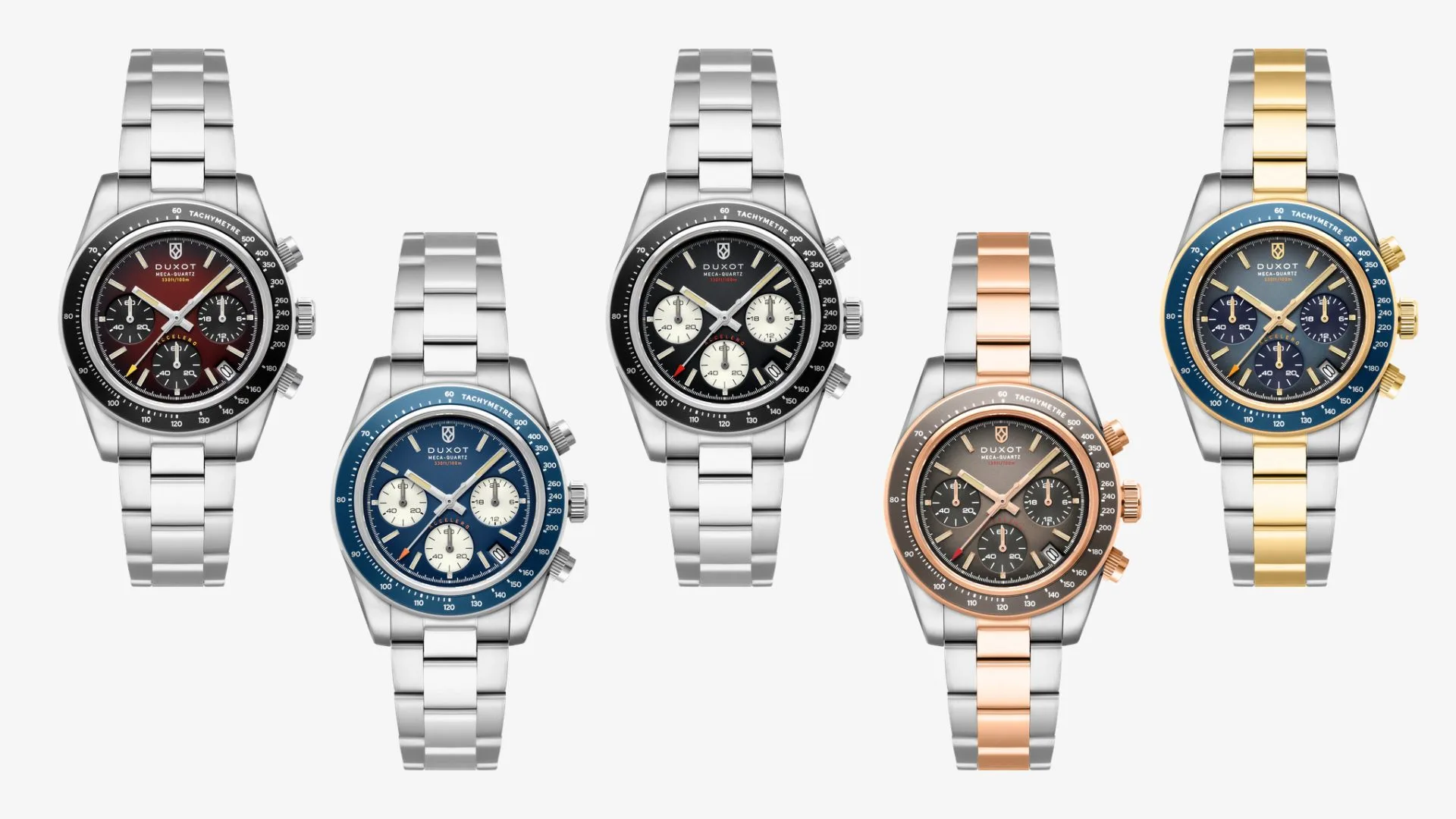
Royal Oxford is the more classic of the two, the kind of blue-and-gold combination that works with a suit as well as at the weekend. Sable Precision is warmer and more fashion-led, and the smoked grey dial should keep the rose gold from looking too loud. If you only want one watch from the range, though, a full-steel version is easier to wear every day and will look the same in five years.
The bracelet is the same 20mm steel design across the range, which also makes the Vitesse easy to change up. A 20mm lug width opens up a huge choice of leather rally straps and NATOs, and a perforated racing strap on Copper Rust or Eclipse Slate would take the vintage look even further.
Where the Price Starts to Matter
At $220 the Vitesse sits about $90 below Duxot’s entry automatics, and far below most meca-quartz chronographs from better-known names. The Furlan Marri in our guide to affordable chronographs asks $731 for a 38mm meca-quartz. That buys a different level of dial work and finishing, but the movement concept is the same.
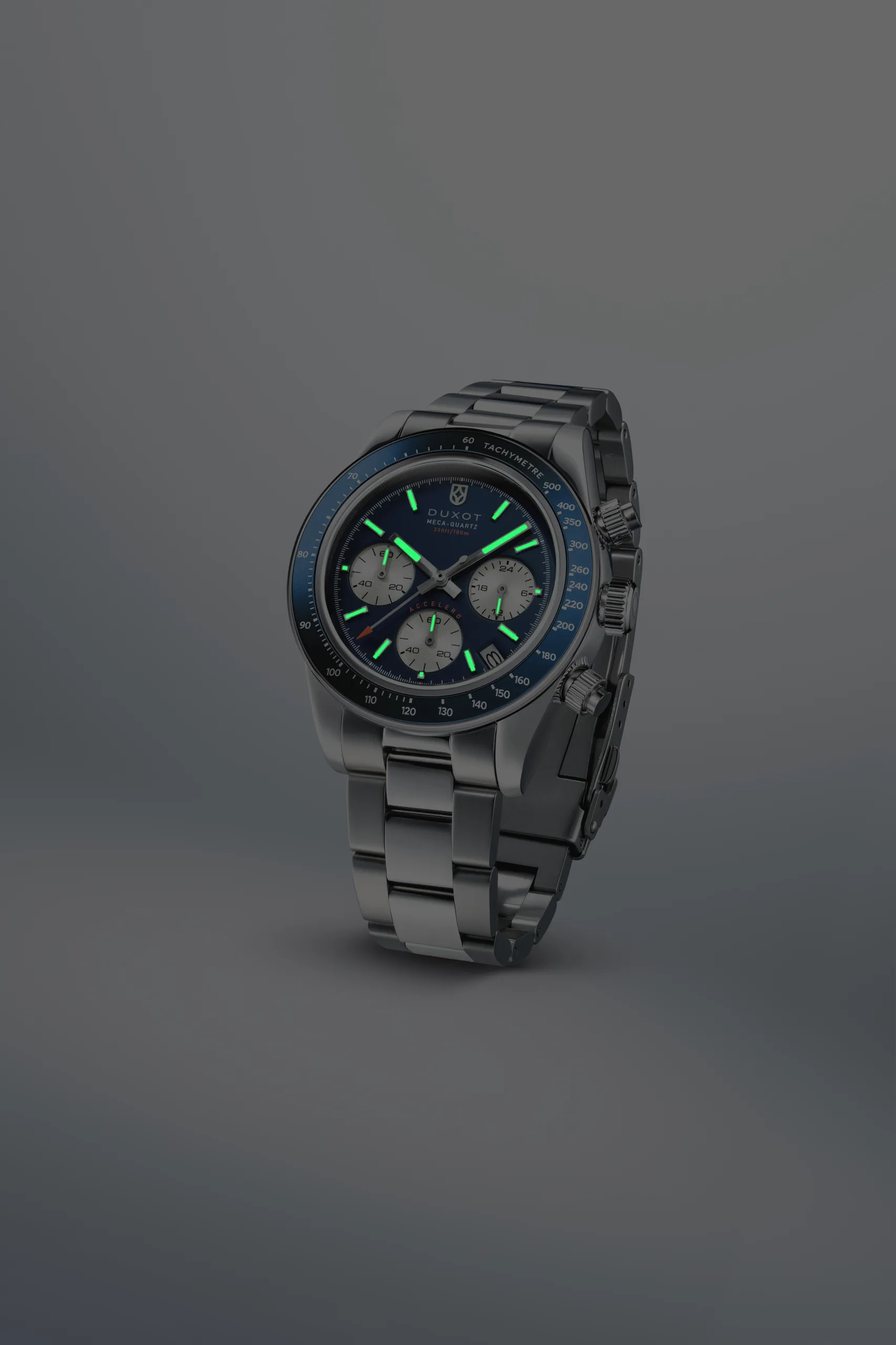
There are limits worth knowing before you order. The press material says nothing about lume, which on a matte racing dial could mean very little. The bracelet closes with a fold-over clasp and push-button release rather than the butterfly clasp I liked on the Taranto, and there is no mention of micro-adjustment, which was my main complaint about that watch’s bracelet. The VK63 is dependable but common, so the Vitesse competes on design and size rather than on anything inside the case.
Specs, Pricing & Availability
Case Diameter: 39mm
Case Thickness: 11.2mm
Case Material: Stainless steel (two-tone steel and gold on Royal Oxford, steel and rose gold on Sable Precision)
Water Resistance: 10 ATM
Caliber: Seiko VK63
Crystal: Flat sapphire with anti-reflective coating
Function: Hours, minutes, chronograph with sub-counters, tachymeter bezel
Price: USD 220 (Eclipse Slate, Radial Blue, Copper Rust); USD 240 (Royal Oxford, Sable Precision)
Who This Actually Makes Sense For
I think the Vitesse is one of the easiest Duxot watches to recommend so far. If you want a vintage-style racing chronograph and your wrist is small to medium, the full-steel Copper Rust or Eclipse Slate at $220 is a very good way in, mainly because 39mm by 11.2mm is a size most cheap chronographs never offer. Skip it if you need lume for real use, or if you have your heart set on a mechanical chronograph and are willing to save for one.
The bigger story is where Duxot is heading. After a run of automatics that kept getting better, the brand is now filling the space below them with a quartz racing watch built on the same compact, retro thinking. If the lower price brings in buyers who later step up to a Taranto or a Quadrata, the Vitesse is doing its job.
Check out The Ultimate Affordable Watches Guide