
Since the PRX relaunch, Tissot has built the collection on two pillars: cheap, well-finished quartz three-handers, and Powermatic 80 automatics that undercut almost everything around them. The chronograph never fitted that pattern. It has only ever existed as a 42mm automatic, listed at $2,150 in the US, a Valjoux-based flagship sitting at the very top of a line whose entire appeal is 1970s design at accessible money.
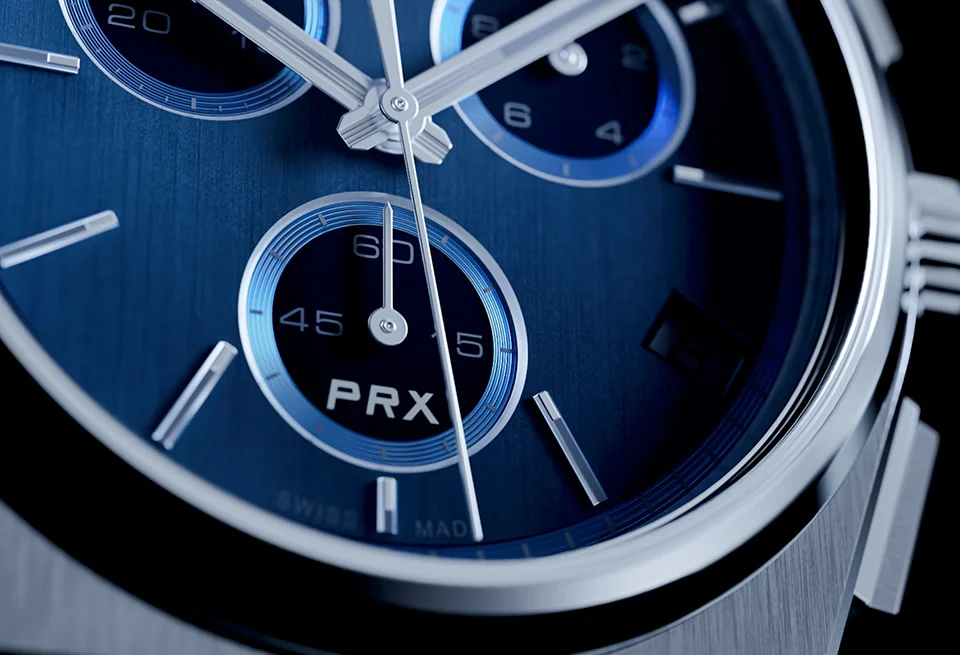
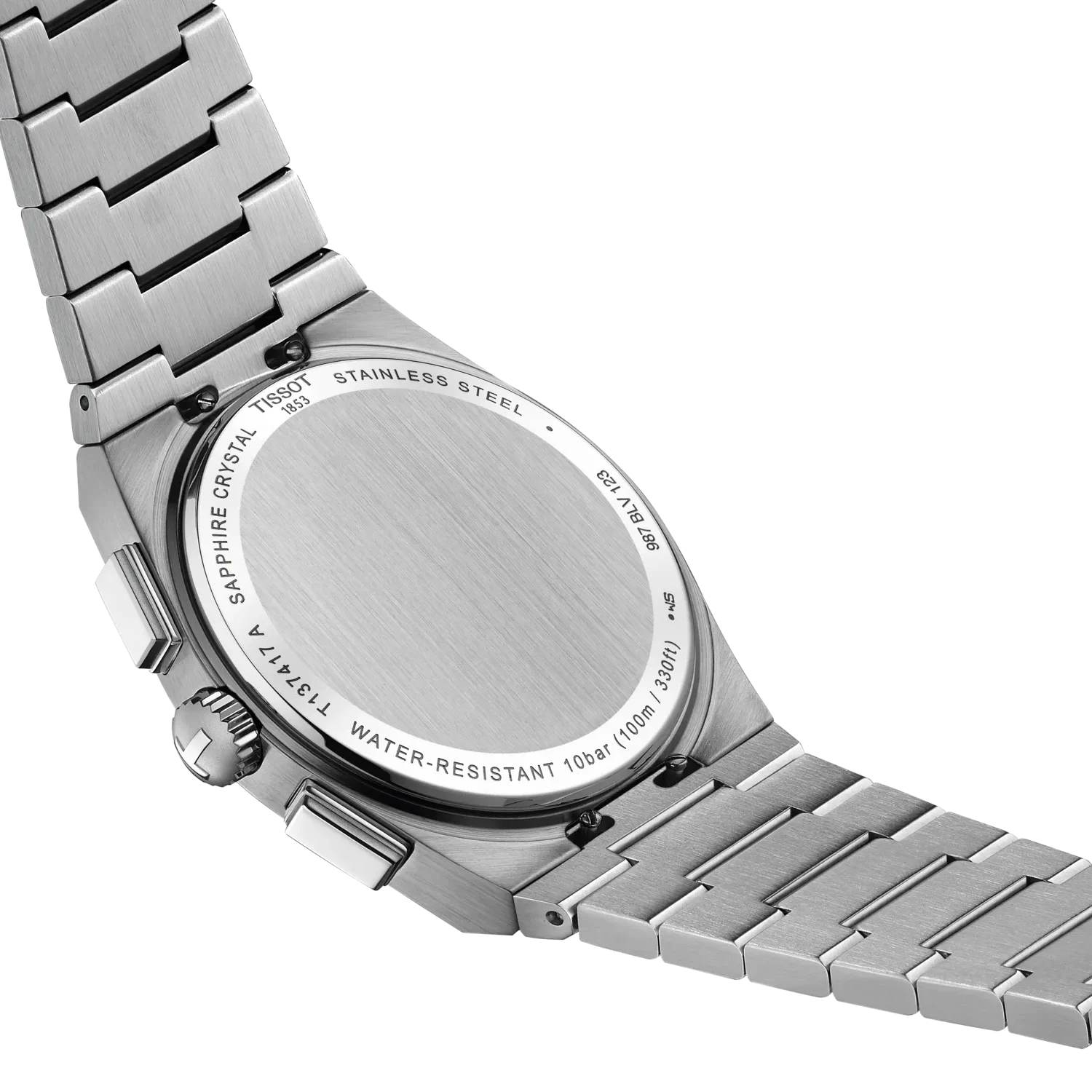
The new Tissot PRX Quartz Chronograph closes that gap. It is 41mm of stainless steel, water resistant to 100m, running an ETA G10.212 PowerDrive quartz chronograph behind a sapphire crystal, on the same integrated quick-release bracelet as the rest of the family.
That figure is the story. It is a shade over a quarter of the automatic’s price for a watch that, at arm’s length, reads as the same design. Anyone who has been circling the chronographs that sit under the thousand-dollar line and wanted the Genta-adjacent silhouette without the Swiss mechanical premium now has a direct route to it.
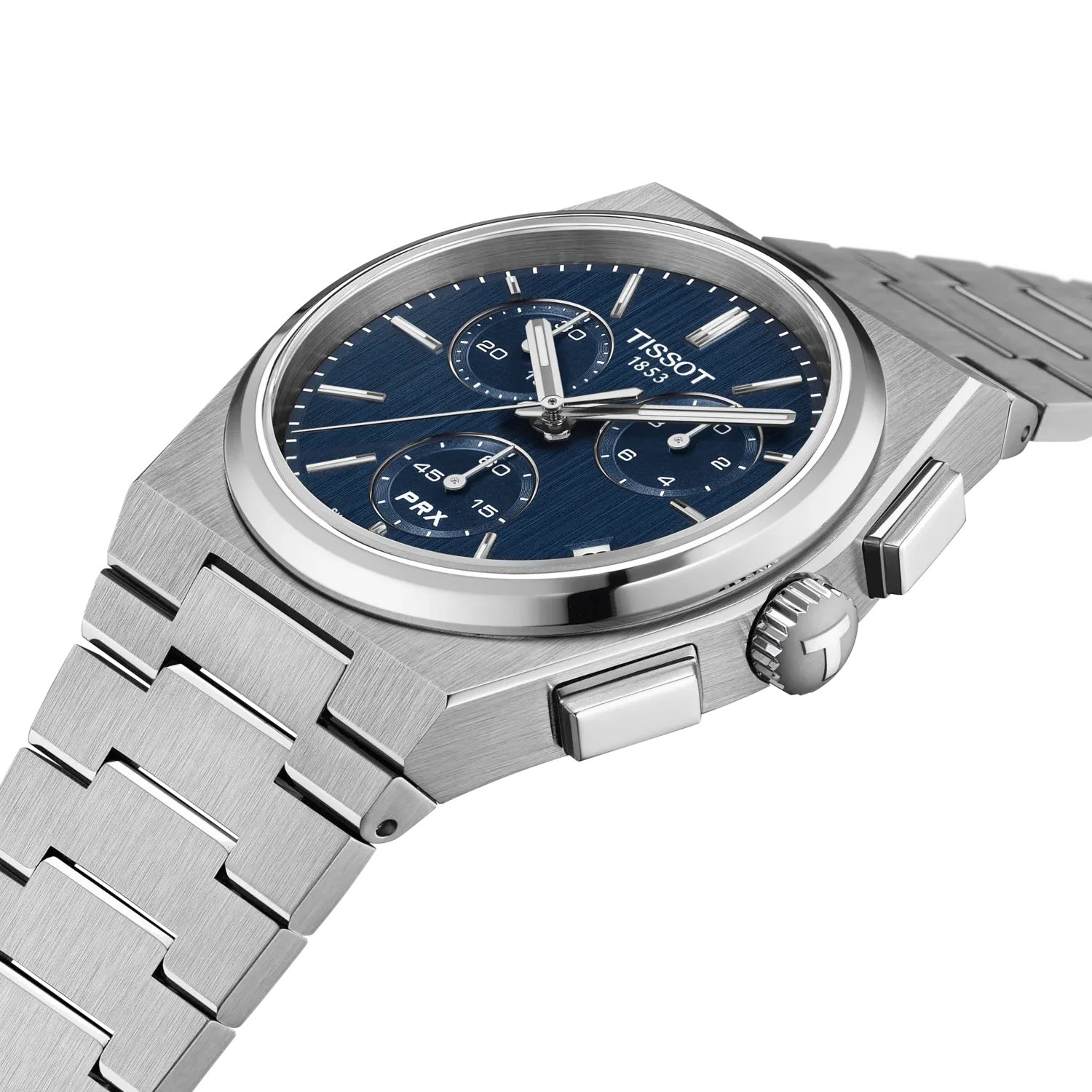
Quartz Was the PRX’s Original Engine Anyway
There is a neat historical symmetry here that Tissot’s own press materials underplay. The 1978 watch the modern PRX is drawn from was a quartz sports watch, not a mechanical one. The integrated case, the tapering bracelet and the flat bezel were all designed around a quartz movement in the first place.
So a quartz chronograph is not a downgrade of the concept. It is closer to the original brief than the automatic is. The PRX has spent the past few years as the default recommendation whenever someone asks for a way into the integrated-bracelet look without five figures, and most of those recommendations were for quartz references anyway.
Strip the two chronographs down side by side and the list of things you lose is short. The automatic gives you a mechanical sweep, a twelve-hour counter, a waffle-textured dial, a display caseback and an extra millimetre of case. That is genuinely it.
The bracelet is the same design. The sapphire crystal carries over. The 100m water resistance carries over. The quick-release system carries over. For a lot of buyers that trade reads as obvious, and on paper the quartz version is the better-value package by a distance that is hard to argue with.
What you gain is less often mentioned. Quartz accuracy over a mechanical chronograph is not close, and the G10.212 offers a 1/10th-second reading the Valjoux simply cannot produce. The end-of-life indicator is a small thing, but it means the watch warns you before it stops rather than after.
The Dial Is Plainer, and the Layout Gives the Game Away
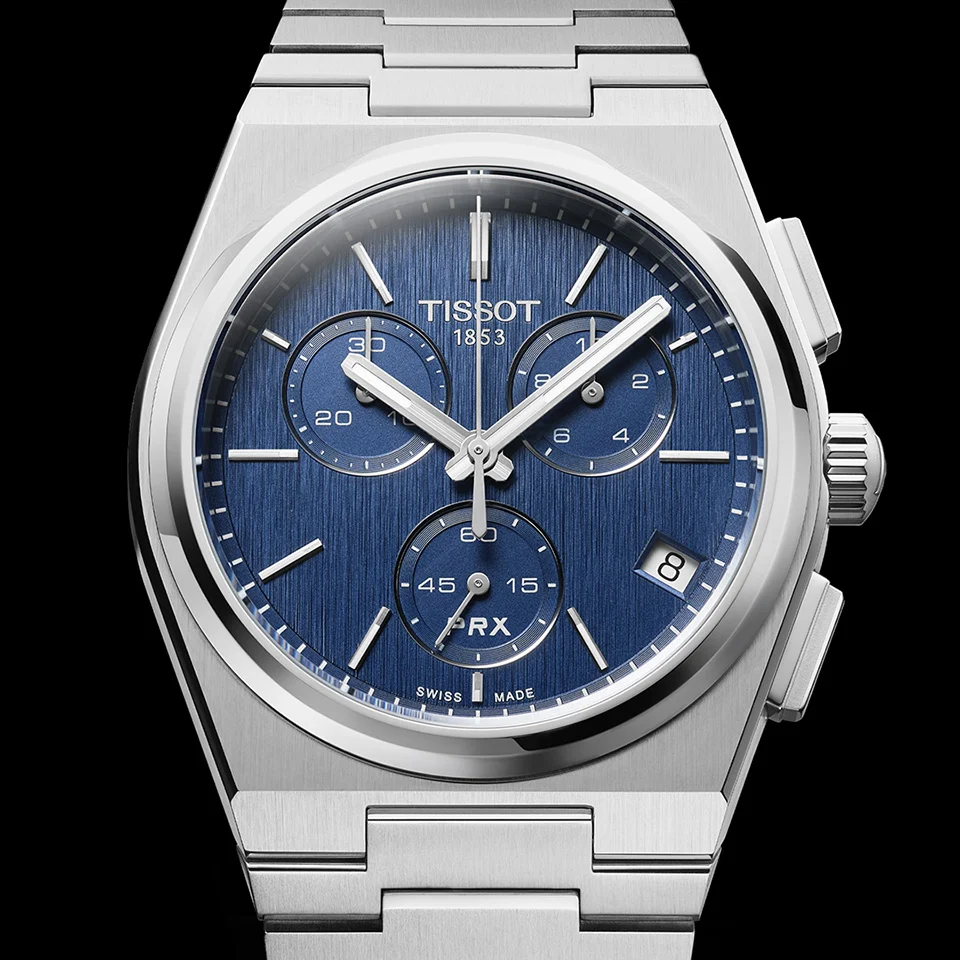
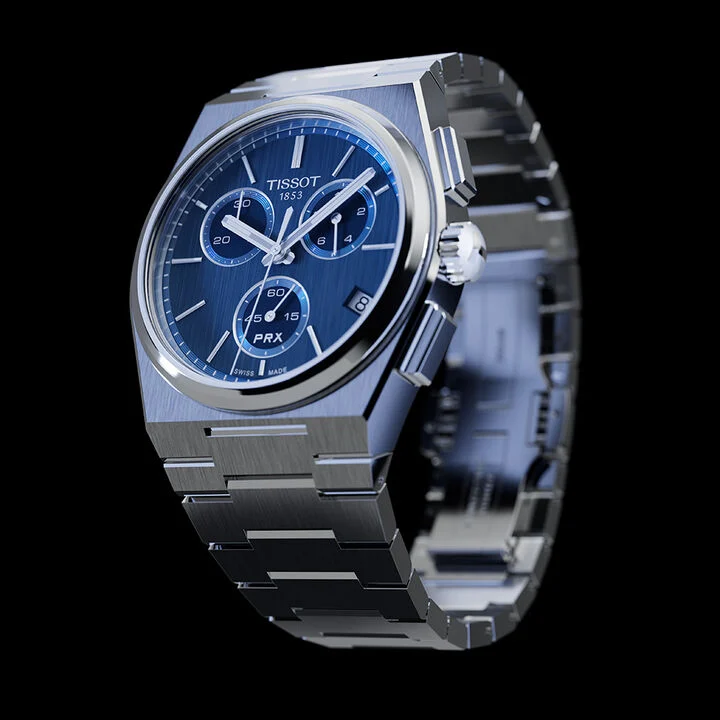
Three colourways launch: a silver dial with yellow-gold accents (T137.417.11.031.00), plus black (T137.417.11.051.00) and blue (T137.417.11.041.00). The silver ships with fine gold outlines around the counters and gold baton hands and indices; the other two swap that for cooler silver. All of them carry Super-LumiNova on the hands.
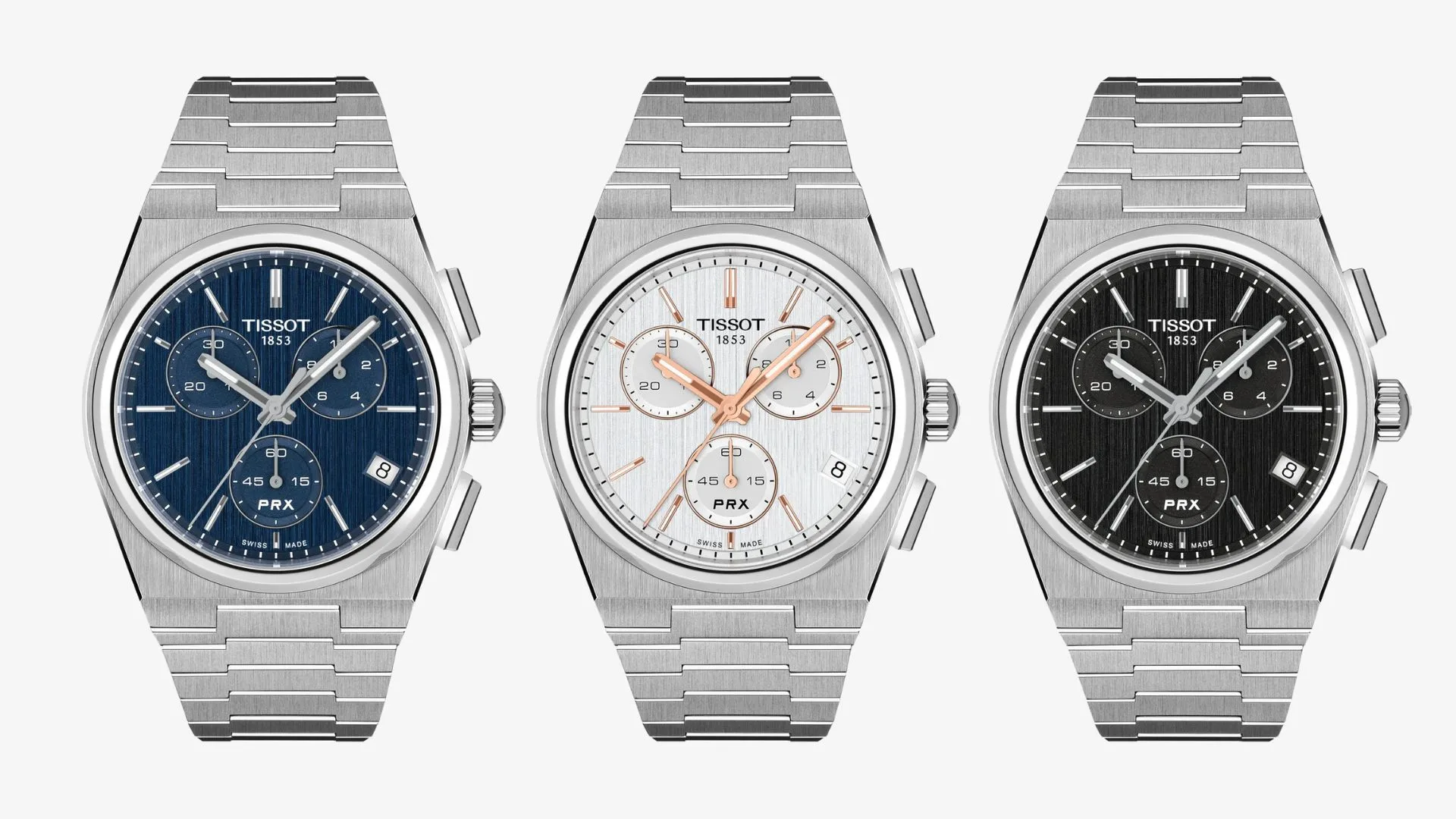
The dials are vertically brushed rather than waffled. It is a plainer surface than the mechanical version and the clearest place where the price shows, though at this money the objection is a weak one. The subdial layout is the real tell: 1/10th-second at 3, running seconds at 6, a 30-minute counter at 9, date at 4. No twelve-hour register, so anything past half an hour is on you to track.
The counters on the silver dial are the most interesting of the three. That warm gold outline is a detail Tissot usually reserves for its dressier collections, and pulling it onto a sports chronograph gives that reference a character the black and blue versions do not have.
41mm Is Still More Watch Than Many PRX Buyers Want
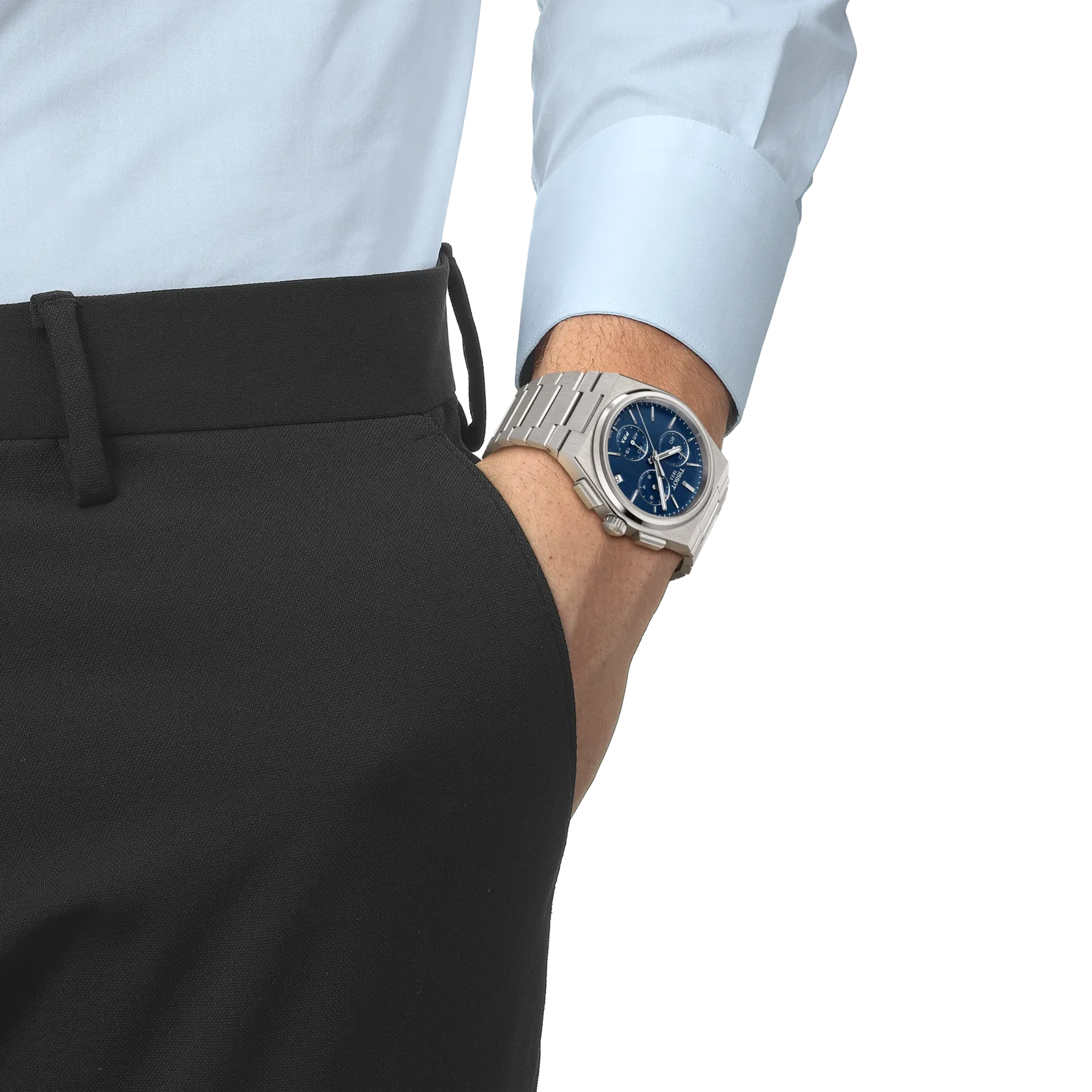
This is where I would push back. The PRX time-only models come in 35mm and 40mm, and the 40mm already wears larger than its number because of the integrated lugs and the wide flat bezel. A 41mm chronograph with a 13mm lug width and a 151g bracelet is a substantial object, and the millimetre saved over the automatic does not change that.
Integrated cases are unforgiving about this in a way round-lugged watches are not. You cannot swap on a shorter strap to fix the proportions, because the bracelet is part of the design. Wearing a mid-size integrated-bracelet watch for a few weeks makes the point quickly: the lug-to-lug span decides everything, and there is no adjusting it afterwards.
Anyone under about a 17cm wrist should try one on before ordering. A 38mm version of this chronograph would be the one to beat in the segment, and its absence is the only real complaint I have about the launch.
The G10 family has been powering Swatch Group quartz chronographs for decades, across Tissot, Certina and Hamilton, and the PowerDrive variant adds motorised hand repositioning so the counters snap back instantly rather than crawling. It is reliable, serviceable at any Tissot point of sale, and entirely unglamorous.
That matters because the competition at this price is increasingly meca-quartz.
Specs, Pricing & Availability
Case Diameter: 41 mm
Case Thickness: 11.65 mm
Case Material: 316L stainless steel
Water Resistance: 100 m (10 bar)
Caliber: ETA G10.212 PowerDrive, quartz chronograph
Crystal: Sapphire
Function: Hours, minutes, seconds, date, chronograph with 1/10-second and 30-minute counters, ADD and SPLIT functions, end-of-life indicator
Price: $525 USD
Who Should Buy It, and Who Should Hold Out
I would buy the blue. It is the most versatile of the three, the silver’s gold accents will divide people, and the black loses some of the dial architecture in low light. At around $500 it is one of the cheapest credible routes to this specific look, and I do not think the quartz movement costs you anything a buyer at this price is actually shopping for.
Hold out if you have a smaller wrist, or if the mechanical sweep is the point for you. Tissot has not replaced the automatic chronograph, it has undercut it by more than $1,500, and that is a more interesting move for the collection than another colourway would have been. It also puts pressure on everyone else building integrated-bracelet sports watches at this money, including Timex, which has been pushing hard into the integrated-bracelet category all year. Matching a Swiss Made chronograph at $580 is a much harder brief than matching a three-hander.