Duxot Taranto Automatic Review: An Attainable Integrated-Bracelet Watch That Gets It

I had been looking at integrated-bracelet watches for a while. The Taranto ended up being my first real time with one on the wrist, and it turned out to be a good place to start.
Integrated-bracelet watches have become one of the most crowded corners of affordable watchmaking. The formula is familiar by now: angular steel case, flowing bracelet, relatively slim profile and at least some visual connection to the luxury sports watches that established the genre.
The Duxot Taranto Automatic is interesting for a different reason. At around $300, it isn’t particularly expensive, yet Duxot has managed to combine a mechanical movement, sapphire crystal, integrated steel bracelet and compact 37mm case, without the finished watch immediately feeling built around compromises.
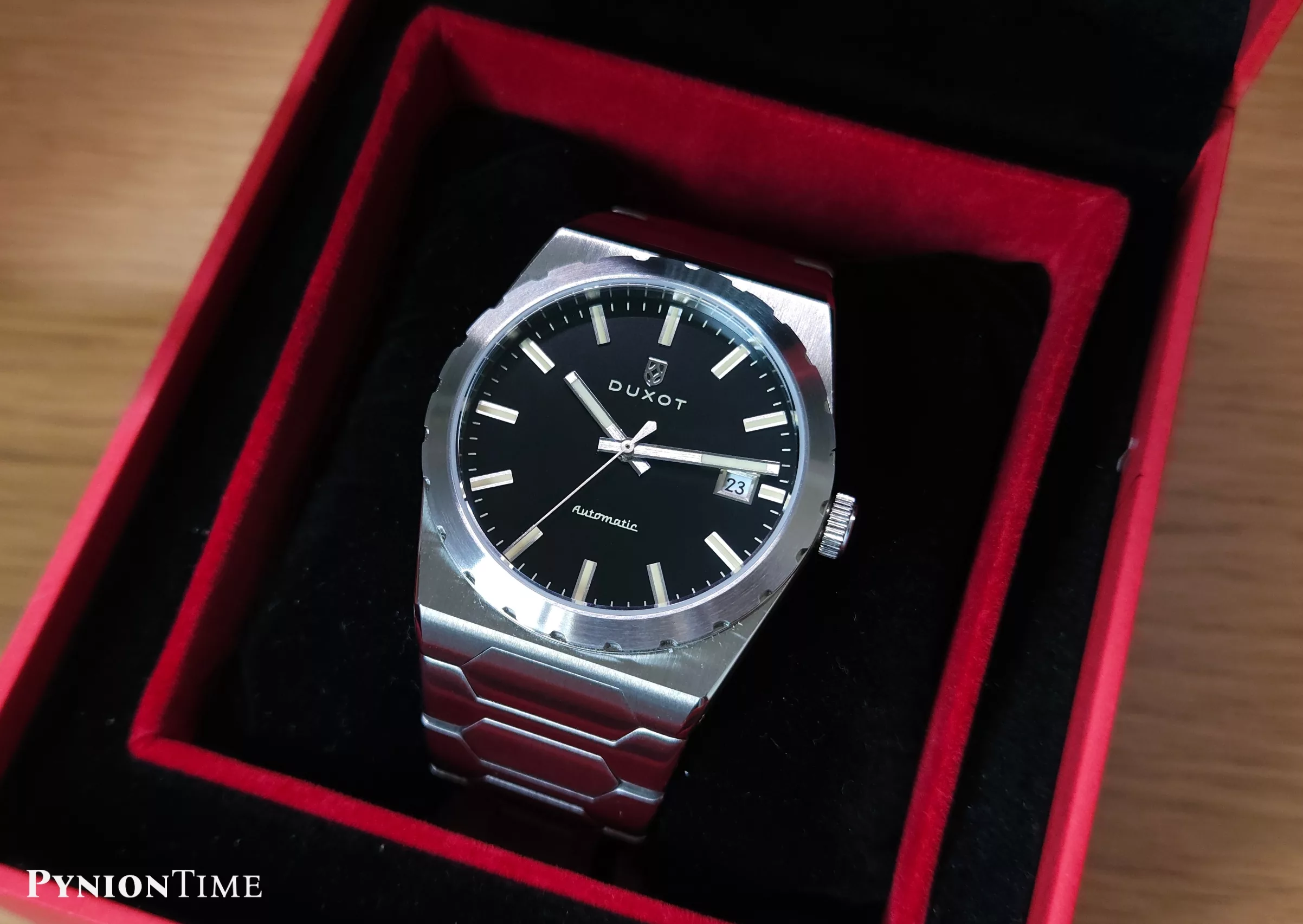
I’ve been wearing the black Ebony Glint, and that’s ultimately what surprised me most. My first impression was considerably more premium than the price suggested, and that impression largely survived actual wrist time.
Duxot Taranto Automatic: Where It Fits in the Market
At these prices, expectations begin to change. Sapphire, better case finishing and stronger bracelets become increasingly realistic rather than luxuries. The Taranto meets most of them.
Duxot gives you a 37mm stainless-steel case, integrated bracelet, AR-coated sapphire crystal, exhibition caseback and Japanese automatic movement. Water resistance is 5 ATM, while the manufacturer quotes a 42-hour power reserve.
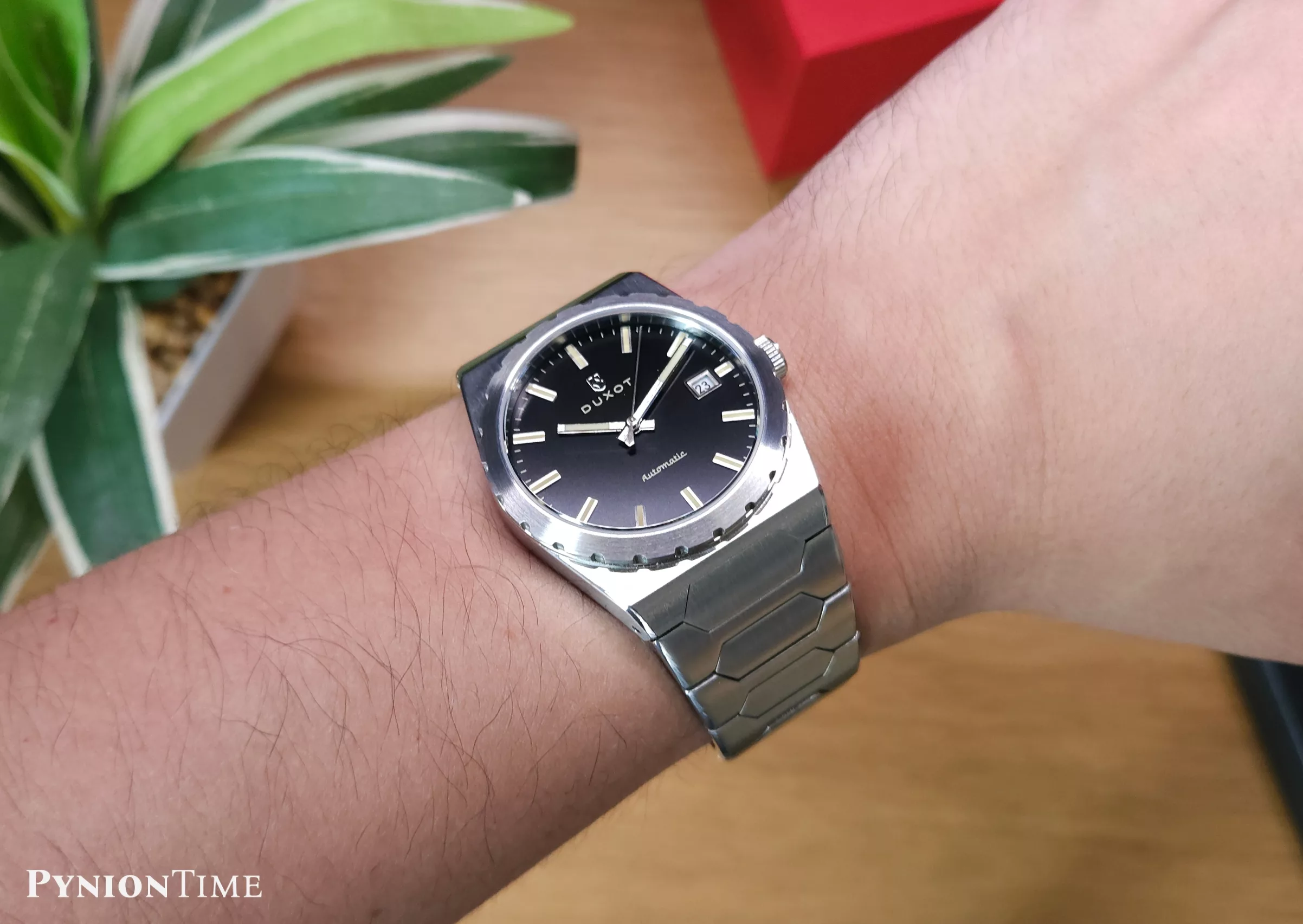
That specification sheet doesn’t tell the whole story, though.
What makes the Taranto competitive isn’t that any individual specification is extraordinary. It’s how complete the package feels for the money.
If you’re familiar with our coverage of affordable watches, this is precisely the kind of watch that makes the category interesting: less money allocated to mainstream brand recognition, with the value proposition instead depending heavily on the physical product.
A Familiar Design, and That’s Not Necessarily a Problem
There is no point pretending the Taranto appeared in a vacuum.
Look at the case, bezel and integrated bracelet and there is a clear Vacheron Constantin 222 influence. That’s going to bother some enthusiasts more than others.
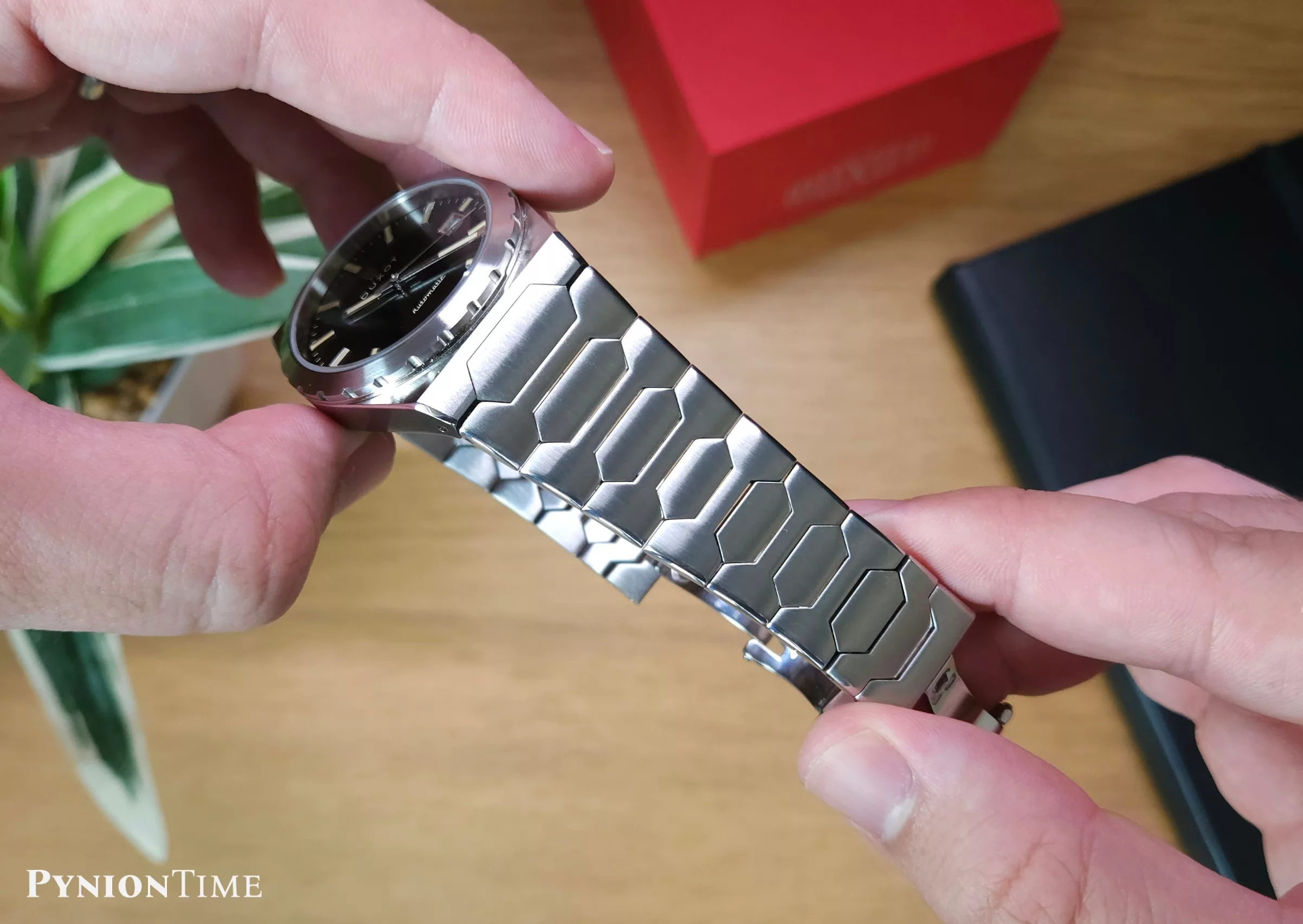
Personally, I don’t think inspiration itself invalidates an affordable watch. The Taranto isn’t a 222 alternative in terms of horology, finishing or prestige, it’s an affordable watch using a recognisable design language, which sits naturally alongside our guide to affordable alternatives to iconic watches: the useful question isn’t whether an inexpensive watch can reproduce a luxury original, but how much of the visual and wearing experience can be delivered at a realistic price.
And in that respect, the Taranto makes a convincing argument.
37mm Might Be the Taranto’s Best Decision
On paper, 37mm might sound small to anyone accustomed to 40–42mm sports watches. On the wrist, it makes complete sense.
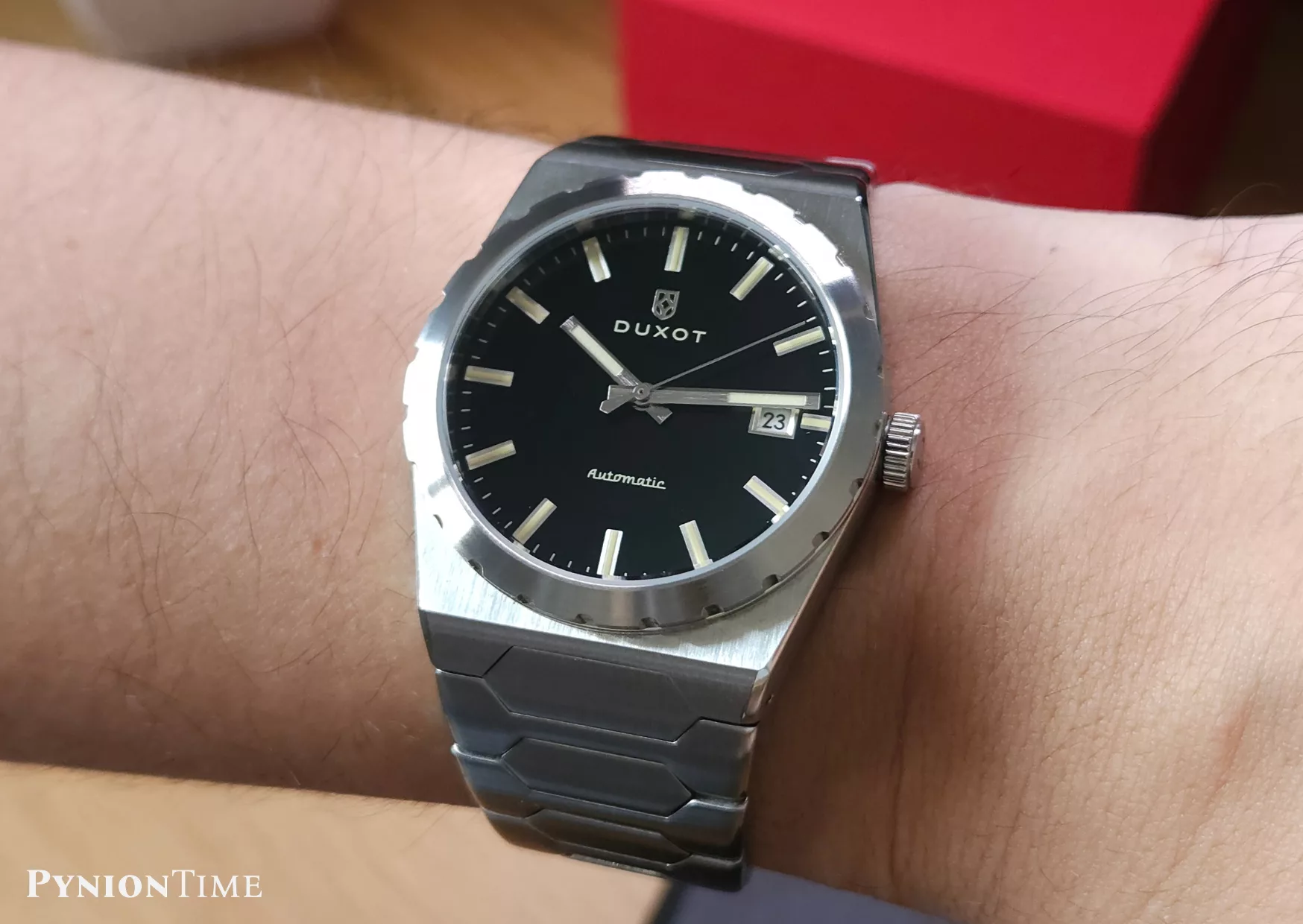
My wrist is approximately 6.5 inches, and the Taranto’s proportions are close to ideal for me. Because an integrated bracelet visually extends the case, these watches often wear larger than their diameter suggests. Going compact prevents the design from overwhelming the wrist. 40mm and even 42mm watches usually fit my wrist, but that could never be the case with a piece like this.
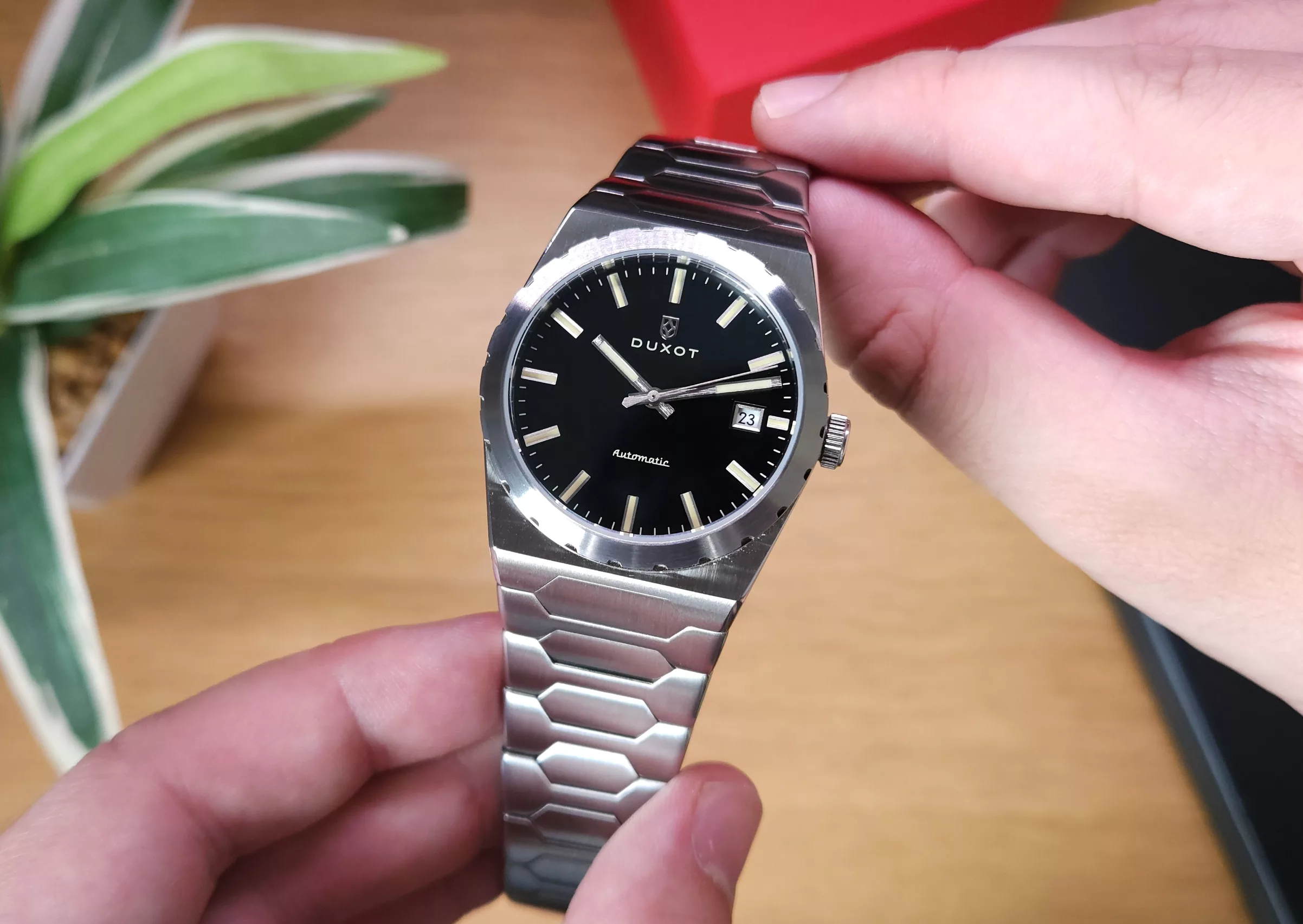
The case is 37mm across, 11.4mm thick and 45mm lug-to-lug, with the complete watch weighing 138 grams. Those numbers translate into a watch with presence without unnecessary bulk.
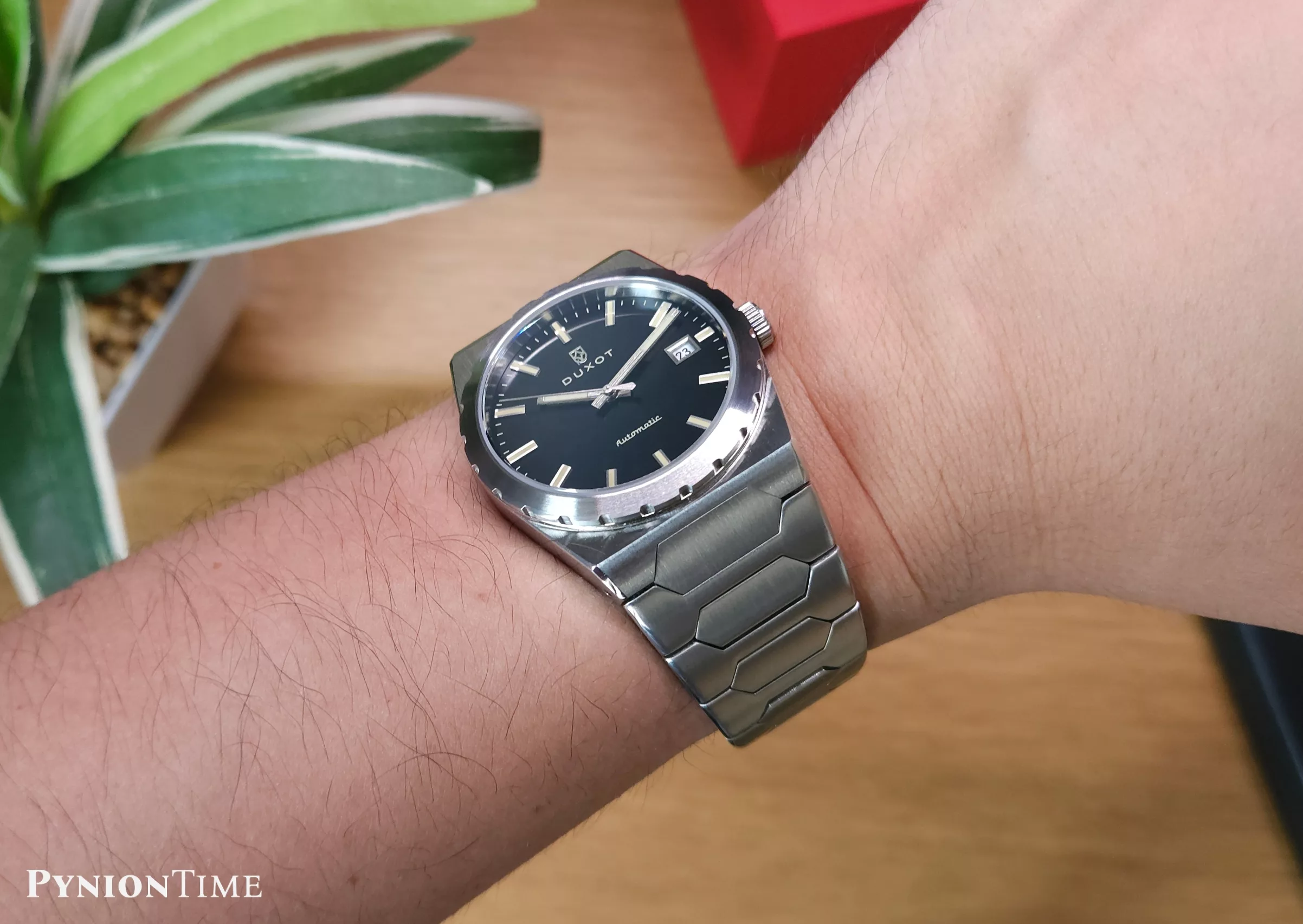
The bracelet also hugs the wrist effectively, so the Taranto feels cohesive rather than like a small watch attached to an oversized bracelet. It’s comfortable over extended periods and has proven easy to wear throughout the day.
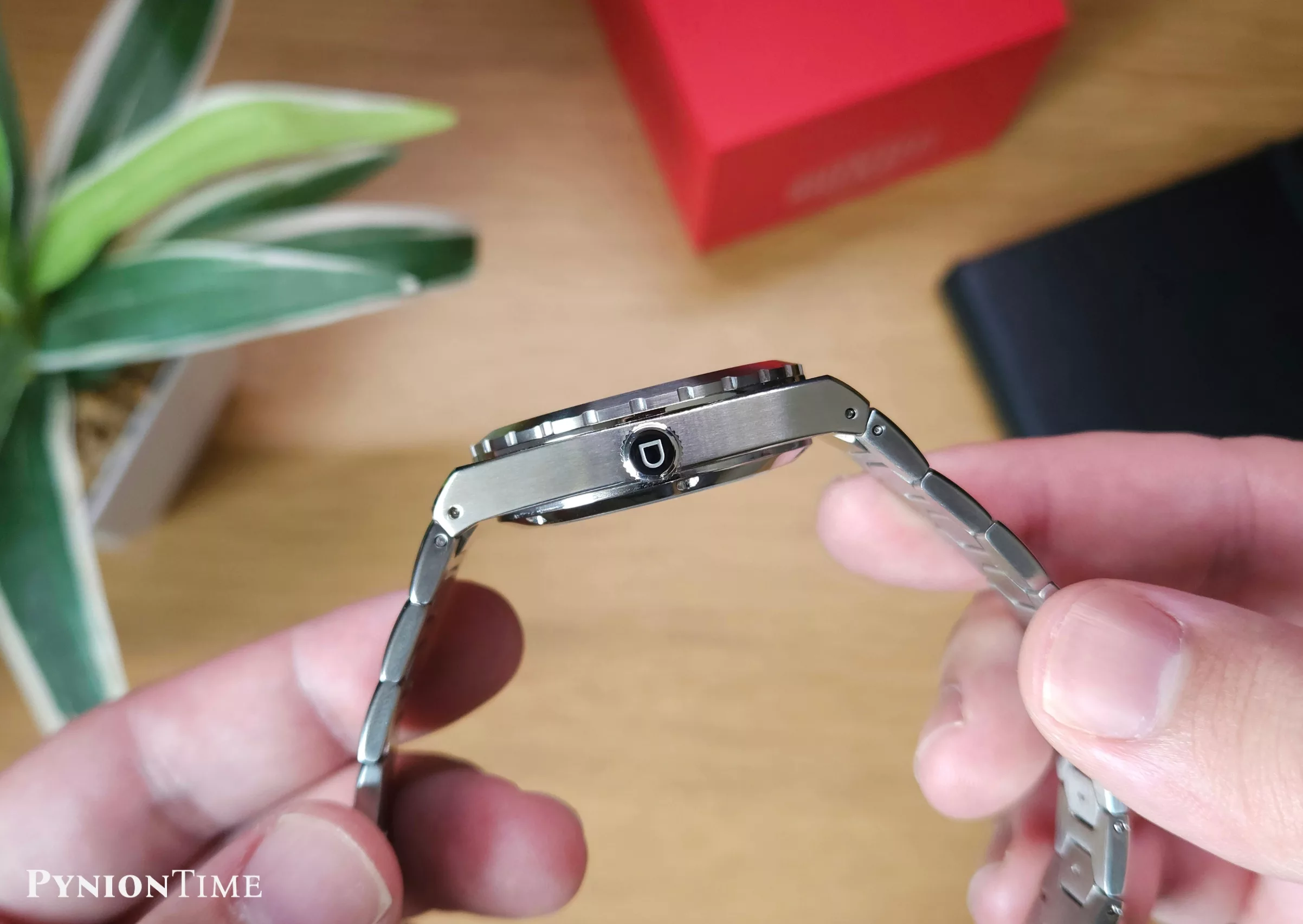
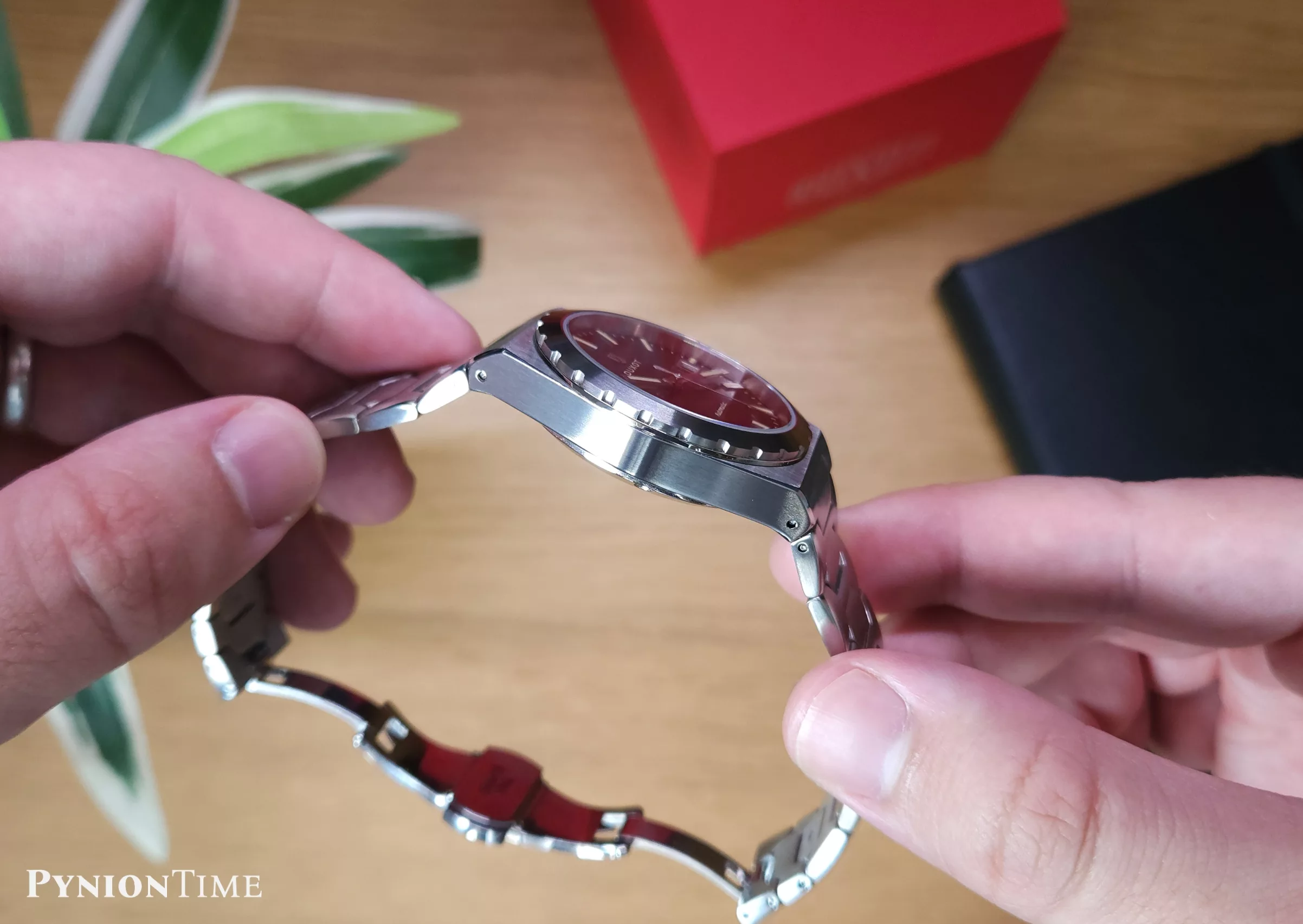
The case isn’t the finest finished I’ve encountered around this price, but I have very little to complain about for $310.
The combination of brushed and polished surfaces gives the angular architecture enough definition to prevent the case from appearing flat. More importantly, the transitions are sufficiently clean that the design works when viewed up close. This was one of the areas where I expected the low price to reveal itself more obviously. It didn’t.
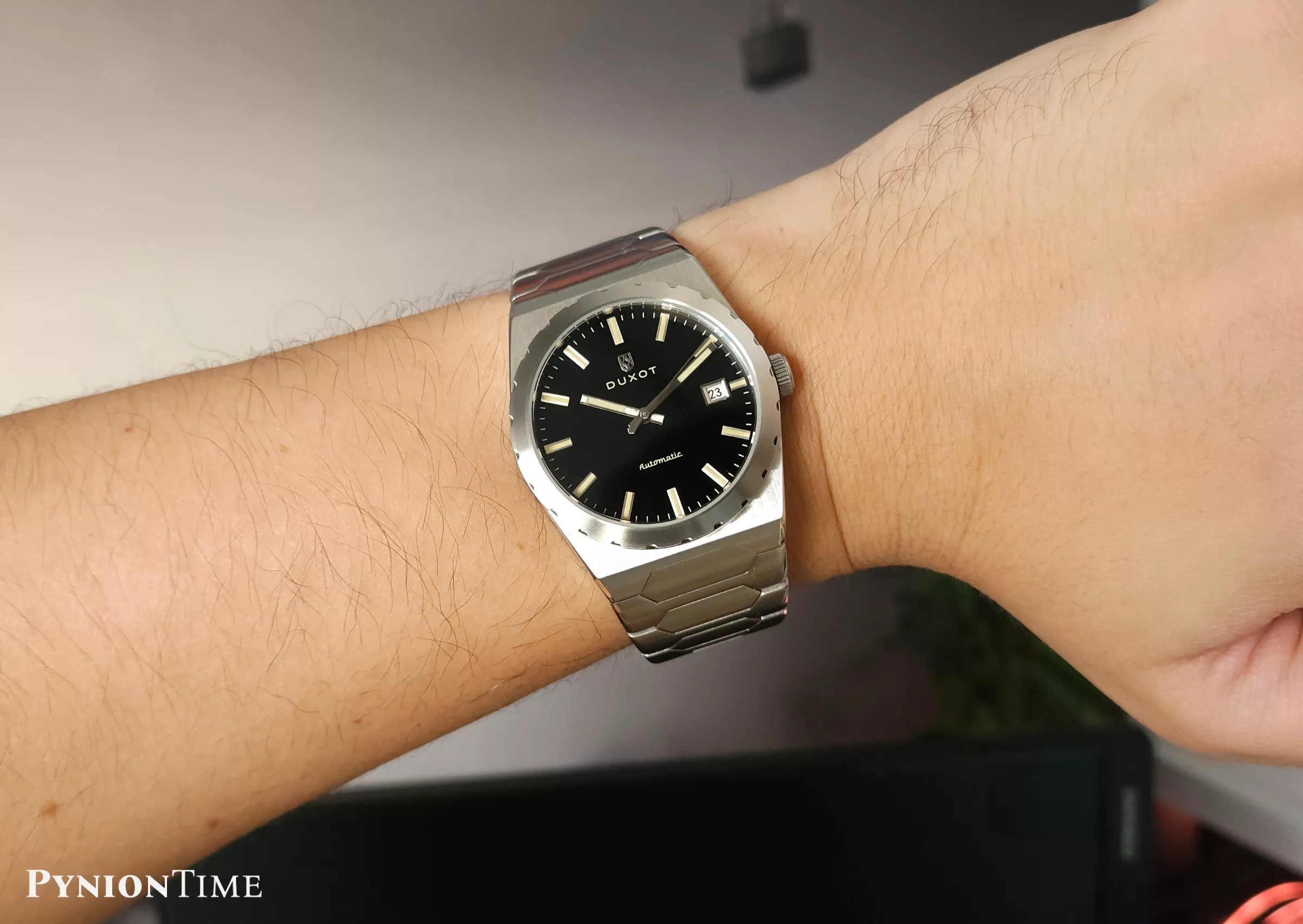
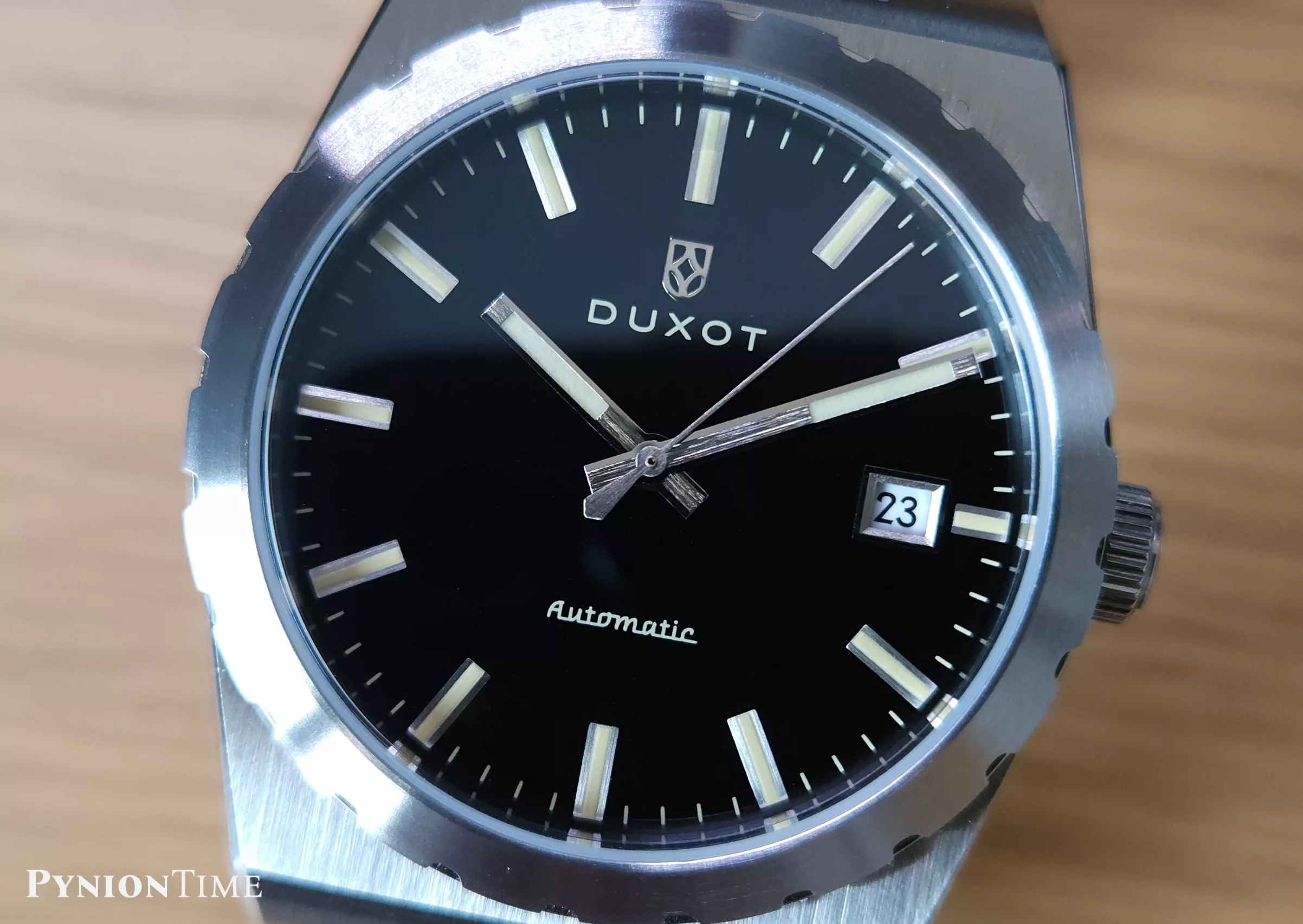
The black Ebony Glint version is probably at its best when you don’t expect the dial to be the star of the watch. It’s a relatively straightforward matte black finish, no dramatic texture or elaborate sunburst effect.
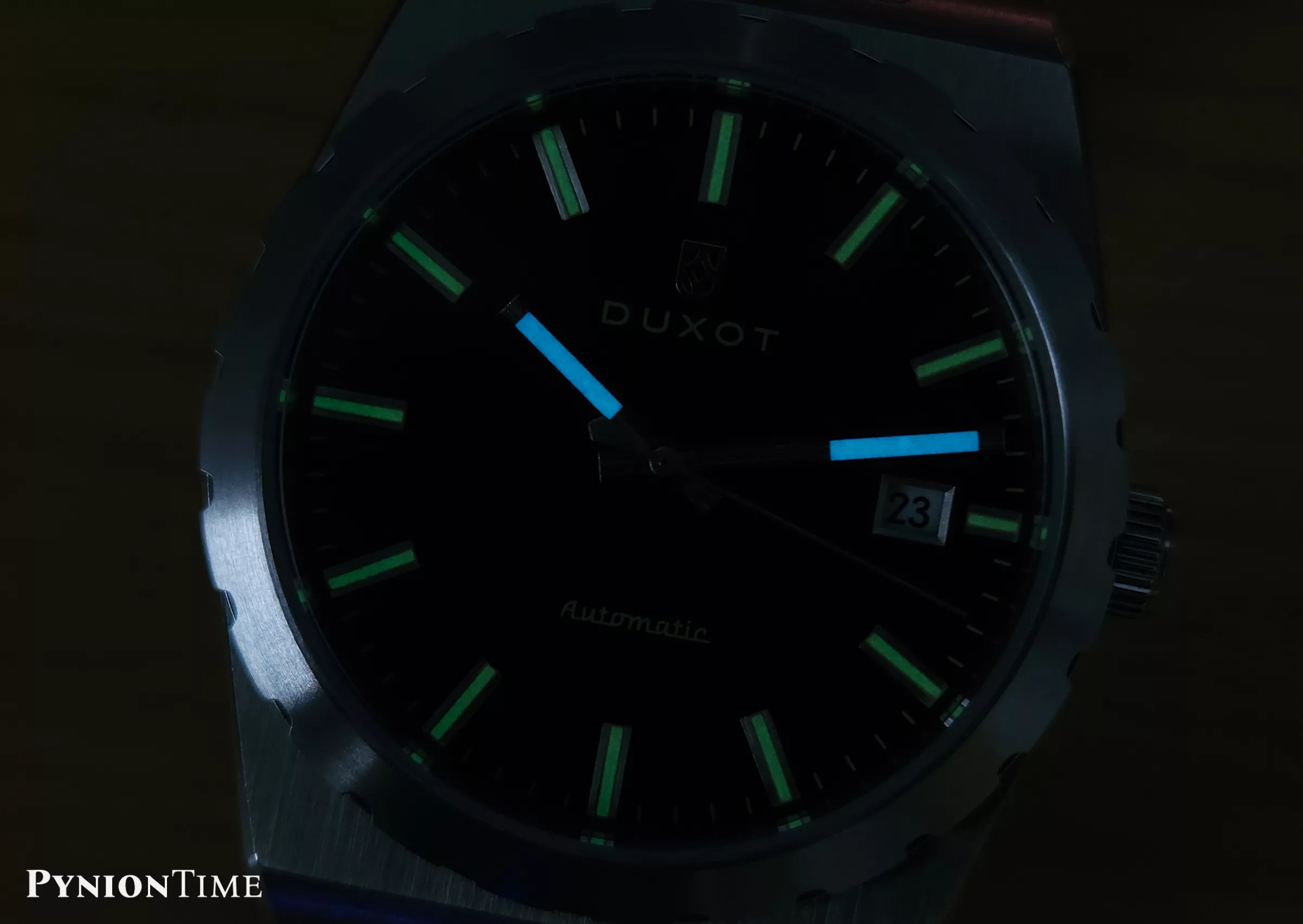
The lume… well, you can judge yourself by the image. Even when fully charged, performance is weak enough that I wouldn’t consider nighttime readability one of the Taranto’s meaningful capabilities.
For an integrated-bracelet everyday watch, that’s less damaging than it would be on a dive or field watch. This isn’t a tool watch, and I doubt many buyers are choosing it primarily for low-light performance. Still, poor lume is poor lume. At $310, this is one of the clearest places where the Taranto leaves room for improvement.
The Integrated Bracelet
The bracelet is fundamental to this watch. Put a mediocre bracelet on an integrated-bracelet design and the entire concept falls apart, because unlike a conventional watch you can’t simply throw it on your favourite leather strap and forget about the problem.
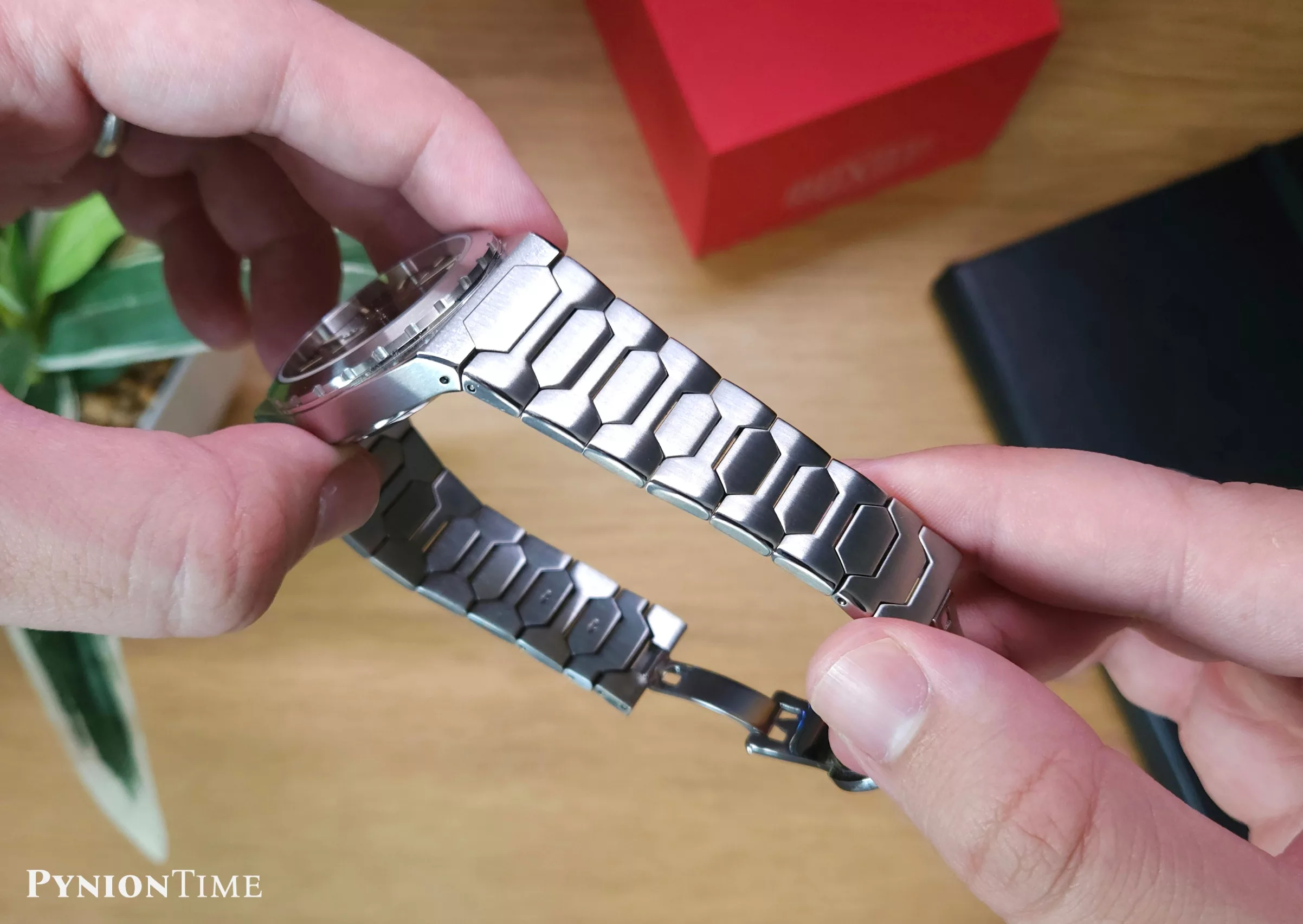
Fortunately, Duxot has done a good job here. The bracelet feels solid and comfortable, and its links articulate sufficiently to wrap naturally around my wrist.
There are polished bevels along the bracelet that help it visually communicate with the case, though closer inspection reveals a difference in finishing quality between the case bevels and the bracelet’s own. It’s not a comfort or structural problem, but it separates good affordable finishing from genuinely excellent finishing.
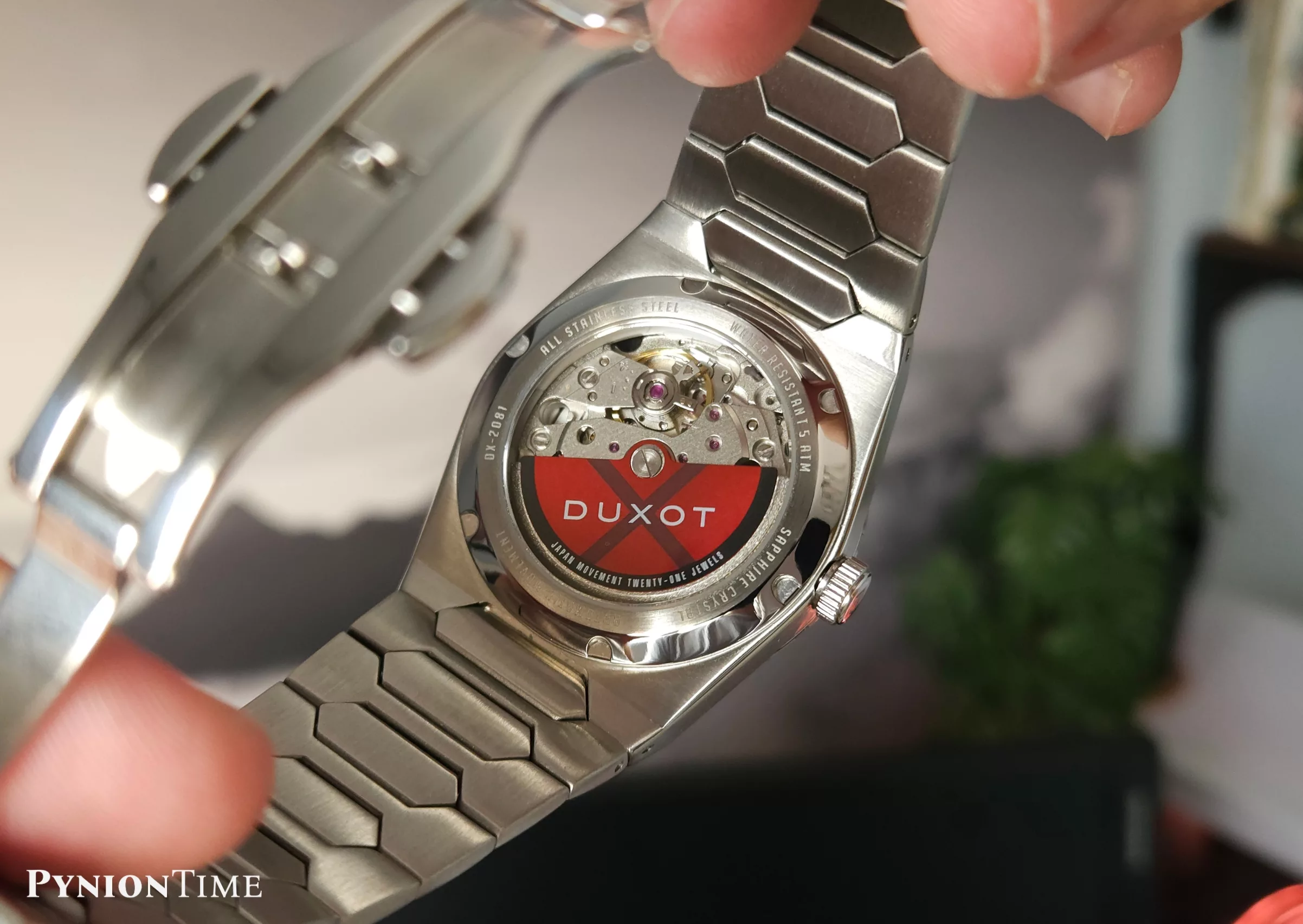
The butterfly clasp itself works very well and keeps the underside clean. But there’s a bigger issue. There is no micro-adjustment.
I happened to get an excellent fit on my wrist after sizing the bracelet, so it hasn’t affected my personal experience. Another buyer may not be so lucky. With no micro-adjustment, you’re much more dependent on the available link combinations to find the right fit.
Miyota 8215: Basic, But Sensible at $310
Inside is where Duxot has made another obvious compromise. The Taranto uses a Miyota 8215, a familiar 21-jewel Japanese automatic movement. Duxot quotes approximately 42 hours of power reserve.
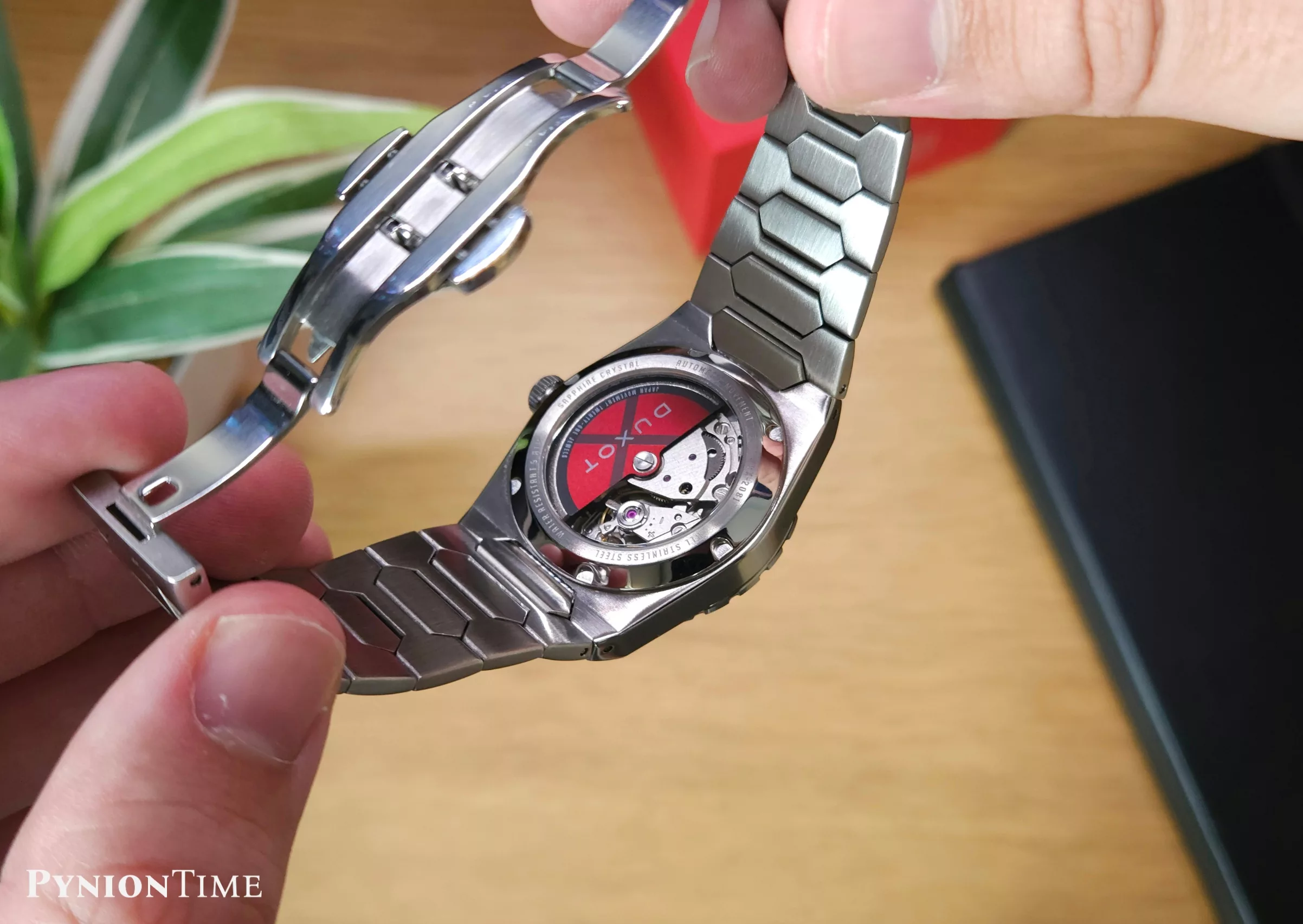
Would I prefer a Miyota 9000-series movement? Of course. But affordable mechanical-watch pricing has continued moving upward, and expectations have to reflect the market buyers actually face rather than the market we wish still existed.
In my example, I’ve been getting approximately +12 seconds per day. That’s not chronometer territory, but neither is it unexpected from this movement. More importantly, it hasn’t introduced any meaningful frustration during normal ownership. The rotor isn’t particularly intrusive, winding feels smooth, and date and time setting operate as expected.
There is also an argument for familiarity. The 8215 is an established, widely used movement, which makes long-term ownership less intimidating than an obscure calibre with questionable parts availability.
The obvious comparison isn’t another obscure microbrand. It’s the Tissot PRX.
At the time of writing, Tissot’s Spanish site lists a steel 40mm PRX Quartz at €395, with sapphire crystal and a Swiss quartz movement. The automatic PRX Powermatic 80 moves into a very different bracket: €775 for steel 40mm automatic variants, with an 80-hour power reserve. The Taranto’s official price is $310. Regional pricing means this isn’t a perfect comparison, but the hierarchy is clear.
At roughly the Taranto’s end of the market, the PRX proposition is quartz. Moving to an automatic PRX requires substantially more money. That makes the Taranto compelling if mechanical movement + integrated bracelet + low price are the priorities.
Would I call it categorically better than a PRX? No. Tissot brings considerably more brand heritage and recognition, and those things have value to many buyers. But evaluated primarily on how much physical watch you’re getting for the money, the Duxot makes a strong case.
Specs, Pricing & Availability
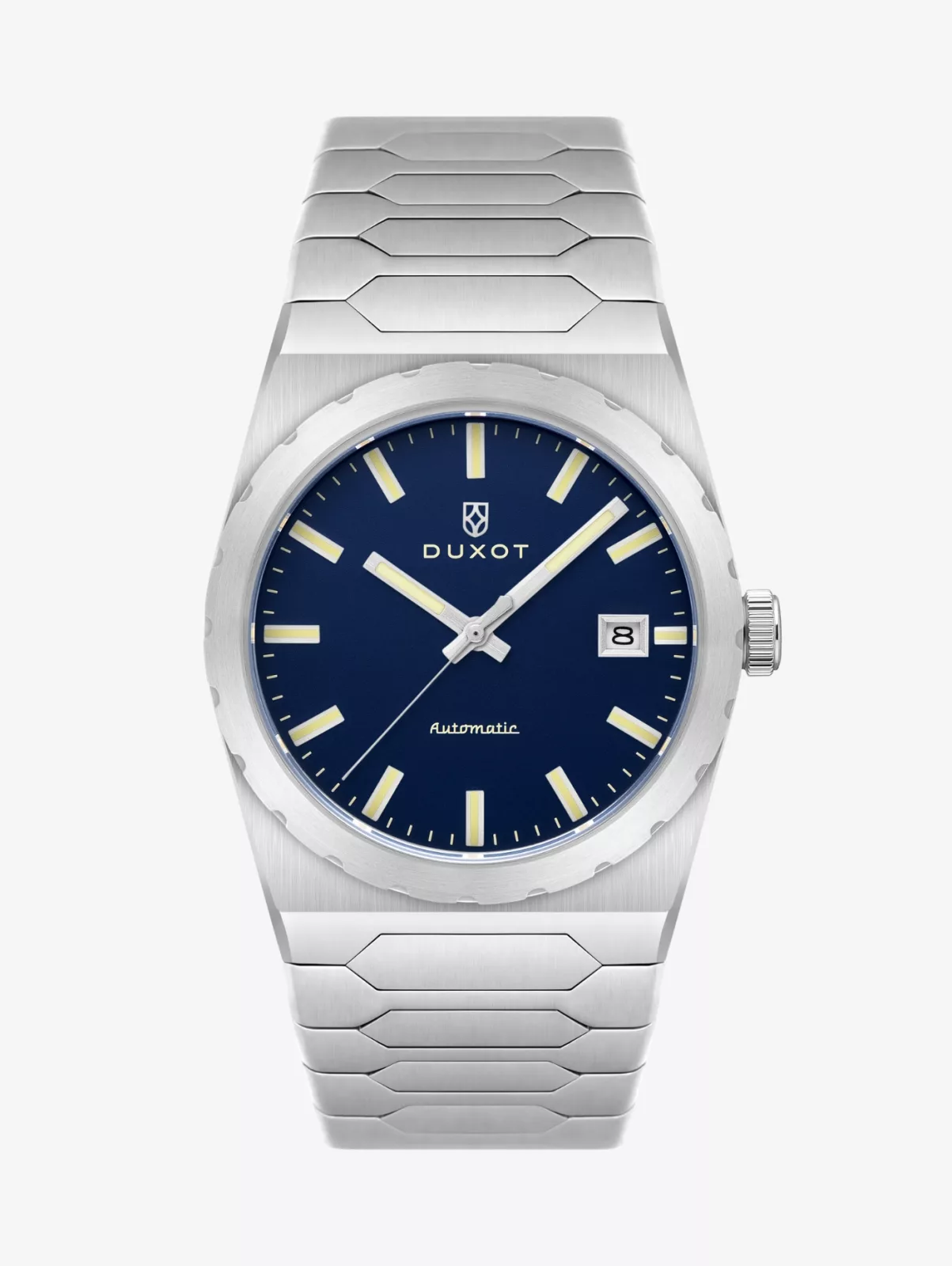
Case Diameter: 37mm
Case Thickness: 11.4mm
Case Material: Stainless steel
Water Resistance: 5 ATM / 50 meters
Caliber: Miyota 8215 automatic, 3 hands and date
Crystal: Anti-reflective coated sapphire
Function: Hours, minutes, seconds, date
Verdict
The Taranto does not try to be more than it is, and that restraint is exactly what makes it work. Duxot made the right compromises (the ones you rarely notice) and preserved the things you interact with every day.
- Proportions are close to ideal for an integrated bracelet at 37mm
- Perceived quality well above what $310 usually delivers
- Sapphire crystal and AR coating included
- Decorated rotor through exhibition caseback
- Butterfly clasp is clean and functional
- Mechanical movement at a price where competitors offer quartz
- No micro-adjustment on the bracelet
- Miyota 8215 is functional, not exciting
- Lume is essentially useless in the dark
- Bracelet finishing could be better to match the case level
The Taranto initially gave me more premium vibes than I expected from a $310 watch, and actual wrist time hasn’t substantially changed that impression. It isn’t a miniature Vacheron Constantin 222, nor should it be judged as one. And it doesn’t make the Tissot PRX irrelevant.
Instead, it occupies a useful position below more expensive integrated-bracelet automatics: an affordable way to experience the category without immediately feeling like you’ve bought the cheapest interpretation of it. For a first integrated-bracelet automatic, that’s a compelling place to be.
The clearest buyer is someone stepping into integrated-bracelet automatics for the first time. At $310 you get the silhouette, the wearing experience and a mechanical movement, without committing serious money to a category you may not have tried before. It also suits smaller and medium wrists particularly well, where 37mm makes more sense than the 40mm standard most of the market defaults to.
If you care primarily about value (what’s physically on your wrist for the money) the Taranto is genuinely hard to argue with at this price.
Skip it if you already own something more refined in this category, because the bracelet finishing and movement will start to show by comparison.
The Duxot Taranto punches above its price where it counts, and hides its compromises where most buyers will never notice.
Check out The Ultimate Affordable Watches Guide