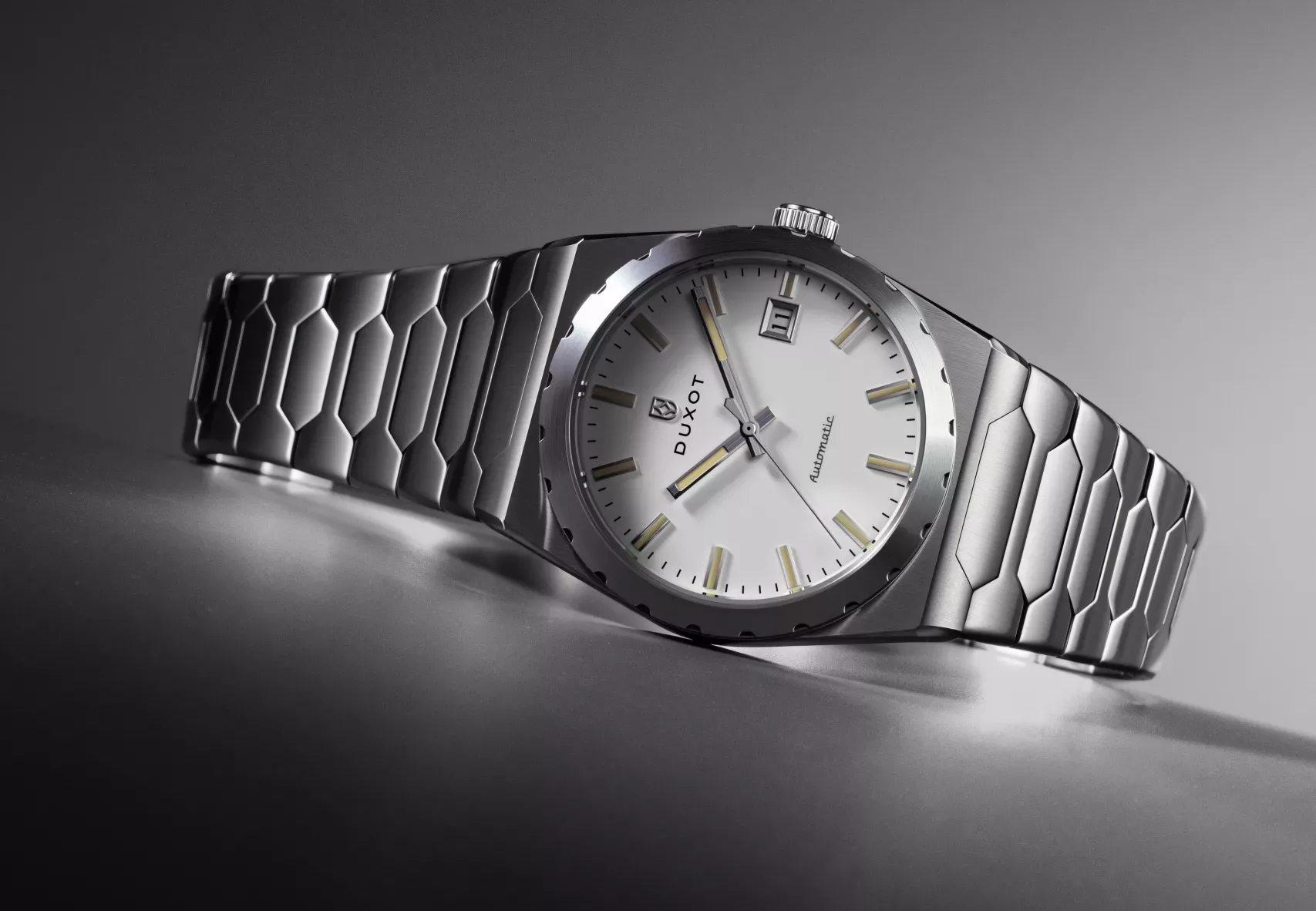

At around $300, the Duxot Taranto Automatic is one of the most affordable ways to buy into the integrated-bracelet sports look without stepping down to quartz. It is a 37mm steel automatic with a sapphire crystal, an exhibition caseback and five dial colours, aimed at anyone who wants the Genta-style silhouette on a budget and is willing to trade a premium movement to get there.
Let me be upfront: the interesting thing about the Taranto is not that it is original. Integrated steel sports watches are having their most crowded moment in years. What makes it worth a look is where Duxot chose to spend the money, and where it did not.
Here is what it was like on my wrist.
You Are Buying the Silhouette, and That Is Fine
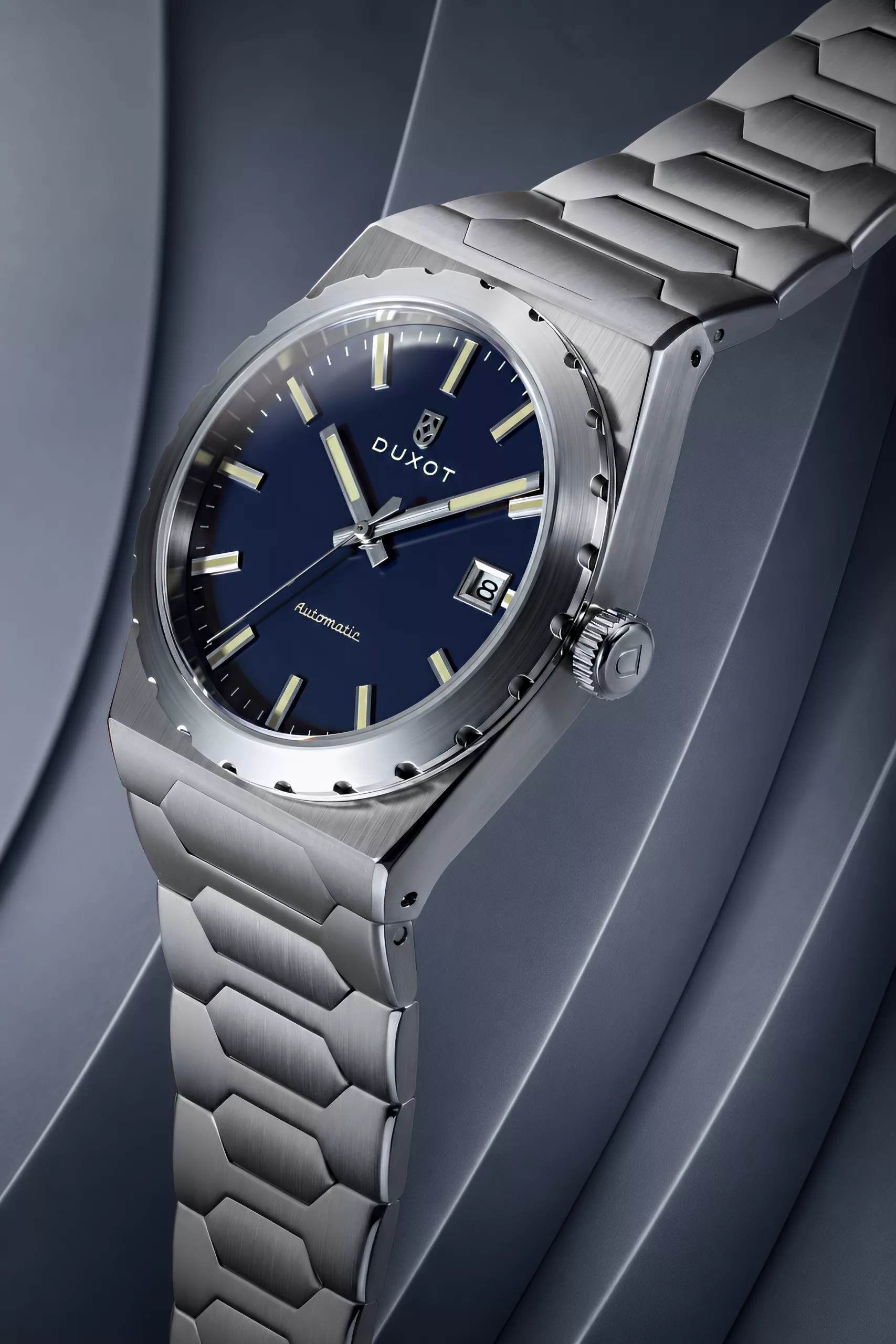
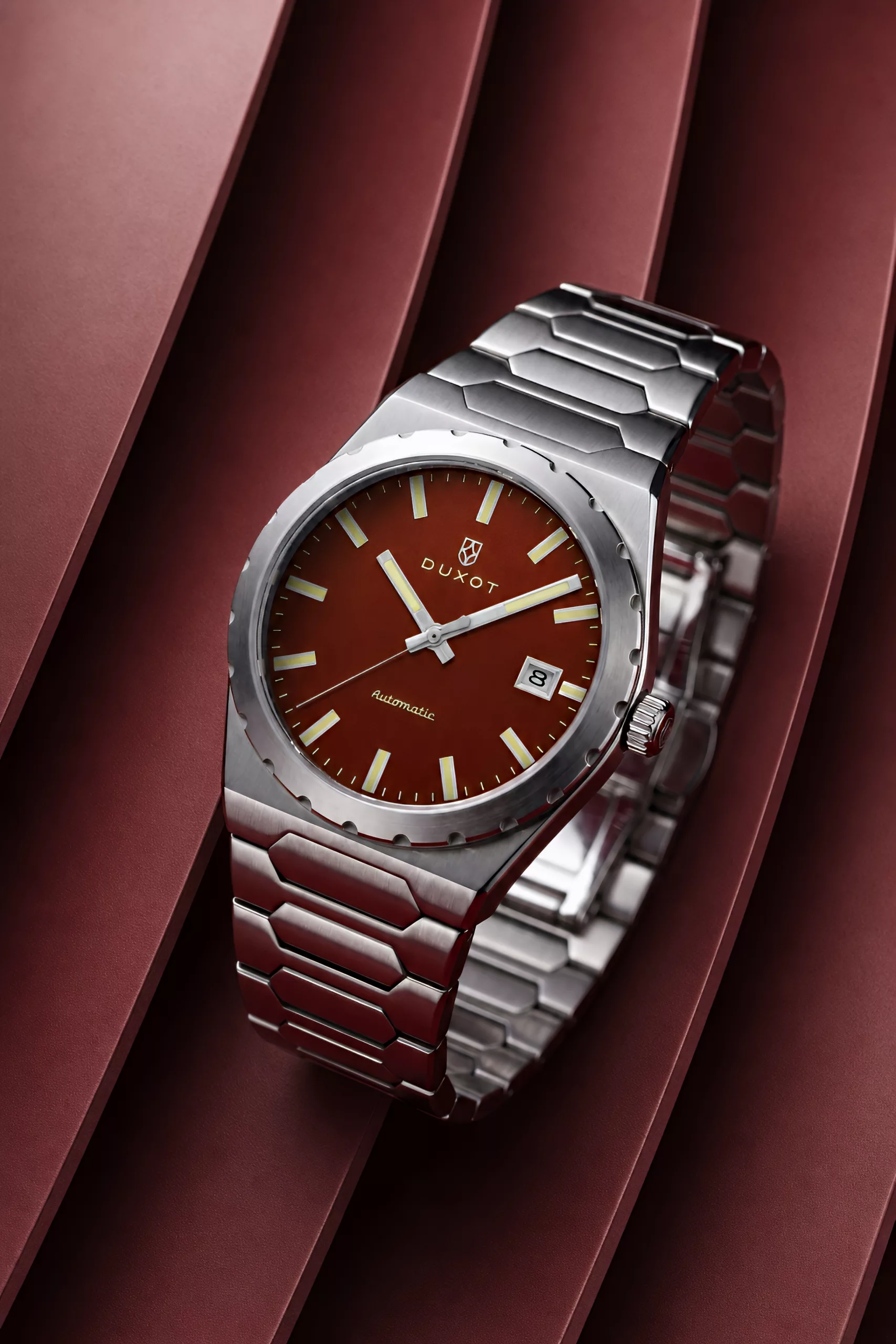
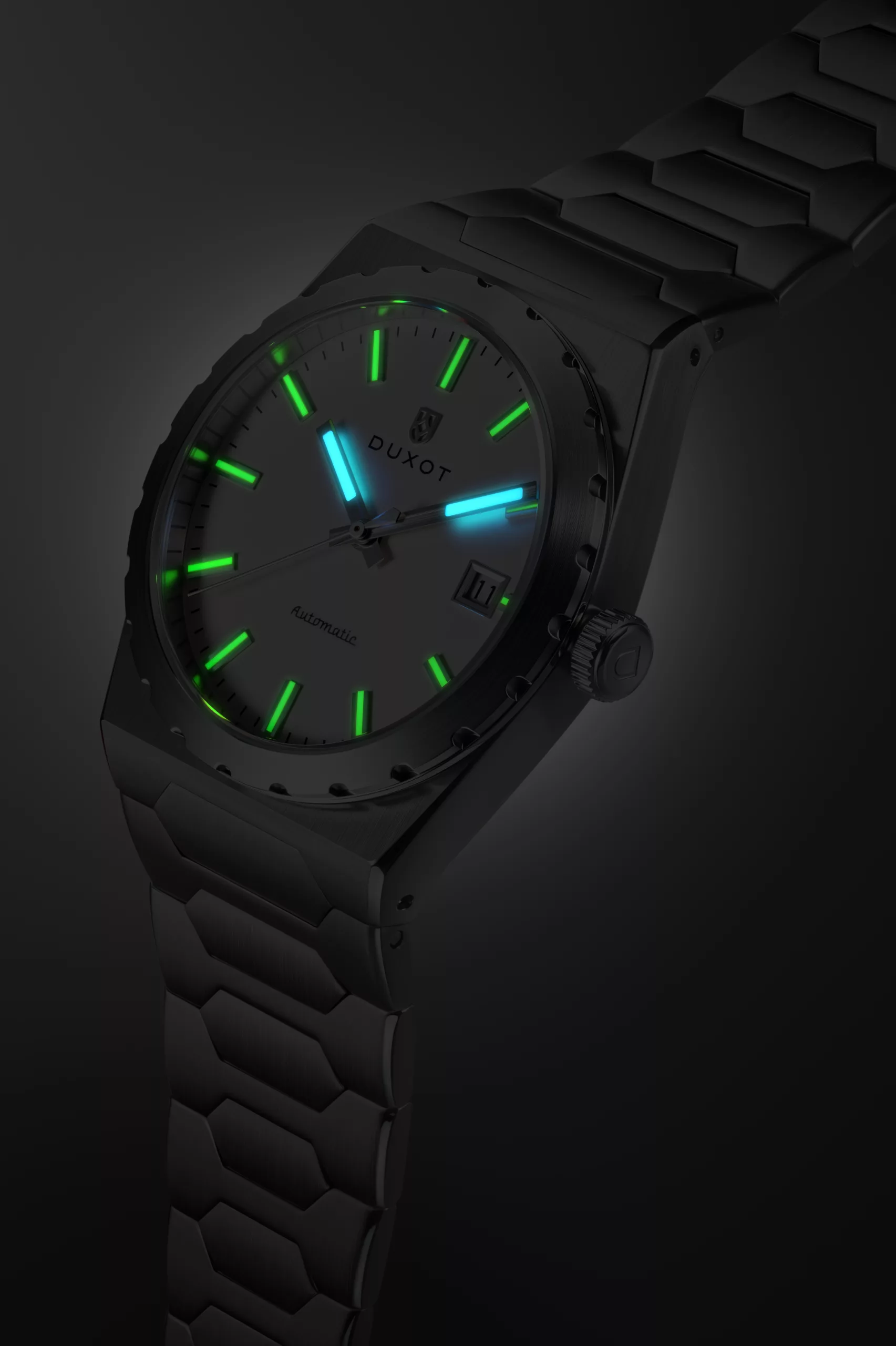
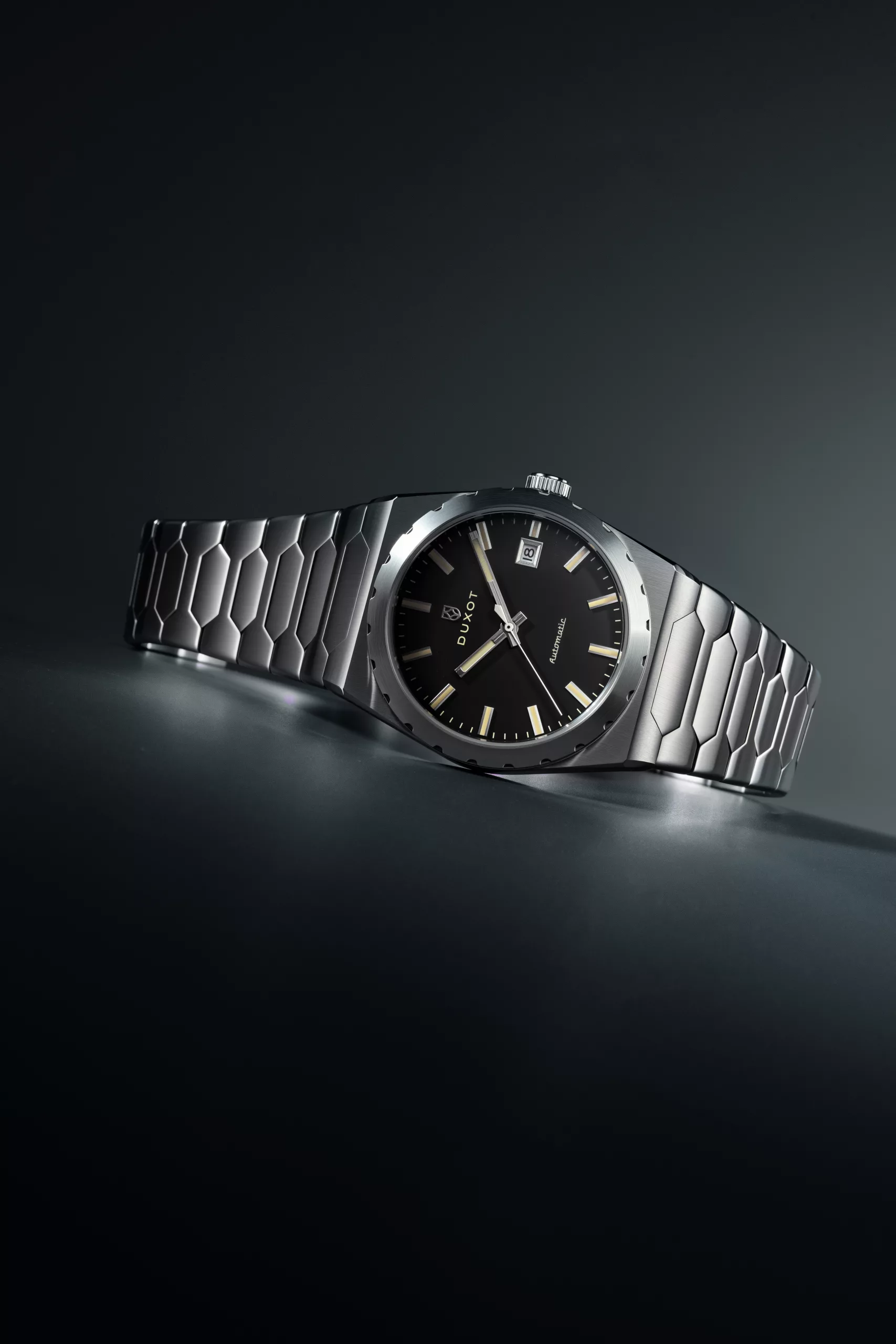
The whole pitch here is the shape. A tapering integrated bracelet, a faceted textured bezel, a slim case, and dials that run from quiet neutrals to a loud Vermilion Dream red. This is the language the Royal Oak wrote and the Tissot PRX made affordable, and the Taranto speaks it fluently at a price that undercuts most of the segment.
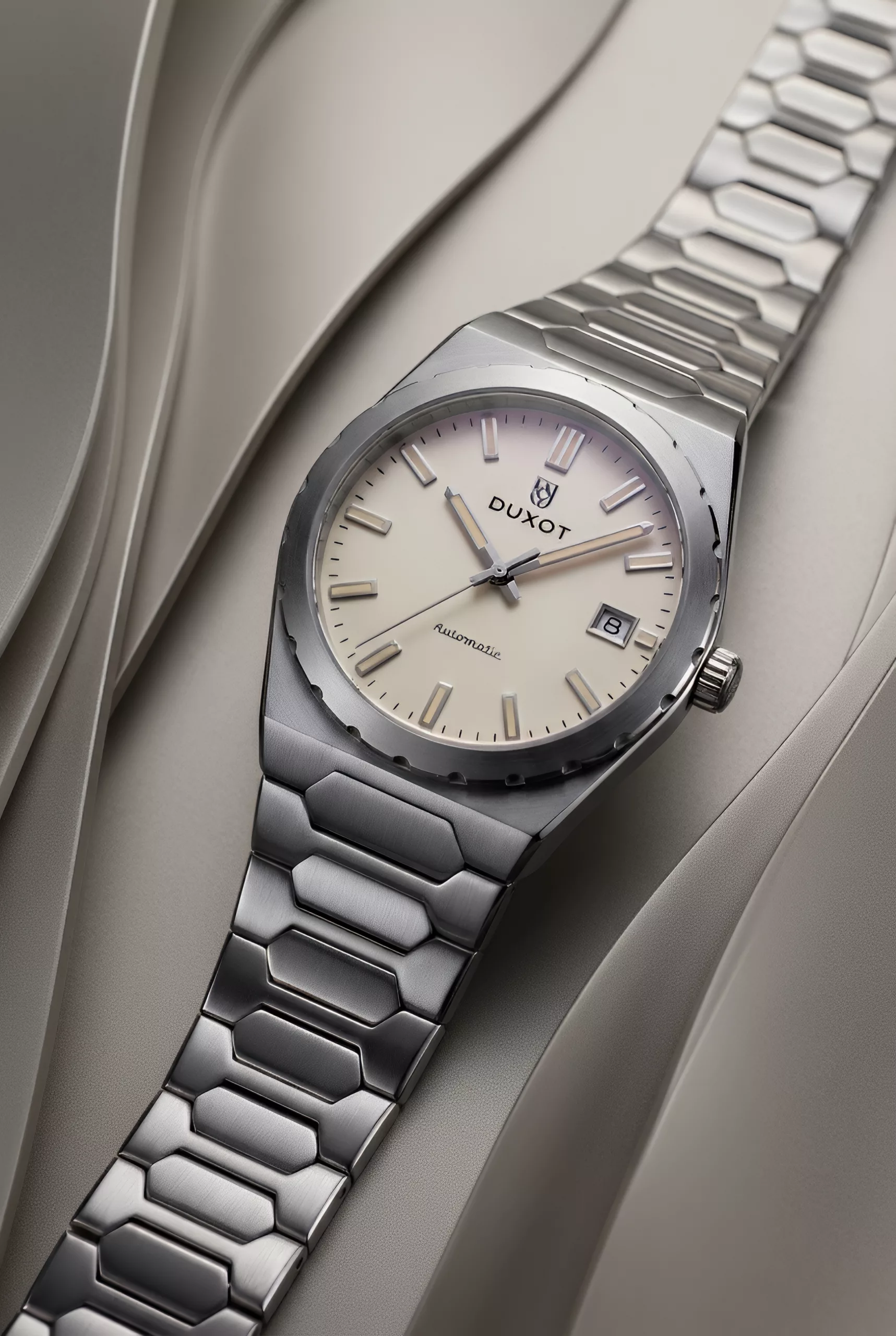
The part that I appreciate the most is the diameter. At 37mm with an 11.4mm height, the Taranto is genuinely compact, and that is rarer than it should be here (it took Tissot their sweet time to release a 38mm piece). Most integrated sports watches sit at 40mm and up, which pushes them off smaller wrists entirely. As someone who tends to reach for compact watches, a 37mm integrated is exactly the corner of this segment I find under-served, and it is the Taranto’s most useful differentiator, more than any single colourway.
Where Duxot Spent, and Where It Saved
For $310, the spec sheet is smarter than the price suggests. You get a full stainless steel case and integrated bracelet, a proper sapphire crystal with anti-reflective coating, and an exhibition caseback, none of which are guaranteed at this level. Those are the parts you see and touch every day, and Duxot did not cut them.
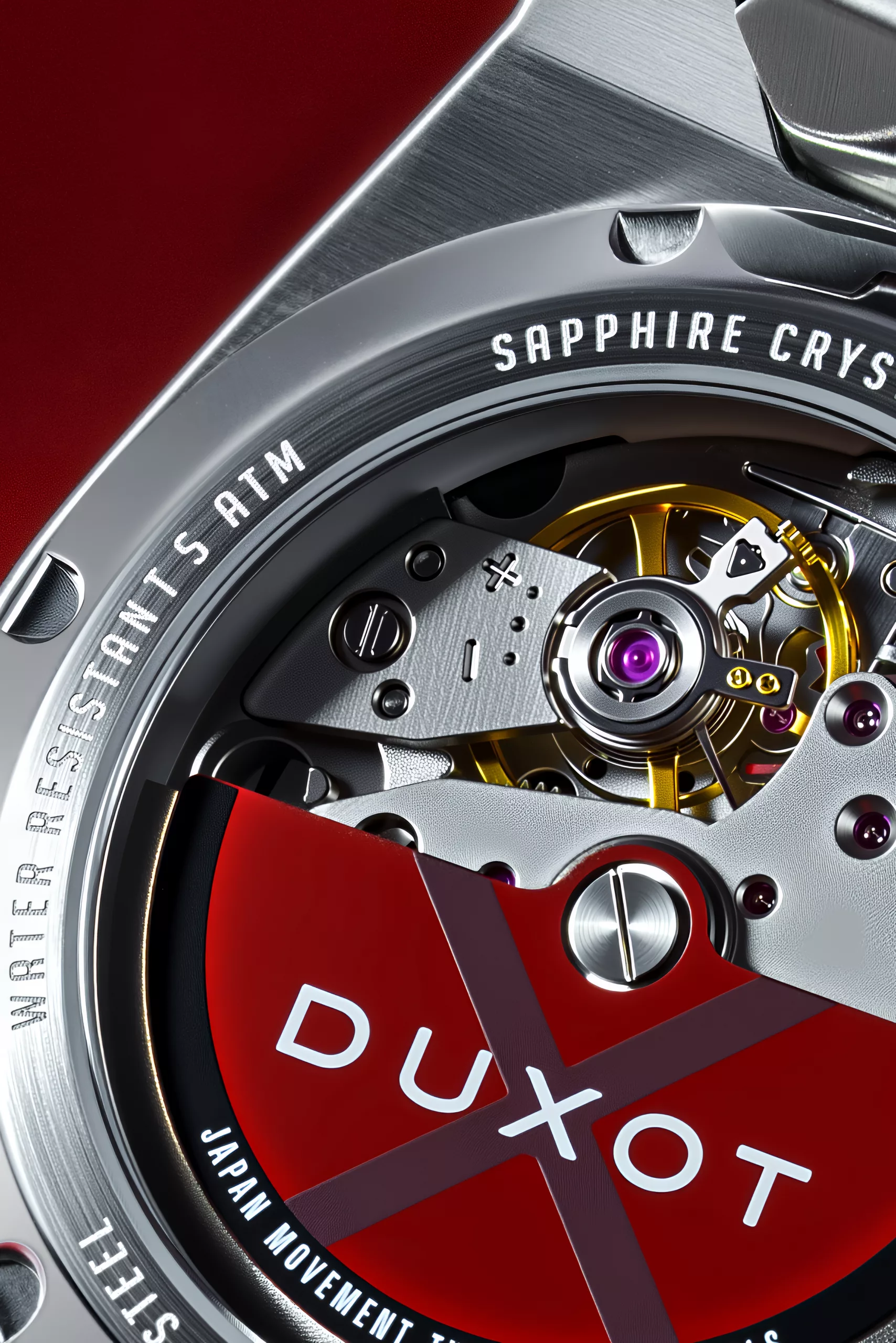
The savings show up in two honest places. Water resistance is 5 ATM, or 50 metres, which is fine for daily wear and rain but not for swimming with any confidence.
Inside is the Miyota 8215, a Japanese automatic you will find across a long list of affordable watches. It hand-winds through the crown and it self-winds off the wrist, and it has a long, proven track record for being dependable and easy to service. That reliability is the reason so many microbrands reach for it.
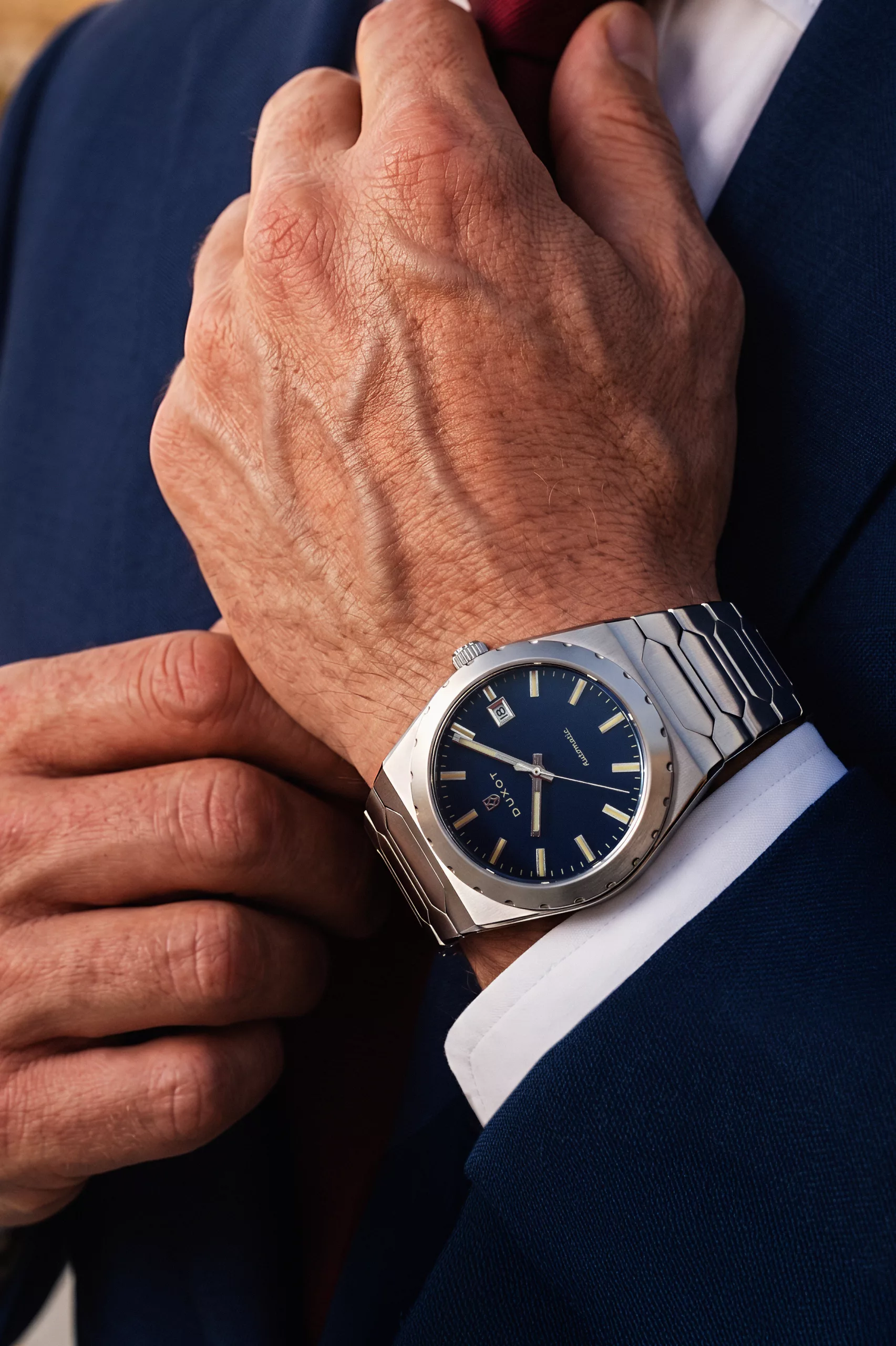
What it is not is exciting. The 8215 runs at 21,600 beats per hour with roughly 42 hours of reserve, and its rated accuracy sits in a loose -20 to +40 seconds a day, so this is not a movement you set your week by. It is a workhorse chosen for dependability and price, not for refinement, and at $310 that is a sensible place to make the compromise.
None of this is a scandal at $310. It is simply the line that separates the Taranto from the watch everyone will inevitably compare it to.
The PRX Still Sets the Bar It Is Measured Against
The obvious rival is the Tissot PRX Powermatic 80. It costs more, usually around $700 to $800, and for the extra money you get a Swiss automatic with an 80-hour power reserve, and 100 metres of water resistance in a 40mm case. That is a real step up in mechanics and sealing, and it is why the PRX remains the default recommendation in this space.
What Duxot deserves credit for is how much of that experience it delivers for less than half the price. At $310 the Taranto still gives you the sapphire crystal, the full steel case and integrated bracelet, and a genuine automatic, which are the parts most people actually notice day to day.
If you don’t care about the Swiss tag, this Duxot is definitely the smarter choice.
The other reference point is the Citizen Tsuyosa, another integrated automatic that hovers around the $375 mark with a comparable entry-level Miyota caliber and a 40mm case. Against the Tsuyosa, the Taranto’s argument is simpler: it is cheaper and it is smaller. If you have been waiting for one of these in a 37mm size, the Taranto answers a question the bigger names have mostly ignored.
Seen that way, Duxot is not trying to beat the PRX on movement or water resistance. It is undercutting it on price and out-manoeuvring it on size. Whether that trade works depends entirely on which of those you care about. For a deeper spread of options at this budget, this is the same territory my sub-$300 picks and my affordable alternatives to iconic watches both live in.
Specs, Pricing & Availability
The Duxot Taranto Automatic launches July 10, 2026, at $310. It measures 37mm wide and 11.4mm thick, in stainless steel with an integrated bracelet and butterfly clasp. It runs the Miyota 8215 automatic with date, under a sapphire crystal and exhibition caseback, rated to 5 ATM. Five colourways are offered: Chrome Glow, Metallic Mist, Ebony Glint, Starlit Blue and Vermilion Dream.
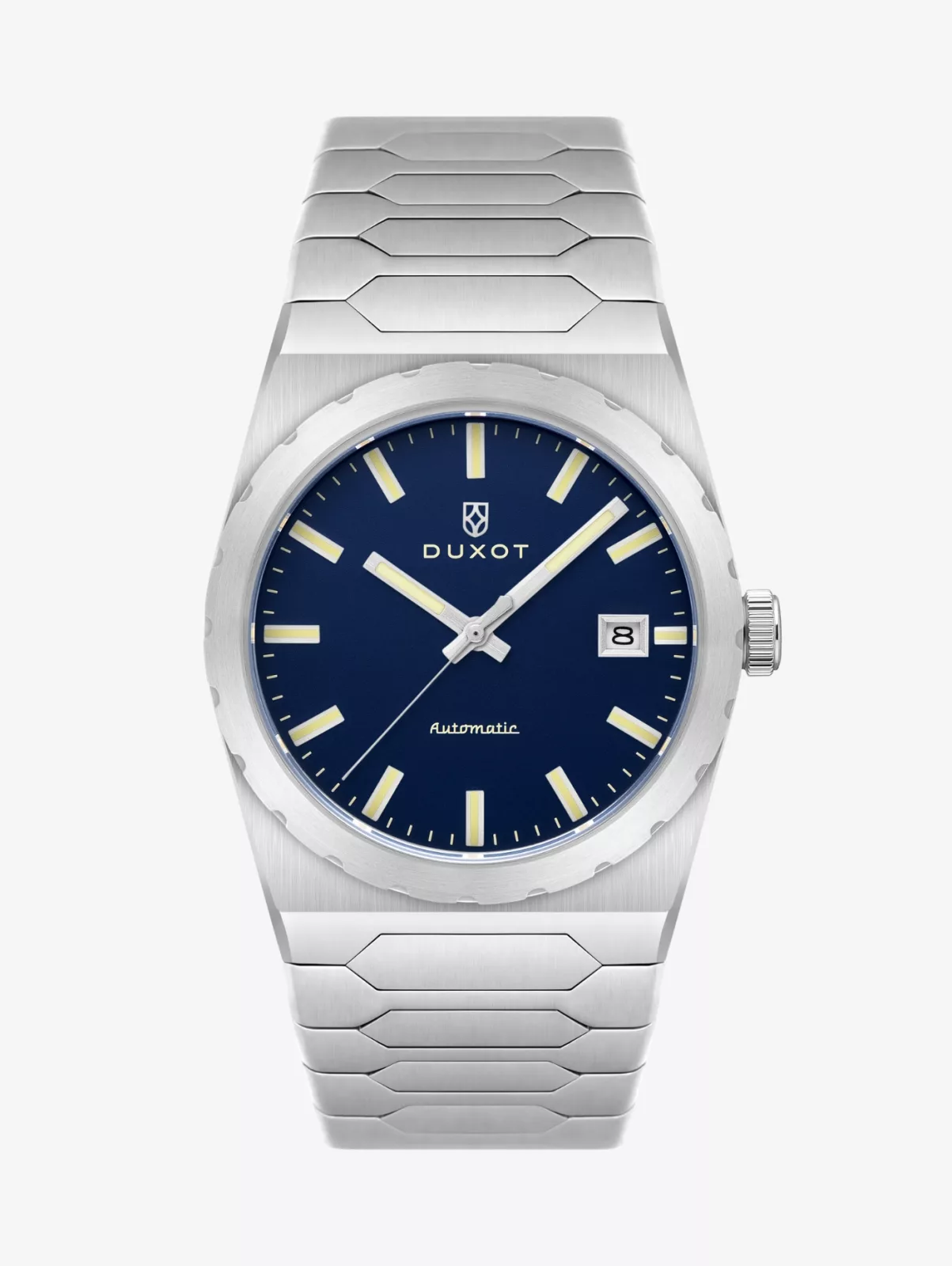
Case Diameter: 37mm
Case Thickness: 11.4mm
Case Material: Stainless steel
Water Resistance: 5 ATM / 50 meters
Caliber: Miyota 8215 automatic, 3 hands and date
Crystal: Anti-reflective coated sapphire
Function: Hours, minutes, seconds, date
The Taranto is a lot of watch-for-the-look at $310, and it is honest about its compromises: the movement and the water resistance are where the price shows, not the case, crystal or bracelet. If you want the best mechanics in this segment, save for the PRX. If you want the integrated look in a compact size for the least money, the Taranto has a genuine reason to exist.
Of the five, I would take the Ebony Glint. The black keeps the faceted case as the main event and stays the most wearable across a week, where the Vermilion is a statement you have to be in the mood for. The colours are the easy part here. The 37mm size is the actual selling point.
Check out The Ultimate Affordable Watches Guide