Heinrich Deco: A 7.2mm Art Deco Watch

Heinrich has spent its first five years building watches that live in the ~€1,000 range. The Stuttgart brand, founded by Wolfgang Heinrich in 2021 and assembling in Pforzheim, made its name with the Taucher divers on Sellita SW200-1 Elaboré movements, then moved into natural dial materials with the Helicoprion, sold in carnelian, lapis lazuli, amethyst and red tiger’s eye versions at around €1,049. The 1970s were always the reference point. The entry ticket rarely dropped below €900.
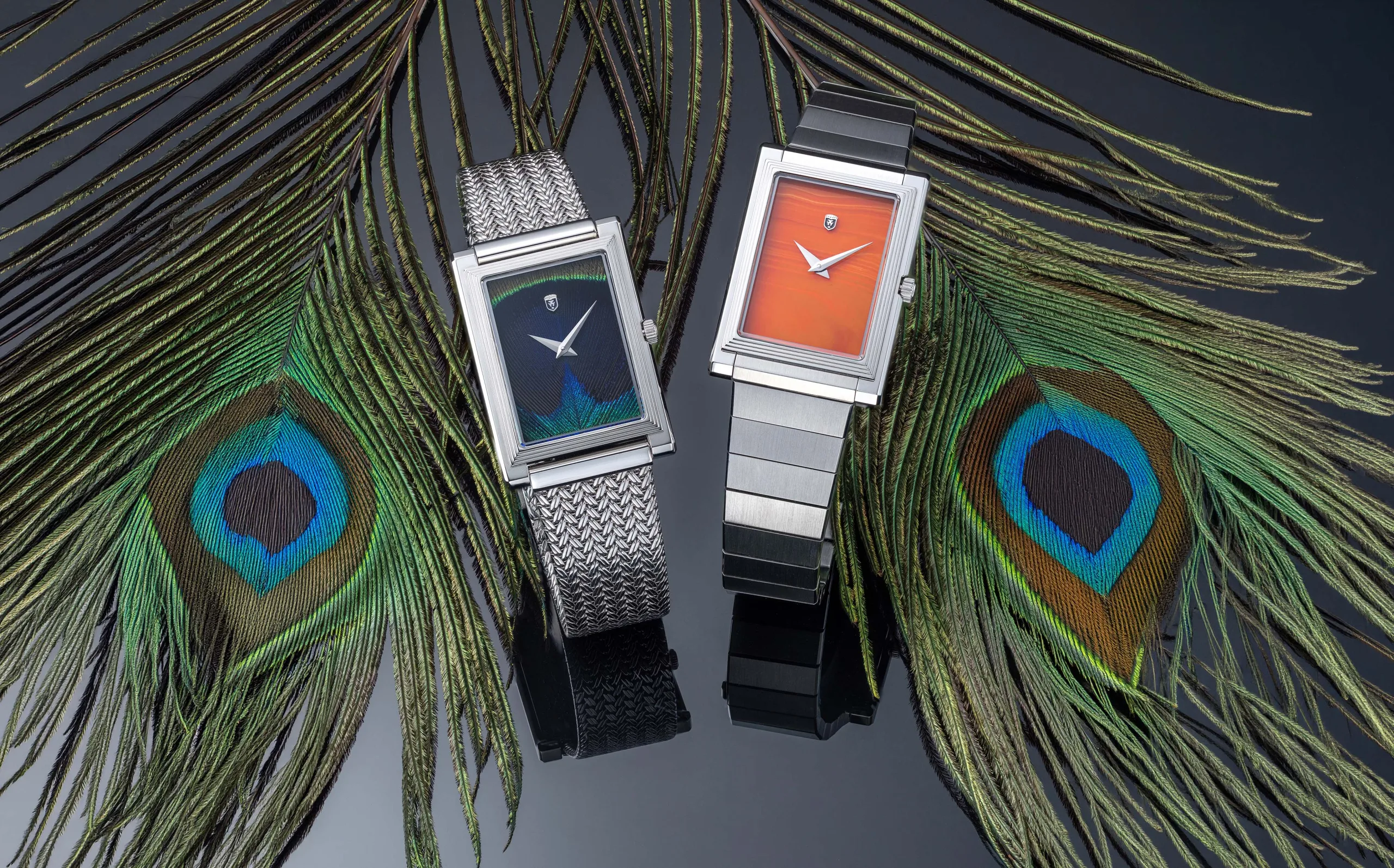
The new Heinrich Deco changes that. It is a rectangular two-hand quartz dress watch in a stepped steel case only 7.2mm thick, with a dial made from genuine peacock feather or natural carnelian, and it starts at €400. The watch was unveiled at the WindUp Watch Fair in New York this October, and shipping begins in late November.
What makes the Deco interesting is not that Heinrich built something cheaper. The brand stripped out nearly every tool-watch cue it is known for, from the rotating bezel to the 200m rating and the Super-LumiNova, and kept only the thread that runs through its catalogue: unusual natural materials on the dial. That is a sharper move than a stripped-down Taucher would have been.
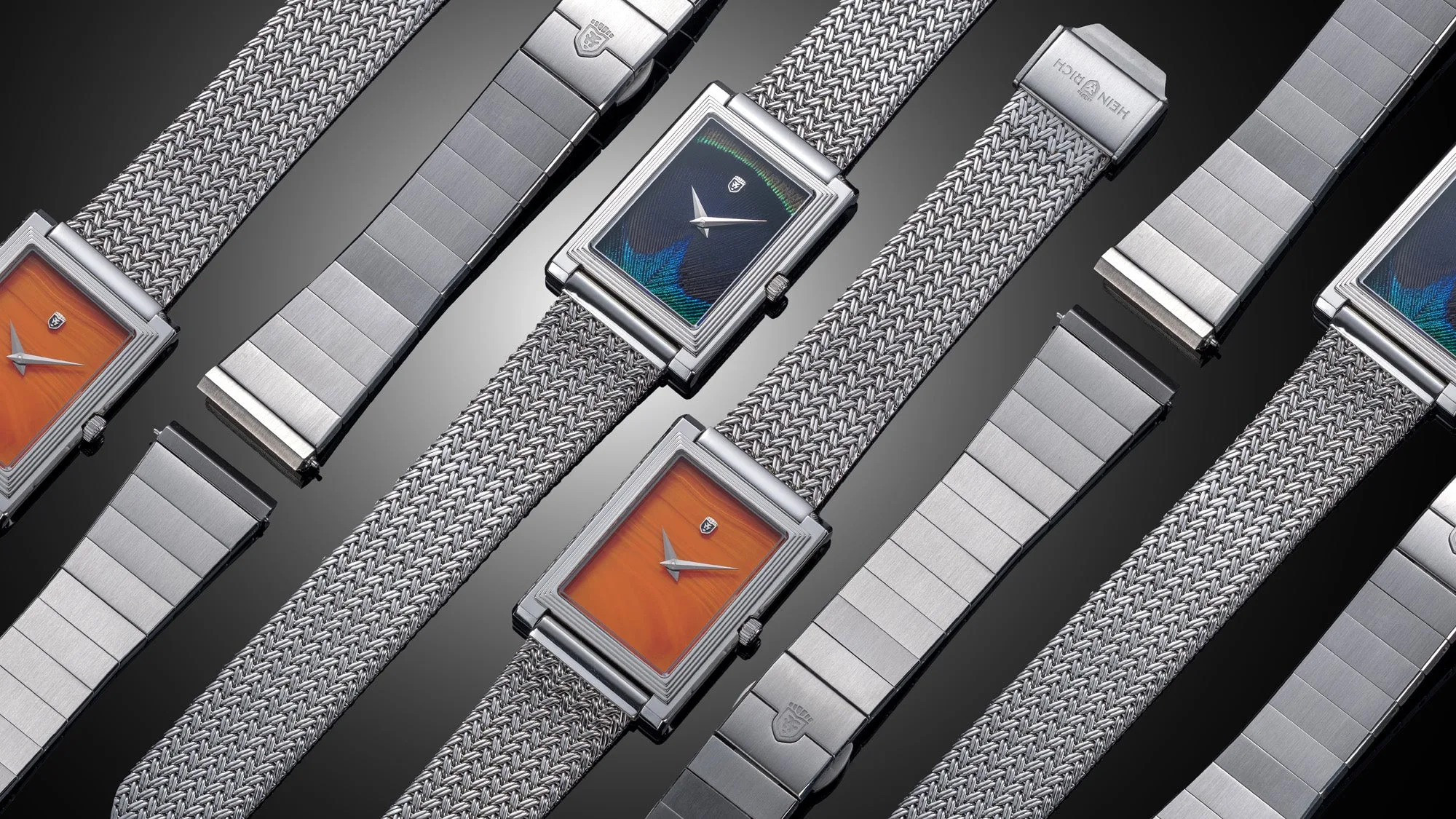
The Case Comes From Manhattan
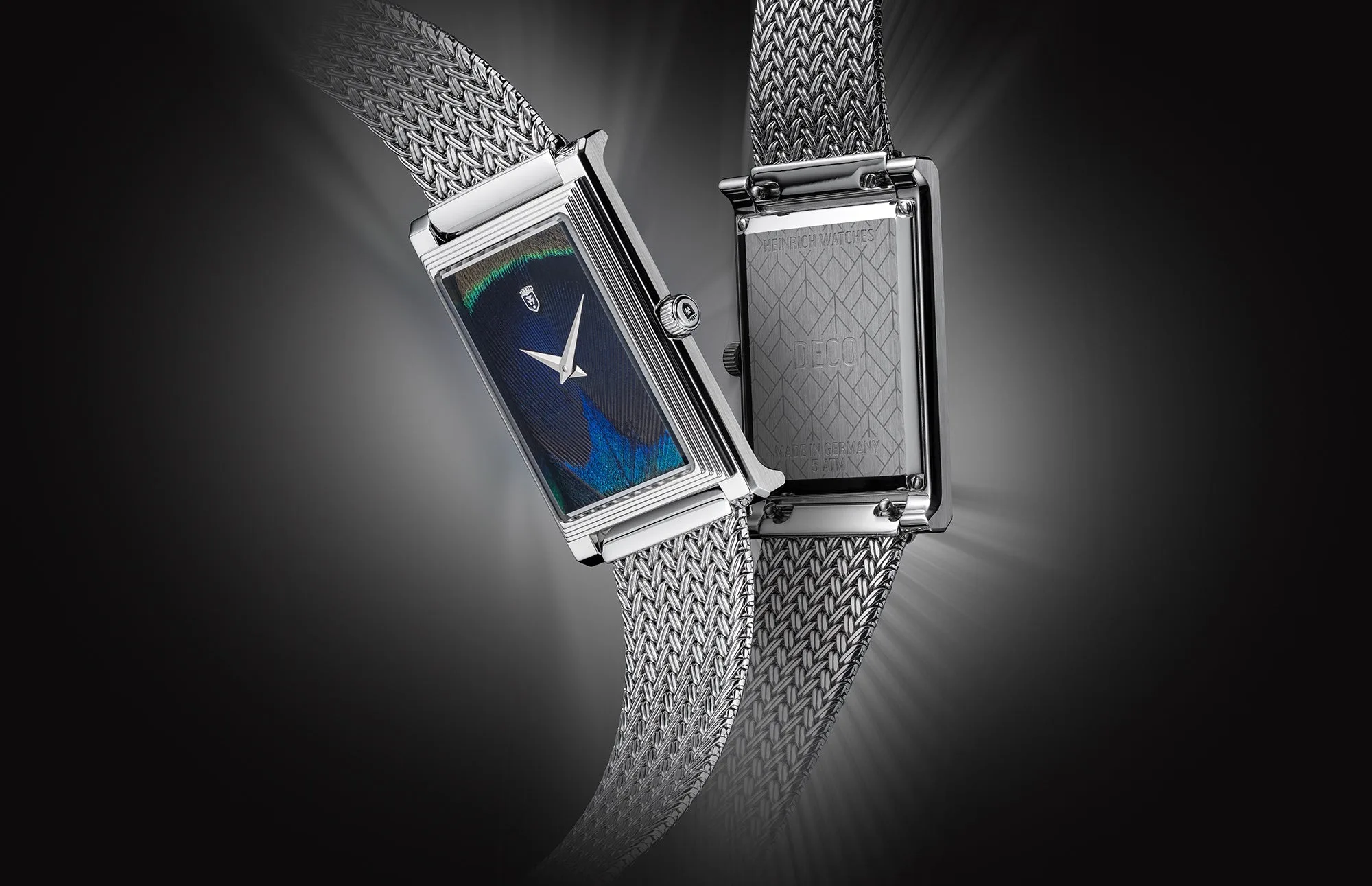
Heinrich is unusually direct about where the shape comes from. The stepped setbacks of the Empire State Building and the Chrysler Building are the cited inspiration, and the case translates them into tiered frames that step down toward the dial in strict symmetry around the central axis. The brand is careful to say this is not a replica of any historic watch.
That matters, because almost every rectangular dress watch under €1,000 gets read against the Cartier Tank. The Deco sidesteps the comparison. Instead of thin parallel brancards, it uses layered borders that make the case itself the decoration, and the stepped case is the strongest argument for the whole watch.
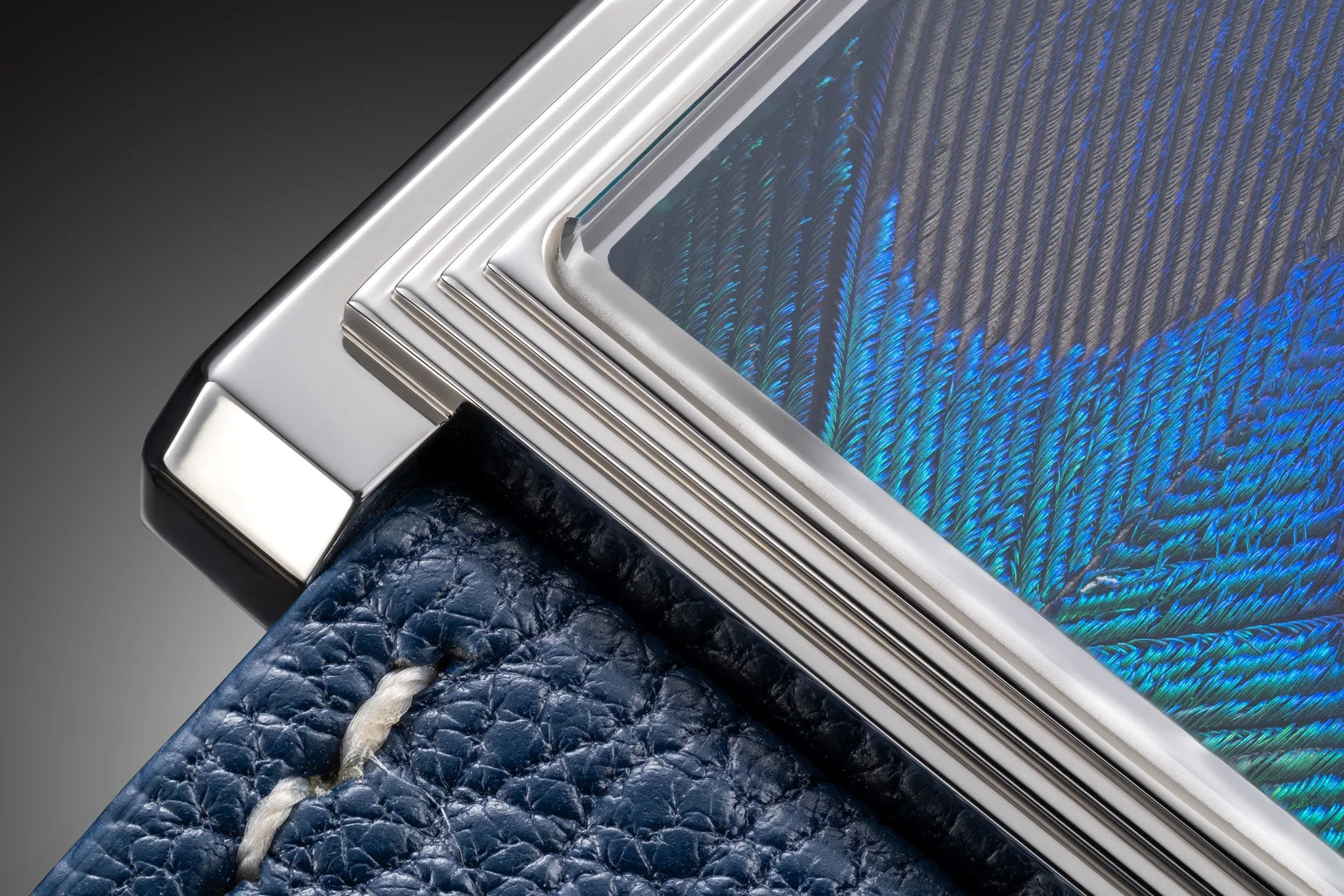
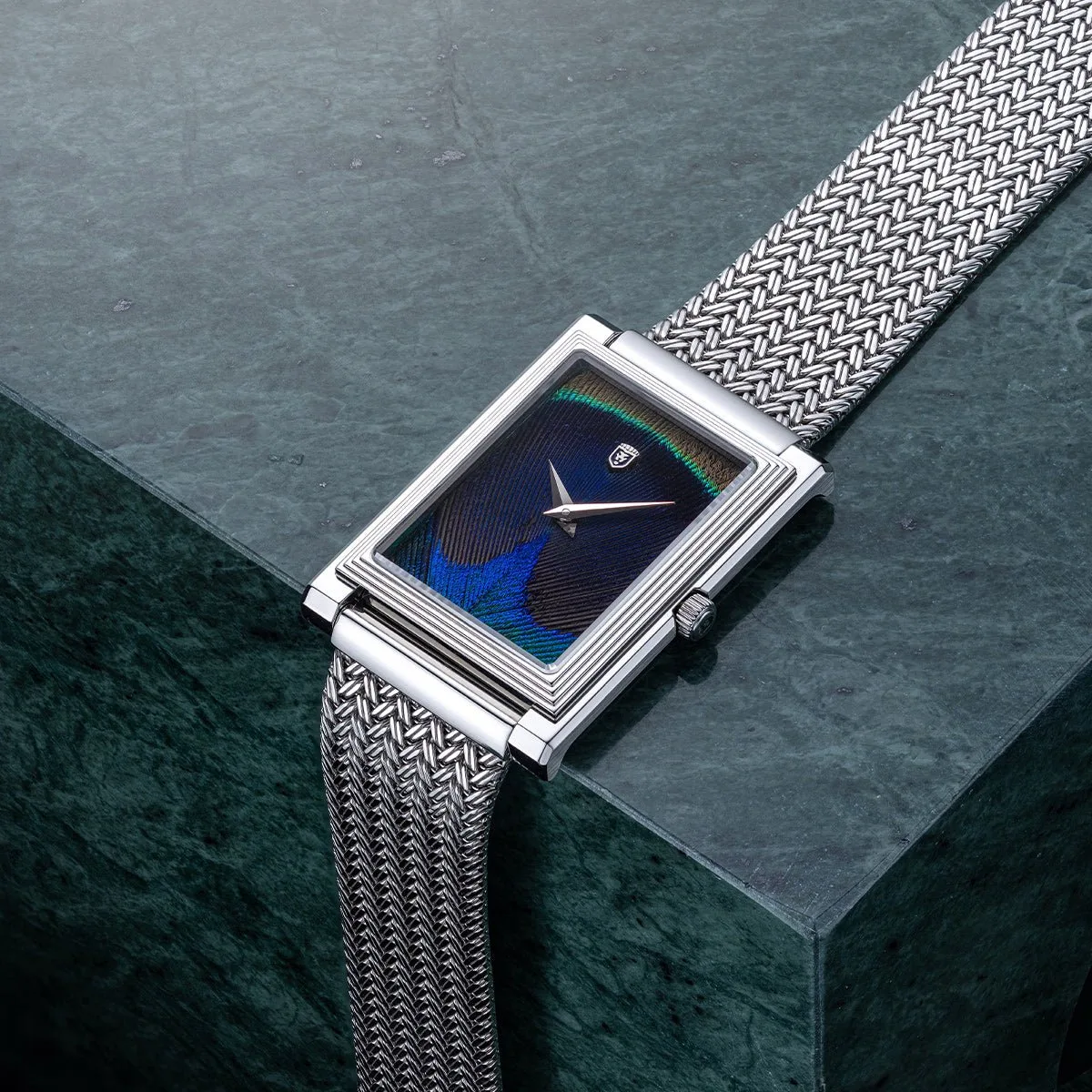
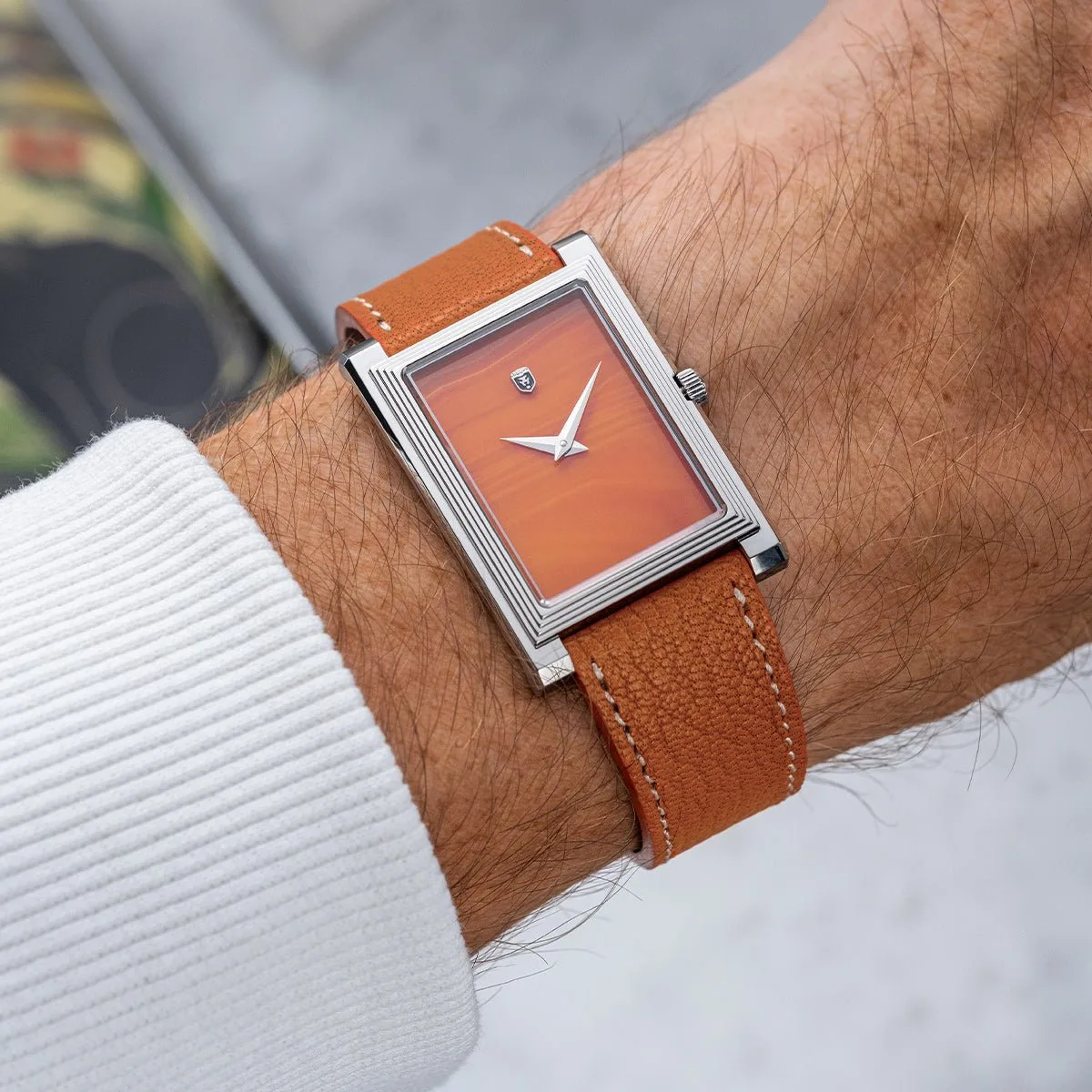
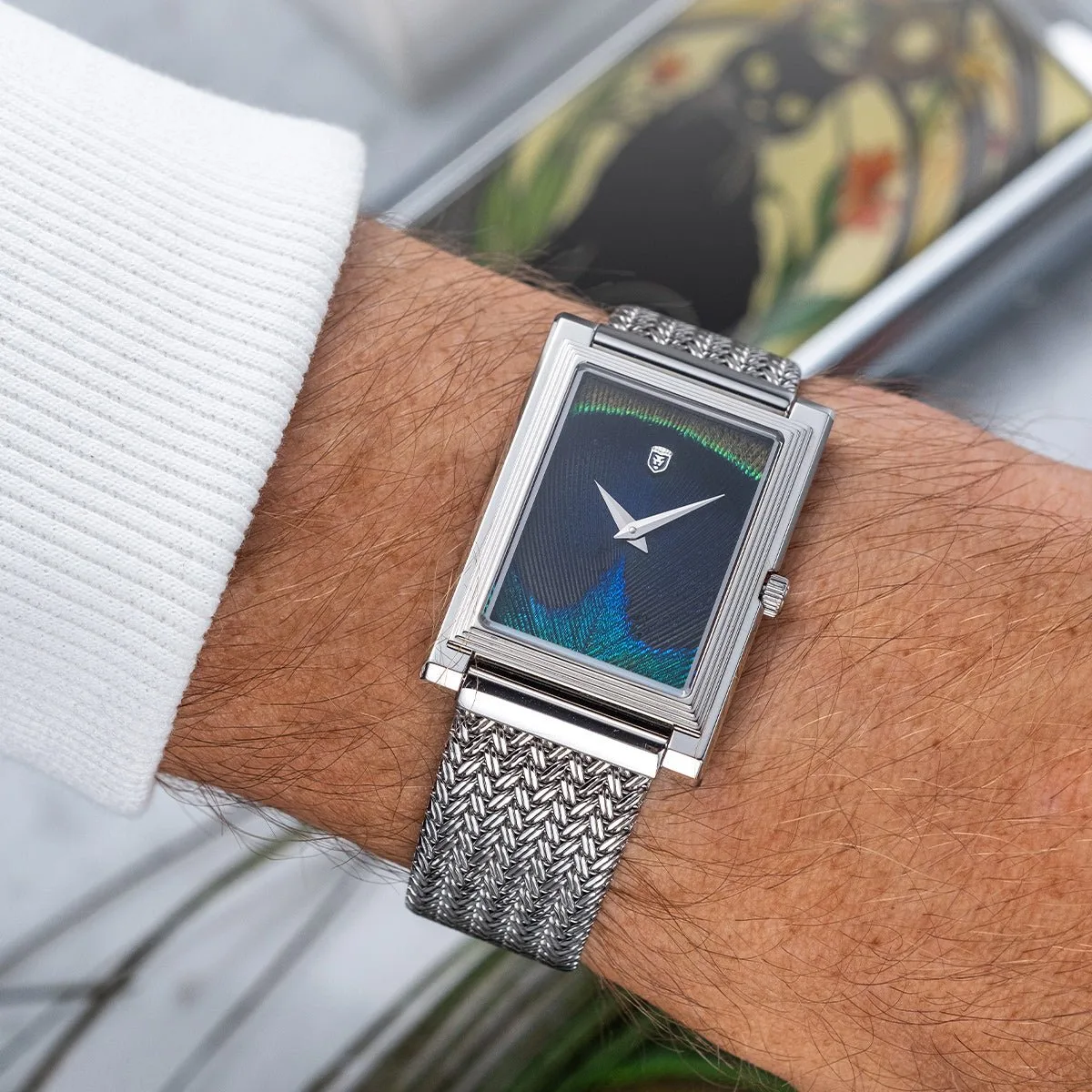
The numbers are 40.0mm long and 28.2mm wide. Heinrich lists only length and width, so it is not yet clear whether that 40mm includes the lugs, and lug width is not published either. Buyers with smaller wrists should wait for real-world wrist shots before committing.
Two Dials, and Neither One Is Printed
The peacock feather dial is the bolder of the two. Heinrich describes it shifting between deep blue, turquoise and green depending on the light, and because it is a real feather, no two will match. The carnelian dial is the more natural fit for the brand, since carnelian already appeared on the Helicoprion, and its orange-red grain changes from piece to piece.
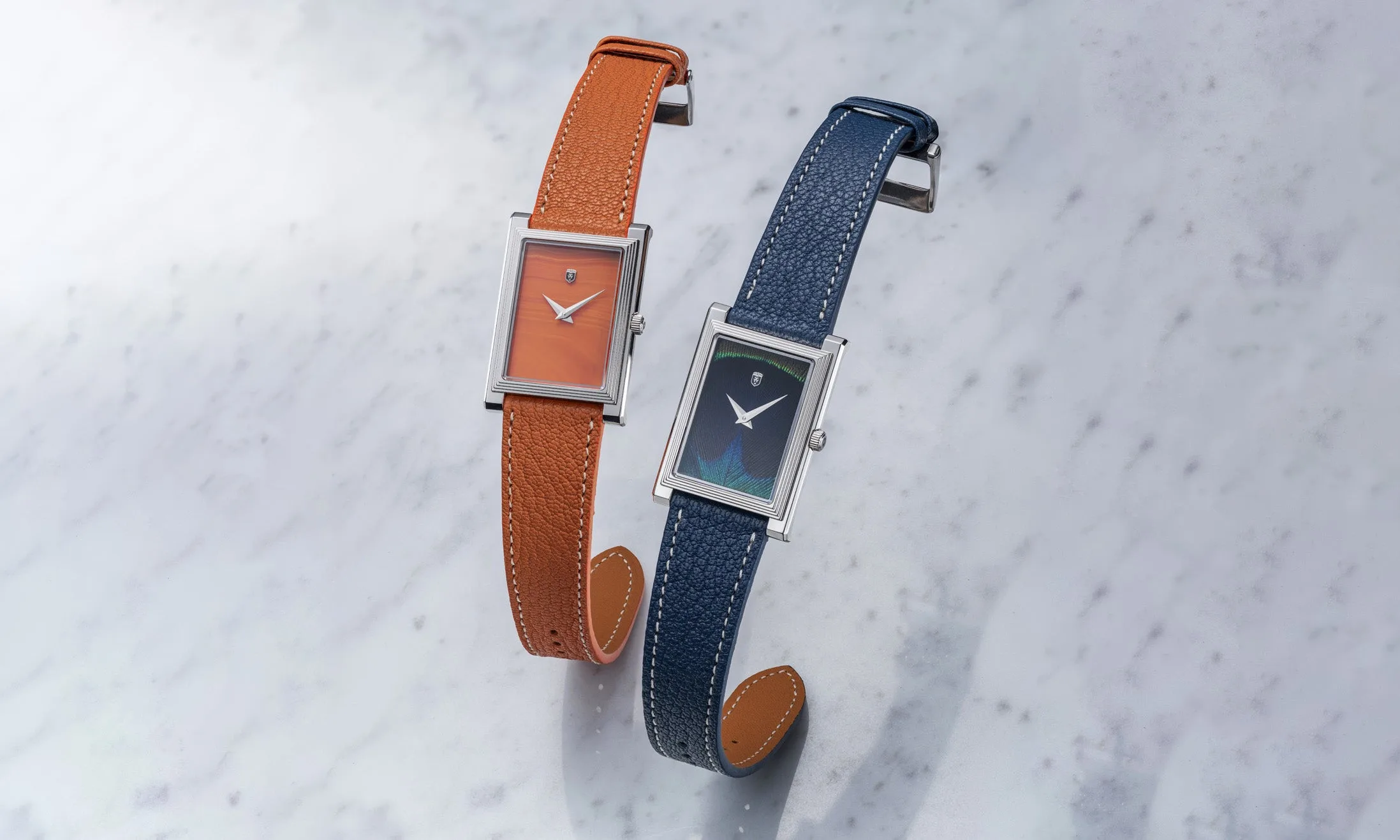
There is almost nothing else on either face. No indices, no seconds hand, no date, only two sculptural hands and a small Heinrich emblem. Wolfgang Heinrich’s own line is that “the material, the shape, and the strap are the design,” and the brand openly positions the Deco between a watch and a piece of jewelry.
I like that restraint, but it carries a cost. With no markers and no lume, reading the time on an iridescent feather in dim light will rely entirely on hand position. Natural materials also mean the dial you receive will not match the product photos exactly, which some buyers love and others return.
The Quartz Movement Is the Right Call
Inside is the Swiss-made Ronda 1062, a two-hand quartz caliber with a height of just 1.9mm and a battery life Heinrich puts at around six years. That slim movement is what makes a 7.2mm stepped case possible. For context, the Sellita SW200, the engine behind the Taucher and Helicoprion, stands 4.6mm tall on its own, more than twice the Ronda.
For a watch whose job is to slide under a shirt cuff, the trade is easy to defend. If the mechanical versus quartz question still decides your purchases, the Deco will not change your mind. For a dress piece worn a few times a month, a battery that outlasts most strap changes is the more practical choice.
The rest of the build matches the brand’s usual standard: sapphire crystal with internal anti-reflective coating, 5 ATM water resistance, and a caseback with a custom geometric Art Deco engraving that carries the “Made in Germany” marking.
The obvious reference point is Seiko’s recent rectangular quartz line. The SWR103, SWR104 and SWR106 trio measures 38.4 x 27.2mm, is 6.4mm thick, uses sapphire, runs the Seiko 4N30 with a battery of about three years, and sells for roughly $300.
On paper, the Seiko is the better value and the Heinrich is the more interesting watch. The Deco is slightly larger and 0.8mm thicker, costs more before shipping is added, and comes from a brand with a fraction of Seiko’s service network. In return, you get a genuinely natural dial instead of a printed one, a case design with its own identity, a battery rated for twice as long, German assembly and an optional bracelet with a butterfly clasp and micro-adjustment on both sides.
The Seiko is a quiet Tank alternative. The Deco is not trying to be an alternative to anything, and that is exactly why it costs more.
Read the Strap Pricing Before You Order
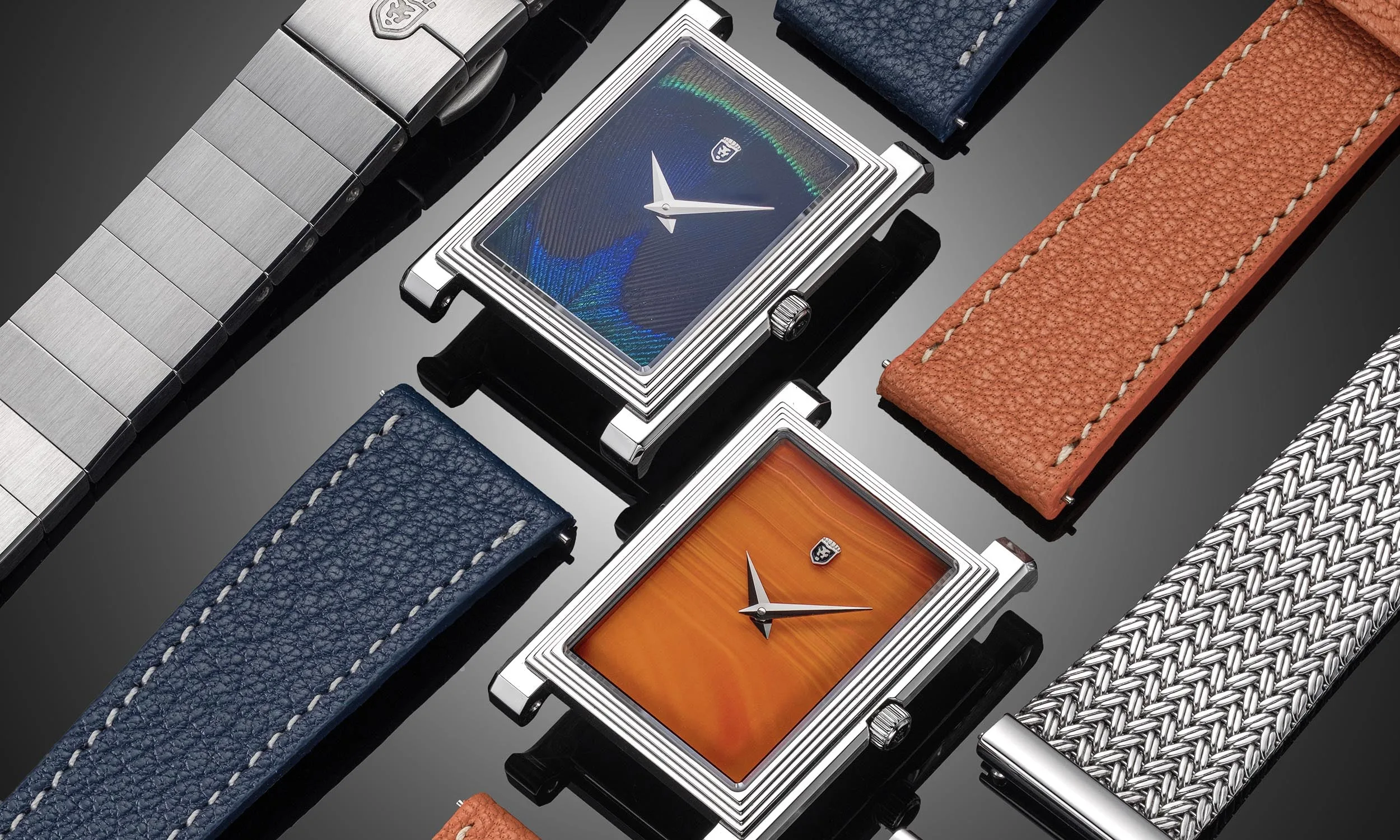
The Deco comes in three configurations per dial. On leather (blue for the peacock, orange for the carnelian) it costs €400, on fishbone mesh €470, and on the geometric steel bracelet €520.
Here is the detail worth knowing. Heinrich also sells both metal options on their own, at €129 for the steel bracelet and €89 for the mesh. Buying the leather version and adding the bracelet costs €529, only €9 more than the bracelet version, and you end up with two ways to wear the watch.
A few other points deserve caution. Heinrich says the Deco is built in small series in Pforzheim, but there is no stated production number, so this is not a numbered limited edition and should not be bought as one. The 5 ATM rating rules out swimming, the warranty is two years, and returns are accepted within 14 days of receipt.
Specs, Pricing & Availability
Case Diameter: 40.0 x 28.2 mm (rectangular)
Case Thickness: 7.2 mm
Case Material: Stainless steel, stepped Art Deco case
Water Resistance: 5 ATM (50 m)
Caliber: Swiss Made Ronda 1062 quartz
Crystal: Sapphire with internal anti-reflective coating
Function: Hours, minutes
Price: €400 (leather), €470 (mesh), €520 (steel bracelet)
Who This Actually Makes Sense For
If I were ordering one, I would take the peacock feather on leather and add the steel bracelet separately. The feather is the dial nobody else at this price is offering, and the leather keeps it in the jewelry register the brand is aiming for.
The Deco makes most sense for someone whose rotation already has a diver and a field watch and who wants a single dress piece with real personality, something that slides under a cuff at 7.2mm and starts a conversation. If you want a mechanical, classic round dress watch for far less money, the Orient Bambino we spent time with remains the safer place to start. If you only want the Tank silhouette at the lowest cost, the Seiko does that job well.
For Heinrich, the Deco is a smart gateway into a catalogue that has been out of reach for most affordable buyers. For Seiko, it is a reminder that the rectangular quartz segment above $300 is no longer just about value. Heinrich is betting buyers will pay a bit more for a story and a material they cannot find elsewhere, and on the evidence of the specs, that bet looks reasonable.
Check out The Ultimate Affordable Watches Guide