
Timex’s heritage-styled watches have run on the same repeatable formula for years, whether they carried the Q Timex reissue badge or not: pull a case shape out of the archive, print a period-correct dial, put it on a leather NATO or a rubber strap, and let nostalgia close the sale. Bracelets showed up occasionally, but they were never the point. Building and tooling an integrated steel bracelet is expensive to get right at these prices, and Timex mostly avoided the risk.
Q Timex’s Continental Chronograph followed that script until this year: a 40mm chronograph sold on leather or steel, with a rotating tachymeter bezel that leaned into 1970s racing signaling more than dress-watch restraint. The 1983 E Line, Timex’s other bracelet-first piece, launched quietly at 34mm in early 2025 and mostly got buried in a catalog still dominated by straps. Neither read like a real commitment to the category.
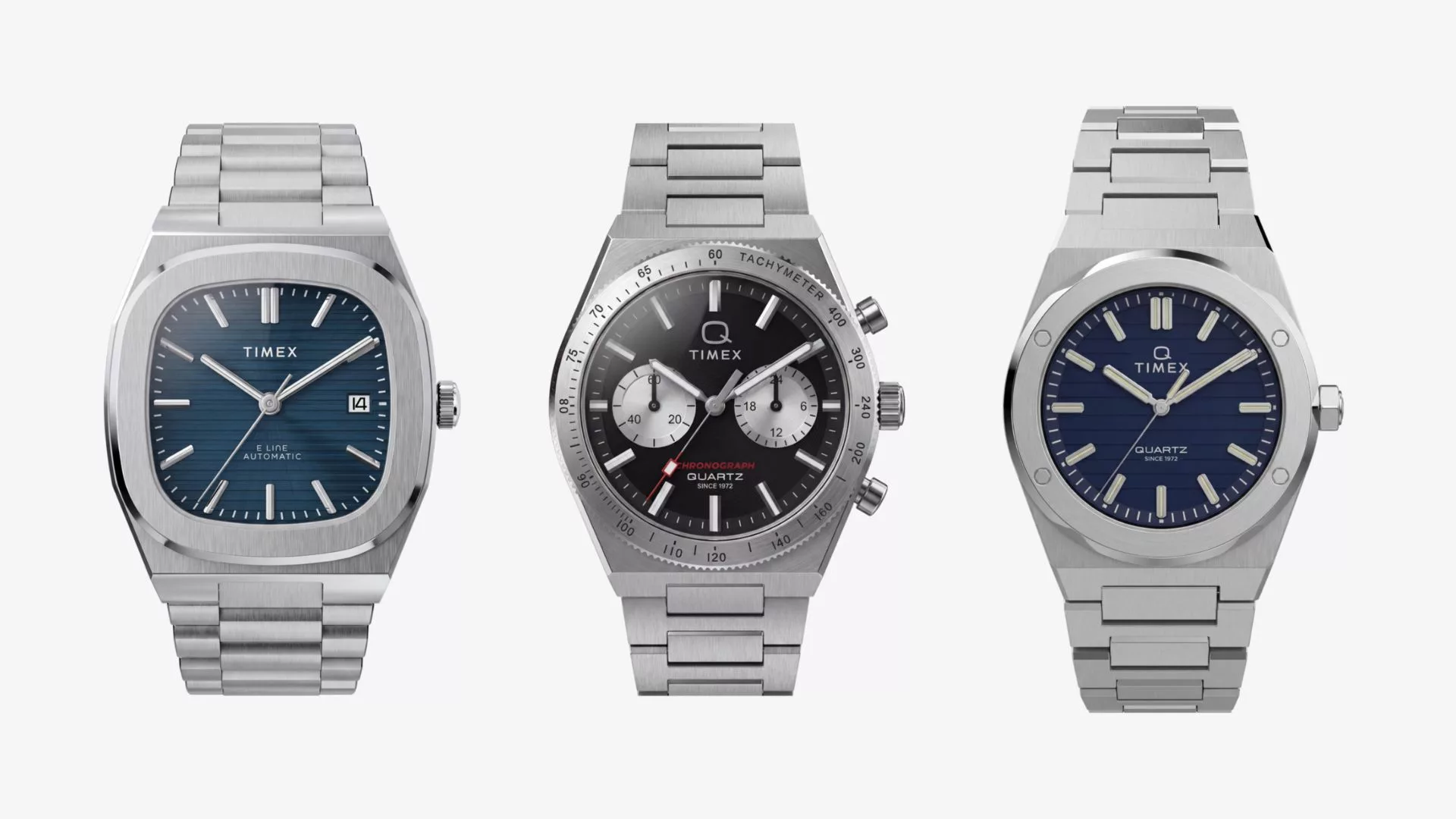
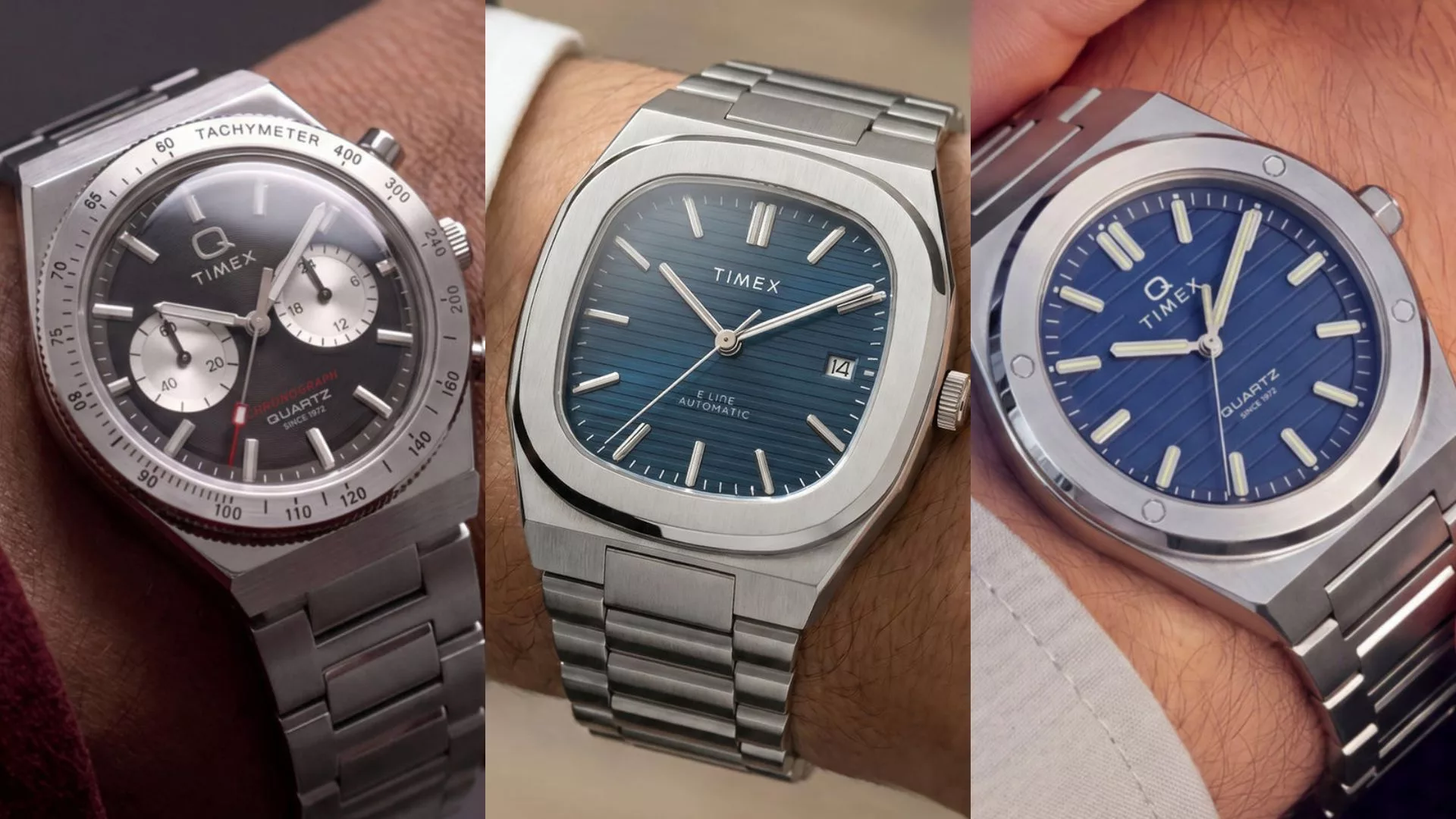
Then, inside a single week in August, that changed. E Line’s 38mm chapter posted earlier this month. Few days later, Continental Chronograph came back downsized to 36mm with its rotating bezel gone, and Marbella launched as an entirely new integrated-bracelet line alongside it. Three product families, eleven new stainless steel references, prices from $209 to $399, and not one of them overlapping in size or price with another. Tissot PRX rebuilt this category in 2020 and still owns the top of it, with the automatic Powermatic 80 at $850 and the 40mm quartz at $450. Timex isn’t pricing anywhere near that, but stacking three separate bracelet lines into five days looks like a direct attempt to claim the affordable end of a category the PRX defined.
Three Launches in Five Days Is a Strategy, Not a Coincidence
Eleven new references in five days, spanning $209 to $399, with each line occupying its own price band and case size rather than competing with the others, is not how incremental product drops usually land. E Line owns the $379-399 automatic tier. Continental Chronograph sits at $259-279 for a quartz chronograph. Marbella covers $209-239 as the true entry point. That is a shelf stocked end to end, not three teams shipping whatever was ready.
Timex Automatic E Line 38mm
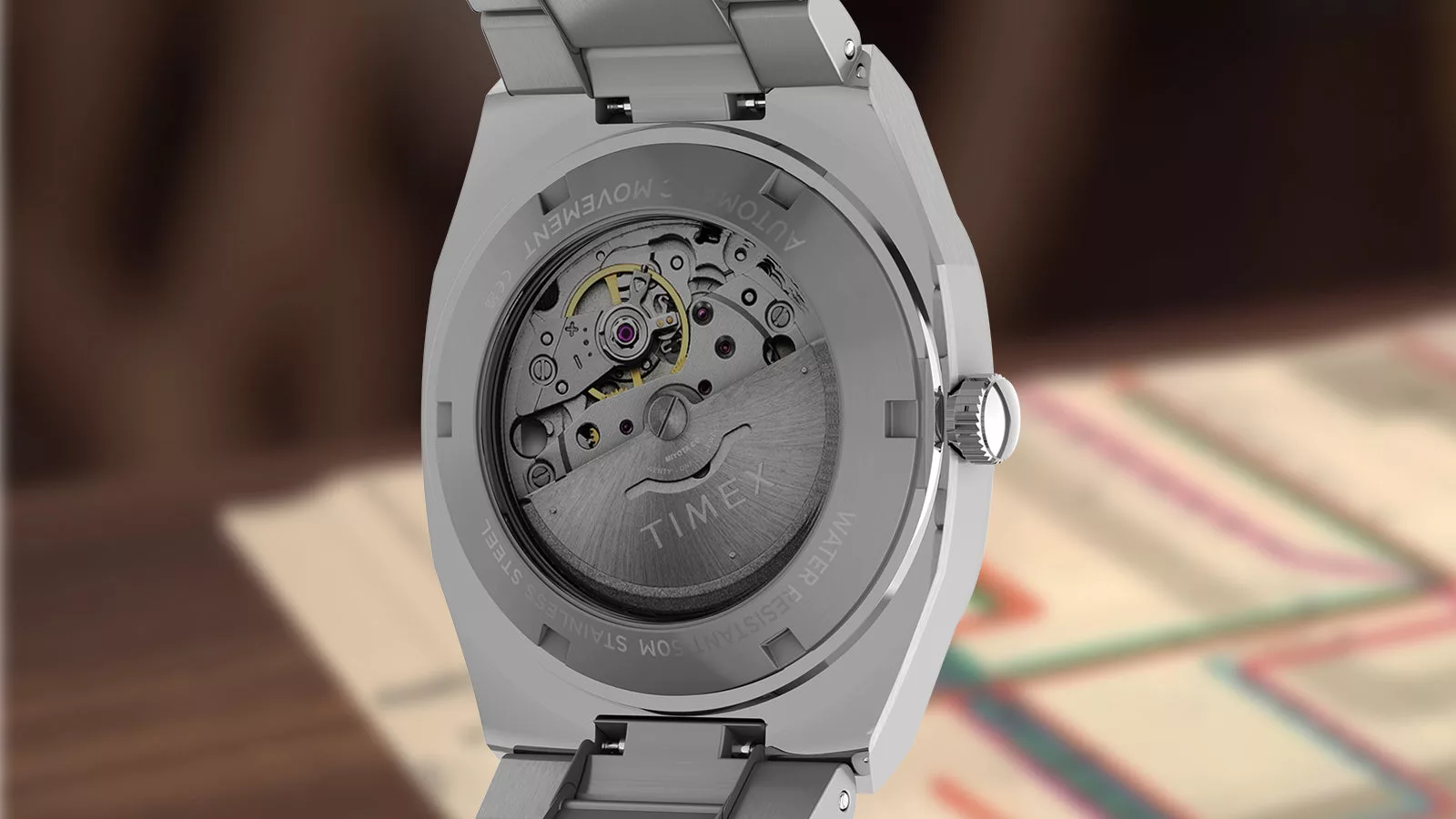
The 38mm case is 4mm larger than the original 1983 E Line, addressing the most common complaint about that watch: it wore too small for a lot of wrists it was marketed to. The movement carried over unchanged, a Miyota 8215 automatic with 21 jewels and roughly 40 hours of reserve, now paired with an exhibition caseback, a butterfly deployant clasp, and a more heavily textured “garage door” dial that references Patek’s Nautilus without copying its H-link bracelet.
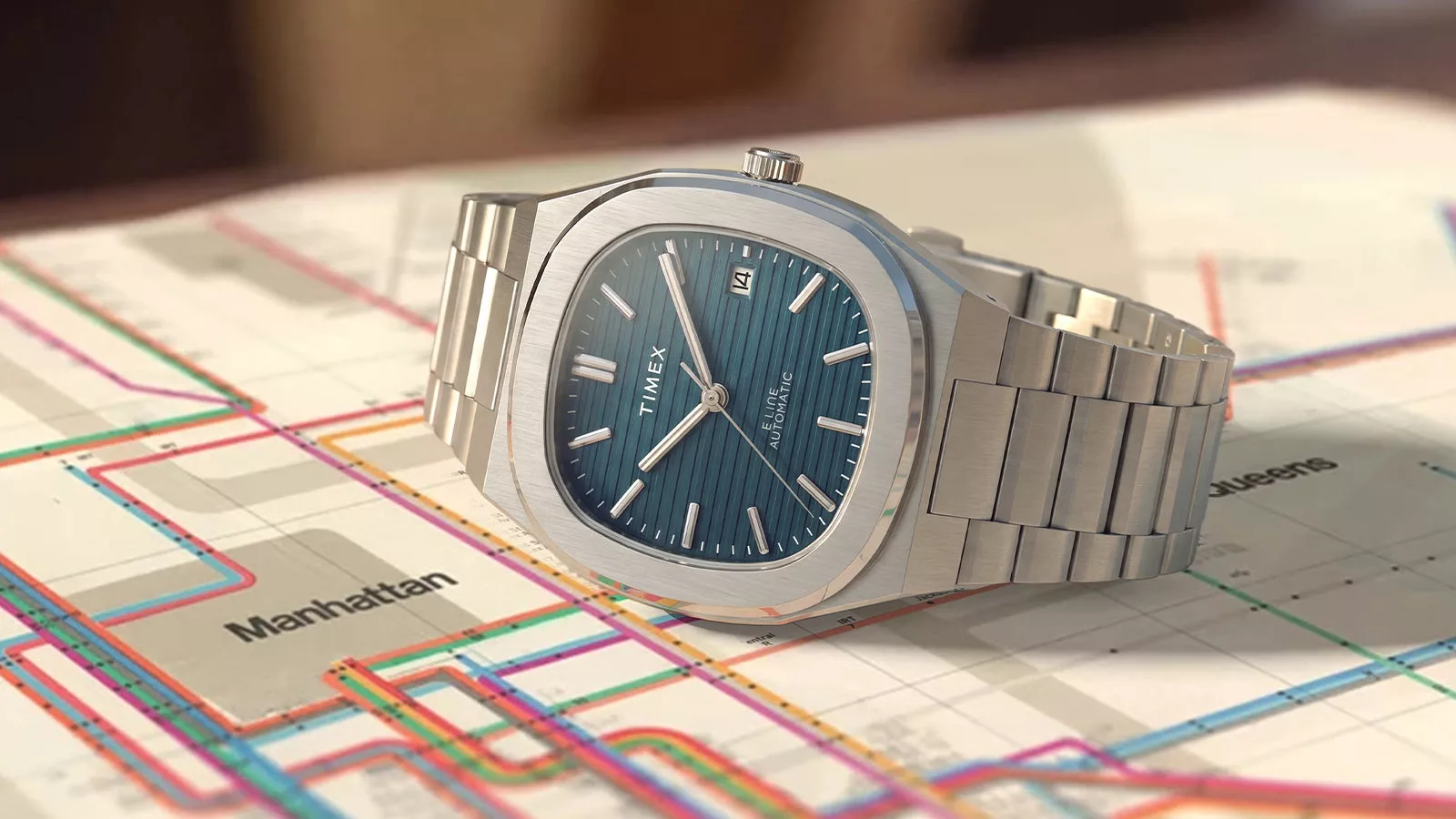
That upsize costs $80 to $140 over the 34mm quartz range, which started at $259. The Miyota 8215 is a dependable, well-worn caliber that shows up in watches well under $150, so the premium buys Timex’s case work, finishing, and the exhibition caseback more than any mechanical upgrade. That is a reasonable trade at this price tier, but it is worth knowing what the extra money is actually for before paying it.
Case Diameter: 39.5mm
Case Diameter: 38mm
Case Thickness: 12.5mm
Case Material: Stainless steel
Water Resistance: 50 meters
Caliber: Miyota 8215 automatic
Crystal: Mineral glass
Function: Date, exhibition caseback
Price: $379 (steel), $399 (two-tone)
Q Timex Continental Chronograph 36mm
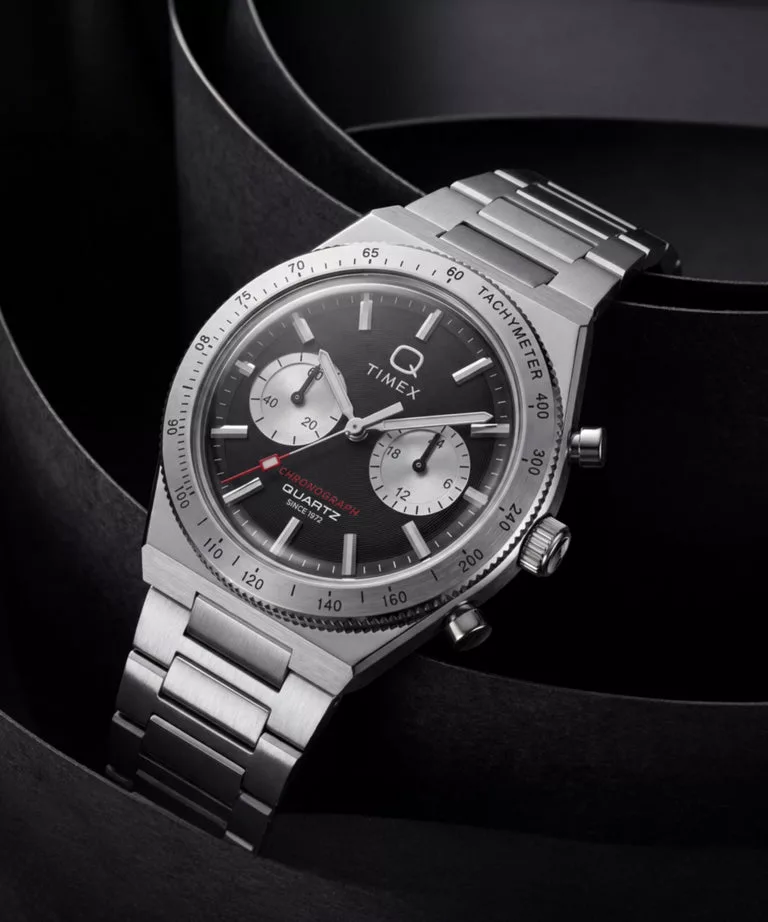
The original 40mm Continental Chronograph, which launched in February 2026, wore a unidirectional rotating bezel with tachymeter markings and 100m of water resistance. The new 36mm generation replaces that bezel with a fixed tachymeter scale, drops water resistance to 50m, and standardizes the integrated bracelet across all three colorways where the first run split between bracelet and leather.
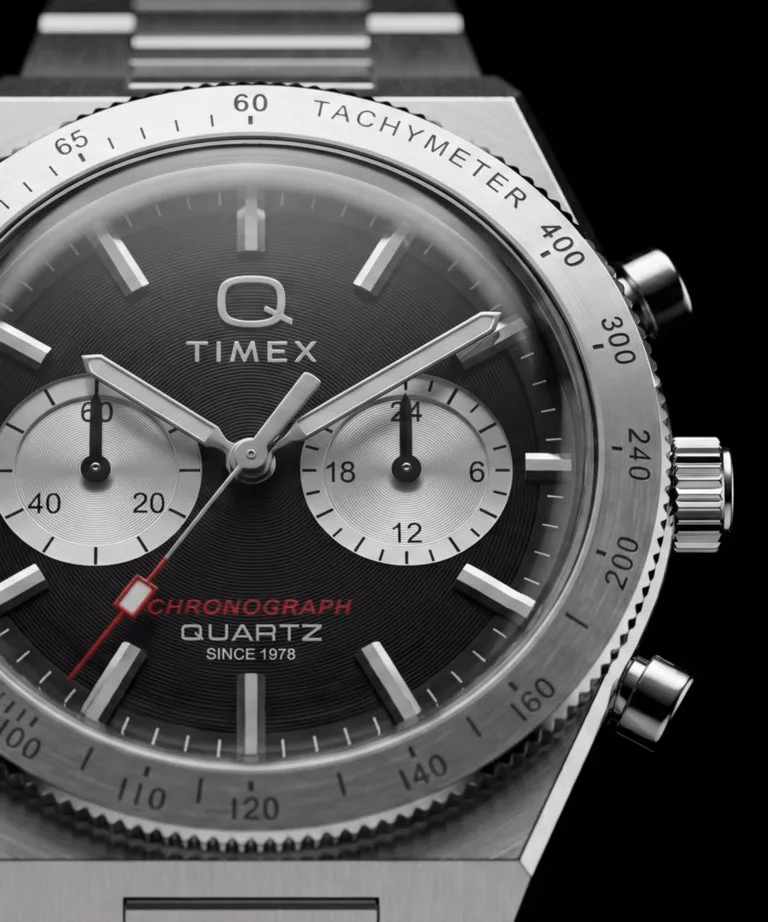
A rotating dive bezel on a 50m watch always read as costume more than function. Losing it for a fixed scale is not a downgrade, it is the design catching up to what the watch actually does. The movement caliber for the 36mm has not been confirmed by Timex, though the 40mm ran a Seiko-Epson quartz chronograph movement, and it wouldn’t be surprising if the smaller case carries the same unit forward. The 36mm case also sits closer to the 1970s chronographs this line is quoting, most of which ran 36-38mm rather than 40mm, so the downsize reads as correction as much as refresh.
Case Diameter: 36mm
Case Thickness: 11.5mm
Case Material: Stainless steel
Water Resistance: 50 meters
Crystal: Mineral glass
Function: Chronograph, tachymeter
Price: $259 (black, ice blue), $279 (gold-tone)
Q Timex Marbella 40.5mm
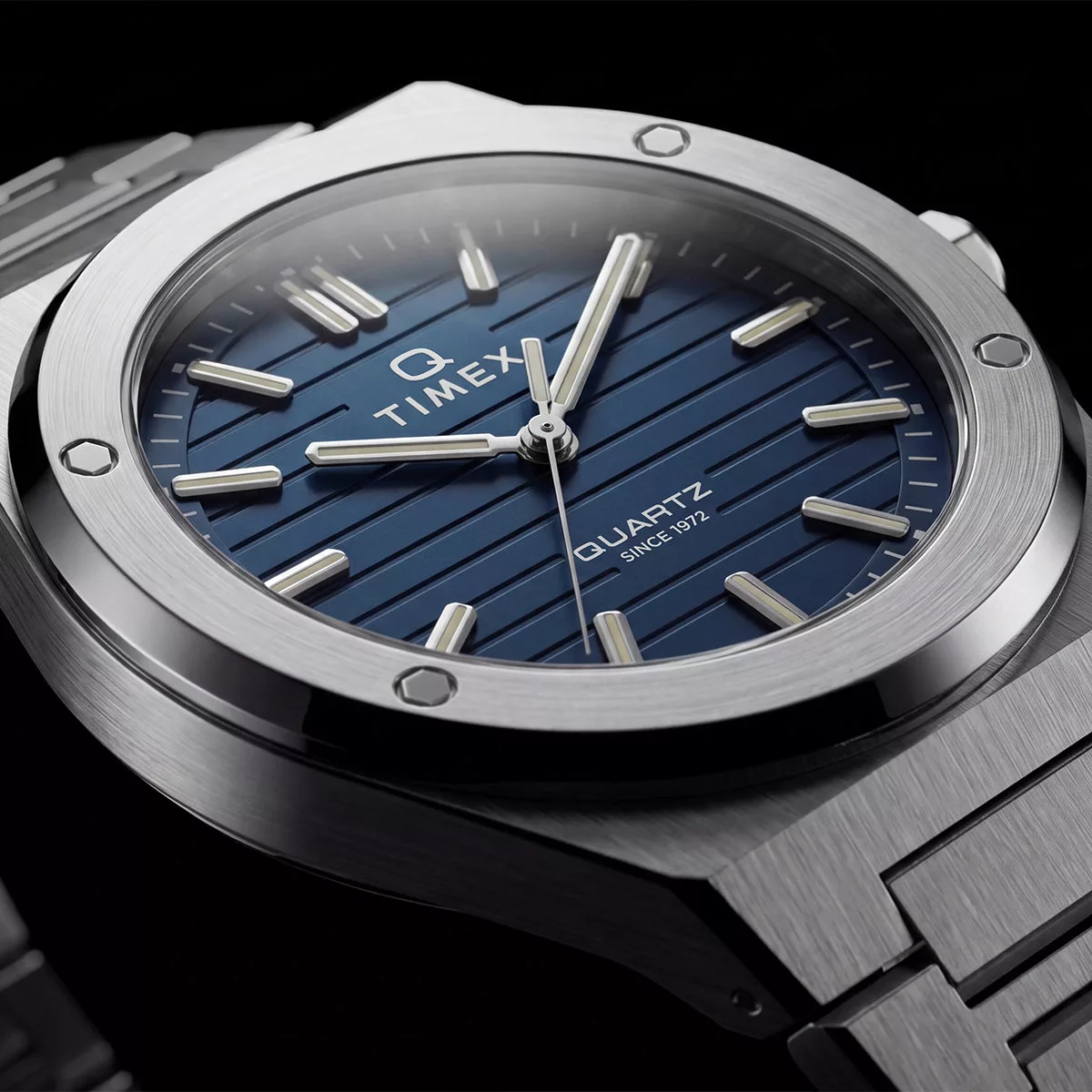
Marbella is new, not a resize of an existing line, and the 40.5mm version is the most direct answer to the affordable-integrated-bracelet conversation Tissot PRX started. Five variants split across 34mm and 40.5mm cases, all quartz on an SR626SW cell, with a circular-brushed bezel finished in four exposed polished bolts and an H-link bracelet on a deployant clasp. The 40.5mm runs 9.5mm thick with a 50mm lug-to-lug and a blue textured dial, water resistant to 50m, with mineral crystal rather than sapphire.
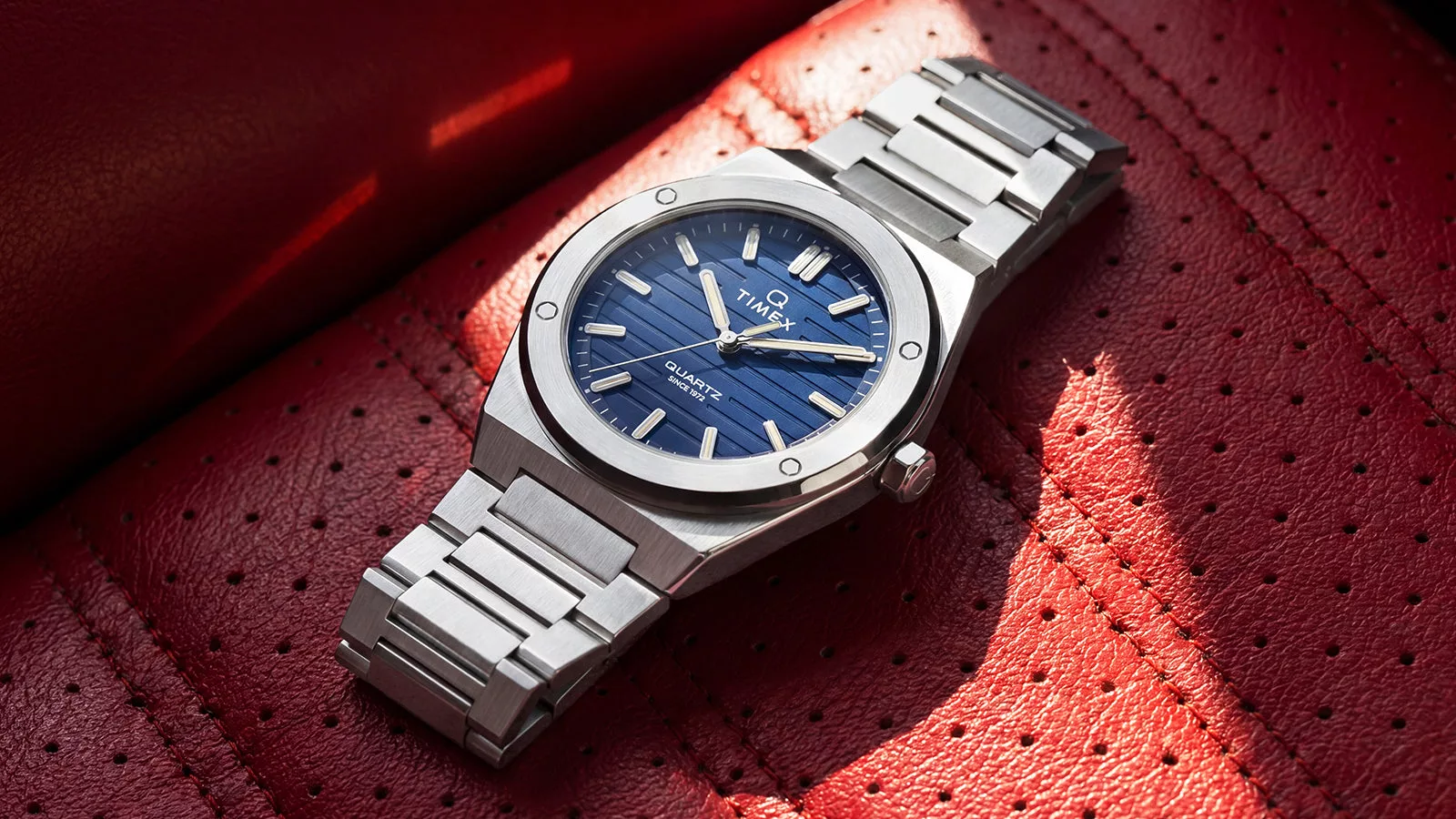
Set the 40.5mm Marbella at $219 next to the 40mm PRX quartz at $450, also on a blue dial: same case diameter, same three-hand quartz format, same integrated-bracelet premise, less than half the price. The PRX still wins on water resistance, at 100m against Marbella’s 50m, a sapphire crystal against mineral, a 10.4mm case that runs slightly thinner, and a quick-release bracelet system Marbella doesn’t offer, but Timex is not trying to match those specs. It is trying to sell the shape and the wearing experience of a PRX-adjacent watch to someone who was never going to spend $450 in the first place, and on that specific brief, it is a legitimately strong effort.
Case Diameter: 40.5mm
Case Thickness: 9.5mm
Case Material: Stainless steel
Water Resistance: 50 meters
Crystal: Mineral glass
Function: Time only
Price: $219 (blue dial, steel), $239 (black dial, gold-tone bezel)
Who Should Actually Buy One
If you want the PRX look without the PRX bill, Marbella is the easy recommendation, and the 40.5mm blue dial at $219 is the one I’d point a first-time buyer toward over the two-tone or gold executions, which read a step more formal than the case shape wants to be. Continental Chronograph makes sense if you specifically want a chronograph in this format and prefer the corrected, more honest 36mm proportions over the flashier 40mm original, though I’d want to see the movement confirmed before recommending the $279 gold-tone over the $259 base colorways. E Line is the hardest sell of the three: a genuinely nicer watch than its 34mm predecessor, but the jump to $379-399 for an unchanged workhorse movement asks buyers to pay mostly for finishing, and that only makes sense if the styling itself is what you are after.
Taken together, these three launches are less about any single watch and more about what Timex thinks affordable buyers want next. For a brand that spent the last few years selling nostalgia on rubber and leather, betting on integrated steel across three separate price points in the same week is a real strategic pivot, not a seasonal refresh, and it puts Timex in more direct competition with the PRX-driven segment than any single release from this year has managed on its own.