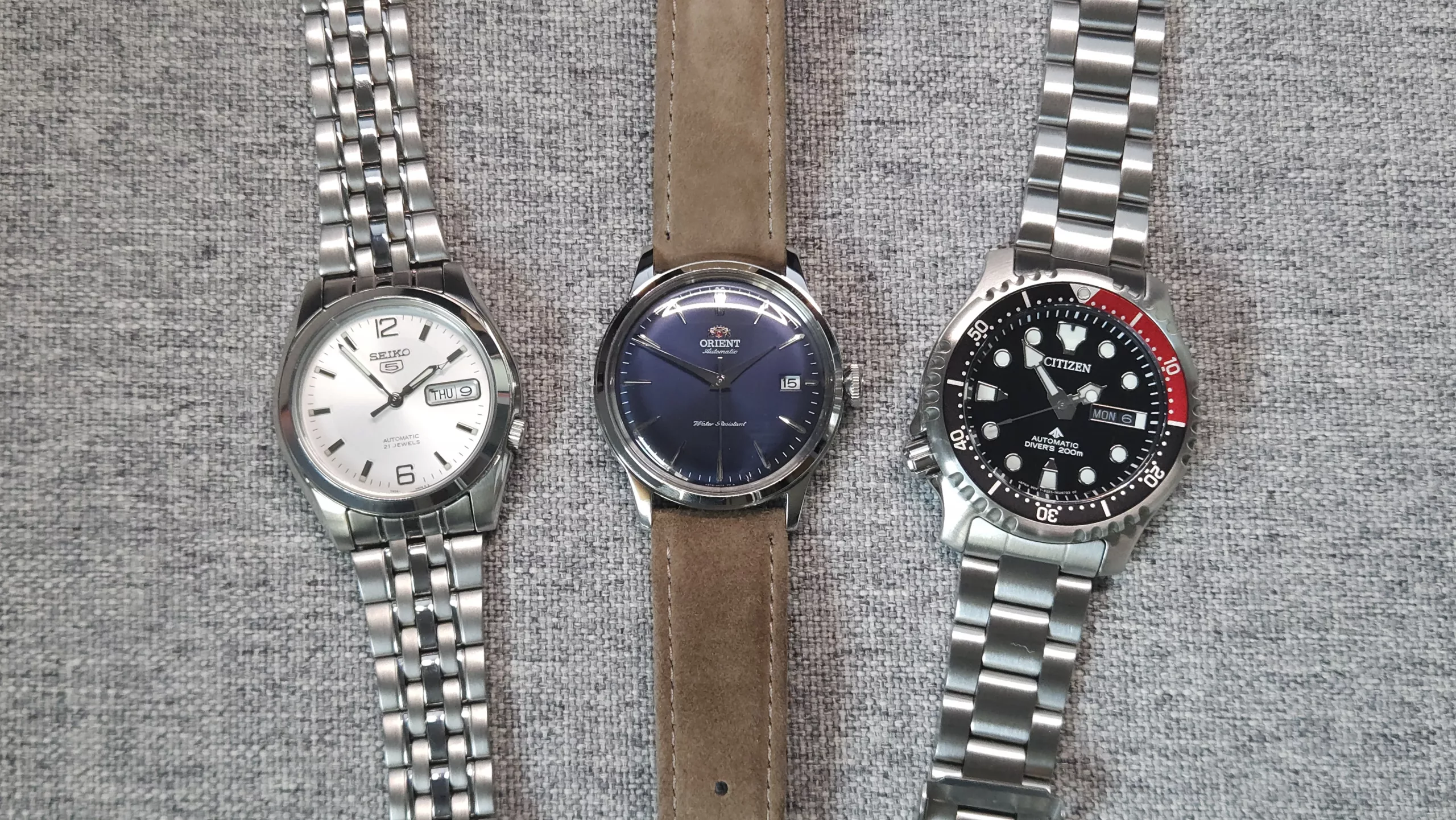

There is no single best entry-level Japanese automatic, because the three brands are not really competing for the same job. The Seiko 5 SNK385 earns its place through charm and history, the Orient Bambino through how complete it feels as a dress watch, and the Citizen Promaster through how much real tool-watch spec it packs under €300. I have owned and reviewed all three, and which one I would tell you to buy first depends on the same kind of thinking behind most first-watch mistakes: knowing what you actually need a watch to do before you look at the spec sheet.
That is the part most “Seiko vs Citizen vs Orient” articles skip. They treat this like a spec-sheet shootout, as if there is one winner sitting at the top of a table. In practice, I reach for these three watches in completely different situations, and none of them is trying to replace the other two.
Three Different Answers to the Same Question
When people ask which Japanese brand to start with, they are usually really asking a narrower question without realizing it: start with what, a diver, a do-it-all watch, or a dress piece. I picked one watch per category because that is closer to how the decision actually works. The Orient Bambino RA-AC0M12L30B covers dress. The Seiko 5 SNK385 covers the old GADA idea, a watch elegant enough for most days without demanding much thought. The Citizen Promaster NY0085-86E covers the diver, and it is the only one of the three that is ISO 6425 certified.
Once you separate them by role instead of by brand, the comparison stops being about who wins and starts being about who wins for you. It also assumes you have already settled the bigger question of why an automatic makes sense over quartz in the first place; if you have not, that decision comes before any of these three.
Here is the raw specs side by side before I get into what each one is actually like to wear:
| Watch | Best For | Typical Price | Movement | Crystal | Water Resistance | Main Weakness |
| Citizen Promaster NY0085-86E | One-watch starter, diver | 240 to 300 EUR | Citizen 8204 | Mineral, anti-reflective | 200m, ISO 6425 | Bracelet and crystal are the cheapest parts |
| Orient Bambino RA-AC0M12L30B | Dress | Around 200 EUR | Orient F6724 | Domed mineral | 30m | No lume, not built for rough use |
| Seiko 5 SNK385 | Vintage charm, cheapest entry | Around 140 EUR | Seiko 7S26 | Hardlex | 30m | No hacking or hand-winding |
The Citizen Is the One That Actually Behaves Like a Tool
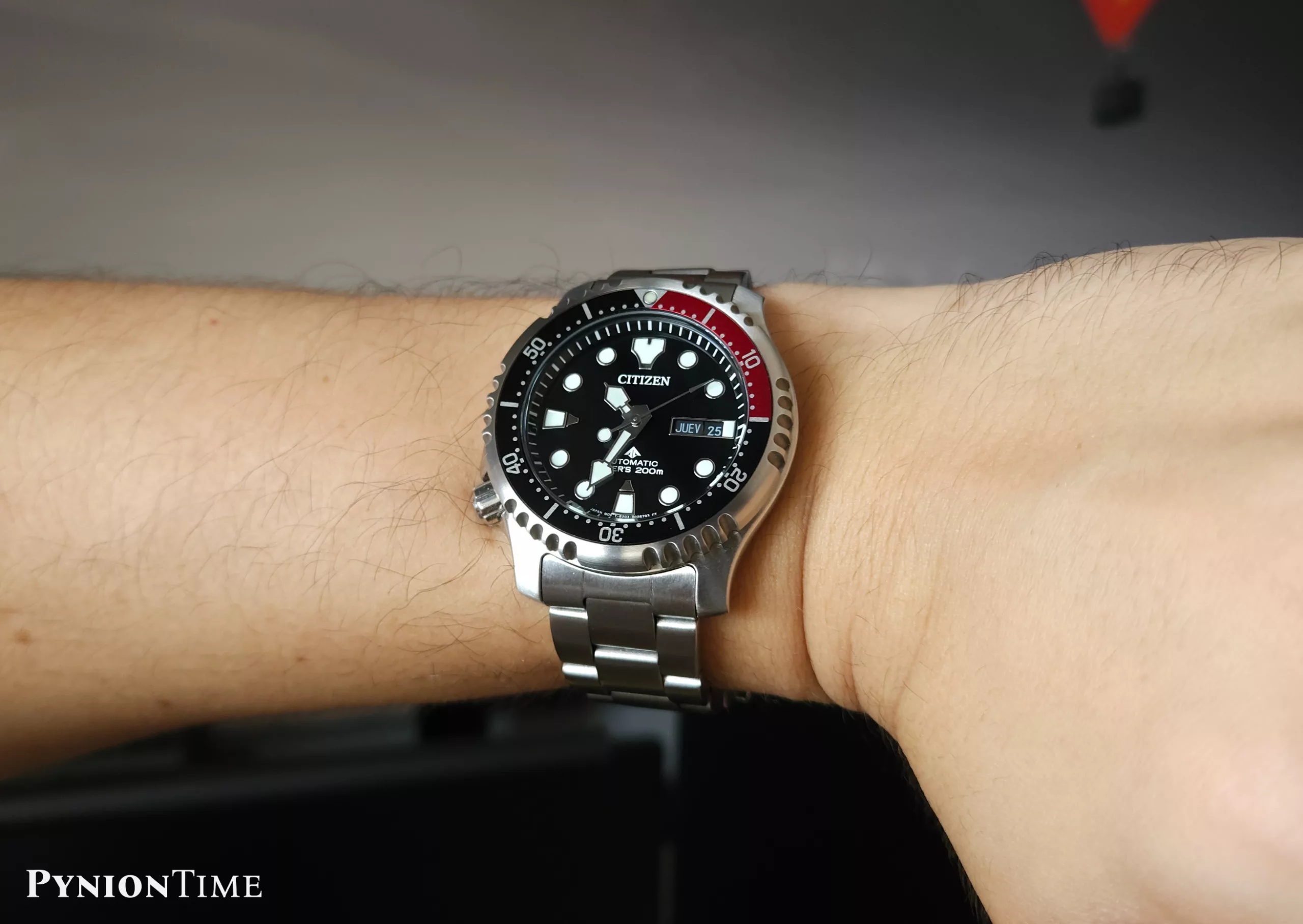
The Citizen Promaster NY0085-86E is the outlier here in the best way. At 42mm and 12.5mm thick, it is bigger than the other two, but it wears more comfortably than those numbers suggest, and it is the only watch in this comparison built to an actual diving standard rather than borrowing dive-watch looks. It is also the only one of the three with a rotating bezel at all, since the other two are not trying to be divers.
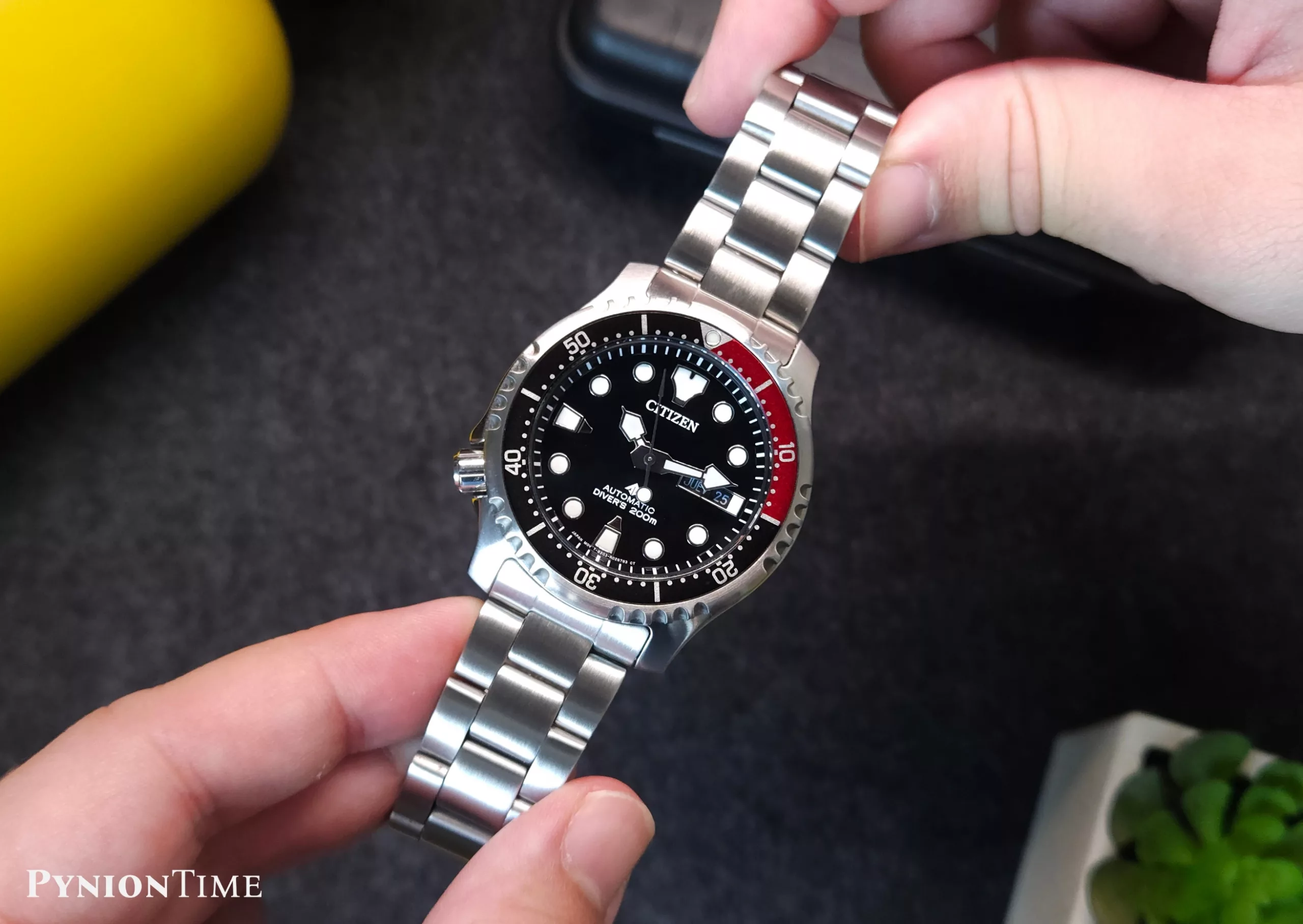
That bezel is what sold me on it. On a lot of affordable divers the bezel is where the price shows, with loose action or vague alignment. Here it grips well and turns with precision, and the lume matches that seriousness. The crystal is where the compromise shows instead: mineral with anti-reflective coating, not sapphire. Inside is Citizen’s automatic caliber 8204, beating at 21,600 vibrations per hour with roughly 40 hours of power reserve, and on that movement mine has run around +10 seconds a day in real use, a solid result for the price, with a low, occasional rotor whir rather than anything intrusive. Those are honest trade-offs for a watch I paid €240 for on discount, closer to €280 to €300 at full price.
The Orient Bambino Is the One That Feels Finished
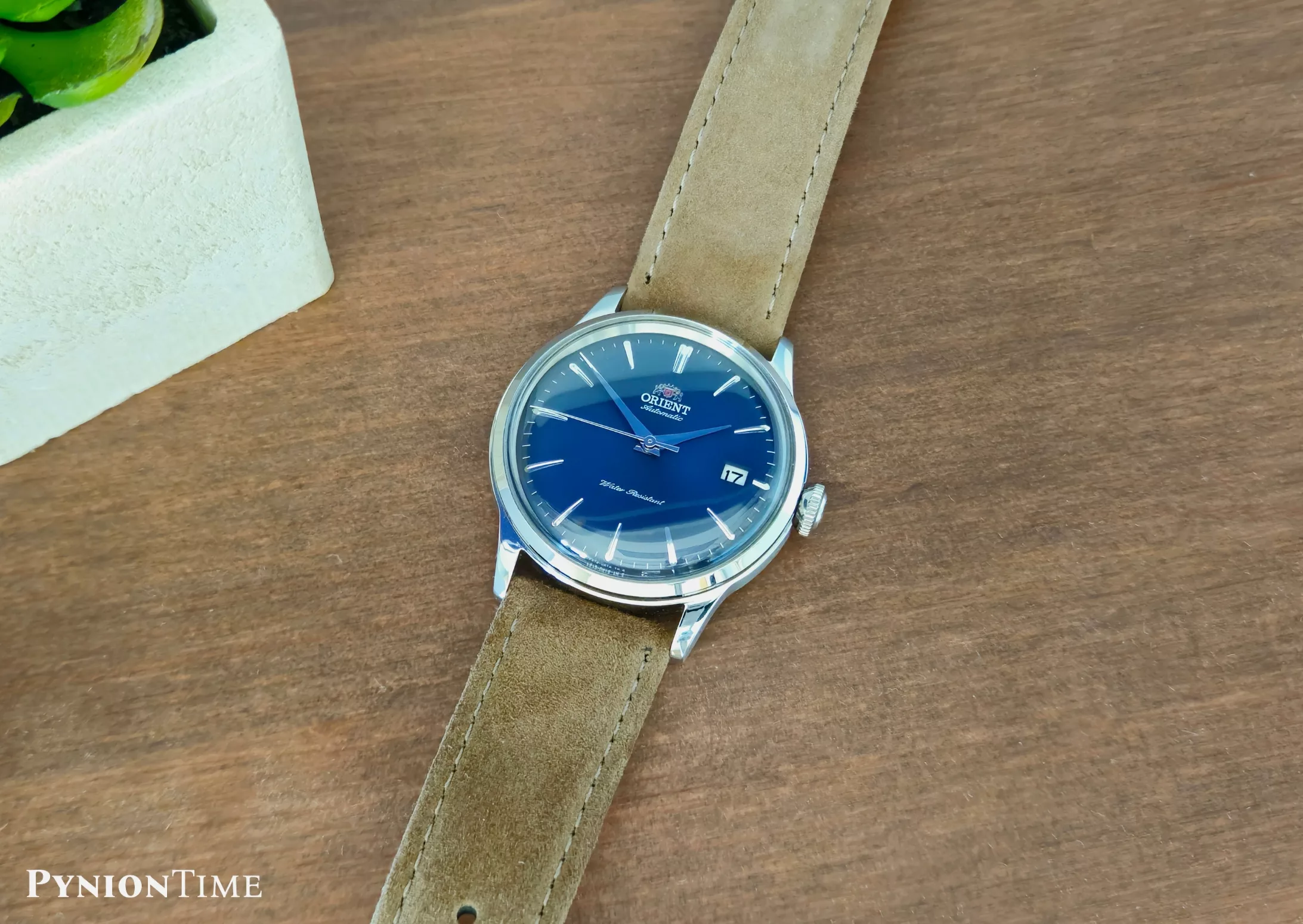
The Orient Bambino RA-AC0M12L30B is the watch I reach for when the occasion actually matters, and part of that is because it does not feel like it is compensating for its price anywhere. At 38.4mm and light on the wrist, the sunburst navy dial and the mix of brushed and polished case surfaces give it more presence than a €200 dress watch usually has. There is no bezel and, more deliberately, no lume at all, which on a dress watch is the right call rather than a missing feature.
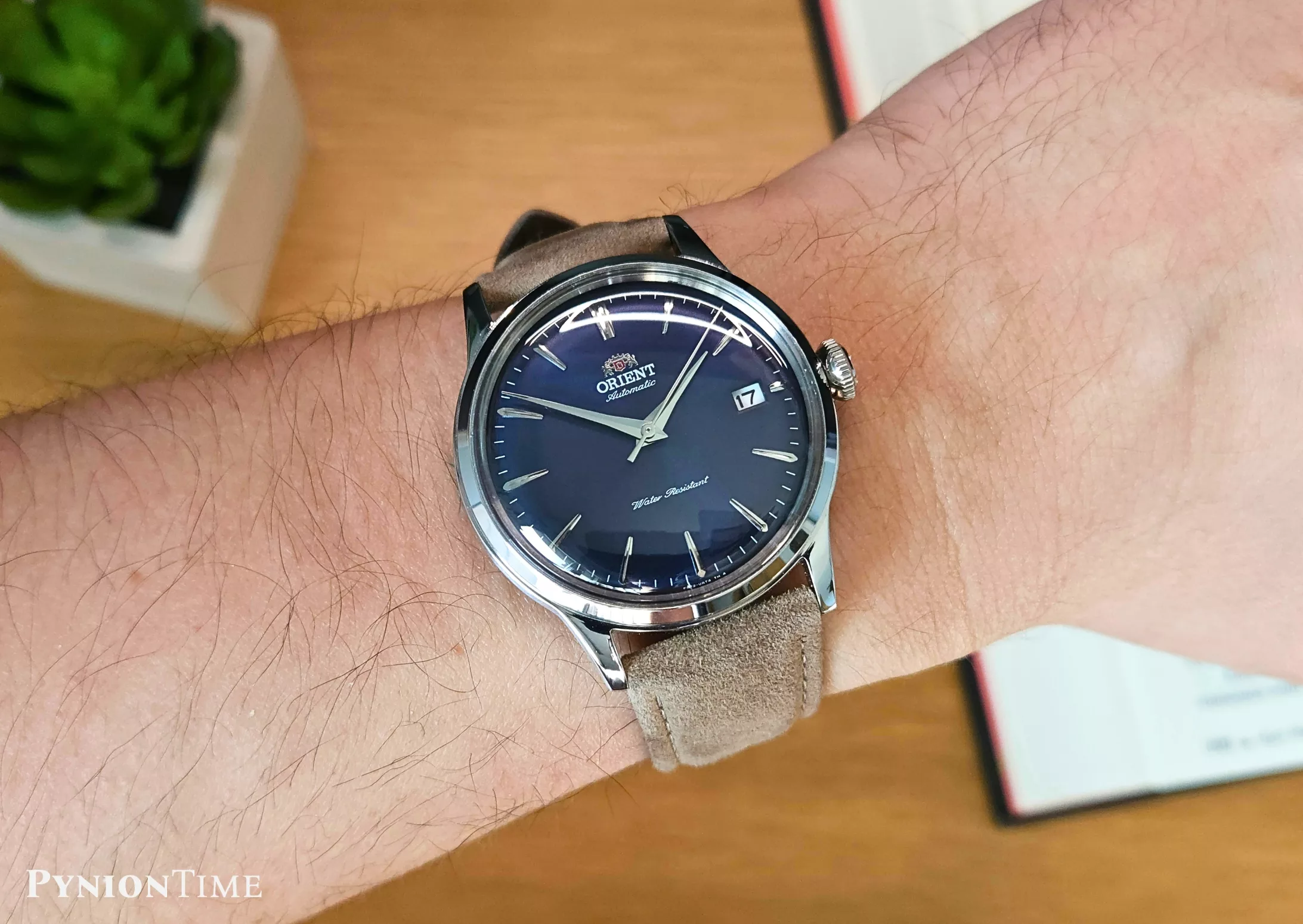
The domed mineral crystal is not sapphire either, but the dome does more for the way light plays across the dial than a flat crystal would. Inside is Orient’s own F6724 caliber, one of the few movements at this price actually manufactured in-house rather than sourced, and on that movement it runs close to +10 seconds a day for me. Unlike the Seiko, it hacks and hand-winds, so setting the time is precise instead of a guess. The rotor is audible in a quiet room, similar to the Citizen, though never bothersome in daily wear. The suede strap surprised me most: Bambino straps have a rough reputation online, and mine has been comfortable from day one.
The Seiko 5 SNK385 Earns Its Place Through Character, Not Specs
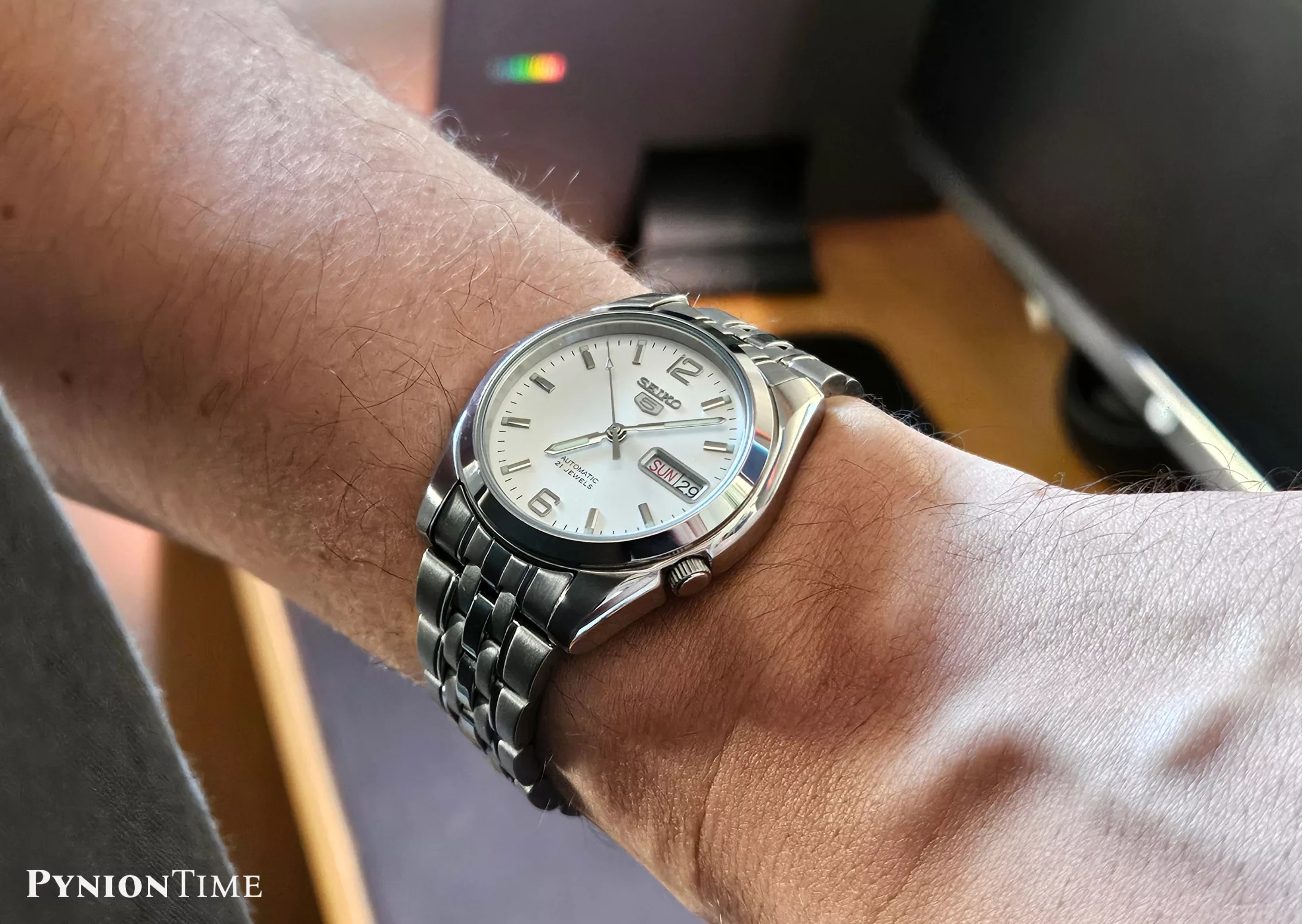
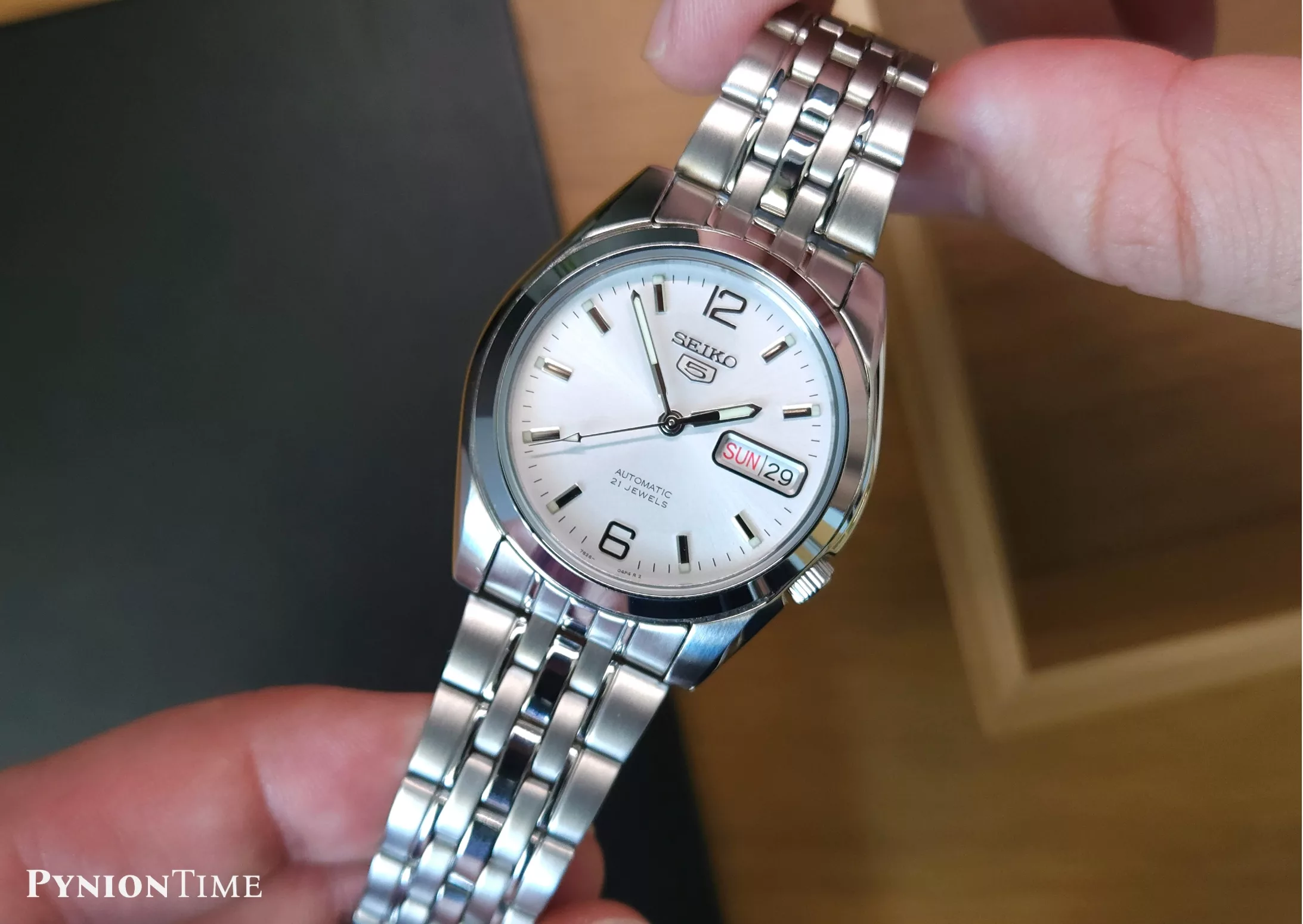
The SNK385 is the one that makes the least sense on paper and the most sense once you have actually worn it. At €140, it is the cheapest of the three, it only manages 30 metres of water resistance, and its Hardlex crystal is the same category of compromise as the other two, just under a different name. Inside is Seiko’s automatic caliber 7S26, and on mine it runs at roughly +20 seconds a day, the least accurate of the group. The 7S26 also does not hack or hand-wind at all, so you are stuck doing the Seiko shuffle every time it stops, and setting the day-date means working around the crown’s quickset window rather than through it directly.
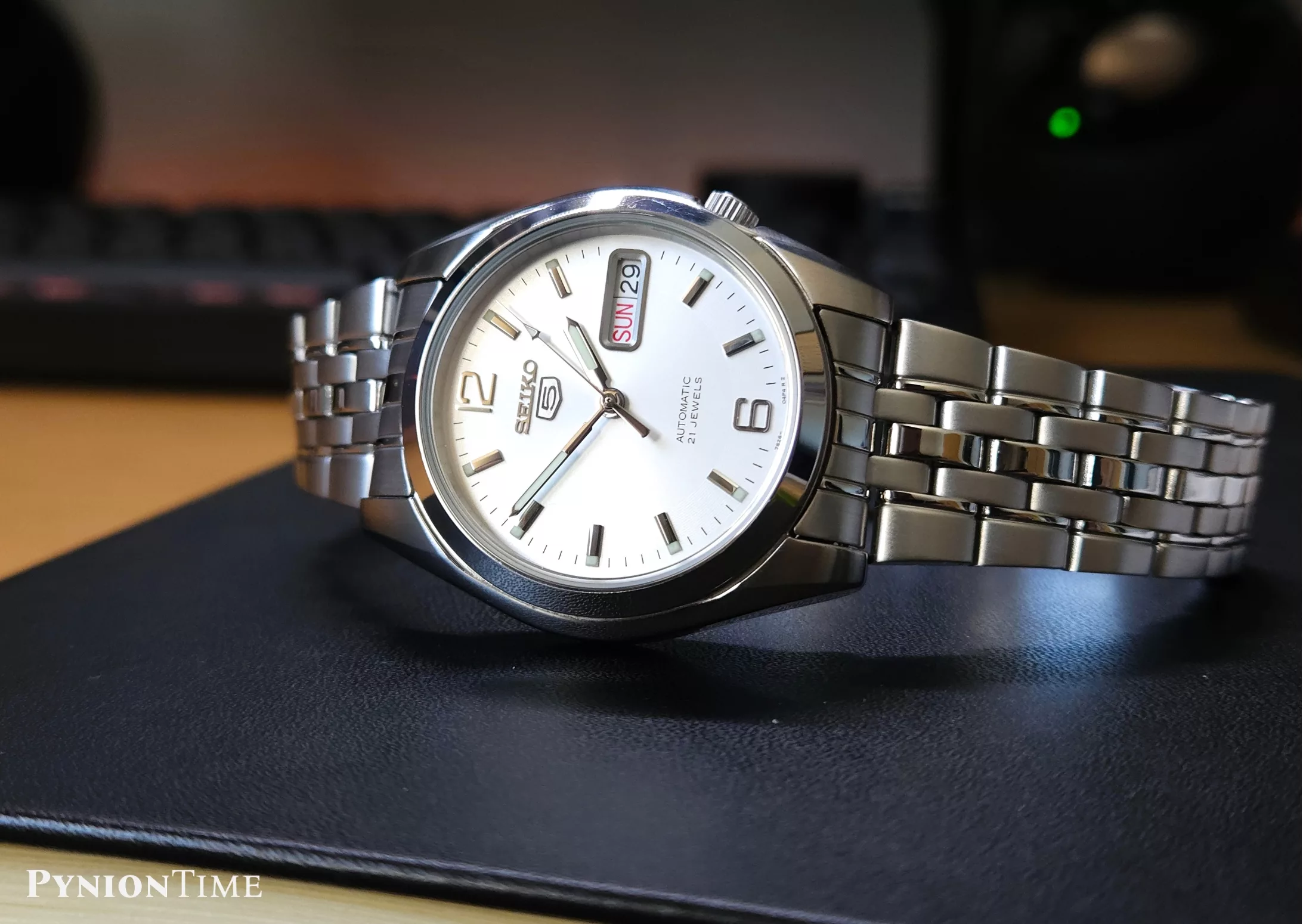
None of that has stopped it from becoming my go-to watch whenever I need to dress up. Over a year of ownership, the case has picked up a few light scratches but the crystal has held up cleanly, and the vintage proportions on my 6.5-inch wrist have aged better than several watches with stronger specs. This is the clearest example in the group of a watch that works despite the spec sheet, not because of it.
Where the Three Actually Overlap
Strip away the categories and the similarities are more interesting than the differences. None of the three uses sapphire, which says something about the real compromises €150 to €300 still buys from big, established brands. Seiko is the partial exception: its proprietary Hardlex crystal resists scratches better than standard mineral, even if it still falls short of sapphire, which gives the SNK385 a small edge on crystal quality despite losing on nearly everything else.
All three run inside a usable accuracy band for budget automatics, between +10 and +20 seconds a day in my own testing, so precision alone is not a good reason to pick one over another. The Citizen and Orient both have an audible rotor in a quiet room; the SNK385’s case construction means I have never noticed the same thing on that one, likely because it is not something you can wind by hand and check in the same way.
The real differences show up in what each brand chose to prioritize with a limited budget. Citizen spent it on water resistance, bezel action, and lume. Orient spent it on case finishing and a strap that does not need replacing. Seiko spent almost none of it on modern specification and let the design carry the watch instead, which is either the smartest or the laziest choice depending on how much you value proportions over paper.
The Strap and Bracelet Story Tells You the Most
If I had to pick one detail that predicts how much you will actually enjoy wearing each of these day to day, it would be what is on the wrist, not what is inside the case. The Citizen’s factory bracelet is the most budget-limited of the three, very close to the Seiko to be honest. It works, it includes a genuinely useful diver’s extension, but the clasp does not hide its price the way the bezel does. Swap it for a rubber strap, which I did with a deployant clasp option, and the whole watch feels a step above where it started.
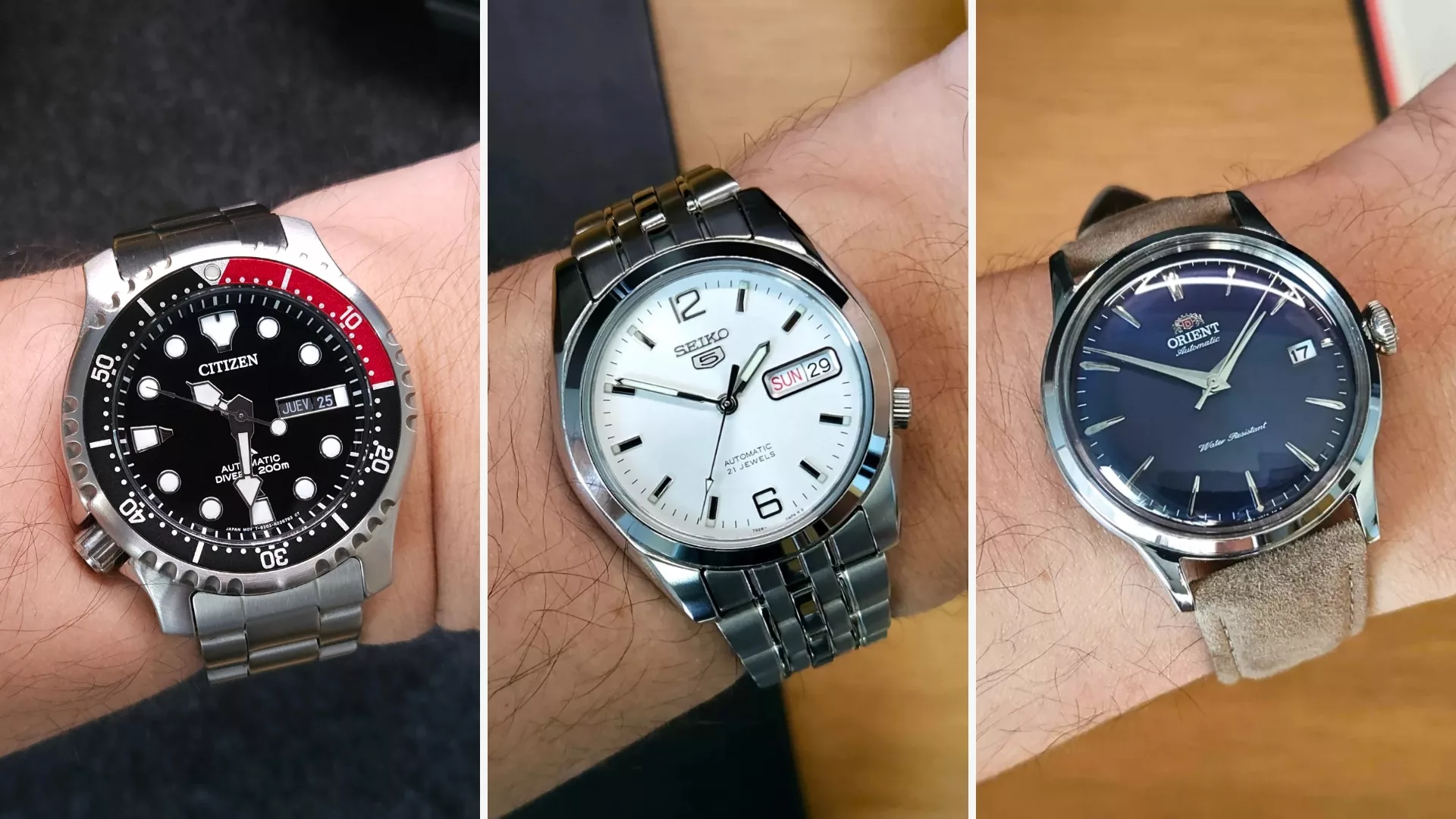
The Orient’s suede strap is the pleasant surprise of this comparison. Bambino straps have a reputation for stiffness and cheap leather smell online, and this reference did not match that reputation, at all. It was comfortable within days and matches the dressy character of the watch without looking like an afterthought. The Seiko’s bracelet is the one detail on the SNK385 that genuinely outperforms its low price. It is light, it does not pull arm hair the way cheap bracelets often do, and after a year it still fits the vintage character of the watch better than most aftermarket options I tried.
If I Had to Rank Them
Each of these wins its own category, so ranking them against each other only makes sense if you ask a narrower question: which one would I hand to someone buying their first Japanese automatic, if they could only own one to start.
That would be the Citizen Promaster, with the other two winning narrower questions instead of the overall one:
| Pick | Watch | Best For | Why |
| Overall pick | Citizen Promaster NY0085-86E | Starting a collection with just one watch | The only ISO-certified diver of the three, already proven on three strap styles from casual to dressy, closest to a watch that goes anywhere |
| Best for dress | Orient Bambino RA-AC0M12L30B | Dress occasions specifically | Most finished look for the money, sunburst navy dial, suede strap that never needed replacing |
| Best for heritage | Seiko 5 SNK385 | Charm and horological history | Real Seiko pedigree, ages better on the wrist than the spec sheet suggests |
I would not buy all three expecting them to overlap. Buy the one that matches the gap in your own rotation, and if you do not have one yet, start with the Citizen.
Quick Answers Before You Pick One
It depends on what you weigh most. The Citizen Promaster NY0085-86E gives the most specification per euro, with ISO 6425 diving certification and 200m water resistance. The Orient Bambino gives the most finished look for around €200. The Seiko 5 SNK385 gives the lowest entry price at roughly €140 but the fewest modern specs.
The Citizen Promaster NY0085-86E. It is the only one built to a real diving standard, it wears well on multiple strap types, and it comes closest to doing everything reasonably well rather than excelling in one narrow role.
No. All three use mineral crystal: Hardlex on the Seiko 5 SNK385, a domed mineral crystal on the Orient Bambino, and an anti-reflective mineral crystal on the Citizen Promaster NY0085-86E.
In real-world testing, the Citizen Promaster and Orient Bambino both ran close to +10 seconds a day, while the Seiko 5 SNK385 ran closer to +20 seconds a day. All three are within normal range for affordable automatic movements.
No. The Orient Bambino’s F6724 and the Citizen Promaster’s caliber 8204 both allow hand-winding. The Seiko 5 SNK385’s 7S26 does not, so it needs to be wound through wrist motion instead.
Check out The Ultimate Affordable Watches Guide