
(This article features affiliate links, for more information, click here.)
Affordable GMT watches have become one of the most exciting corners of modern watch collecting. A few years ago, a mechanical GMT at an accessible price usually meant compromise: thick cases, generic designs, mineral crystal, or movements that felt more like a novelty than a serious travel tool. Today the landscape is different. Seiko’s NH34, stronger microbrand competition and better consumer expectations have made the GMT one of the most compelling complications below luxury pricing.
What a GMT Watch Actually Does
If the complication is new to you: a GMT adds a fourth hand that goes round once every 24 hours, read against a 24-hour scale, and that scale is how it tells you whether it is 3am or 3pm somewhere else. That is the whole trick. How you set that hand is where they differ, and I get into that below the picks.
That does not mean every affordable GMT is worth buying. You are usually choosing between movement type, finishing, case thickness, water resistance and bracelet comfort, and the mechanical or quartz decision matters more here than people expect. Some of these are genuine travel companions. Others are three-handers with an extra hand added for looks.
Best Affordable GMT Watches at a Glance
If you’re short on time, here’s the quick rundown of the most compelling GMT picks in this guide:
These watches reflect how far the category has evolved, offering genuine GMT functionality, strong everyday usability, and increasingly refined execution without pushing beyond an accessible price point.
Beaucroft Contour GMT Tropical Teal
Not every affordable GMT needs to look like a travel tool, and the Beaucroft Contour GMT makes that point immediately clear. Instead of following the familiar formula of bold bezels and overtly sporty cues, it leans into a more sculpted, contemporary design language. The result is a watch that feels closer to a modern integrated sports piece than a traditional GMT, which already puts it in a different conversation within this segment.
What makes it genuinely compelling is that this design-first approach is backed by real mechanical credibility. The inclusion of the Miyota 9075 gives it true GMT functionality, with a jumping local hour hand that makes it far more practical for travel than the typical caller GMT alternatives at this price. It’s a watch that doesn’t shout about its complication, and that restraint will either be its biggest strength or its main drawback depending on what you expect from a GMT.
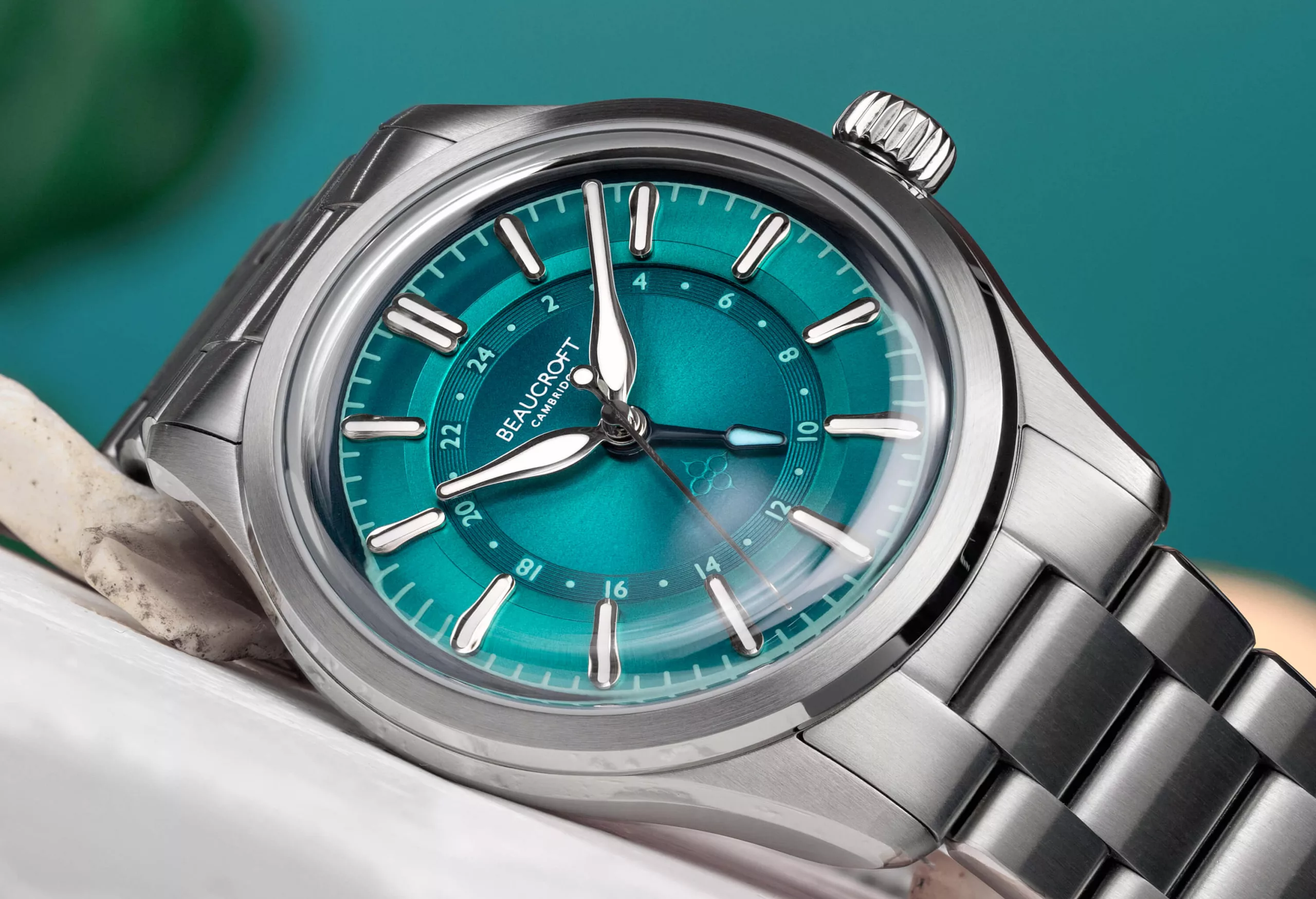
- Case/Dial: 39.5mm hardness-coated steel case with a flowing, sculpted profile, paired with a layered Tropical Teal dial featuring a raised chapter ring and darker outer track for added depth
- Crystal: Box sapphire with triple underside AR coating
- Water Resistance: 100m with screw-down crown
- Movement: Miyota 9075 automatic true GMT, flyer-style with jumping local hour
- Strap: Hardness-coated bracelet with on-the-fly micro-adjust
- Price: £795
- Why it stands out: A true GMT with a design-led identity, offering a more refined and contemporary alternative to the usual tool-focused GMT watches in this price range
Erebus Ascent 40 GMT
There’s a point in the affordable GMT segment where specifications stop being impressive and start being expected. The Erebus Ascent 40 GMT pushes directly against that boundary by offering true GMT functionality at a price that feels almost deliberately disruptive. It’s not trying to reinvent the category, but it is forcing a reassessment of what buyers should reasonably expect at this level.
What makes it particularly compelling is how little it sacrifices to hit that price. The Miyota 9075 places it firmly in the “serious GMT” category, while the overall execution stays clean, legible, and versatile. It leans toward a classic sports GMT aesthetic, but avoids feeling derivative thanks to its enamel dial finishes and restrained design choices. The trade-off is that it plays things relatively safe visually, which may not appeal to buyers looking for something more design-led or distinctive.
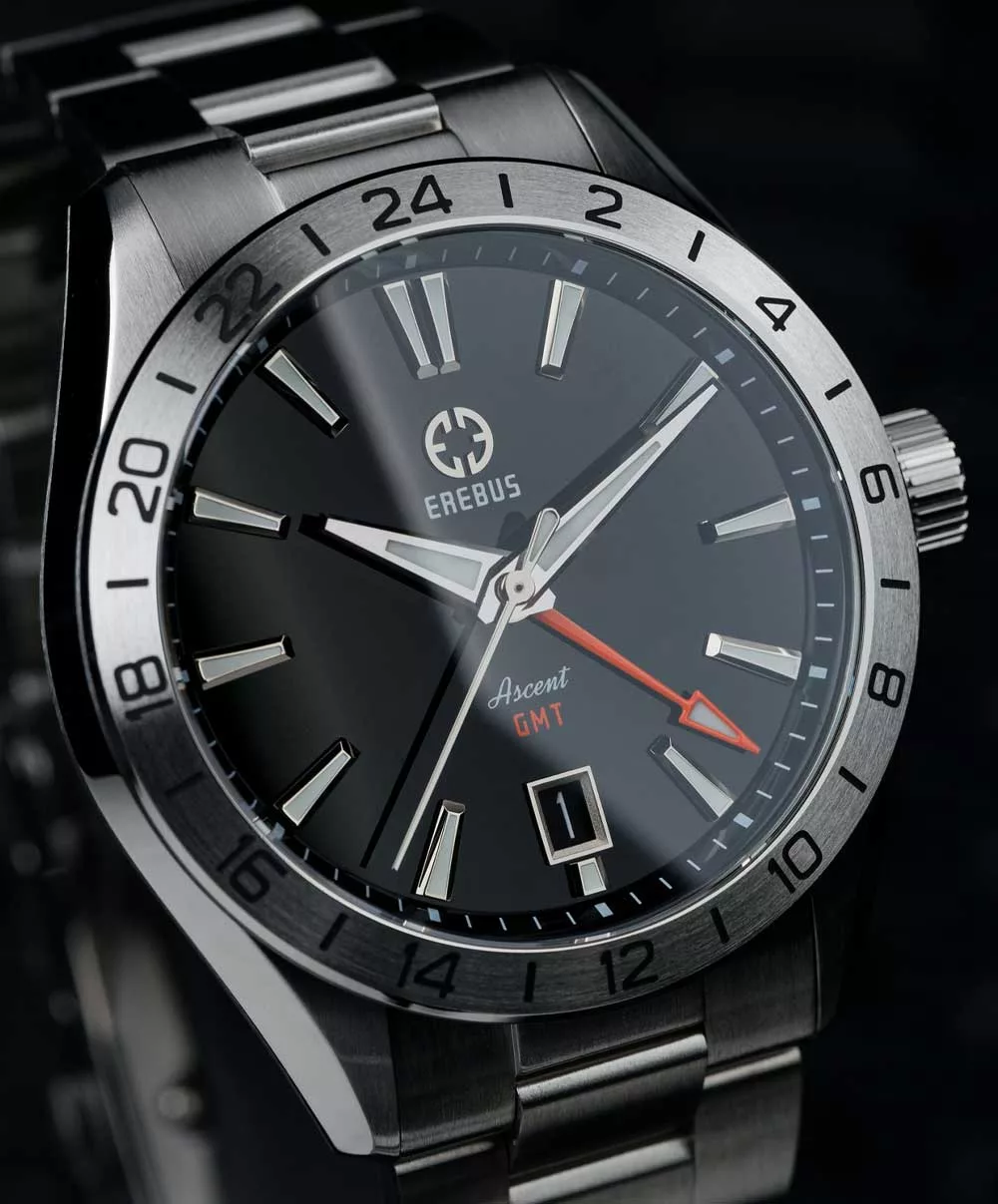
- Case/Dial: 40mm stainless steel case paired with high-gloss enamel dials in multiple colorways, featuring applied details and a clean, highly legible layout
- Crystal: Double-domed sapphire with AR coating
- Water Resistance: 100m
- Movement: Miyota 9075 automatic true GMT (flyer-style with jumping local hour)
- Strap: Integrated “O-style” bracelet with strong emphasis on comfort and finishing
- Price: $499 USD (plus shipping and taxes depending on region)
- Why it stands out: One of the most aggressively priced true GMT watches on the market, delivering genuine travel functionality without the usual price premium
Baltany GMT S6073AB
Not every affordable GMT tries to reinvent the category, some aim to deliver a familiar formula at a more accessible price, and the Baltany S6073AB is firmly in that camp. Powered by the Seiko NH34 automatic GMT, it brings a proven, widely trusted movement into a design clearly inspired by the Tudor Black Bay Pro. This is a caller-style GMT, so it is less convenient for frequent travel, but far more reassuring in terms of reliability and long-term serviceability than many cheaper alternatives.
What makes it worth considering is how convincingly it executes that formula for the price. The 39mm case, 200m water resistance, and strong lume give it real tool-watch credibility, while the vintage cues keep it visually approachable.
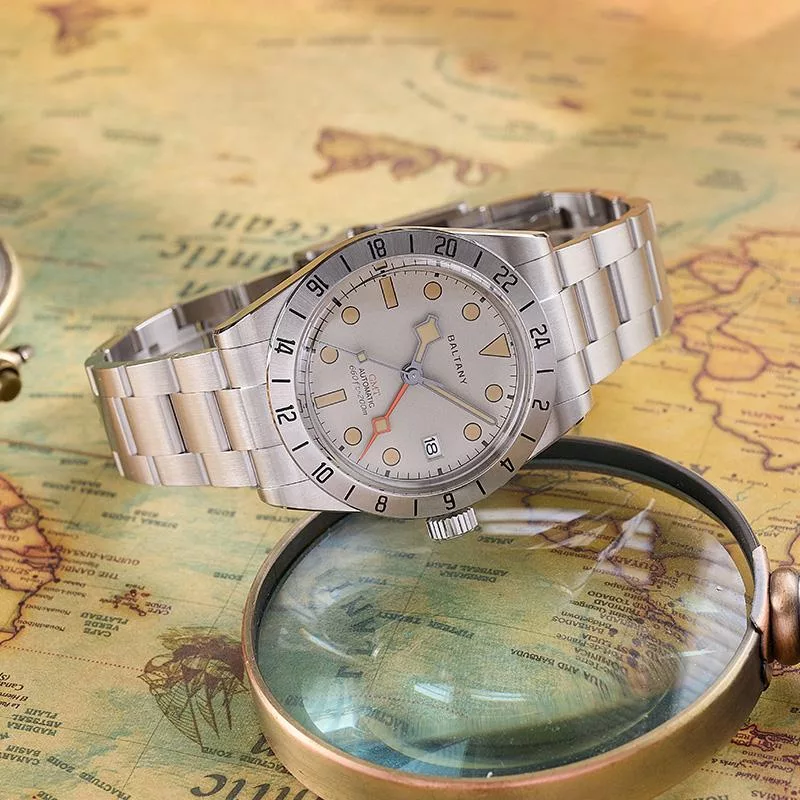
- Case/Dial: 39mm stainless steel case with brushed and polished surfaces, paired with matte black or light cream dial and vintage-toned lume
- Crystal: Domed sapphire with AR coating
- Water Resistance: 200m with screw-down crown
- Movement: Seiko NH34 automatic GMT (caller-style)
- Strap: Leather strap or stainless steel bracelet
- Price: $210 USD
- Why it stands out: A proven NH34-powered GMT that delivers strong tool-watch specs and a familiar design at a very approachable price point
Lacité Urbanite GMT
Some watches try to reference travel through aviation or vintage exploration cues. The Lacité Urbanite GMT takes a different route, framing travel as something more grounded and contemporary. Built around the idea of city life rather than long-haul nostalgia, it feels designed for people moving between neighborhoods, workspaces, and time zones rather than cockpit-inspired storytelling.
That approach carries through to the execution. The use of textured dials, restrained layout, and subtle GMT integration gives it a more tactile, modern character than most watches in this segment. Underneath that, the Miyota 9075 ensures it is not just conceptual but genuinely practical for travel. The trade-off is that it avoids bold, instantly recognizable GMT styling, which may leave it feeling understated for those who prefer a more traditional or sporty presence.
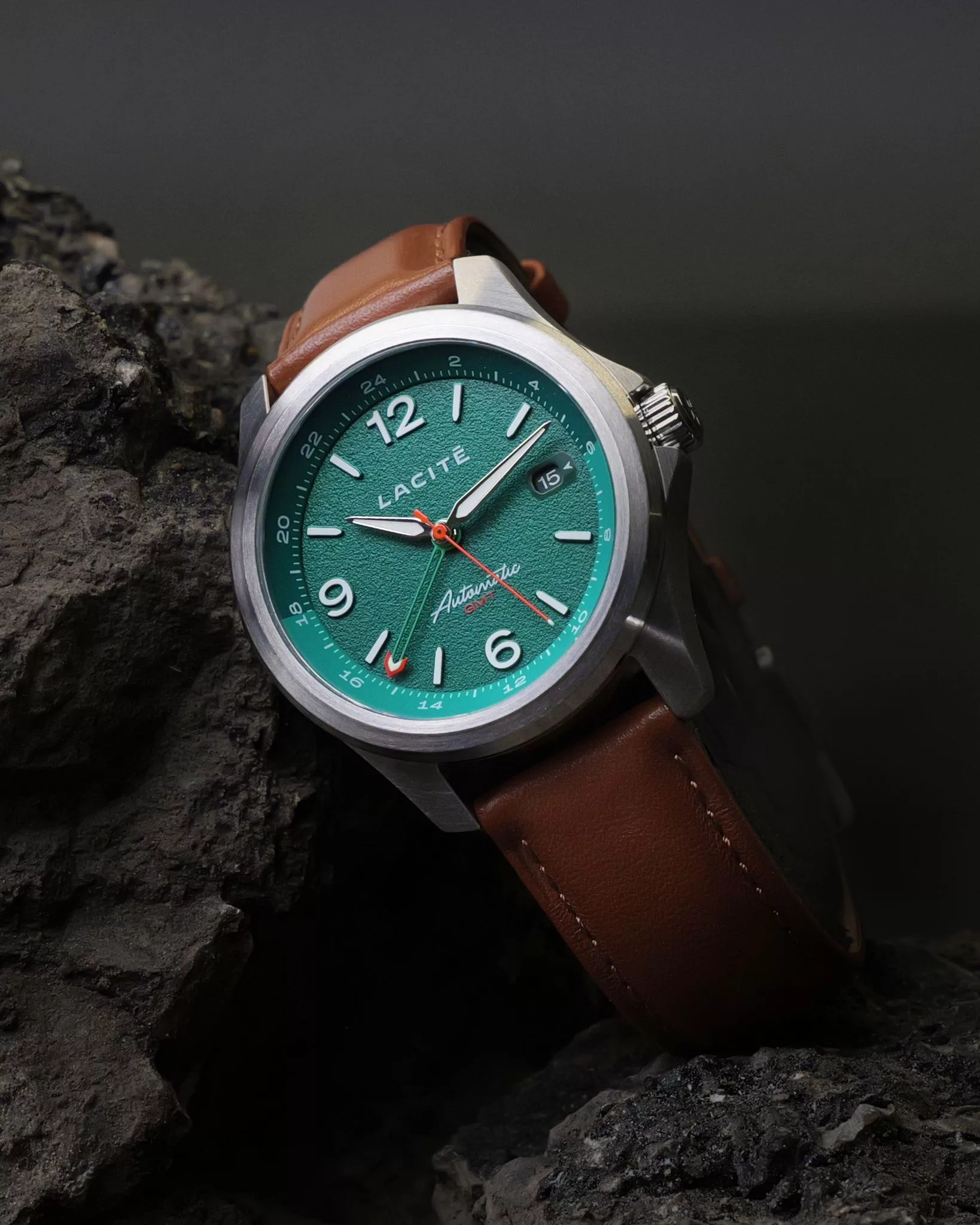
- Case/Dial: 40.5mm stainless steel case with brushed finishing, paired with textured “gravel” or sunburst dial options, raised indices, and a sloped 24-hour rehaut
- Crystal: Flat sapphire with inner AR coating and sapphire caseback
- Water Resistance: 100m
- Movement: Miyota 9075 automatic true GMT (flyer-style with jumping local hour)
- Strap: Stainless steel bracelet (IP-coated option on Slate Black variant)
- Price: $725 USD depending on version
- Why it stands out: A city-focused take on the GMT, using texture and restrained design to create something more contemporary than the usual travel-watch formula
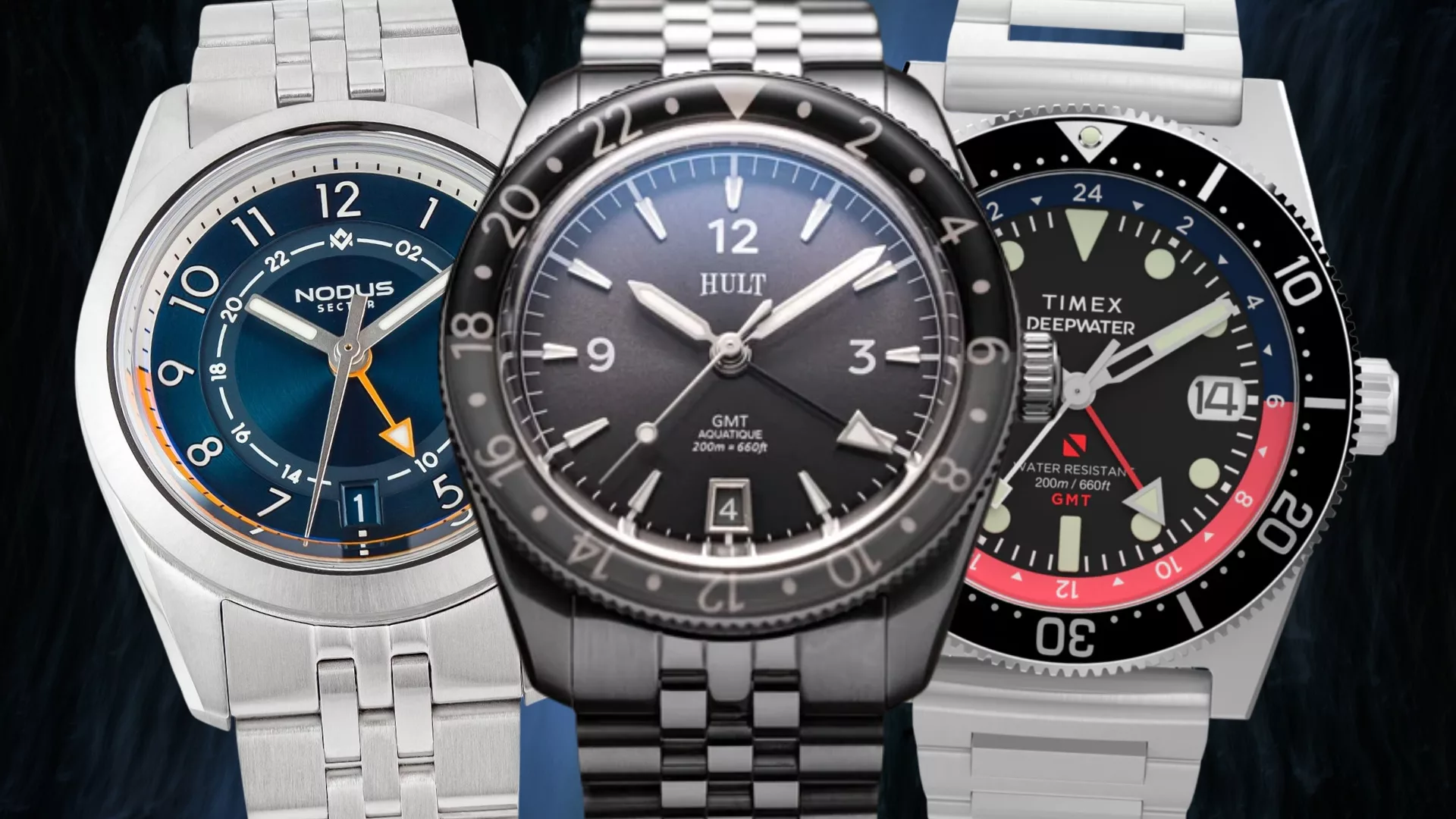
Hult Aquatique GMT
Most affordable GMTs today have quietly drifted toward larger, more assertive case sizes. The Hult Aquatique GMT pushes in the opposite direction. At 37.4mm, it immediately sets itself apart as a watch that prioritizes proportion and wearability over presence, bringing the GMT complication back into something that feels closer to mid-century tool watches than modern sports pieces.
That smaller footprint is not just a stylistic choice. It reshapes how the watch is used. Combined with the Miyota 9075 true GMT movement, it becomes a genuinely practical travel companion that wears easily across long days, flights, and daily use without ever feeling bulky. The vintage cues, from the top-hat crystal to the bakelite-inspired bezel, reinforce that direction. Also, I love how detailed their listing is! More brands should be taking notes.
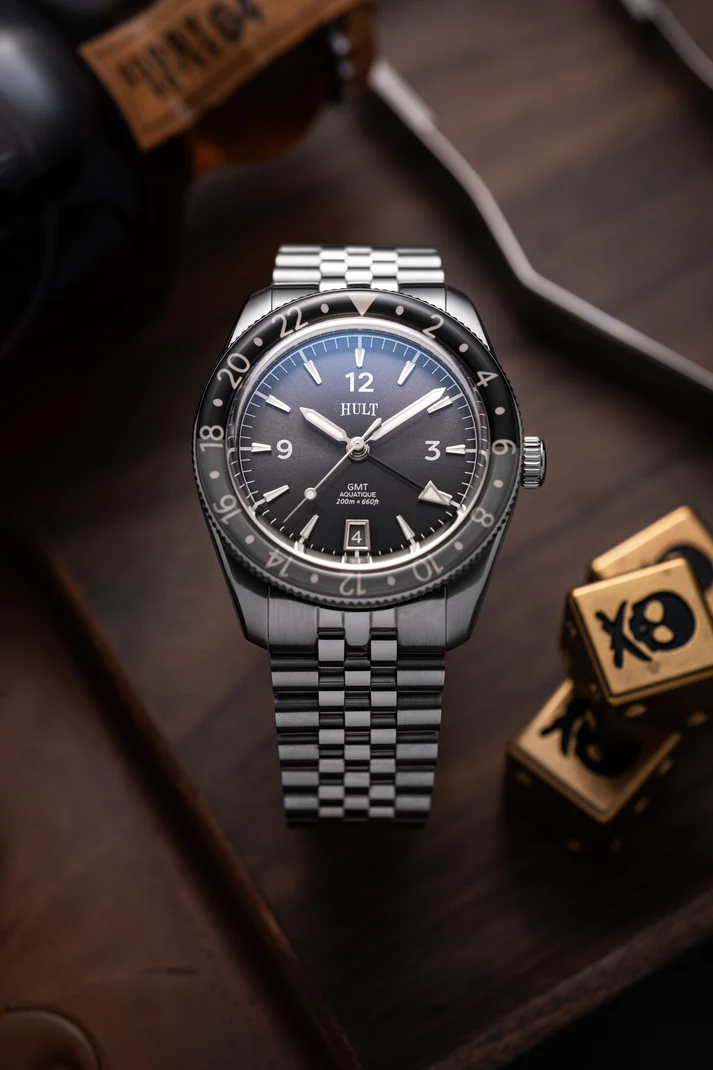
- Case/Dial: 37.4mm stainless steel case with satin finish and polished chamfers, paired with a sunray graphite dial, applied markers, and a clean, open layout without a traditional minute track
- Crystal: Top-hat sapphire with anti-reflective coating
- Water Resistance: 200m with screw-down crown
- Movement: Miyota 9075 automatic true GMT (flyer-style with jumping local hour)
- Strap: Five-link stainless steel bracelet with taper and on-the-fly micro-adjust
- Price: €600
- Why it stands out: A compact, vintage-proportioned true GMT with a distinctive sapphire 24-hour bezel, offering something genuinely different in a segment dominated by larger watches
Nodus Sector II GMT Pacific
The Nodus Sector II GMT is interesting because of what it removes. Instead of chasing bulkier cases or overbuilt specs, it focuses on efficiency, pushing the limits of how slim and compact an NH34-powered GMT can realistically be. At 11.9mm thick, it rethinks how this movement can be packaged, and that alone makes it one of the more technically considered entries in this space.
That focus on efficiency extends to the overall design. The Bauhaus-inspired dial is clean, highly legible, and deliberately structured, with a fully lumed 24-hour track integrated into the layout rather than separated into a bezel. The result is a GMT that feels more architectural than sporty. The trade-off is that it lacks the bold, tool-watch presence some buyers expect from a GMT, and the NH34 remains a caller-style movement, meaning it is less convenient for frequent travelers than true GMT alternatives.
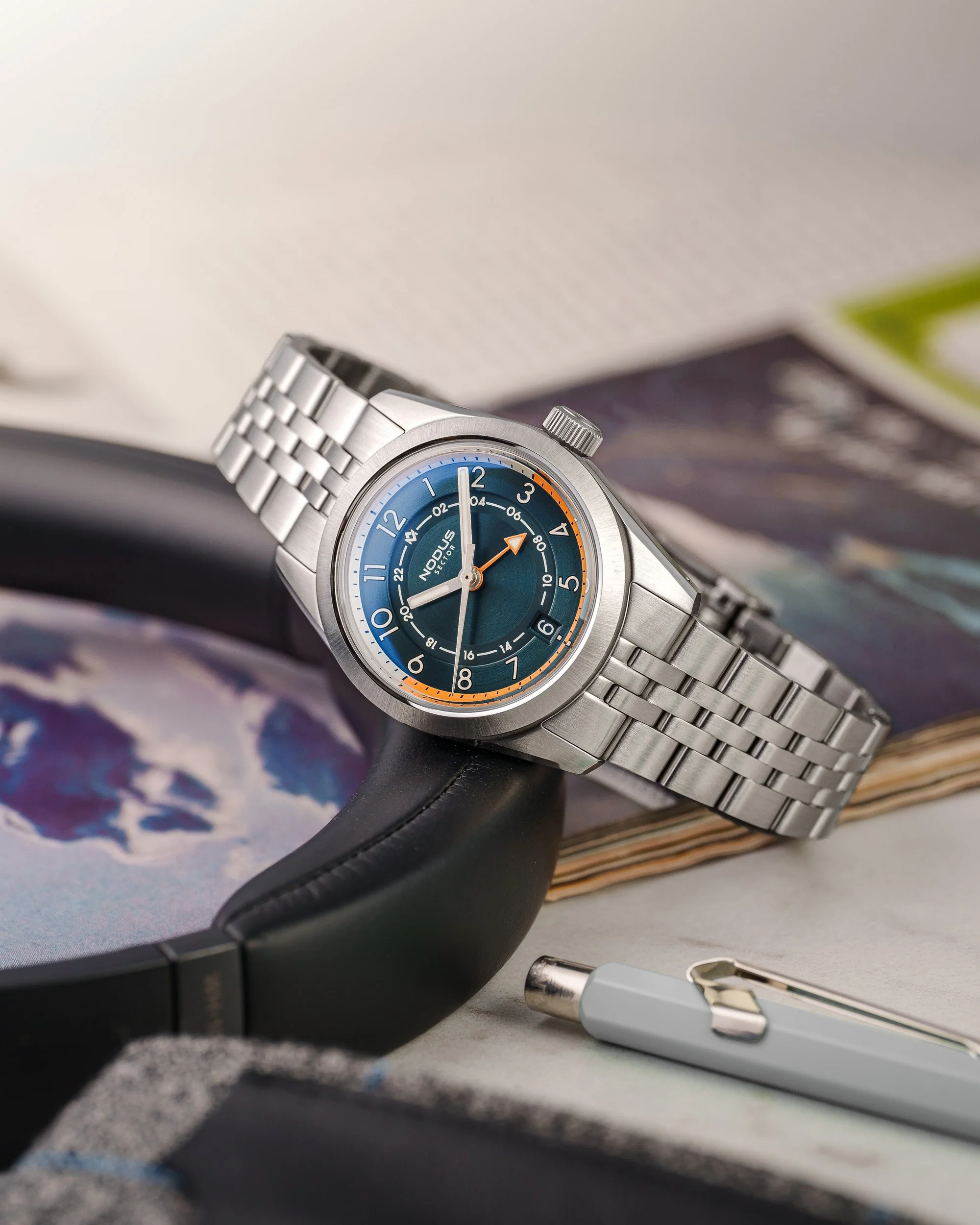
- Case/Dial: Slim 11.9mm stainless steel case with a redesigned, compact profile, paired with a Bauhaus-inspired sector dial featuring large numerals and an integrated 24-hour track
- Crystal: Box-shaped sapphire crystal with optimized dial proximity
- Water Resistance: 100m
- Movement: Seiko NH34 automatic GMT (caller-style, regulated by Nodus)
- Strap: Stainless steel bracelet with Nodus on-the-fly micro-adjust clasp
- Price: $525 USD
- Why it stands out: An ultra-efficient, slim GMT design, pushing the NH34 platform further than most competitors while maintaining strong everyday usability
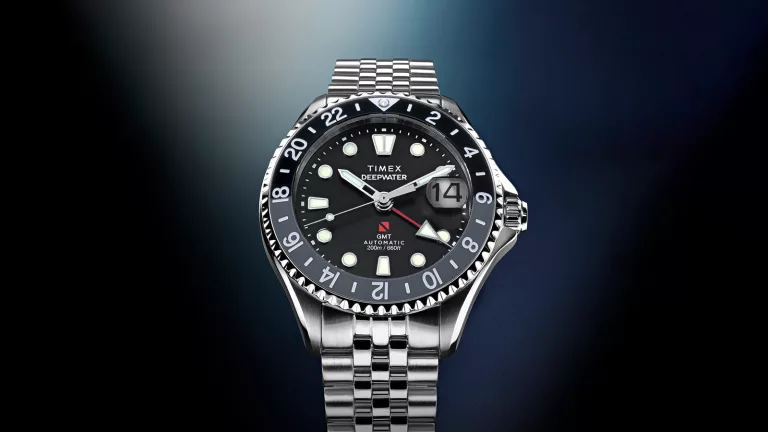
Timex Deepwater Reef 200 GMT
Most GMT watches in this price range try to appeal to enthusiasts first. The Timex Deepwater Reef 200 GMT takes a more practical route. It is built as a straightforward tool watch, prioritizing durability, accuracy, and ease of use over mechanical appeal or collector-driven features.
At the core of that approach is its quartz GMT movement. Unlike automatic alternatives, it offers set-and-forget reliability with high accuracy and no need for daily wear or winding. Combined with 200m water resistance, a screw-down crown, and a robust case construction, this is a GMT designed for real-world use rather than horological interest. The trade-off is clear: it lacks the mechanical charm and depth that enthusiasts often look for, but in return delivers simplicity and dependability that many buyers will actually benefit from.
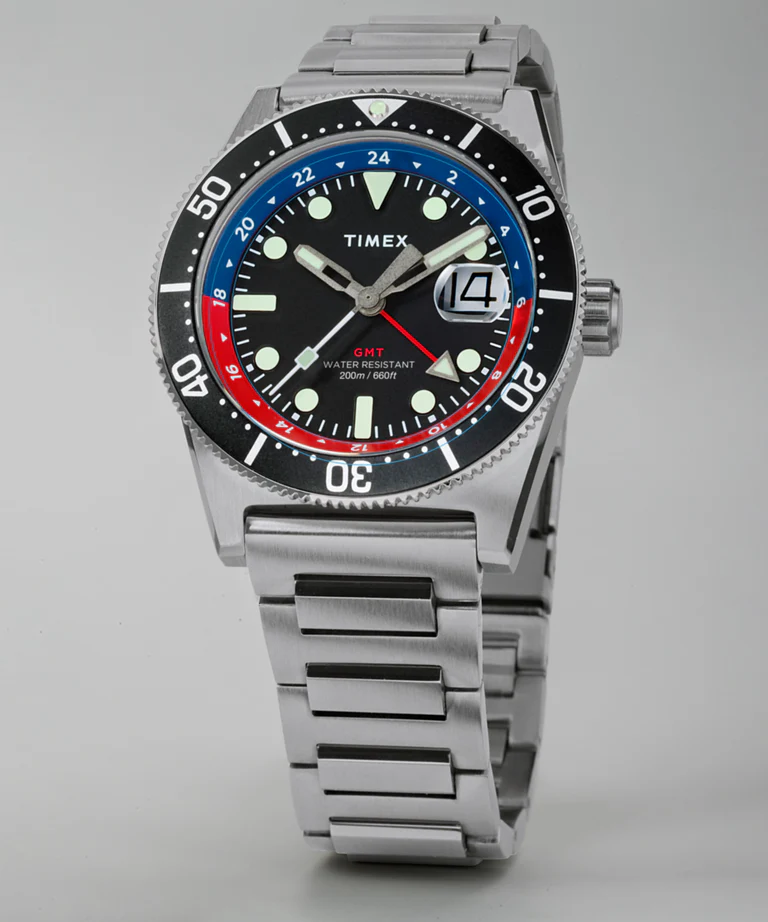
- Case/Dial: 41mm stainless steel case with a clean, highly legible dial and functional layout, including a date window with magnifier
- Crystal: Sapphire with anti-reflective coating
- Water Resistance: 200m with screw-down crown and caseback
- Movement: Quartz GMT (high-accuracy, battery-powered)
- Strap: Stainless Steel Bracelet
- Price: $320 USD (often discounted)
- Why it stands out: A no-nonsense quartz GMT tool watch, offering excellent durability and accuracy for buyers who prioritize function over mechanical complexity
What to Avoid When Buying an Affordable GMT Watch
The first thing to avoid is buying purely from the spec sheet. Sapphire crystal, automatic movement, and 200m water resistance sound impressive, but they do not guarantee a good watch. Poor bracelet articulation, weak lume, bad bezel action, or an overly thick case can make a watch disappointing even when the specifications look excellent.
Buyers should also be careful with vague GMT descriptions. Some watches offer a caller-style GMT, where the 24-hour hand is adjusted independently. Others offer a flyer-style GMT, where the local hour hand jumps independently. Flyer GMTs are usually better for frequent travellers, while caller GMTs are useful for tracking another time zone from home.
Finally, be realistic about expectations. Not every affordable GMT needs to be a “do everything” watch. Some are better suited for travel, others for daily wear, and others simply for aesthetic enjoyment. Understanding that distinction will lead to a far better purchase.
Affordable GMT Watches: FAQ
Yes. A GMT watch is genuinely useful if you travel, work across time zones, or want to track home time while abroad. Even for non-travel use, it can be practical for following international markets or remote teams.
It depends on what you value. Mechanical GMTs offer more enthusiast appeal and craftsmanship, while quartz GMTs provide better accuracy, lower maintenance, and greater convenience.
Yes. Sapphire crystal is now standard across many affordable GMT watches, even below $500. However, it should be considered alongside overall build quality, not as a deciding factor on its own.
If you travel frequently, a flyer GMT with a jumping local hour hand is more convenient. If you mainly track another time zone from home, a caller GMT is usually sufficient and more affordable.
Final Thoughts
The affordable GMT category has matured into one of the most compelling segments in modern watchmaking. What used to be a niche complication is now widely accessible, with options that cater to very different types of buyers, from casual travelers to dedicated enthusiasts.
What stands out is not just the availability of GMT functionality, but the diversity in how brands approach it. Some prioritize design and wearability, others focus on value and specifications, while others refine proportions or technical constraints like case thickness. This variety means that the “best” GMT is no longer universal, it depends entirely on how you plan to use the watch.
If you want to continue exploring beyond GMTs, consider expanding into adjacent categories such as best watches under $1000 of 2025, affordable microbrand watches to know, best affordable tool dive watches, and top affordable field watches; and if you’re shopping specifically under $300, our best affordable watches under $300 guide narrows that budget down further.